Bearing Witness: Four Days in West Kingston

IMG_5841IMG_5842

IMG_5839

Gleaner column, Nov 23, 2017

How to “make life in and through violence” in Jamaica is the problem an exhibition at the Penn Museum in Philadelphia ponders. Titled “Bearing Witness: Four Days in West Kingston” the exhibition is constructed around a film called Four Days in May by Deborah Thomas, musician Junior Wedderburn and Deanne Bell, a Jamaican psychologist based at University of East London. Thomas who is a professor of anthropology at the University of Pennsylvania initiated research for the film in 2012. The Penn Museum exhibition, unveiled on November 17th, 2017, marked the formal launch of the completed project.

Thomas is known for her books Modern Blackness and Exceptional Violence as well as her first film, Bad Friday, which chronicles the state-sponsored repression and victimization of Rastafari in the wake of events at Coral Gardens in 1963. Both films are examples of the thrust of anthropology in the digital age, visual practices attempting “to witness and to archive state violence, and to give some sense of how the practices and performances of state sovereignty have changed over time.”

IMG_5869

Beautifully designed story boards provide details of the timeline of the 2010 Tivoli incursion mounted by heavily armed security forces in Jamaica to restore law and order in the garrison community and to arrest its leader, Dudus, wanted in the United States for drug running and other crimes. A (Very) Brief History of Jamaica provides historical background while below, a series of numbers are provided, amplifying what took place during the dramatic period of the incursion.

The series starts by presenting an interesting connection to Jamaica. 1682: The year Pennsylvania was founded after William Penn was given a land grant from the British Crown due to his father’s role in winning Jamaica from the Spanish in 1655. Then it shifts to Tivoli in West Kingston. 75: The number of civilians the state acknowledged were killed. 200: Roughly the number of people the community says were killed 4: The number of days citizens were locked down in their homes unable to leave. 18: The total number of guns found in Tivoli Gardens by security forces. 36: The number of spent casings that were recovered and presented for analysis. 1,516: The number of rounds of ammunition expended by the Jamaica Constabulary Force. 4000: The approximate number of people detained of whom only 148 were not released. 6.5: The number of years it took to produce an official report on the incursion.

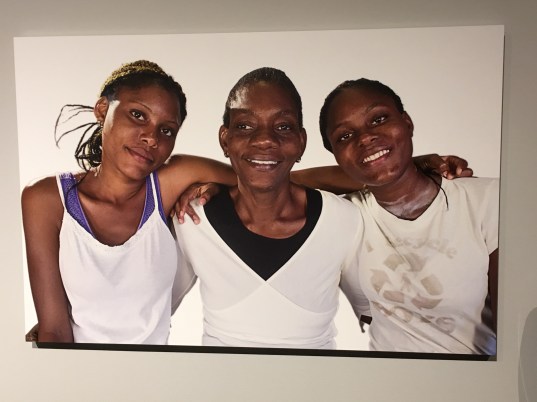
The project is intended as a platform for inhabitants of Tivoli Gardens and surrounding communities to talk about what they experienced during the incursion and to publicly name and memorialize the loved ones they lost. 30 oral histories were collected and portraits created which are displayed in the exhibition. Each life size portrait, expertly and empathetically shot by photographer Varun Baker, is accompanied by a recording of the person portrayed speaking, which visitors can listen to through headphones. The direct, unembellished testimony is moving, sometimes shocking. Many who listened were moved to tears.
IMG_5846

One such portrait is that of Marjorie Williams and her daughters, Diane and Diana Barnes. The text  accompanying it says: Marjorie was born in KIngston, on November 14, 1961, her twins were born at Jubilee Hospital in 1997. Marjorie moved to the area that is now Tivoli Gardens at age three. She attended St. Alban’s Primary School, and then graduated from Tivoli Gardens High School. When her kids were younger she worked seasonally in Cayman doing housekeeping work in hotels. Her two sons were killed, execution-style, outside her house on the second day of the incursion. Since that time, the twins have been living in central Jamaica, as they didn’t feel they could stay in Tivoli Gardens.

IMG_5844

Similar texts accompany the other portraits. Also featured is a life-sized model of a Revival Table, and a display of different kinds of drums used in Revival, Kumina and Nyabinghi, “three musical traditions integral to the formation of West Kingston.” At the launch Jamaican musicians and exemplars of each tradition drummed and danced bringing the still, silent museum to life. We joked that the old African skulls and bones displayed in vitrines in a neighboring exhibition “Is There Such a Thing Called Race in Humans?” must have felt invigorated by the rousing African-inspired rhythms and songs filling the air.

IMG_5852

Also on display is a copy of the Report of the West Kingston Commission of Inquiry. An innovative part of the exhibition posed different outcomes depending on what actions were or were not  taken. What would have happened if the security forces had never gone into Tivoli? What if the Government had not signed the extradition order? What if Dudus had turned himself in?

Bearing Witness culminates in a screening of an eight-minute excerpt from the documentary Four Days in May projected onto three screens. The excerpt starts with footage from the American ‘spy plane’ showing aerial images of the community, with what appear to be gunmen staking out rooftops. The exhibition will remain at the Penn Museum till July 2018.

A World Fit for Children

clovis corporal punishment
Clovis, Jamaica Observer, November 30, 2017

In the midst of heated discussions in the public sphere about the proposed abolition of corporal punishment in Jamaican schools the 12th annual Caribbean Child Research Conference took place under the theme “A World Fit for Children: The UN 2030 Agenda”. This agenda aims to promote a global movement that will ensure that children worldwide are protected from poverty, harm and exploitation, war and disease among other things. It also promises to create an environment that listens to children and allows them to participate in decisions that affect them.

Clearly the world is a long way off from achieving even a quarter of these goals. Still the Sir Arthur Lewis Institute of Social and Economic Studies at the University of the West Indies Mona has been holding a conference annually in which schoolchildren participate alongside adult scholars in presenting their research, thus at least partially fulfilling the mandate about child participation and listening to what they –the primary stakeholders in this conference–have to say.

This year the adult papers ran the gamut from “The Disappearance of Self-initiated Play and Playful Learning from the Early Childhood Landscape: A Guyana Context” by Godryne Wintz to “Exploring the Knowledge of Parents about Child Sexual Abuse within a Jamaican Suburban Community: A Case Study” by Viviene Kerr. The latter explored changes in parents’ knowledge of child sexual abuse within a Jamaican suburban community and was prompted by an increase in sexual abuse cases from a low of 121 in 2007 to a high of 2,671 in 2011 (OCR, 2011).

That is a huge increase by any standards which begs the question has the reportage of such cases increased or has the incidence?

In “Trouble with Neketa: Drama as a Force in Early Childhood Professional Training Programmes” Grace Lambert dealt with the rejection of Creole language or mother tongue in early childhood settings in Guyana. As she pointed out this practice of rejecting children’s home language breaches the UN Convention of the Rights of the Child which promotes the principle of development of and respect for children’s language. More significantly, this practice contradicts developmentally appropriate early childhood learning experiences which dictate that children’s home language is probably the best medium for early interactions. Using a case study approach, Lambert’s research examined the impact of the first Early Childhood Development (ECD) professional development programme offered by the University of Guyana on ECD practitioners’ interaction experiences with Guyanese Creole speaking children. It highlighted how practitioners’ knowledge of language acceptance principles influenced their recognition of Creole as a legitimate way of speaking. The research emphasized the extent to which dramatisation effected change in consciousness and enlightened attitudes to first language recognition.

In “Counselling gender-nonconforming students in Jamaican high schools: The guidance counsellors’ perspective” Halcyon Reid explored how Jamaican high school guidance counsellors treat with gender nonconforming students. The study focused on the factors impacting how they approach service to these students, how their training helps them deal with issues surrounding gender-nonconformity and sexual identity, and actions that may be necessary to improve counselling services to gender nonconforming students. The aim was to identify gaps in the training of guidance counsellors in their preparation to serve sexual minority students and provide recommendations that may lead to a larger study which can inform policies governing guidance and counselling in schools.

The second day of the conference was devoted to child researchers who presented findings from their studies. The subjects were varied as the following titles indicate: An Investigative Study on Trusted Adults who Sexually Abuse Children – Thea-Moy Hill, Westwood High · An Analysis on the Link between Dysfunctional Families and Deviant Children Disability – Sandrene McKenzie, Westwood High · Investigating the Effect of the Zone of Special Operation (ZOSO) on Children in Mount Salem St. James – Aniska Christie, Westwood High.

There was also An Exploration of the Impact of Parental Migration on the Development of Teenagers in Rural Jamaica by Dylan Baker, Westwood High · An Investigation on the Impact of Gang Violence Among Teenagers in Jamaica (Underlying Reasons for Teenage Boys Joining Gangs and the Negative Impact on Jamaica) by Julleyne Sewell, Westwood High and An Investigative Study into the Impact of Gang-Related Sexual Grooming on the Academic Performance of Teenage Girls on the Community of Highgate Gardens by Breanna Julal, Glenmuir High. Ms. Julal won the overall award for the best research study and presentation.

With the elimination of corporal punishment in schools Jamaica will have gone some way towards achieving a world fit for children. Although none of the papers given at the Child Research conference dealt directly with this subject, investigations into abuse and violence dominated the presentations. “If we cannot have a world fit for children, we will not have one fit for adults,” cautions Professor Aldrie Henry-Lee, the conference convenor. Spare the rod and improve the world.

He raped me! She’s lying…

IMG_3181
Men were well represented at the Tambourine Army march

Gleaner column of November 8, 2017

While the world reels from the fallout of women finding their voices about being raped and sexually harassed over the years, in Jamaica some men would have us believe the problem is a different one. The problem here (it would seem from numerous views expressed in the media) is the preponderance of women who have lied about being raped.

It’s curious; whereas women who have actually been raped, here and elsewhere, say that  the hardest thing is getting anyone to believe them, in Jamaica, it would seem, women who falsely accuse men of raping them are instantly believed (oh! Jamaica is exceptional also in having no violence against women in case you didn’t know).  The phenomenon is crying out to be researched as it would suggest that Jamaica is bucking global trends by accepting prima facie evidence in rape cases.

“How does an innocent man defend against a sexual harassment claim made many years after the alleged harassment?” The tweet appeared mild, innocuous almost, but I felt rather than saw a little red flag waving at me from the margins of my mind. Coming from a prominent talk show host and attorney whom we’ll call CW it echoed the reactions of several callers i had heard on radio shows ever since powerful, influential men in the US, the UK, and elsewhere were brought to book by women they had harassed sexually, in some cases several years ago.

“But why is the discussion about innocent men? Why is that the reaction? Why isn’t the discussion about guilty men?” Diana McCaulay’s response to the CW’s tweet seemed extremely pertinent to me as did her following tweets: “What I want to know is why is this the question? Why is the question not how to stop men behaving this way? Men are afraid of being falsely accused by women. Women are afraid of being actually attacked by men. These are not equivalent fears.”

Why is it that whenever women try and talk about being victimized men seem to want to insist on their victimhood instead? Isn’t it a bit like the planters demanding compensation when slavery was abolished?

In other words instead of commiserating with the poor human beings they had enslaved, all the planters could think about was the ruin now staring them in the face. What’s more they were easily able to convince the powers that be that they were the injured parties, not the other way around. Everyone knows about the millions of pounds slaveowners received in compensation for the abolition of slavery. That’s what happens when you live in a system skewed towards maintaining the power and privilege of a particular segment of society.

So it was with the plantocracy then and so it is with the patriarchy now. Ultimately this is about power, as is rape. The takedown of so many powerful men all over the world seems to be sending shivers down the spine of men here and everywhere. There is no other way to interpret the rhetorical shell game being played by men whose learning ought to lead to less blinkered responses from them.

I agree with Diana McCaulay., When rape/assault/harassment of women and girls by men comes up, why is the response the possibility of a false accusation?. I agree too with Rachel Mordecai: These dangers aren’t statistically equivalent so why such anguish over something that is much less likely to happen than rape? And where is the anguish over the global culture of rape in which we find ourselves?

Catherine Burr, a professional investigator of sexual harassment claims in the US wrote an article on so-called false allegations in 2011. She had several insights to offer which CW and others should ponder:

— “It is simplistic and unhelpful to frame allegations as “true” or “false”.  If the allegation has merit it will be substantiated by the evidence. If it does not, it will not be substantiated. In a few instances, a determination of “unable to substantiate” may apply, if the investigation has not been able to find evidence persuasive either way, often the result of a lack of any evidence (direct or similar fact) which might shed light on the matter.”

— care must be taken says Burr, not to define lying as a false allegation. “While popular discourse may equate false allegations with lies, not all lies are false allegations. For example, let us say a complainant (an administrative staff member) does not disclose the fact that he engaged in kissing and sexual behaviour with the alleged harasser (a professor) or that such behaviour was consensual in the early days of their intimate relationship. However, this “lie” (lack of full disclosure) does not necessarily mean his allegations of subsequent sexual harassment by the faculty member are false”.

— and finally, points out Burr, not proven (not substantiated) does not necessarily mean a false allegation, it simply means there was not enough evidence to satisfy the court or disciplinary process in question. If A kills B, but there is no evidence to prove this, it doesn’t mean that A is innocent or didn’t kill B.

So now can we discuss the real problem? Those with power using their superior positions, whether in academia, the entertainment industry or politics, to rape those subordinate to them. THAT is the real issue.

American Pain, Jamaican Gain?

Screenshot 2017-11-27 08.44.31

Gleaner column of November 1, 2017

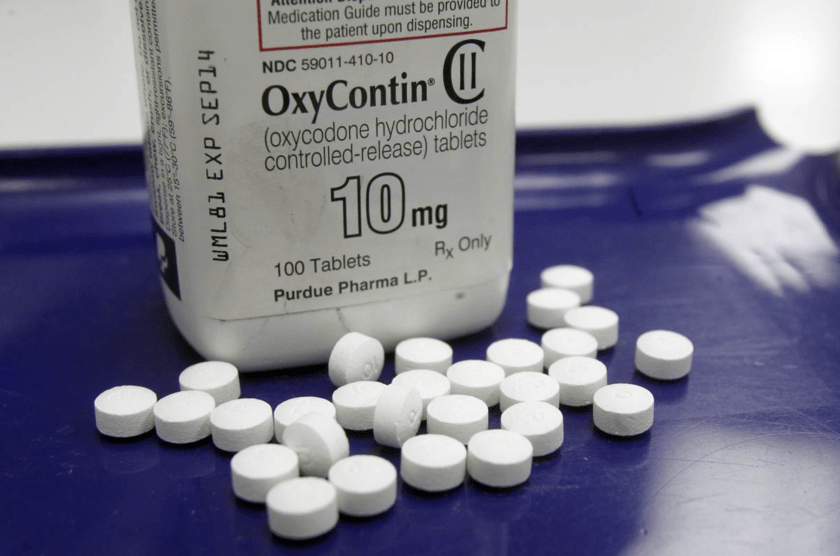
The time has never been better for Jamaica to enter the medical marijuana market with the US reeling from an opioid epidemic in the everlasting hunt for pain relief. Opioids are synthetic derivatives of opium—essentially synthetic heroin. Ganja offers much less risky and more effective pain relief than the dangerous opioid-laced drug OxyContin which has been ruthlessly marketed to Americans since 1995.

The background to this addictive drug is fascinating. An article in the New Yorker titled “Empire of Pain” details the links between the venerable Sackler family and Purdue Pharma, the company that popularized OxyContin in the US. Known for their art patronage in particular, with a wing of the Metropolitan Museum in New York bearing their name as well as numerous other major museums, galleries and art enterprises, the Sacklers could give lessons in how to convert filthy lucre to Brahminic prestige and honor using the magic wand of art.

The rise of the family and their rapid consolidation and control of the pain industry is the perfect illustration of predatory capitalism at work.  One of the wealthiest families in the US, with a collective net worth of thirteen billion dollars, the Sacklers are known for their philanthropy. The New Yorker quoted lawyer Joseph Choate’s speech when the Met was founded in 1880, coaxing the rich to support the arts:

“Think of it, ye millionaires of many markets, what glory may yet be yours, if you only listen to our advice, to convert pork into porcelain, grain and produce into priceless pottery, the rude ores of commerce into sculptured marble.”

Started by three brothers who between them had a talent for medicine, marketing and business the Sackler Firm was founded on the astute promotion and distribution of tranquilizers like Valium. So effective was their advertising campaign that “by 1973, American doctors were writing more than a hundred million tranquillizer prescriptions a year, and countless patients became hooked.” The best selling novel “Valley of the Dolls” chronicled Hollywood’s addiction to such drugs in the 60s.

Arthur Sackler, who ran the advertising company, now started a periodical for doctors called the Medical Tribune that reached 600,000 physicians. Then the brothers bought Purdue, a medicine manufacturing company and they had the perfect setup to get America hooked on their drugs. A subcommittee looking into the pharmaceutical industry in the 60s summed up the situation succinctly:

“The Sackler empire is a completely integrated operation in that it can devise a new drug in its drug development enterprise, have the drug clinically tested and secure favorable reports on the drug from the various hospitals with which they have connections, conceive the advertising approach and prepare the actual advertising copy with which to promote the drug, have the clinical articles as well as advertising copy published in their own medical journals, [and] prepare and plant articles in newspapers and magazines.”

OxyContin is the extended-release version of Oxycodone, an opiate that alters not only the perception of pain but also mood, giving users an artificial ‘high’. It wasn’t long before the drug started to be abused, spawning a secondary industry in OxyContin being used for pleasure rather than pain. “Crushing the pills, then shooting or snorting them up, delivered an immediate, powerful rush, as addictive as any hard street drug,” according to a New York Post article on a chain of clinics set up in Florida called “American Pain” which also acted as a front for dispensing Oxycontin to drug-users under the pretext of medicating them for pain.

American Pain prescribed 20 million pills in two years. Cynthia Cadet, a young doctor attached to the clinic would see 70 patients a day, busily prescribing Oxycodone pills for everyone. Eventually the FBI cracked down on the pain chain but not before 51 patients Cadet had prescribed pills for, died from related causes.

Screenshot 2017-11-27 08.48.49

While the USA reels from opioid addiction many in the health sector are turning to another more benign drug for help: Cannabis or as we know it, Ganja. More and more studies are showing that cannabis can be used instead of opioids to treat pain, and to reduce reliance on opioids.

A study conducted by scientists at the University of Michigan in 2016 highlighted the following in an article published in the Journal of Pain:

— Cannabis use was associated with 64% lower opioid use in patients with chronic pain.

— Cannabis use was associated with better quality of life in patients with chronic pain.

— Cannabis use was associated with fewer medication side effects and medications used.

The jury is no longer out on Ganja’s remarkable healing and pain-relieving properties. It may even be that this was what motivated the legalization of the heavily policed drug in parts of the US in recent years. I’m not sure why the Jamaican government is dragging its feet where capitalizing on this positively virtuous drug, whose name is virtually synonymous with Jamaica is concerned, but I sincerely hope that we don’t miss the boat on this one. America’s pain can surely be converted to Jamaica’s gain but as Usain Bolt knows, the race is to the swift not the tortoise, no matter what the Bible says.

Mind the Gap

Screenshot 2017-11-27 08.39.00

Gleaner column of 25 October 2017

En route to London a couple of weeks ago I checked the limited offerings on British Airways’s entertainment portal and decided to watch a documentary on Bitcoin, the electronic cash system or digital currency that is currently rocking the foundations of the financial world. It was high time I educated myself on this so-called cryptocurrency I thought, since it’s a word that crops up frequently nowadays.

According to the documentary, as economies all over the world flounder, one currency has been rising—Bitcoin. What is unique about this currency is that it has no links to any bank or banking system and is unregulated by any institution. There are no fees for using it or for buying and selling it. Bitcoins are bought at digital exchanges with real money. The virtual currency is a long string of unique digits, stored in a digital wallet, on your computer or phone.

The rise of Bitcoin can be linked to the decline of economies like Cyprus, whose currency is restricted, or Argentina whose currency is devaluing. In both countries people have turned to Bitcoin as a more reliable financial instrument although its value fluctuates wildly, soaring when Cypriots started exchanging their Euros for Bitcoin and plunging after a cyberattack attempted to interfere with it. “Bitcoins in Argentina” is a documentary “about independence from government-issued currencies, and how bitcoin turns that dream into reality.” No one and no institution controls the value of Bitcoin, it is completely decentralized and moves up and down in direct relation to the demand for it. There are no middlemen and it’s the perfect currency for the unbanked and micro and small businesses.

Created in 2009 Bitcoin bears all the markers of what we now agree is the classic model of a disruptive technology. It is gaining ground rapidly and earning huge profits for those who took the risk of investing in it. There is nothing illegal or shady about it unlike pyramid schemes and other get-rich-quick con games although plenty of shady folk find it a useful way to story their ill-gotten gains. Bitcoin was created using open source software and all agree that its math and cryptography are very sound. In fact not only is it a virtual currency, it is seen by some as the ultimate virtuous currency, unhinged as it is from the architecture of consumer capitalism and foreshadowing the death of money as we know it today.

Right now the exchange rate for a bitcoin is almost US$6000, an all-time high for the world’s first digital currency. This is a steep and sudden rise for in July you could have bought Bitcoin for as little as US$3000. It remains however a risky investment, as the only way to store it is in a digital wallet, which like all things digital is susceptible to being hacked.

It turned out this was an appropriate frame of mind in which to arrive in London. VR or virtual reality is rapidly transforming life in this metropolis. At my host’s house a tantalizing package sat on the table along with a booklet. It was from the Guardian newspaper and it said, “There’s a new world of journalism inside this box,” “while the booklet announced itself as “Your guide to virtual reality.” Inside the box was a pair of cardboard Google glasses that had to be assembled. When finished it looked like those viewfinders of yore through which you could rotate photographic stills and cartoons. “Step inside the story—download our app, assemble the headset and experience Guardian VR,” said the instructions on the box. The newspaper had distributed a number of free headsets to subscribers on October 7.

“Suppose I make it so that you are in the story, you speak to the shadows, and the shadows reply, and instead of being on a screen, the story is all about you, and you are in it.”

Quoting American Sci Fi writer Stanley Weinbaum’s story Pygmalion’s Spectacles, the booklet explained the premise of the new technology. “With Guardian VR, the reader is inside the story, exploring it from a different perspective, and seeing the world through someone else’s eyes. Unlike many other VR experiments, these pieces are visceral, experiential and impactful.”

So what were some of the VR stories featured? Interestingly, with the story of Agana Barrett and others who died of suffocation in a Constant Spring cell occupying the news again, one feature is called 6 x 9 and allows the viewer to experience the effects of long-time solitary confinement. A story called Limbo allows you to put yourself in the shoes of an asylum seeker arriving in the UK and Arctic 360 offers the viewer an immersive tour of icebergs. The Party takes you into the world of autism via a teenager confronted with a surprise party, “You’ll hear her inner thoughts and experience the sensory overload that leads to a meltdown.”

Between the Guardian VR app and apps like Bus Guru which allowed me to find out exactly when the next bus was due along any road I happened to be on, the visit to London felt like a trip to the future. Will we ever be able to catch up? Oh well, in the meantime, let me at least buy some Bitcoin.

The “Me Too” Phenomenon

Gleaner column of October 18, 2017

“If all the women who have been sexually harassed or assaulted wrote ‘Me too.’ as a status, we might give people a sense of the magnitude of the problem,” read the Facebook update. So said, so done. Within a couple of days the #MeToo hashtag gathered so much momentum that women who didn’t post #MeToo as their status update on Facebook were in the minority.

It was the logical outcome of a wave of outings of famous men who have systematically assaulted women, using their power to extricate sexual services from their victims either without consent or by manufacturing it. Whether it was the drugging of victims by Bill Cosby or demands for sexual favors in return for Hollywood stardom by Harvey Weinstein, the public outcry has made it clear that such blatant abuse of power has to stop. If not  the perpetrators will be named and shamed in no uncertain terms.

Interestingly there were many who rushed to Cosby’s defense insinuating that he was the victim of a plot against black people, and that the increasing number of women accusing him of sexual abuse were lying. In the Harvey Weinstein case one has yet to hear of sinister plots against Jewish Hollywood producers but no doubt its a matter of time. In the meantime he is being pilloried in no uncertain terms, losing contracts, respect and prestigious positions left, right and centre.

Note too, that all of this is without benefit of police charges, trials in court and conviction by jury as was demanded by the Jamaican public when a small group of women here insisted that it was time to expose sexual predators by naming and shaming them. In the Weinstein case it was the New York Times that broke the story, after in-depth investigation and interviewing of some victims.

The outing of Weinstein is not only loosening the tongues of his victims, it is pushing other women around the world to talk out about the routine sexual harassment they face, particularly in show business. A former member of popular American band the Pussycat Dolls has claimed in a series of tweets that the girl group operated as a ‘prostitution ring’, with the members forced into sex with entertainment executives. “’To be a part of the team you must be a team player. Meaning sleep with whoever they say. If you don’t they have nothing on you to leverage,’ tweeted Kaya Jones who spent two years as a band member.

It’s bad enough to be sexually exploited but far worse to face denial and vilification when you try and report or talk about the offense committed. Instead of receiving help and sympathy the victim is often hounded and disparaged as Kaya Jones found out. In India Sheena Dabholkar, a Pune-based writer and blogger, started a thread on Twitter highlighting the harassment she experienced at popular bar and hangout spot High Spirits, as well as the response she got for calling it out.

Sheena’s tweets elicited social media testimony from many other women who had experienced the same disgusting behavior from the bar’s owner, Khodu Irani, who has been accused of groping, sending lewd messages, fat-shaming and harassing multiple patrons/employees of his cafe.

Sexual exploitation is not just an occupational hazard of show business and entertainment however. It abounds at universities too. John Rapley, who worked at University of the West Indies for many years, wrote an interesting blogpost titled ‘The Weinstein Syndrome’. Said Rapley:

“I once worked in an environment where this sort of thing was rife – a university, where most of the students were women and most of the teachers, men. The students were in the full flower of youth and the teachers, well, were not. But they had something more potent. The authority and aura that go with scholarship sometimes suffice to bring young students tumbling into a lecturer’s lap; but for those who lack charisma or charm, there is plain power. They determined grades, they assigned scholarships, they controlled promotions. And enough of them were ready to use that power to impose themselves on reluctant young women that it became what Weinstein called ‘the culture.’”

There is no institution that is immune from the abuse of power. Earlier this year the founders of the Tambourine Army and others found themselves the subject of hostile media attention after outing members of the Moravian Church for preying on underage girls. It is astonishing that outrage is reserved for those who find the courage to name and shame rather than the perverts who commit the crime of sexual exploitation.

“‘Humankind cannot bear very much reality,’ declared T. S. Eliot. But bear it we must, and stand alongside those for whom reality is too often a punch in the gut. I looked at my many sisters and friends declaring “me too” on their Facebook walls (knowing that for every “me too” said aloud, there are thousands-upon-thousands whispered or left unsaid) and I am floored. It shouldn’t be a surprise—and in many ways it isn’t—but to see the avalanche of evidence rushing down… Reality does feel like too much.”

If only more people thought like Garnette Cadogan, quoted above, one of the few men to respond compassionately to the #MeToo confessions. There is simply no excuse for demanding that women (or men) remain silent in the face of systematic sexual depredation.

“One from ten leaves naught”

Screenshot 2017-11-10 19.00.01_preview

my Gleaner column of October 15, 2017

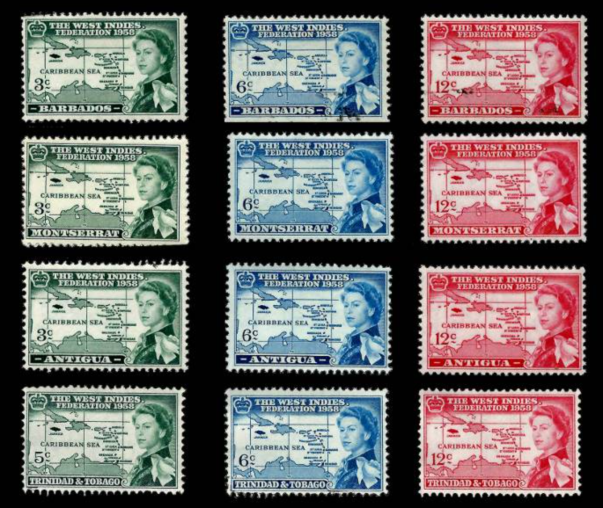
Research on a great Jamaican scholar who went to Oxford in the fifties has led me face to face with the exciting moment when the political federation of the Anglophone Caribbean was not only seriously being considered, it had briefly become a reality. By Jan 3,1958 the Federation of the West Indies was a functioning political entity and by May 31, 1962, it was no more. Most of us are only familiar with the famous statement made by then-President Eric Williams of the federal government of the West Indies when Jamaica’s departure put paid to the future of Federation: “One from ten leaves naught.” But what exactly were the considerations that led Jamaica to leave the Federation after a referendum by the then JLP government returned a majority vote against it?

Among university students from the Caribbean at Oxford, Cambridge and other universities in England the Federation was a political entity impatient of debate. In the West Indian diaspora that developed in England, migrants from different islands were forced to shed their national identities and band together as West Indians. To begin with, it soon became obvious that to the English they were all seen as having the same racial/ethnic identity—often misidentified as Jamaican.

As they settled into their new homes and workplaces the creolization of English cities began to occur, arousing the resentment of working-class English men and women who viewed the West Indians as interlopers. This pushback further reinforced the sense of a diasporic West Indian identity.

It was natural in such a climate for there to be great sympathy for a federation of the relatively small micro islands of the Caribbean into a larger, more powerful polity. This further united the university students from the Caribbean, who felt that uniting against common adversaries would give the West Indies a better chance of postcolonial prosperity. Today the plans for a Federated West Indies are hardly remembered and it’s well worth lingering on them here to regain a sense of why the idea was so seductive.

The initial push for Federation had been made by the British, who were increasingly reluctant to foot the mounting bills to maintain their fifteen colonies in the West Indies. There were, for example, seventeen governors, eight directly taking orders from Downing Street, complete with their individual staffs, to govern the 15 colonies or ‘units’ as they came to be called.

Many of the West Indians at University in England looked forward to returning to become citizens of the independent “West Indian nation state” proposed at the time. But Federation meant different things to different islands in the Caribbean. In Trinidad and Tobago, it was synonymous with the politics of Chaguaramas, a piece of land leased by the British to the US in 1941 for purposes of maintaining a naval base there. There was tremendous political pressure to recover the leased lands for the site of the Federal Government but Eric Williams, the leader of Trinidad and Tobago was also wary of alienating the Americans by making such a demand.

It fell on J. O’Neil Lewis and William Demas, civil servants who had been sent to university in the UK by their government, now back in Trinidad and Tobago, to write a paper on the Economics of Nationhood laying out an administrative structure for federal governance. Trinidad and Tobago felt that the freedom of movement of persons enabled by Federation without concomitant movement of capital and investment would affect Trinidad the most, with other small islanders flocking to the oil-rich island for jobs. The Federation had to be able to intervene in such a situation by providing aid, funds for which could be found only if the region’s customs and income taxes ended up in its coffers. The Federal entity would also determine industrial policy for member states. Naturally, there was disagreement over such proposals particularly from countries such as Jamaica that felt it had little to benefit from such administrative arrangements.

Screenshot 2017-11-10 18.57.53_preview

There was no agreement among the 10 countries in the Federation as to whether the power to regulate industrial development, freedom of movement and the collection of taxes should rest with the Federal Government or the individual island state governments. For Jamaica, for example, the ability to use its own income tax and country revenues to fund its industrial development was crucial to its economic policy. The Jamaicans countered the strong-Federation model proposed by the Economics of Nationhood with MP18, a proposal for a looser federation of politically powerful units.

There was also disagreement about parliamentary representation for the member states. The Jamaican Premier Norman Manley suggested that it should be proportional to population numbers so that Jamaica with a full half of the population involved in the Federation, ought to have fifty percent of parliamentary seats available. Although a modified version of this and other suggestions of Manley’s were taken on board by the incipient Federation, in 1961, the people of Jamaica voted in a referendum not to remain part of the regional entity. Basically, Jamaicans could not see what advantage there was in a coalition with a number of, what they considered small, insignificant islands, and were suspicious of being governed by a government external to their territory over which they would have little control.

Had British Guiana and British Honduras been part of the Federation the Jamaican decision to leave might not have been so clear-cut for it was felt that their larger markets would have made belonging to such a federation a more economically viable and durable political decision. But for various reasons they were not so Jamaica bowed out, leading to Williams’s immortal statement “One from ten leaves naught.

The Storms that are to Come

21730996_205250866680027_3884132509385157788_n
Tremayne Brown

My Gleaner column of September 13, 2017

You have to wonder whether Hurricane Irma was rudely intervening in the debate about the sustainability of Small Island Developing States (SIDS) in the 21st century. With unerring aim she slammed the most vulnerable ones in the Caribbean–Barbuda, St. Kitts and Nevis, St. Martin/Maarten, St. Bart’s, Anguilla, Tortola, Anagarda, Virgin Gorda, the entire British Virgin Islands, the US Virgin Islands, Puerto Rico, the Dominican Republic, Haiti, Turks & Caicos, Ragged Island, the Southern Bahamas, Bimini, Grand Bahama and Cuba. “My heart breaks,” wrote curator Holly Bynoe, Chief Curator of the National Gallery of the Bahamas, herself from the tiny island of Bequia, part of St. Vincent and the Grenadines, after listing all of the above on Facebook.

Social media was the go-to place to haplessly wring your hands during the unnerving passage of Hurricane Irma, exchanging notes and advice with others all over the Caribbean and its diasporas. People even took swipes at the naming of storms suggesting like Greenpeace USA “We should be naming hurricanes after Exxon and Chevron, not Harvey and Irma.” “They should start naming hurricanes after notable climate change deniers,” suggested another tweeter.

Thank you very much but there’s already a hurricane named Trump in the hemisphere. “The region is facing a difficult period. Condolences and sympathy to our Caribbean family, Mexico and the USA. You are all in our prayers,” tweeted the Jamaican Prime Minister @AndrewHolness acknowledging the deadly earthquake that rocked Mexico during the same period.

“I’m sure the rest of the Caribbean will also send condolences to Ja for over 1000 people murdered in Jamaica this year,” radio talk show host @SimonCrosskill tartly responded to the PM’s tweet, earning him the wrath of many. It’s not such an ill-considered thought, for although Jamaica was spared a natural disaster this time, it’s true we’ve been ravaged by unprecedented levels of crime and violence this year. The number of those killed by Hurricane Irma pales in comparison to our murder rate in the last 8 months.

When an external catastrophe threatens to collide with the catastrophe you’re living in weary cynicism is the order of the day. The Washington Post quoted a Port-au-Prince resident about preparations for Irma in Haiti:

“I guess we are worried, but we are already living in another hurricane, Hurricane Misery,” said Nadeige Jean, a 35-year-old mother of three who was selling fruit at the Olympic Market in the capital city. “How much worse can our lives get? … So they say I should board up my house? With what? Wood? Who’s going to pay? With what money will I buy it? Ha! I don’t even have a tin roof. If the winds come, I can’t do anything but hope to live.”

Similar sentiments were echoed by Rutgers University Professor Yarimar Bonilla, who was ruminating on Hurricane Irma the day before it hit Puerto Rico, where her family lives.

“Puerto Rico is now about to be in the eye of the “perfect storm”: a climate-change fueled mass of angry waters that is about to smash into a failing economy, an already dismantled public sector, and a vulnerable population that has already been lulled into accepting austerity and precarity as the inevitable fate of a bankrupt colony.”

“Ironically enough,” Bonilla continued, “one of the many people I interviewed this summer about Puerto Rico’s economic crisis was a local ‘wealth manager’ who was extremely upbeat about the economic climate. Investments in the wake of Trump’s election have been doing very well, she said, ‘The only thing we need now is a hurricane.’ She was referring to how such natural disasters bring in federal funds for reconstruction and provide a boom for the construction industry. (She encouraged me to invest in Home Depot stock). “

In the midst of all the mayhem and confusion an unexpected ray of sunshine appeared. In Trenchtown, dwelling place of Bob Marley before his ship came in, a 12-year old boy was swept away in a gully engorged with rain from Irma’s outermost feeder bands. As his mother and others watched, seemingly unable to do a thing but wail and scream, a young man named Tremayne Brown jumped into the swiftly moving water and grabbed the boy.

The two were swept along by the floodwaters and carried far from their homes to Marcus Garvey Drive where Tremayne managed to catch hold of a tree branch and hold on till they were rescued. What struck me about the interview I heard with Tremayne on Nationwide radio the next day was his British accent. It turned out he was a deportee from Britain.

To my mind this made the daring rescue all the more remarkable. Apart from the fact that the UK deported a hero they might have been better off retaining you have to wonder whether it was that very upbringing in the UK that made him jump into the gully without hesitation. After all not a single one of the others seemed willing to risk their lives to save a child, not even members of the community he came from.

If we could clone Tremayne Brown we might stand a chance of weathering the storms that are to come.

What Really Happened in Grenada? Part 2

coard pic
Bernard Coard signing my copy of his book, The Grenada Revolution: What Really Happened? at the launch

revoauto

Gleaner column of Sept. 27, 2017

In this column I continue my reportage of the launch of Bernard Coard’s book The Grenada Revolution: What Really Happened? Put on by the Department of Government at The University of the West Indies on September 15th the anticipation-filled event fully lived up to its promise.

One of the enduring beliefs about the unhappy events of October 19th, 1983, when Prime Minister Maurice Bishop along with several cabinet ministers and other supporters were lined up at Fort Rupert and assassinated was that the orders to kill him came directly from the Worker’s Party of Jamaica (WPJ), from none other than its leader at the time, Trevor Munroe.

The question of Munroe’s role came up more than once at the launch, the first time during

Professor Rupert Lewis’s eloquently articulated response to Coard’s book. Lewis who had lived in Prague 1982-84 as a representative of the WPJ on the World Marxist Review, a theoretical journal containing jointly-produced content by Communist and workers parties from around the world. As such Lewis  had direct access to the Central Committee of the Communist Party of the Soviet Union. What he said was this:

“The letter that Trevor sent to me to deliver to the Central Committee of the Communist Party of the Soviet Union basically said there were two trends in the New Jewel Movement (NJM). There was a working-class trend, a proletarian trend led by Bernard and a petit-bourgeois trend led by Maurice. I was very angry at this simplistic portrayal of the complex struggle that had taken place in Grenada.”

Coard’s own response to the question of Munroe’s role during the tense and emotion-filled q and a afterwards was passionate, his voice rising an octave or two:

“With respect to the role of anybody, any Jamaicans, and in particular the WPJ, let me just say this, that Rupert’s critique of myself and all of us in the leadership in Grenada was based on the fact that we were very jealous of the little piece of sovereignty that we had. We bad for wi piece of sovereignty. We will decide everything ourselves, we will listen to advice but we will take our own decisions. Listen, if people givin’ us arms and training and economic help and help with our international airport, and we weren’t prepared to let them dictate to us, you think Trevor Munroe or anybody could tell us what to do in the Grenada Revolution? Come on, get serious. Call it petty nationalism if you want but that nationalism runs very deep so I don’t care what anybody says, or what anybody says to anybody else, we are going to make our own decision. That’s how we are. I don’t agree that that’s a wrong approach. I don’t agree that people helping us have a right to tell us what to do, they can advice yes, but we decide whether to take that advice or not. I’m sorry, I make no apologies for that.”

militia9
Militia

Coard’s own response to the speakers before him was methodical, articulated in nine points. He started by describing how painful the process of writing the book had been, how he had been unable to write for the first 19 years in prison despite being urged to do so by many and had finally decided to do so because there had been hundreds of thousands of articles published on the Grenada Revolution during that period, most of them by outsiders, almost exclusively detailing one side of events and it was important for someone to write from within the revolution as it were. So as emotionally painful and difficult as the recounting of those traumatic events was Coard had finally decided to write to provide a different perspective.

After outlining his methodology ( extensive use of contemporaneously kept minutes and court documents) and objectives for writing this memoir (to document the mistakes they made), which he said would be the first of several volumes, Coard mentioned two things that to me are worth highlighting. He said a study of US actions in Grenada, not just at the end, but throughout the life of the revolution, “would help to cast light for those who are interested, in happenings going on right now in various parts of the world.”

“You cannot understand what is going on in Venezuela unless you understand what we went through in Grenada. And just like we made mistakes from the beginning, the Venezuelans are making mistakes. But the fact of the matter is it is one thing to make mistakes and to suffer the consequences of those mistakes. It’s another thing to have a very powerful country deciding that in addition to whatever stumbling you make on your own I’m going to make sure you can’t get up and walk.” Coard said that despite having held 11 elections Chavez was consistently referred to as a dictator by US media.

The next point Coard made was that on August 9, 2017, an article had appeared in the Washington Post, by a specialist on North Korea, Benjamin Young, in which he details the connection between Reagan’s decision to invade Grenada and the current potentiality for nuclear war between the USA and North Korea. “This is important because what he says in that article is that Kim il Sung, the grandfather of the current leader, was not just extremely disturbed by the invasion of Grenada but that it was the basis of a decision by the North Korean leadership to embark on a program of acquiring nuclear weapons.”

The Korean leader’s fear that N. Korea would be next in line for a Grenada-style invasion led to an investment in nuclear weapons as a deterrent, a “delayed fuse” as Coard put it that we are confronted with today. “In other words the US invasion of Grenada, as far back as October 1983, is directly linked to the current potential for nuclear war between the United States and North Korea.”

A sobering note to end on.

What really happened in Grenada?

Gleaner column, September 20, 2017. Photos above from Social and Economic Studies, Vol. 62: 3&4, September 2013, Special issue on Grenada

On Friday, September 15, an emotion-wrought, politically fraught event took place at the University of the West Indies. The occasion was the launch of a book by Bernard Coard, former Deputy Prime Minister of Grenada, called The Grenada Revolution: What Really Happened. Coard, along with 17 others spent 26 years in prison for the assassination of Prime Minister Maurice Bishop and others in 1983. It was the most sensational, traumatic political event of the Anglophone Caribbean and as the evening wore on, it became clear that the gaping wound is far from healed, although 34 years have now passed between then and now.

Put on by the Department of Government, the launch featured speakers Heather Ricketts, Head of the Department of Sociology, Social Work and Psychology, herself a Grenadian, Professor Rupert Lewis, Clinton Hutton and Bernard Coard himself.

Ricketts opened by describing the book. “In the 340 plus pages divided into 3 parts, Bernard recounts the highs and the lows of the revolution. The book is captivating, detailed, filled with intrigue, providing graphic and factual recollections in a methodical manner, typical Bernard.”

“In spite of how one may feel about his account,” Ricketts continued, “Bernard  must be commended for his bravery in putting his credibility on the line. He lays bare his soul, and his conscience, acknowledging his shortcomings, even short-sightedness. For me there is a lot of new information which may be due to a PTSD affliction which I confess rendered many of us unable to read anything written about the revolution. The book is invaluable for providing answers to questions Grenadians and others have long wanted closure on but knowing Grenada it might be a case of reopening old wounds and the start of new rumours. I hope not.”

The unraveling of the Grenada Revolution and the PRG, the People’s Revolutionary Government, had much to do with the unraveling of a friendship cemented in childhood between Maurice Bishop and Bernard Coard. Much was made of Coard’s efficiency as a manager and administrator. According to Ricketts a participant in a 2013 focus group she conducted described his experience of working under Coard in glowing terms:

“I was the accounting officer in the Ministry of Works; our budgetary control was so effective and efficient that we knew at each point in time how much money we had to spend and what we were spending it for, there was tight control in the whole process. I recall us having meetings upon meetings to discuss the works of the government and ministries and we had to make sure we kept within our budgetary allocations. And if at all we had to go outside of it we had to give a reasonable explanation as to why we had to do it. It was a period that taught us, me in particular, how to manage finances extremely well. Coard was meticulous.”

But the very qualities that made him an effective administrator worked against him too. As Ricketts noted: “Bernard has a sharp mind and a photographic memory and he isn’t given to diplomacy. He ruffled some and he made some enemies within the party. His strong chairmanship of the organizing committee of the party along with his tight fiscal management incurred the ire of some.”

“It is a sad tale of confidence and friendship betrayed,” said Ricketts. “To give some insight into how caustic the split had become another participant in the focus group discussion in 2013 said that she heard that in Gouave at the time “If you only say ‘co-‘ make sure it’s ‘coco’ you saying and not Coard.”

Rupert Lewis summarized the personality differences between the two: “Bishop was the political leader with strong ties to the Grenadian people, Coard was the economist, Minister of Finance, he was administratively innovative, and had gained the reputation of running the economy well. But he was also a very effective organizer and behind the scenes person, very disciplined and hard on others who did not live up to their responsibilities. Bishop was loved and Coard respected.”

The childhood friendship had blossomed, Rupert Lewis said, with the synergies between Bishop and Coard that had developed during the the anti-Gairy years of bloody struggle in the 1970s and continued during the revolution. “The relationship between these two boyhood friends was crucial.”

However in 1983 the New Jewel Movement, the party both men belonged to proposed joint leadership of the Party in a bid to move away from the Westminster model of government. This move Lewis thinks contained the seeds of the disintegration that would follow, setting off a series of misunderstandings, misconceptions and mistakes that would lead the revolution to implode.

“The party membership accepted joint leadership at the level of the party, not of the government, and this worked to an extent but the trust between Bishop and Coard was hanging on a thread,” said Lewis. The security apparatuses around both men and the  intelligence apparatuses of the main international players in Grenada were also spinning rumors that developed into deadly threats and escalated into violence. The stakes were high around the leadership issue so the joint leadership proposal was read as an attempt to remove Bishop and install Coard. There was no doubt that Bishop was the people’s leader not Coard.”

Lurking in the wings was the Cold War, with the United States and Reagan on one side and the Soviet Union and Cuba on the other.  The Cubans were very invested in Grenada and Castro opposed the joint leadership proposal instead pushing for Bishop to remain maximum leader but this generated paranoia in the New Jewel Movement. The paranoia wasn’t helped by Castro’s obvious affection for Bishop and dislike of Coard. Coard resented Cuban involvement in the political life of the revolution.

“In my view,” said Lewis, “on two counts joint leadership was not workable from the standpoint of the traditions of West Indian politics. First in the Westminster system, the power of the Prime Minister is based on his being elected to parliament and being leader of the party. Secondly the political nature of the Grenadian population, so well described in Archie Singham’s classic study, The Hero and the Crowd, was definitely in favor of one leader at a time, not joint leadership.”

“This memoir must have been an arduous journey of reconstruction, painful reliving and reflection,” continued Lewis. “The book ends with extraordinarily sharp self-criticism by the author. He takes full responsibility for the events of October 8, 1983. My regret however, is that Maurice Bishop is not alive to tell his story. This is Bernard’s story. Maurice’s story has to be told.”

The full story of the book launch will require a Part 2 which I hope to provide next week.