Terry Lynn’s anti-payola Logic

The draconian decision of the Broadcasting Commission of Jamaica (BCJ) to proscribe the broadcast of ‘daggering music’, subsequently extended to soca and other sexually explicit music or lyrics, dangles like the sword of Damocles over Jamaica’s cultural landscape. The General Managers of local TV stations are reacting with such hysteria that a recent episode of TVJ’s Entertainment Report had the titles of three of the songs on its top 10 listing crossed out with a large red sign simply saying CENSORED. Others are losing sleep over the money that will be lost from not being able to televise the gyrations of well-fed upper saint andrew-ites during the fast-approaching Jamaica carnival.

Belatedly Cordel Green, executive director of the BCJ, is turning his attention to a more fundamental problem plaguing the broadcast and distribution of Jamaican music—payola—“the private payment offered to media personnel in return for the promotion of specific entertainment material”. According to a Sunday Herald article Green acknowledged that while broadcasting regulations play a critical role, they do not represent “the sum total of the counterweight required against those who have pushed the envelope to the extreme.”

Accordingly the BCJ is now calling on companies that are major advertisers to get involved in the process of cleaning up the airwaves.

“I say to our business leaders, do not allow the pursuit of profit and the imperatives of marketing to cause you to support a vortex of unbridled sex, violence and profanity on the public airwaves.”

“In addition to calling for the cleaning up of the lyrics, we must also demand that DJs and VJs stop the prostitution of radio and television through payola. We want those involved to stop running down popularity and money by feeding poison disguised as music.”

This is a welcome move indeed. Hopefully the BCJ will be just as uncompromising in its stand against payola as it has been in relation to ”indecent” lyrics.

While we’re on the subject of of payola it’s worth noting the creativity with which some music producers are approaching this widespread scourge. Take the new singer Terry Lynn whom this blog has featured more than once. The Terry Lynn story is an inspiring one that points to the new and innovative directions Jamaican music might take. Zurich-based Russell ‘phred’ Hergert, Terry Lynn’s creative partner, is head of phree music, a label that is committed to the free online distribution of music. Flying in the face of traditional concerns about copyright protection as a way to earn money Hergert’s philosophy is one of expanding his singer’s fan base by ‘freeing’ up the music (This is also Matisyahu‘s approach—the Jewish Reggae singer makes tracks and live concerts available free to online fans).

Thus Terry’s music will be freely available at phreemusic.com where fans will have “the option to download select tracks and mix-tapes for free, or pay if you choose.” The website urges fans to: “Feel phree and download a cappellas to create remixes (for non-commercial use please) and we’ll post what you submit back to us on Terry’s site.”

According to a report in Slamxhype:

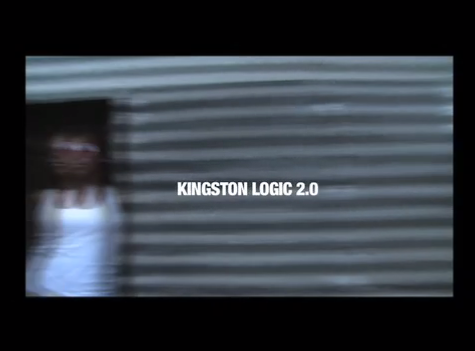
“Refusing to dole out the payola ransom money that Jamaican media and radio so often demands, 1000 copies of Terry Lynn’s debut album Kingstonlogic 2.0 were instead manufactured and distributed for free across the country, and throughout impoverished neighborhoods. Each copy was emblazoned with an anti-payola message; “my music is about the people, for the people, it’s about change. we will not pay media a ransom to play this for people, we are instead paying for phree copies for you”.

“It’s a strategy and movement that matches Terry’s message and sound: honesty and change. Same goes for the debut in the streets from which it came. The new video is a culmination of a great deal of time and effort from everyone involved, including the community, to create something that looks and sounds unique in an uncompromising way.”

Kingstonlogic 2.0 / Directors Cut from Rickards Bros. on Vimeo.

As I reported in an earlier post Lynn’s Kingston Logic video was made by The Rickards Bros. I took the opportunity to ask Peter Dean Rickards about the process involved in shooting the video. This is what he told me:

It relied heavily on the vibrancy of Kingston, its spontaneous daily occurrences and its inhabitants as opposed to any metaphor or even a storyboard. Since the song mentions so many things, we decided that the city would have to tell its own story. Consequently, we started to drive around looking for material that contained a good mixture of photographic form, excitement and of course relevance to Lynn’s lyrics.

Before long we narrowed our shooting zone down to Terry’s community of Waterhouse after realizing that the city itself was far too large and difficult to capture by driving, stopping, and driving again. At that point we decided to immerse ourselves in the community for as long as it took to attain the footage that we needed. This proved to be a good decision even though the images still had to present themselves to us as we walked and searched. It was very much a documentary-style exercise that took a total of 6 days on foot.

As we watch the impact Lynn’s music has locally as well as worldwide, as her music starts to circulate, its worth noting the unconventional process her producer took in developing this singer from Waterhouse. Having encountered the young talent, phred decided to spend two to three years grooming, training and allowing her to develop her songwriting skills without any commercial pressure. It didn’t take a lot of capital. As Hergert puts it:

Terry Lynn is a unique artist. She captures with her words an honest depiction of Kingston’s environment and Jamaica’s struggles the way a camera captures images with a lens. Terry lives in (read: ‘born in’ – her mother couldn’t get to a hospital at the time) Waterhouse, Kingston JA. A brutally impoverished area of inner-city Kingston, where living by your word is often a life or death decision. Terry’s writing pulls at the root of the issues she addresses with vivid clarity, on her own sonic terms. She isn’t getting paid much to make her music, other than living expenses and creative costs to record, mix, master etc. She wants to get her message out independently and free from the local music industry’s repetitive sound and myopic business model. We’ve partnered because we think our collective skills might benefit the other.

As Lynn herself said in an interview with Plan B magazine:

My writing opened up under the freedom to express myself and my environment away from time restraints and local misconceptions. We’d work on songs, travel to record and re-record, re-work structures, free to discard what didn’t feel right. He’d always surprise me with new producers, new beats, ideas and we’d just keep carving till it felt done, ready. We agreed to release nothing until we had a complete set of work. That was how we wanted it.

Hustle it bustle it juggle it smuggle it
Life is hard still got to struggle it
Walk it ride it find it hide it
Get your fortune keep it guide it
Reach it grab it hold it keep it
Brag and boast bad luck will sweep it
Live it learn it read it check it
Kingston streets is arithmetic.

KINGSTONLOGIC!

Already Lynn has been hailed by mainstream media in London and New York as one of the top 10 acts to listen out for in 2009 (“the new sound of the Jamaican underground is fierce, and its female”–Time Out, London). Local businesspeople should take a leaf out of Hergert’s innovative model of artiste development and start investing in the abundant raw, young talent seething in Kingston (The last time someone did this–Chris Blackwell–the product was a Bob Marley). Only yesterday music producer Mikie Bennett wondered aloud on Facebook what the music industry could have been like had it received the kind of investment cricket has received.

The new non-commercial models of music dissemination–open source music sharing for instance, are poised to transform the consumption of music. The best way to improve the local musical product is for the kind of investment to take place that other sectors such as tourism and sport have benefited from. Perhaps then there would be no need for the BCJ to intervene in local music production and distribution in the way it has.

Brawta: check out this video of a song by Sanjay and Dazzla about what they would do if they had Bill Gates’ money.


Indiaspotting … Jai ho Slumdog!


I first heard about Slumdog from the Afllicted One who had been telling me about it forever it seemed. It’s India’s City of God! he would exclaim in the face of my apathy, giving me a dvd of the movie which I watched sometime in January. By then it was the subject of much discussion having already bowled over audiences at film festivals such as Telluride, Toronto and Sundance, not to mention sweeping the Golden Globes. All my friends who had seen it here loved it as well.

Despite all this my first viewing of Slumdog left me with numerous misgivings that I couldn’t readily articulate. I was reacting to something about it that struck me as a bit formulaic, even slick. It lacked the raw edge of Cidade de Deus which I think is one of the five best films I’ve ever seen. By the way, The Harder They Come also ranks in my top five. But then again I’m not a real film buff so my taste in movies is not as highly developed as my taste in art or literature or music. I now find myself wondering whether Perry Henzell’s film, despite the universal approbation it earned, might also have left some Jamaicans less than satisfied with its depiction of life here.

Still I feel altogether more kindly towards Slumdog in the wake of the Oscar ceremonies which I thoroughly enjoyed watching while live blogging with Anna John and her friends. Anna (Twitter name Suitable Girl), whom I knew from her posts on Sepia Mutiny (‘the brownest blog ever’) had tweeted an invitation to all and sundry to join her in testing the new live blogging software, Cover it Live, during the Oscars. I’m still congratulating myself for deciding to join in because the live blogging turned into a “raucous party” that lasted a good four hours or so. You have to understand that normally the Oscars pass me by almost completely. But to be part of a group of voluble Indians in the diaspora watching the Oscars while contributing to a live, running commentary the year Slumdog Millionaire won 8 Oscars was quite an experience. Here’s a small selection of the comments to give you an idea…

9:38 [Comment From Abhi]
That dress is fugly

9:39 [Comment From cheesefries]
Don’t. understand. the. dress.

9:39 [Comment From sfgirl]
Jessica Beil.. ugLy hair and dresss

9:39 [Comment From annie paul]
it looks like a mundu and chatta

9:39 [Comment From host Anna John]
BEST COMMENT OF THE NIGHT, SO FAR, Annie-chech 😀

9:39 [Comment From kal]
Anil Kapoooor is Mr. India, do not insult him..or else your effigies will be burnt

9:39 {comment From brimful]
And the Charlize Theron memorial Gift Wrap dress award goes to Biel.

9:39 [Comment From marina]
Is Jessica Biel wearing a silk diaper?

9:39 [Comment From Babu]
I want to see those kids do a bhangra on stage…their red carpet talk was great..

9:40 [comment From Margin Fades]
The earrings are awesome…I’m not so sure about the dress.

9:40 [Comment From Pooja]
Why is Jessica Biel wearing a sheet?

To add some masala to the whole thing Anil Kapoor, the actor who played the tv show host in Slumdog, was in situ at the Oscars and taking part in the live blogging by texting comments from backstage. I even had a live and direct exchange with him when he responded to a comment I made about ‘doubles’–the Trini Indian street delicacy. Here’s an edited version of the conversation:

Trini doubles, a droolworthy version of Indian cholay bhaturay

9:50 [Comment From host Anna John]
Why aren’t there brown hot pockets? With chole [channa] within? Sigh.

9:50 [Comment From annie paul]
Oh you must be talking of doubles…the trini version of chole bhaturay

9:51 [Comment From host Anna John]
No, never heard of either doubles or what FD mentioned 🙂 This is highly useful information!

9:51 [Comment From GurMando]
you can buy every indian dish in micro-wave ready packets now

9:51 [Comment From Fuerza Dulce]
No – it’s not doubles, Annie. It’s desi food in a pocket.

9:52 [Comment From Anil Kapoor]
doubles are good and so is soca and chutney

9:53 [Comment From annie paul]
Anil, you’ve been to TnT!

9:53 [Comment From host Anna John]
Tanqueray and Tonic?

9:53 [Comment From Anil Kapoor]
yes annie

Doubles…drool…daily i rue the fact that they can’t be obtained here . For those who don’t know what it is, doubles are the Trini version of something called Chole Kulchay in India, an absolutely delish combination of a soft, spongy bread eaten with spicy chickpeas or Chole. In Trinidad they put the channa between two ‘baras’ or kulchas which is why it’s called ‘doubles’–a sort of channa sandwich.

To return to Slumdog, i think the uneasy sense it gave me was the discomfort of feeling that India had been translated for a global audience, a little too glibly and somewhat inaccurately, but really what the hell, ultimately it’s someone else’s version of an Indian story and it’s all good as they say here…although Salman Rushdie has come out swinging against it by saying the plot of Slumdog ‘beggars belief’. It’s true and that’s one of the things I didn’t like about the film, the number of sheer coincidences the plot depended on. Slumdog Millionaire is a latter-day Beggar’s Opera, a contemporary Brechtian Threepenny Opera set in Bombay, complete with maimed child beggars.

I tend to agree with Ashok Korwar who said:

Indians don’t connect with the movie because it is riddled with small mistakes, which make it look and feel inauthentic. It is a movie made for a British audience by a British film-maker, who doesn’t know enough about India. Which is fine. I personally have no problem with it. it is a perspective and all perspectives are valid as cinema..

I also agree with Raj from NY who said in a forum called The Real Roots of the ‘Slumdog’ Protests:

The exploitation of these slum dwellers is well documented. It is not fantasy. I have seen and heard the contempt the upper classes have for the poor and the “untouchables”. Believe me, the words used to describe them are far stronger than “slumdog”. Maybe Indians need to ask why so many of their romantic, escapist Bollywood movies are shot abroad for its scenery. Why did it take a British director to think of making a romance based in a slum?

Predictably the reaction from Indians in India was not as enthusiastic as that of Slumdog fans around the world (a “globalized masterpiece” etc.). There was also a generational dimension to the protests against the film that reminded me of the debate around Mira Nair’s 1988 film Salaam Bombay, the storyline of which covered much of the same material as Slumdog: Street kids, slums in Mumbai and brothels. My father found the film extremely distasteful whereas I thought it was a powerhouse. Now as then, the older generation (and I now have to include myself in this dismal category) are not inclined to view films like Slumdog with much enthusiasm.

At the same time my views are not as extreme as exsqueeze me who commented:

I find the movie extremely offensive and racist. It shows Indian culture as bankrupt and evil. There isn’t a single good Indian person in that movie. What are people happy about? Do you guys really believe India is such a morally bankrupt society? How come the west likes to see only movies that show abject poverty and misery? This movie is made by a westener for a western audience so that they can feel good about themselves. Pathetic! : January 14, 2009 at 05:18 PM

I thought Manohla Dargis’s description of Slumdog in The New York Times was a good one:

A gaudy, gorgeous rush of color, sound and motion, “Slumdog Millionaire,” the latest from the British shape-shifter Danny Boyle, doesn’t travel through the lower depths, it giddily bounces from one horror to the next. A modern fairy tale about a pauper angling to become a prince, this sensory blowout largely takes place amid the squalor of Mumbai, India, where lost children and dogs sift through trash so fetid you swear you can smell the discarded mango as well as its peel, or could if the film weren’t already hurtling through another picturesque gutter.

“It’s a white man’s imagined India,” said Shyamal Sengupta, a film professor at the Whistling Woods International institute in Mumbai. “It’s not quite snake charmers, but it’s close. It’s a poverty tour.”

On the other hand, “Get Real, India”, said Neelesh Mishra of The Hindustan Times (and I completely agree):

Let me get this straight: We are not agitated because slumdwellers exist, living their crushingly poor lives. We are not agitated that an Indian man, a senior diplomat, wrote their well-told tale. We are agitated because a White man put them on screen.

One of the film’s most vocal critics, TP Srinivasan, claimed that it was “As bad or worse for India than the Mumbai attacks.” In contrast his son, Sree Srinivasan of Sajaforum (South Asian Journalists Association), the Columbia journalism professor who hosted a post-Oscars conversation about Slumdog on Blogtalkradio immediately after the ceremonies ended, agreed with the many pro-Slumdog sentiments expressed by 2nd generation Indians in the diaspora. As one caller put it, Slumdog presents post-liberalization India, the attitude that we can do whatever we want to, a proactive spirit in keeping with the new India that has emerged after casting off the socialist shackles of Indira Gandhi, Nehru etc.

Magazine Cover (Mar 06, 2009)

Some people, like Sramana Mitra, thought that Slumdog might win the foreign language film category, a sentiment which seems faintly amusing now .

The film, of course, is in English, with a combination British and Indian production team and mostly unknown actors…It was hugely satisfying to see the film on many accounts for me, not the least of which is that it uses all the “business” ingredients that I have been writing about in the Vision India 2020 series: low budget, English language, Indian context, great screenplay, great editing, and Indian-international combination production teams.

Well, here we have a great product that will likely make a legitimate run for the Foreign Language Academy Award this year. !!!

The roots of the Slumdog controversy swirled around the ethics of storytelling and as one critic put it: “The process of telling someone’s story without exploiting it, with integrity and respect, particularly when you’re using subjects who don’t have a voice of their own.”

Like most controversies there is a back story to all this. The truth is that film director, Danny Boyle, of Trainspotting fame, never expected the film to become such a success. The original distributors said the movie was going nowhere, as a result of which the producers were considering going straight to dvd. Then Fox Searchlight was contracted to distribute the film, it was most enthusiastically recieved at the Toronto Film Festival and the rest is now history. Incidentally it was also thought that there would be little interest in the Oscars this year because of Slumdog’s domination of the nominations. How wrong these predictions turned out to be!

Despite the negative critiques lobbed at it Slumdog Millionaire can claim several successes. For one thing with people like MIA and British-based actor Dev Patel in it, the film harnessed the Indian diaspora while bridging Bollywood and Hollywood innovatively. As one commentator pointed out just having big Bollywood celebrities such as Anil Kapoor and AR Rahman in the film would have doubled its costs. Yet their presence in it greatly enhanced this unprecedented collaboration. For Indians the sight of the much beloved AR Rahman performing his signature song “Jai Ho” on the Oscars stage with John Legend was an incredible experience. When Rahman spoke in Tamil after accepting the Oscar it was the icing on the cake for all of us: God is great. All the glory goes to God he said in undiluted Tamil. Incidentally the politics of Tamil, a South Indian language, is highly fraught, with Tamilians being the most uncompromising chauvinists where their language is concerned. Tamil speakers will not even deign to speak Hindi so to hear it on the ‘world stage’ as it were was an extraordinary moment.

Finally one of the best outcomes of Slumdog is the attention focused on slums like Dharavi. This film, like the novels The White Tiger and A Thousand Splendid Suns spotlights the problem of poverty which is why it has been dismissed as ‘poverty porn’. Their success brings to mind the biggest ever anti-poverty movement called the “Make Poverty History campaign” which I first heard about from Kumi Naidoo. Danny Boyle can hardly be faulted considering that the film that propelled him to international attention, Trainspotting, was also a film about urban decay and squalour in the midst of wealth. What is telling is that while many middle and upper class Indians were offended by Slumdog Millionaire the Oscars were avidly watched in Dharavi and other slums where the poverty-stricken inhabitants got a chance to see themselves represented on the so-called world stage. As an anonymous commentator said:

Boyle has done a great job in telling the story about Dharavi to the other side of the world and a big favor to India cinema, music & Indian people – long after what Satyajit Ray had accomplished in the same department almost half century ago. Senior Bachchan may find it as a grumbling point, but this movie is a reminder to the likes of Amitabh Bacchan (including Khans, Kumars etc.) that they missed the boat to produce such creative work for Indian cinema/people when they all remained busy in playing Monopoly on money/power in Bollywood, just to promote their own interests for almost four decades! It should serve a wake-up call to all of them to come out of woodwork and do some thing real now.

Nuff said.

At Daggers Drawn: The Broadcasting Commission and Jamaican Popular Culture (updated)


cartoons by Las May, The Gleaner


In India the self-appointed defenders of Indian culture wanted to ban Valentine’s Day celebrations and force all couples found displaying affection in public or dating on Valentine’s Day to wed on the spot; in Jamaica the Broadcasting Commission (BC) has imposed a blanket ban on ‘daggering’ songs from the airwaves, even in edited form. It defines ‘Daggering’ as “a colloquial term or phrase used in dancehall culture as a reference to hardcore sex or what is popularly referred to as ‘dry’ sex, or the activities of persons engaged in the public simulation of various sexual acts and positions.” It should be noted that this definition has been contested by some people as inaccurate.

The BC then issued the following directive to licencees:

1. There shall not be transmitted through radio or television or cable services, any recording, live song or music video which promotes the act of ‘daggering’, or which makes reference to, or is otherwise suggestive of ‘daggering’.

2. There shall not be transmitted through radio or television or cable services, any audio recording, song or music video which employs editing techniques of ‘bleeping’ or ‘beeping’ of its original lyrical content.

3. Programme managers and station owners or operators are hereby required to take immediate steps to prevent transmission of any recorded material relating to ‘daggering’ or which fall into the category of edited musical content using techniques of ‘bleeping’ or ‘beeping’.

It’s such a pity that elections aren’t impending because you would have been sure to find various politicians daggering all over their campaign platforms, delivering themselves of stirring speeches in rock chaw Patwa and otherwise wallowing in the vernacular culture that is now deemed too profane for the airwaves.

For the last ten years I’ve been studying and writing about the culture wars played out in the Jamaican public sphere. The following is a quote from Dancehall in Jamaica: ‘Keeping It Jiggy’ in Babylon, a paper I presented at a symposium on censorship in the arts at the Edna Manley College of Art some years ago. The paper was inspired by an article called Jonkonnu in Jamaica published many years ago by Sylvia Wynter in Jamaica Journal:

‘Plantation’ ideology, the official ideology, “would give rise to the superstructure of civilization in the Caribbean while ‘provision ground’ ideology would produce the ‘roots of culture’. The former was predicated as European and the latter as African. With such a worldview it wasn’t surprising that the suppression of African-based ‘slave culture’ was widespread throughout the Caribbean; Errol Hill describes how even those well-disposed towards the slaves had no hesitation in calling for the banning of the more ‘African’ influenced dances and masquerades:

“Ironically as we have seen, among those who worked hardest for slave liberation were people prominent in demanding the suppression of so-called slave culture. Reasons given for suppressing the Christmastime masquerades in Jamaica in 1842 were that they obstructed the progress of civilization and were derogatory to the dignity of freemen. At the other end of the Caribbean, similar attitudes prevailed regarding the Trinidad Carnival. Once it was taken over and transformed by the black freedmen, the leading newspaper castigated the festival throughout the nineteenth century in the severest terms and urged its abolition. Rioting ensued. In 1838 the masquerade was called “a wretched buffoonery [tending] to brutalize the faculty of the lower order of our population.” In 1846 the carnival was “an orgy indulged in by the dissolute of the town”; in 1857 it was “an annual abomination”; in 1863, “a licensed exhibition of wild excesses”; in 1874, “a diabolical festival”; and in 1884, “a fruitful source of demoralization throughout the whole country.” These attacks served only to alienate the revelers and to stiffen their resistance to any form of control. The results, unsurprisingly, were more riots and a widening gulf between government and the people.”[1]

Similarly Wynter refers to the quotation by F.G. Cassidy of a 1951 letter to the editor of the Gleaner which objected to the revival of Jonkonnu “because the dances were ‘demoralizing and vulgar’.The police had managed to succeed in suppressing it in his district, ‘and many people were taken to court for it’.”

Policing Popular Culture
Ironically the policing of popular culture has been such a normal part of the Jamaican scene for centuries that it was even a trope in Jonkonnu. Wynter talks of the dance of the Whore Girl and the Wild Indian.

“But there was another dance in 1951—one performed by a Sailor and a Whore Girl “who dance(d) vulgar all the time” [Wynter’s italics]. This was the same one danced in the Jonkonnu Parade at Portland as late as 1969—and termed by the citizens who watched it with shocked delight: “a real dirty dance”. Apart from the Whore Girl, there was another character called the Wild Indian. In this dance, both these principals are men, but Whore Girl is dressed as a woman. He/she lifts his/her dress, holding it at both sides to show the underwear, bends back with knees open and bent before, and does a dance which is an exaggerated form of the hipsway and pelvic roll. The Wild Indian straddles his/her hip, and lifting one leg and changing the other, does a backward-and-forward movement of the pelvis, known in Portland as ‘the forward jam’. “

Their openly sexual dance is curtailed by a Policeman who arrests them both pending their being bailed out by the crowd who pay pennies to set them free. Then the dance which Wynter claims parodies obscenity and celebrates the life force continues. “And without its framework of meaning it repels the more Christian element who see it only as one more example of the ‘sexual license’ and immoral lack of restraint of the lower classes.”

Unfortunately one has no choice but to see the latest action of the BC as an updated version of the centuries old attempt first by the slave masters, then the colonial missionaries, and now the middle and upper class elites who occupy the highest rungs of society in postcolonial Jamaica, to censor and legislate the morality of ‘the lower classes’ on the grounds that their behaviour and musical products are a threat to the moral well-being of wider society.

One is forced to take this view for various reasons. The Broadcasting Commission of Jamaica went on the rampage after Esther Tyson, the Principal of a local high school wrote a column expressing outrage over the popularity of a song called ‘Ramping Shop’ featuring popular DJs Vybz Kartel and Spice. Depicting the song as ‘musical poison’ the Principal went on to lament the effect such ‘filth’ would have on young minds. Contradicting her own worry she went on to quote several children at her school who were all critical of the song and showed that they were capable of digesting and analyzing the lyrics without becoming desensitized sex maniacs. Perhaps she didn’t notice how this contradiction weakened her own argument.

Neither did the Broadcasting Commission. Ms. Tyson’s letter appeared on February 1 and acting with what one might legitimately call indecent haste, the BC issued its draconian ban on daggering exactly two weeks ago on Feb. 6, less than a week after the Tyson letter had appeared. Ironically February 6 is celebrated here and elsewhere as Bob Marley’s birthday. Also as a visitor from Germany who is an avid consumer of dancehall noted, it was interesting that this devastating stab to the heart of the music industry occurred during the recently instituted Reggae month, something he and his wife, well-known music journalists had come to Jamaica to cover.

The reason one is forced to conclude that a certain bias guided the censorious actions of the BC is that Esther Tyson subsequently pointed out that she had previously written a similar column expressing concern over carnival and its attendant vulgarities. In yesterday’s Observer Michael Burke also wrote a column titled Slackness and Hypocrisy lamenting the fact tht the BC had paid scant attention to his earlier columns demanding censorship of vulgar carnival dances and lyrics.

As Trinidad and Tobago stands poised on the brink of its annual cleansing carnival rituals (Feb 22-24), a wonderfully licentious national celebration that purges and purifies the atmosphere there, its worth noting that in Jamaica carnival remains a middle and upper class indulgence. Although the BC subsequently came out and said that carnival songs and dances are included in its ban, the language it couched its ban in was clearly exclusively directed at dancehall music, which is primarily consumed by the underclasses here.

Double-edged sword
The tragedy of all this is that the freewheeling creativity and exuberance of the dancehall which for the last twenty or more years has built up an international demand for its products without benefit of state subsidy or intervention is about to be curtailed and put in shackles by people who neither understand nor appreciate its iconic stature in world culture. On the contrary the state has been completely indifferent to the pleas of numerous DJs, promoters and other players in the music industry who have been asking for years that specific regulations and structure be designed for musical production and consumption here. The letter of the day in the Gleaner (Feb 19. 2009) titled “Dangers of dictating tastes for others” outlined ways in which the consumption of cable telelvision can and should be regulated. There is no reason why dancehall music which is primarily for adults should not be regulated in the same way.

Despite the stellar international success of Jamaican music there are no purpose-built venues for its consumption and dissemination locally although there is a National Gallery of Art, the Little Theatre for the National Pantomime and other such facilities for the cultural products of the middle classes. The nation’s universities have no courses in entertainment law and management; its banks have no loan products to facilitate music producers or aspiring singers and DJs yet we can’t wait to drive a dagger through the heart of the goose that has laid so many golden eggs for Jamaica.

There are other glaring inconsistencies in the BC’s recent actions. As others have pointed out, despite international outrage the BC has never issued a ban on lyrics threatening violence to homosexuals, or so-called ‘hate’ music in general although this could be argued to be more morally deletrious to the nation. There is also the entrenched system of payola plaguing the dissemination of music on radio which is the bane of music production here. What action has the BC taken to clean up this kind of corruption in the industry? does it interpret its mandate solely to be that of a watchdog against moral corruption?

As Sylvia Wynter pointed out in her article forty or so years ago the careless, cavalier interventions of Christian groups eventually drove Jonkonnu underground and led to its extinction. Today the custodians of culture in Jamaica lament its demise and try in vain to resurrect what is acknowledged to be the ‘folk culture’ of Jamaica. Dancehall music is today’s–contemporary–folk culture, and will be celebrated as Jamaican folk culture in the future (if its goose isn’t cooked by then), something today’s elites are loath to acknowledge.

The moral brigade and the state could do worse than to pay serious attention to the words of Vybz Kartel who responded to the attack on the Ramping Shop with the following words:

Ms Tyson, the “devastating impact on the psyche of Jamaican children” is not caused by ‘daggerin’ songs but rather by socio-economic conditions which leave children without free education, single-parent homes, (or shacks), the lack of social infrastructure in ghetto communities, unemployed and disenfranchised young men with no basic skills who are caught up in the ‘gun culture’ cultivated by our politicians in the 1960s-’70s, all faults of the governments (PNP and JLP).

Until these underlying systemic obscenities are rapidly dealt with such actions as the BC undertook in Reggae month must be viewed as purely cosmetic and marred by class bias. The daggering debate in Jamaica proves that censorship can and often is a double-edged sword.

Rebuke them! rebuke them!
you have to watch this wonderful Elephant Man spoof of the Moral Re-armament crew–


and for the latest in contemporary soca, this is one of the hottest songs/videos in Trinidad this carnival! Machel Montano’s Wild Antz–get bitten!

PS: The University of the West Indies now offers courses in entertainment law and artiste management under the aegis of the Reggae Studies Institute. This a relatively recent development. As soon as i have the exact course titles i will post them here.

Also since posting this yesterday the Broadcast Commision has come out with a second ban which covers transmission of carnival songs as well. The original ban issued two weeks ago only targeted dancehall music. In another development the rivals Vybz Kartel and Mavado have both come out with songs protesting the action of the BC. As Clordene Lloyd notes:

With the release of three new songs, A So Yuh Move by Mavado (Big Ship Productions), Dem Nuh Like We (Big Ship Productions) and A Nuh My Music (Fresh Ear Productions) by Kartel, the deejays are protesting the ban by the Broadcasting Commission on all daggering songs and songs that require bleeping.

[1] Errol Hill, The Jamaican Stage 1655-1900: Profile of a Colonial Theatre, Amherst:University of Massachusetts Press, 1992, p. 279.

The Random Pleasures of Life in the Tropics

Wow, what a weekend. First there was the debut of Kingston Logic on TVJ’s Entertainment Report, Friday night. The Rickards Bros and friends were all in house to watch it and celebrate.

Kingston Logic 2.0 premieres on Entertainment Report (TVJ JAMAICA) from Rickards Bros. on Vimeo.

I had barely recovered the next day when a friend called to invite me to watch the fourth day of the West Indies vs. England. Now i hadn’t taken any interest in this cricket match at all thus far but i wasn’t going to turn down the opportunity of a free ticket to Sabina Park to watch the West Indies play–from a box no less. And what a day it was. We reached just in time to watch the third wicket fall and it was all downhill from there for the English. I thought it hilarious when the band at the Mound started playing ‘London Bridge is Falling Down’ and the highpoint for me on an afternoon of pure peaks and summits was Etanna’s visit to our box.
Etanna the strong one, flanked by Bridget Lewis (l) and Diedre Chang (r)

As if that weren’t enough–in the evening i found myself within spitting distance of Tanya Stephens who gave a fabulous, intimate performance at Cold Front, the fund-raising event to get Kim-Marie Spence of CAPRI started on her Antarctic expedition.
Moi, Tanya Stephens and Denise Hunt

Tanya sang for almost an hour, thanking the audience for allowing her to lubricate her performance with red wine. Hey we were the lucky ones, coz the lyrics just kept flowing and the band, Dubtonic Kru, sounded good too. Imagine Tanya performing in your backyard, that was the vibe. Check out my video. I tell you, life in the tropics….
Jumped out of bed early the next morning to take part in the three mile Uni-T walkathon which produced a massive appetite for some good greasy breakfast food which i was able to find at Juici Patties–fry dumpling and callaloo and saltfish. Slept till one pm and then it was time to get ready to go up into the hills to visit a friend. Ignored all deadlines and just focused on socializing this weekend. No regrets. of course now i’m paying for it.

Here’s a video of Tanya performing; quality not great but it gives you a flavour of the evening.

The Random Pleasures of Facebook

In recent times a wave of people on Facebook have been obligingly listing 25 Random Things About Themselves in response to an invitation “to write a note with 25 random things, facts, habits, or goals about you. ” While i shy away from any such disclosures myself (why give away information for nothing?) i do enjoy reading them and in this post i pass on the most interesting and provocative of the 25 Random Things responses i’ve seen to date. It’s by Peter Dean Rickards of Afflicted Yard and the Rickards Bros (whose video Kingston Logic premieres on TV tonight on TVJ’s Entertainment Report, 9 pm Ja time).

Peter Dean’s 25 Random Things About Me:

25. I have been waking up very early in the morning lately, usually because of a dream that initially seems traumatic but upon closer analysis is actually pretty stupid. As a matter of fact, that is why I am up at 4:17 am writing this foolishness now…I just woke up after dreaming that I had somehow qualified to race some famous runner (I think Usain Bolt), and somehow I was going to turn the event into some sort of PLUS despite my knowing that I would come in last. I am not making this up…I just dreamed it.I thought the best thing to do would be to make sure I don’t look silly on worldwide television. I told myself to remember to write down a bunch of clever stuff to say when asked about my chances of winning the race as well as things to say once I lost. I even started to write down things to say if i WON! As usual, I procrastinated, and on race day I had nothing witty to say and forgot to buy shoes that looked like I was taking the thing seriously. My hair was doing strange things as well and before long I was scrambling around looking for a clean t-shirt. Then stuff went wrong with my car and my laptop died and someone from the credit card company found out where I lived and started dragging her keys across the gate and repeating the words : ” I know you’re in there Rickards, and I know its raceday. We’ve got you now Rickards. We’ve got you now.!”

24. My earliest memory is being bathed in a bathroom sink. I recall that it was just the right size to lie down in and my grandmothers rings were flashy.

23. My biggest childhood fear was ‘the big bad wolf’. As a child I had a read-a-long record version of it and I would play it over and over again, astounded at how this wolf was allowed to just go and kick in people’s (well, pigs) doors. At night when I heard cars drive by the house I envisioned the big bad wolf pulling up in his limo outside the door getting ready to blow it down. I would creep out of my bed and crawl (on my hands and knees in the darkness) approximately 70 metres to my grandmothers room on the other side of the house.

22. I once lit my friend Freitas on fire sort of by accident ( I didn’t think the fire would spread the way it did all over his nylon jacket). I put him out by bashing him with a snow showel.

21. I worshiped my father so I didn’t think it was a bad idea to take his advice about using one of his old briefcases as a schoolbag in grade 7. Turns out it was a bad idea.

20.When I was 21, I smoked hashish at dusk on one of the great pyramids at Giza (Khafre). The complex was empty as all the tourists had gone home. I bribed a guard to do it…he also sold me the hashish.

19. I have slipped on a banana peel. 18. I have been escorted out of the Vatican by a Swiss Guard for lying on my back taking pictures of the ceiling. I returned the next day and stole a 3-D hologram of a blinking Jesus out of the Vatican store.

17. I like a beautiful woman but I like her a lot more if she can make me laugh. I don’t meet many of those, so I usually settle for just the beautiful part…shallow I know; but if a funny AND beautiful woman ever comes along..woo-hoo!

16. I used to read a lot more books before the Internet and I used to write a lot more before meddling with cameras. To combat it, I’m trying to use a camera that won’t be worth much unless you read its manual and write stuff telling it what to do.

15. My father still uses a fountain pen.
14. I was not a spoiled child. When I was disobedient my hockey stick was hurled into a lake.
13. Even though I knew it would be confiscated the minute my parents saw me with a boomerang, I bought one at the Ontario Science Centre with lunch money I had hoarded for over a week. I snuck it home in my briefcase and went to nearby Brebeuf park to try it out. After 8 or 9 throws (none of which produced the desired effect of RETURNING), the thing got caught in a gust of wind and came back with amazing precision–striking me in the side of the head. My immediate response was to run…in any direction as fast as possible. I never retrieved the boomerang but the next day I accused Brian Jardin of stealing it (his house bordered the park and he was always looking out his stupid window waiting for kids to forget their stuff in the park so he could run out there and get it after they had left). He denied it so I ran over him with my BMX in the alley when he wasn’t looking.

12. I once found a pair of severed horse legs in a plastic bin at the side of a rural road in Caledon, Ontario. I thought this was amusing so I put one of them in a plastic bag and took it home. I put a scarf on it and laid it in my little sister’s bed. When she came home from school she knew I was up to something and got very suspicious when I told her to go check her room. She didn’t know what the lump in the sheets was at first but then she peeled back the sheets and saw the hoof and ran like a bat out of hell.
11. I once used an old hair dryer (connected by several extension cords to the next door neighbours flat) to keep warm in an abandoned house in the a place called Plumstead (a depressed area on the outskirts of London) in the winter of 1997. It was not a regular hair dryer either. It was one of those huge things that look like a giant helmet. Take it from me, it’s no fun sleeping with one of those.

10. In 1993 the door of my 1985 Honda Civic fell off in traffic. I replaced it with a door that was a different colour from the rest of my car and wrote the word PORSCHE on it with a felt pen.

9. When I first arrived in Canada and was told the words ‘FUCK OFF’ for the first time, I thought the best reply was ‘SHIT OFF’.

8. When I was 15 I underwent a test called a lymphangiogram. This process involved cutting 3 inch incisions in both of your feet and pumping radioactive fluid into the veins found there so you would glow in the dark under an x-ray machine. Later after the test, they sew up the incisions and keep you overnight with your feet elevated. But I had to go to the bathroom and so I got up and started waddling to down the corridor of the hospital at around 2 am. Then I felt the first foot ‘pop’ and when I looked down it was squirting up like a fountain. I kept waddling until I heard the second foot pop. I said ‘HELP’ and blacked out. Later when I woke up back in the bed, the nurse told me I should use a bedpan next time…then I think she tried to molest me…but she was cute so I didn’t mind.

7. When Hurricane Ivan came, I somehow managed to get myself locked out of my apartment (twice) right when giant trees were starting to snap and fall into the pool.

6. I once overdosed on nutmeg and passed out in a graveyard near Earls Court, London.

5. I don’t like being called a photographer. I know I can take pictures but my sister once dated a photographer and I remember thinking at the time that he must be out of his mind to be doing that sort of shit for a living.

4. I’m happiest when I’ve accomplished something that was not easy to accomplish and I stand back and look at it and think — how perfectly pointless.

3. I don’t like cops of any sort. It doesn’t matter if they are supposedly decent people or if they have arrested 900 murderers. It takes a certain mentality to be a cop and its the sort of mentality than I despise…the same people who everyone beats up in school. Like Kayne West.

2. My sisters would find their Barbies with genitals and nipples drawn on them.

1. I thought that if I ever found a small person living in my house. Like a person who was maybe 5 inches tall…and they wanted to be friends; that I would hear them out and probably make them feel comfortable enough to be able to coax them into a jar or a shoebox.Then I would try to sell it to a lab.

Fasting for Zimbabwe: Update on Kumi Naidoo etc

: Kumi Naidoo says his 21- day hunger strike was prompted by a 14-year-old Zimbabwean boy who had not eaten in 11 days. Picture: KEVIN SUTHERLAND from The Times

I had a call from Kumi this morning. It’s the 12th day of his hunger strike to draw attention to the humanitarian crisis in Zimbabwe . He has drunk only water since Jan. 21 but his voice sounded normal and even strong. He was calling to thank those of us from Jamaica who participated in the one-day hunger fast yesterday. And let me clear up a misconception up front–Kumi Naidoo is not an Indian, he is South African, and this strike is being conducted from Johannesburg and not from some corner of India. Kumi has been an ANC activist since the age of 15.


I’m sure it was a tremendous boost for all those coordinating this hunger strike to have 35,000 people from around the world join in, if only for a day. It’s also a test case of what can be achieved in terms of mobilizing people around the world to rally around a cause. For the latest information on this strike read Hungry For Change in Zimbabwe.

Conflicting reactions to the strike
Cynics are questioning how all these actions will ultimately benefit people in Zim. The starving people there would have been happy to eat the food all of us renounced for a day and so on. While that is true it overlooks the spiritual effects of such a fast on each of us individually and on citizens of Zimbabwe assuming they were aware of the worldwide fast yesterday. It must be of some comfort to know that people outside your country are aware of the hardships you’re undergoing and willing to try and draw attention to it in the hopes of improving your plight.

And then again there are people like my friend C. who argued against the strike on the following grounds:

“Against whom/what are these hunger strikes directed? Many people were un/critical supporters of Mugabe when others (me included) were critiquing the particular form of his neo-colonial regime, which is actually fundamentally similar to many in Africa and elsewhere, including ANC-Led South Africa.

My political response to Mugabe/ZANU-PF remains constant. I cannot, however, at all understand those who are blaming that leader and his regime for the current state of mass starvation, mass dislocation, health challenges and inflation, there. These are all, beyond a peradventure, the intended product of racist imperialism’s decision to punish the Zimbabwe people for having a leadership that challenged it on the African land question and to teach Southern African peoples (in South Africa and Namibia especially) not to try to restore African land to the African masses, excepting on terms agreed by international racism and imperialism.

This is their way of driving ‘regime change’: How many people in Iraq died and migrated because of the means they chose there? Or in Gaza, more recently – incomplete as yet in the latter instance? In my view, anyone who does not understand this and who lines up with the leader of the opposition (personally selected by the white farmers and funded by them and prepared to rely on the increasing suffering of the people of his own country as his ladder to state power) understands neither the race nor the class issues in Southern Africa.

The forces that are causing (and at the same time complaining about the ‘humanitarian’ crisis in Zimbabwe )are also exactly the ones that have caused more or less similarly ones in Palestine (Gaza, Now:asjustmentioned) and in Somalia. In respect of the latter place their media would have us discussing ‘international piracy’. They always have local allies. They are there in Darfur as well: causing the continuation of that ‘humanitarian catastrophe’ while using it to blame China and to allow the Christian right to make Anti-Muslim hay.

Why has the West not give military supplies to the African Union force in Darfur? It has no air cover whatsoever! Why has the humanitarian West not imposed a ‘no-fly Zone’ over the relevant part of The Sudan? Clearly only their allies like the Iraqi Kurds deserve that kind of protection. Not Africans, whose deaths are one of the ends desired and enjoyed by racist, imperialist Euro-Americans. Please don’t join in misleading people by giving publicity miss-directed hunger strikes that operate objectively in the interest of racist imperialism (White Power, as the Nationalists call it.) “

I think C. raises many valid questions about the treatment of Zim and other African countries by the West. I don’t agree with his labelling of the hunger strike as mis-directed. Another blogger (BasBasBas.com) who participated in the one-day fast yesterday from Bulgaria wrote an interesting post, Fasted For 2 Days & Why Fasting Works in which he said:

“No action exists by itself and any action’s vibrations will spread. I hope through fasting, I have encouraged others or at least informed others. Secondly, fasting is an important spiritual practice. I’ve never fasted and decided that now that the call for a fast was there, why not. Thirdly, I’ve always been curious what Muslims have to go through during their holy month of Ramadan (or Ramazan in some languages). I cannot imagine what it’s like to do this for a full month, but at least I got closer to understanding – and I have a lot more respect for it now. Finally, unlike the critical commenter, I do believe these small acts make a difference. How about you?”

i couldn’t agree with BasBasBas.com more. My own reasons for joining in the fast were manifold. I had never fasted before, not for a whole day although i too grew up amidst Muslims and Hindus who did so regularly. I also grew up in Ahmedabad, the city where Mahatma Gandhi had his Ashram, so it was very much part of the zeitgeist i grew up with. Yet i had never done it.

Also in the last two years i’ve come to believe more and more strongly that all or each of us has to take more and more radical steps to contribute to changing what we all agree is a completely untenable situation in almost all our countries. how can we justify starving children? how can we participate in systems that routinely condemn poor children to lives of sordid misery? how can poverty be tolerated or rationalized?

One of the things i realized after going through the fast yesterday is that we are all eating much more food than we need to–those of us who eat three square meals a day that is. I went for 20 hours with only water without any great discomfort and my body showed little stress from the sudden deprivation of food. Kumi too remarked on the resilience of the human body, saying that after 12 days his main complaint was dryness of the mouth. i definitely couldn’t do what Kumi is doing–fasting for 21 days with only water. but i’m really glad that I did what i did yesterday.

The change must begin with us. That is the only way to change the world.

Here’s a wonderful video of a Zimbabwe vendor selling carrots with a sales patter that sounds like it could be a riddim from here:

Fasting for Zimbabwe

STARVING FOR A CAUSE: Activist Kumi Naidoo is on a hunger strike to highlight the humanitarian crisis in Zimbabwe.
Picture: DANIEL BORN
from The Sunday Times.

On the 21st of December I got a text saying “Security situation now much worse and very tense. Leaving BYO for Gweru and Harare tomorrow. Poverty situation more desperate than we thought.” It took me a moment to realize it was from my friend Kumi Naidoo, a South African activist and head of Civicus—a non-governmental organisation that champions human rights .

Kumi had gone into Zimbabwe with an undercover team to film Time 2 Act, “a series of personal appeals from the Zimbabwean people for the government of South Africa and the SADC to alleviate their suffering.” Just about 10 days before that Kumi had published a piece in the Huffington Post called Time for global civil disobedience?: Five things to Advance the Universal Declaration of Human Rights. In it he suggested that:

Petitioning, pleading, talking to our leaders, holding mass awareness events such as music concerts and so on are clearly not having the kind of impact that the current situation of tens of millions of men, women and children in rich and poor countries today urgently calls for. Assertive but disciplined peaceful passive resistance and civil disobedience, backed by a deep sense of moral outrage by the broadest possible coalition of civil society across the world is probably what it will take to ensure that these changes stand a chance to be realised.

On returning to Johannesburg Kumi and other like-minded individuals spearheaded the Save Zimbabwe Now campaign. On Jan 21st he embarked on a 21-day hunger strike saying I won’t eat while Zimbabwe starves.
I am fasting in solidarity with the people of Zimbabwe, who are being forced to fast involuntarily.

In Zimbabwe, we saw a people and a country ravaged by want, destitution, fear and terror. We do not wish to battle this cruel and apathetic regime with guns or weapons, but we will oppose them with our bodies and our consciences through fasting. We want the Zimbabwean people to know that we united our resolve to oppose the brutality they suffer with every bit of our beings.
On Monday, January 26th, I arranged for Kumi to be interviewed on Nationwide Radio’s This Morning programme by Emily Crooks. It was good to hear his voice on the 6th day of his fast sounding as strong as ever. He joked about looking forward to coming to Jamaica to eat Ackee and saltfish when the strike is over and the situation in Zimbabwe resolved. For Kumi the support from Jamaica was like a shot in the arm; for the Save Zimbabwe Now movement every little nod from the outside helps.
On January 26 the Southern African Development Community (SADC) held an Extraordinary Session to discuss the deteriorating situation in Zimbabwe. Naidoo, along with 500 concerned citizens hoped to present a memorandum calling on the SADC to step up political pressure, acknowledge the humanitarian crisis, stop abductions and torture, and to release detained activists in Zimbabwe. Unfortunately they were met with a stone wall.
Buoyed by the hopes of the people on the Union Building steps, seven of us – including my colleague and friend, Nomboniso Gasa- tried to peacefully and respectfully present a Memorandum to the Extraordinary Session called by SADC, to try to address the situation in Zimbabwe. The Memorandum is a document that has been jointly written by a broad range of civil society in Southern Africa, united in its call for an end to the needless suffering of the Zimbabwean people.

The manicured gardens of the Presidential guesthouse could not have been more starkly removed from the reality of the hardships that most face daily north of the border — or the reality of most within our own borders, for that matter. We waited patiently to present our Memorandum, but no SADC representative was forthcoming. We were instead asked to remove ourselves from the grounds and when we suggested an alternative arrangement — to be accompanied by police to present our memorandum, we were forcefully denied.

. . . As I was being bundled into the back of the police van after six days without food, my most overwhelming emotion was one of profound disappointment. Disappointment with SADC – its lofty ideals of civil society empowerment are clearly only paper promises. Disappointment with the South African government – a nation built on the foundations of a grassroots movement for freedom and justice. And ultimately, disappointment with the inertia surrounding the political process to ease the crisis in Zimbabwe, which represents an implicit acquiescence to the current impasse.

It is tragic that the SADC leaders were unwilling to receive an appeal from a broad cross-section of Southern African civil society which called for the end of human rights violations humanitarian intervention, and justice for the people of Zimbabwe. By not receiving this simple letter, they are undermining their own stated commitments on the role of civil society in building a strong Southern Africa.

. . .My fast will continue for more than another fortnight, and my hunger has been replaced with a thirst for change and justice. SADC leaders may have turned us away, but they cannot ignore the hopes and demands of their citizens.

Do people in Jamaica and the Caribbean care enough about events in Zimbabwe to lend their help to this call for moral action? How can we help? What can we do to contribute? As Kumi noted:
The fast will not end after 21 days. Nomboniso Gasa, the chairperson of the South African Commission on Gender Equality will take up the fast from February 11th. She too will go for 21 days with only water, and on March 4th, another individual will take the baton in our relay fast.

But this campaign is not just about a few relatively well-known personalities fasting for lengthy periods of time. It is about calling every individual to civic action. We are asking people to go to
www.savezimbabwenow.com, and to show their solidarity. Other actions will follow – and every individual will be counted.

Can a group from here undertake to fast one day a week in solidarity with this South African initiative? I’m willing to do it but I need company. Any volunteers?

Live and Direct from Washington, D.C.

This week i’m using my blog space to feature a thought-provoking response to President Obama’s inauguration by a friend, Washington D.C.-based guest activist, Shani Jamila, the host of Blackademics on Pacifica Radio’s WPFW 89.3 FM. Shani spent a year in Jamaica in 2000 as a Fulbright Fellow. Read on:

Dispatches from DC: Election Day 2009

Inauguration Day, 2009! It’s been two months since the night that catapulted progressives throughout the country—and indeed the world—into a state of incredulous euphoria. Barack Obama was elected President of these United States. In Washington DC thousands of people flooded the streets dancing on top of cars as if it was an intellectual Freaknik. Multiracial African drum circles spontaneously gathered to announce the arrival of the first Black president, grown ass men went skipping down the sidewalk yelling out “Barack!” like they had Tourettes, and U Street became the site of what was arguably the largest en masse electric slide in recorded history. The sheer joy, not just on Black and brown faces but on white ones too… the naked possibility of it brought many to tears.

That same energy is still pulsating through the city, in a deep thrill that most African Americans have never known. In my travels throughout the African diaspora, I have regularly remarked on the deep sense of nationalist pride possessed by people who come from countries where they see their reflection in the highest echelons of leadership. As we enter this now time, where the symbolic power of Obama’s presidency has catalyzed the reimagination of racial identity in this country, there is undeniably a new sense of belonging that has arisen for many U.S. based Blacks. For the first time in this country’s history, Blacks felt invested enough in the outcome to vote in higher percentages than whites. Our heightened political participation, reflected in slogans like “Refuse us 40 acres and a mule and we’ll take 50 states and the White House,” means that a historically disenfranchised people now see the “us” in the U.S. Whatever one’s political perspective on that fact may be, it is clear that with this election the boundaries of blackness have been expanded in a way that is unprecedented. Due to it, we as a people are forever changed.

We strut a little deeper, hold our heads a little higher, smile a little broader. We temper our brimming joy with a protective caution, clear that this bouquet of emotions does not relieve us of the responsibility for critical analysis. To truly understand, let’s take it back a bit to when the news of this transformative time first began to sink in…

House Negro
The news spread throughout Black America as fast as the sound of hands being placed on hips from coast to coast. He called him a what?? Yeees, honey. On November 19th, 2008 Ayman al-Zawahri, deputy leader of Al-Quaeda, released a video in which he declared President Elect Barack Obama a “house negro.”

While it is strangely remarkable that of all the racial cliches to employ, this one came from that camp, the discussion was not new within our own communities. In fact, al-Quaeda is not the first to call out Black White House operatives – some of our most brilliant minds have done the same. For example, Harry Belafonte famously made the same “house negro” characterization of Powell and Rice in 2002. Well before the disastrous advent of the Bush administration, Audre Lorde questioned whether you could effectively use the master’s tools to dismantle the master’s house. And just as al-Zawahari’s insult was not singularly targeted (he included Condoleeza and Colin in his epithet as well), our analysis also extends beyond Barack to the general ascendancy of Black faces to nationally known positions of political prominence.

It is an interesting paradox of this historical moment that even as Black faces have become more visible in the political realm, our community is facing crises the likes of which we have never before seen: the devastating impact of mass incarceration, exploding rates of HIV and AIDS, rampant illiteracy that is the product of failing school systems, etc. Many attribute this to the catastrophe of conservatism that has assaulted our political system for the past 8 years. But it is of note that al-Zawahari’s comment demonstrated no distinction between African Americans who ascended to positions of prominence due to their affiliation with the Republican party, and Obama who campaigned on a Democratic promise of change. Rather, there is a line being marked in the sand between Black politicians and the larger community they hail from.

By its very nature, the term house negro is meant to evoke an elitist life of privilege and relative comfort in the midst of your people’s suffering. Many house negroes were, like Obama, the products of a mixed race lineage- although at that time this fact would have been due to the institutionalized rape that characterized enslavement. But the reality was that resistance was not solely contained to a certain segment of the community. Many house negroes (who by virtue of their daily proximity to whites were rendered more at risk for sexual assault) were able to utilize their access to rebel against enslavement in ways others couldn’t, e.g. spitting in or poisoning the food they prepared and stealing supplies to sustain their own families. In fact, seven generations ago my own great-grandmother learned to take meat from the big house by putting it in a sack and dragging it back to the slave quarters just before daybreak- when she had the cover of night and the dew was heavy on the grass. By dawn, the sunlight would perk the grass back up and there would be no trail to indicate her steps.

I provide this example to say we got to get deeper y’all, move beyond old stereotypes that are both inaccurate and don’t serve us. To be clear, a conversation about the evolution and implementation of Black leadership is valid no matter what community you come from, especially when that leadership now governs a multi racial country and functions as a world leader. Many of us are anxious for Obama to articulate stances that are more progressive than the centrist stands he has taken to date. But when people outside of our community feel entitled to publicly employ racial epithets, whether it is the political extremists of al-Quaeda or the liberal entitlement of Ralph Nader’s Uncle Tom reference, it is beyond Barack. Neither has the cultural capital to be able to employ these slurs without repercussion.

At this point, regardless of anyone’s personal perspectives about his politics, Barack may be a house negro, but as I’ve heard it said he is the White House Negro. How he chooses to play his position remains to be seen.

U.S. Blacks in the Global ImaginationThere are a lot of comparisons being made between our new President Barack Obama and Black leadership of previous eras. While there is certainly no question that he would not be in this position if it had not been for the work of countless Black people before him, many of these efforts are ill advised. For example, when al-Zawahari went on to say that “Obama is the direct opposite of honorable Black Americans like Malcolm X,” he was drawing a false parallel. They are both tall, slender, light skinned Black men with a tremendous gift for oratory and an inspiring passion for politics. They have both provided the tee shirt industry with a spike in sales. That is where the similarities end.

As Cornel West has distinguished, Barack is an American leader who is Black while Malcolm was a Black leader who was American. While I am loathe to prioritize identities as such, these are two fundamentally different constructs. Malcolm gave his life for the forceful advancement of Black people. Barack did his damndest over the course of the campaign to render his Blackness inconsequential. In fact, when confronted with the discourse of a man much closer to the legacy of Malcolm – Reverend Jeremiah Wright- he distanced himself. But this is not about a comparison of their individual personalities – in their respective ways both have done much to positively impact the Black community. This is about a historical moment in a movement of people of color.

On a large scale, this construction speaks to the ever evolving space that U.S. Blacks occupy in the global imagination. Historically, we have been identified as the anti-America, both here and abroad. Here, we were legally barred from citizenship and counted as only 3/5ths of a person. Abroad, Black folks were seen as cultural ambassadors and human rights advocates, people willing to suffer unimaginable abuse for the sake of challenging this country to claim our and its full humanity. This is what Al-Quaeda’s Malcolm reference was meant to evoke, and an examination of whether this status has changed is both valid and necessary.

What kind of cultural and political ambassadors have Black folk become? Before the advent of the Obama administration, the appointment of Black conservatives to high profile political positions has meant that the face of African America in the global gaze has morphed from Martin, Fannie Lou, Malcolm, and Josephine to what the late Damu Smith called the three C’s– Colin, Condeleeza, and Clarence. The masses of people on the ground who give their lives to work in the continuum of Black struggle, including those in third party politics who also ran for President in 2008, are not given their due shine by the mainstream media. Therefore, this distorted impression of Black America, combined with the targeting of Black and Brown communities by the military industrial complex, means we are disproportionately represented as the face of imperialist occupying power in other countries of color.

What we are witnessing is the browning of American imperialism. And this is the double edged sword of Obama’s victory- Black Americans now feel more included, but in what? Did we just, in the words of Martin Luther King, Jr., “integrate into a burning house?” Or will we be able to harness this desire for change percolating in the air, and in the tradition of our greatest ancestors work to redirect the country to a human rights agenda?

The Politics of Possibility
In the months leading up to the election, I’d argued that this was really a proxy referendum on white supremacy. If McCain could be elected after eight years of Bush – especially when he and his choice of running mate were so obviously inferior to the Democratic ticket – with up to three Supreme Court justices on the line and the fate of key cases such as Roe v Wade hanging in the balance… when this country could leave its own citizens to rot in Gulf Coast waters while sending money and manpower overseas to fight in immoral and illegal wars… when the economy has gone to hell at the hands of a Republican empire…. If in the face of all that we did not have a President Obama at the end of it, the only rationale would have been racial prejudice.

And I fully expected that American racism, woven so intricately into the fabric of this country’s culture, would have been strong enough to withstand the qualitatively different capabilities of the Democratic and Republican candidates. This is why – for a full week after I danced teary eyed down these DC streets – the first thing I would do when I awoke was smile an incredulous smile, and then quickly scan the headlines to make sure it was still true. The blow to white supremacy that Obama’s election signifies is a triumph beyond measure. However, while his election definitely signifies a large shift in the racial landscape of this country it most certainly does not merit the post racial paradigm being bandied about by pundits domestically or globally. The goal should be to celebrate our diversity and get post-racism — which means a dismantling of structural inequity in addition to individual triumphs.

The true blessing of this moment is the transcendent politics of possibility that his election signifies for all. Events we never dared to imagine have proved possible. Can we all be inspired now to believe bigger about bringing an end to the epidemic of police brutality, and to the massacres in Gaza, Iraq, Darfur and the Congo? As Tavis Smiley asked, can we build the grassroots movement that will be the Frederick Douglass to Obama’s Lincoln? Can we, in the words of the World Social Forum, make another world possible?

Today, as I move with millions through these DC streets, I am buoyed with the hope that answers in the words of My New President (!!!!!)- “Yes, We Can.”

And then came President Obama, the Stone of Hope…


In October last year I was invited to the University of Miami to give a talk organized by Pat Saunders of the Department of English. They were launching their Caribbean art website and a whole series of activities had been planned around it. During my stay I was taken to the university bookstore where they had these beautifully packaged little dolls modelled on famous people such as Shakespeare, Einstein, Mahatma Gandhi and others. There was an entire shelf full of Obama dolls and a shelf full of McKain dolls. It was then that I realized that Barack Obama was going to win the US Presidential election by a landslide for the Obama shelf only had a handful of dolls left while the McKain one was practically full. And this in Miami, stronghold of Republican-leaning Cuban-Americans.

The three of us scrambled for the few remaining Obama dolls and I managed to get my hands on one. Manufactured by Jailbreak Toys the Obama doll was advertised as “An action figure we can believe in.” Brilliant, I thought. That is certainly the image one has of Barack Obama, that he is someone who believes in action rather than rhetoric. And today he will assume the most powerful position in the world—the Presidency of the United States.

What a day, what a day as someone once sang. Never before have people all over the world felt as involved and interested in American politics. I remember being taken aback at the response of David Lublin, Professor in the Department of Government, School of Public Affairs at the American University in Washington, D.C. when I asked if he was surprised by the extent of the interest worldwide in this last American election. He basically said that considering the dominance of the United States in world affairs it wasn’t surprising at all (this was at one of those media discussions the US Embassy in Kingston kindly invites me to. Participating in them has greatly enhanced my experience of the election).

While Lublin’s statement is quite true, it made me wonder if the Americans didn’t fully realize how extraordinarily different it is this time. Lublin after all is a young, savvy, astute political scientist yet he didn’t seem to be aware of the unique interest this particular election had aroused worldwide. For instance American might and power has never made me take an interest in their political system before. Yet once Obama showed that he was a force to contend with I started to be interested; how far would this unusual candidate get? What would his tactics be? How long would the American political system tolerate this challenge from a political nonentity? I’m sure there were millions like me all over the world. And trust me Barack hasn’t let any of us down. And for a change neither has the United States, which has proved that its much vaunted democratic system of governance actually can and does work fairly. The Americans should be congratulated for that.

The following Facebook conversation sums up many of the hopes and doubts people all over the world are feeling as the United States installs its 44th President, Barack Hussein Obama.

January 19, 2009
Franka wonders if people realise that Barack can’t walk on water or cure the sick…

SB at 11:29am January 19
Valid point Franka-More than 7 in 10 Americans think that the Obama administration will be able to improve conditions for minorities and the poor , increase respect for the U.S. abroad, and improve education. In T&T I think a lot believe he is swearing in as the next Prime Minister of T&T

Franka at 11:31am January 19
Girl… the topic of today’s World Have Your Say programme is ‘Are people expecting too much from Barack Obama’… need I say more?

KR at 11:37am January 19
Reality will set in after Tuesday…Obama will do great things..but he cannot turn water into wine…or rum!!!!

Franka at 11:45am January 19
He needs to sort that rum thing out though.. water into rum. He wld win wid dat!

CC at 12:29pm January 19
all might be true….but he is the first glimmer of hope people have had for a long long time. can he walk on water…NO can he cure the sick…not likely with his own hands….but he can and has restored hope where hope did not exisit and HOPE can cure….belief can.
As a canadian, we hope our political administration could show this type of progression.

Franka at 12:38pm January 19
I know what you mean Chas, but from where I’m sitting, the mania is a bit much. I get a feeling of lots of people will be sorely disappointed when he has to do unpopular things.

CC at 12:46pm January 19
maybe….but why we don’t let the man start his new job first….

Cybele at 1:34pm January 19
I think part of the euphoria has to do with the fact that finally, you’re seeing some one who apparently has some integrity. That, to most people accustomed to brazenly corrupt or hopelessly lethargic alleged public servants is a huge breath of fresh air. There is no doubt in my mind the opposition and disappointment will come. After all, we are dealing with fickle humans, and fixing Bush’s mess will require tough, even harsh measures (LOL at Bush looking for absolution at this stage!). But I for one plan to give him a minute to sort himself: he deserves it and I believe my patience will be rewarded.

Amen to that! Only time will tell if President Obama will really prove to be a stone of hope carved out of the rock of despair that Martin Luther King talked about in his ‘I have a dream’ speech. Happy Inauguration everyone!

Kingston Logic


When Derek Walcott launched his insult-laced diatribe in verse against V.S. Naipaul at Calabash 08 you heard of it here first. As another blog noted, “The press was actually scooped on this story by a blogger in Kingston, Jamaica, Annie Paul.” There have been several other occasions when my readers have received advance or inside information about one thing or another from this blog.

For instance many of you would first have come across the latest Waterhouse musical wunderkid, Terry Lynn, right here on Active Voice. My good friend Peter Dean Rickards had been assaulting me at regular intervals with outtakes from his maiden music video, The System, featuring an amazing new female singer called Terry Lynn. I say ‘assaulting’ because PD had decided to use the graphic butchery of a pig to depict the predicament of youth from communities such as Waterhouse which the singer lyrically rhymed with ‘slaughterhouse’.

When I mentioned Terry Lynn’s The System back in August last year the music video hadn’t been completed or launched yet. Although its subject matter made me flinch I thought the video brilliant and showed it in Guangzhou at the Guangdong Museum of Art last November where it aroused a lot of interest. Since its release the video has been doing really well, becoming an underground favourite in several places outside Jamaica.

At year end Pitchfork Media — “the most popular independent-focused music publication online” selected THE SYSTEM by the Rickards Bros. as one of the top 40 videos of 2008. Spin Magazine deemed it one of the 20 Best Music Videos of 2008 ranking it at No.12 worldwide and saying “Sometimes really brutal imagery is necessary to express pure rage at unforgivable social injustices. Leave it to Lynn to lyrically elaborate.”

Dan Cairns of the Sunday Times, UK, declared Terry Lynn, one of the 10 hot new music acts for 2009 in his picks of this year’s “next big things” saying, “Terry Lynn Williams’s first album, Kingstonlogic 2.0, is one of the most exciting debuts I’ve heard in ages.With blues-infused folk, some doo-wop soul and electro synth-pop aplenty, there’ll be something for everybody.”

I’ve just previewed Terry Lynn’s new music video, Kingston Logic, by the Rickards Brothers (and others). It will blow the charts and make history. watch out for it! Using laborious animation techniques which stretched the process out way beyond what a normal video would have taken to finish the Rickards Bros have raised the bar of musical production considerably. The extra time and effort spent was well worth it; the video is a multi-faceted Kingston diamond combining crazy lyrics, a compelling electro beat, seriously creative imagery and razorsharp editing. I can’t wait to see where such a superlative, stylish vehicle will transport Lynn.

It’ll be a week before the video is publicly released and I can put it up here. But here’s The System for those with the stomach to watch it.


The middle and upper classes in Jamaica are whipping themselves into a moral frenzy over Daggering–the latest dance craze to sweep Kingston streets– screaming in the best tradition of the former slave-owning classes (Upper St. Andrew logic?) for the authorities to do something, anything, to curb the feverishly creative dancing masses (while themselves preparing for the thrusting gyrations of carnival; Eve Mann has a provocative blogpost about this, Soldering that is what young women want). Meanwhile Terry Lynn has given birth to a brand new paradigm with her debut album KingstonLogic 2.o.

2009 is going to be an exciting new year for Jamaican music! Remember–you heard it here first.