A run down of exciting new developments in Jamaica’s literary and art worlds.
Marlon James at Calabash Literary Festival, June 2014
As a new year hurtles towards us, the worlds of writing and visual art in Jamaica are poised to come into their own once again what with stars like Marlon James and Ebony G. Patterson blazing their way to global attention in 2015. You might say a strong current is buoying Jamaica right now and those equipped to swim with it are bound to soar. Can aquatic creatures soar? are we mashing metaphors here? No doubt…but methinks the situation warrants it.
James’s Booker win with his novel A Brief History of Seven Killings has set off a maelstrom of praise and adulation but also concern from some Caribbean literary critics who maintain the work is needlessly violent. How to represent the internecine violence we live with in a seemly manner is a moot subject that will fuel many a literary conference to come; in the meantime Marlon James has adroitly dismantled the thatch ceiling that seems to veil the work of Caribbean writers from international visibility.
Kei Miller on right, Ebony Patterson and Leasho Johnson on left
Kei Miller, James’s counterpart in the literary world, known more for his Forward Prize-winning poetry than his prose has just signed a six-figure deal with Knopf for a fictional work. Indeed his manuscript Augustown was the subject of a bidding war between publishing giants Penguin, Random House and Knopf, all offering six-figure deals. Miller’s agent chose Knopf, whose editor also works with Toni Morrison.
This is what I call the Marlon James effect. Doors have been flung open! as Kevin Jones remarked on Facebook. The success of Brief History has made publishers sit up and take notice of a culturally rich region they had somehow managed to overlook all these years.
To give some perspective–not even the much lauded Booker winner Marlon James himself was offered six figures by his publisher, River Head–but that was before the stir that his ambitious novel subsequently created. The bidding on his next novel will likely hit seven figures. Move over 7-Star General LA Lewis!
It must be added that Kei Miller’s Augustown was an excellent manuscript, and any really good writing coming out of the Caribbean in the next year or two is likely to arouse the interest of all major publishers. “Roland need to send out something,” remarked Marlon James colloquially, referring to Roland Watson-Grant, a third Jamaican writer whose brilliant novels have yet to get the attention they deserve.
_Space Jamaica and The Current
Meanwhile over in visual art the thatch ceiling is about to be blown away by a very ambitious project called _Space Jamaica, the brainchild of Sotheby-trained Rachael Barrett, who has recently returned to Jamaica with visions of starting an international museum of contemporary art in Kingston and other points in the region.
Located at premises owned by the Henzell family and run as a cultural space for many years _Space Jamaica will hold two shows a year, one in December timed to take advantage of traffic to Art Basel Miami and the other in June to coincide with Kingston on the Edge, a small but exciting series of activities curated by young Jamaican ‘creatives’ and led by Enola Williams. June 2016 will see _Space Jamaica launching its inaugural exhibition with a solo show of works by Jean-Michel Basquiat, curated by Rachael Barrett. Titled I FEEL LIKE a CITIZEN, Barrett “will take a new approach to Basquiat’s oeuvre, examining his life, work and cultural legacy from the perspective of his Caribbean heritage.”
In early December Barrett held a preview of what’s in store for the museum with an ambitious programme of activities, some of which fell through, due to funding and other delays. The highlight was a lunch for diplomats and others held at the Old Railway Station in downtown Kingston. The station is in disuse since the trains stopped running more than a decade ago.
Artist Laura Facey at _Space Jamaica lunch, Railway Station, Kingston
This was followed by the welcome announcement on December 16 by mega-collector Francesca von Habsburg, founder of Thyssen–BornemiszaArtContemporary (TBA21) that TBA21 would be giving _Space Jamaica a significant US dollar contribution to be matched, she hoped, by local contributions.
Francesca von Habsburg announcing collaboration with _Space Jamaica at Red Bones, Kingston, Dec. 16, 2015
In addition TBA21’s ground-breaking (or perhaps ocean-breaking would be a better term) The Current International Research Programme will hold its first ever ‘Convening’ (an inter-disciplinary conference) at _Space Jamaica from March 16-20, 2016. The Current which was launched at COP 21 in Paris instead of Art Basel Miami reflects von Habsburg and her partner Markus Reymann’s shift from pure art (for want of a better expression) to art that engages with environmental problems. According to Reymann the Foundation is interested in knowledge production, not just art production.
Thus The Current, “a three-year exploratory fellowship program taking place in the Pacific, will offer artists, curators, scientists, marine biologists, anthropologists, and other cultural producers a platform to generate interdisciplinary thought and knowledge.”
The curator leading the inaugural voyage is Ute Meta Bauer, founding director of the recently opened Centre for Contemporary Art (CCA) in Singapore, who curated the US entry to the Venice Biennale this year; she was also part of the curatorial team of Documenta 11. It will be exciting to see what she comes up with for the Current Convening in March.
As von Habsburg says:
In spite of the unprecedented wealth of scientific information available, global environmental woes are still largely underestimated and poorly communicated. Art can be a powerful weapon if used well, by challenging us to reconsider the way we think, feel, and live instead of just conforming to the rules of the growing art market. After all, the next 10 years are going to be the most important in the next 10,000.
At the dinner in Kingston celebrating the successful unfurling of The Current von Habsburg announced TBA21’s support of _Space Jamaica and explained why she was shifting her attention “to the environment, to climate change, to preserving our oceans”:
They are my priority for a very special reason–mainly because of Jamaica–because i came here as a baby. I learnt to swim here, i learnt to snorkel here, i learnt to dive here. I taught my children–my beautiful daughter Eleonore who just came in today–i taught her to swim here and to snorkel here and to dive here. So I’ve been on these reefs for over 55 years and I’ve seen a colossal difference and I’ve seen what has been happening to the oceans, not just the oceans here, but to oceans all around the world. So for me Portland is a big accent on my attention, and as a result of that I created a foundation called the Alligator Head Foundation, which will be registered shortly, because it takes a while to get things registered in Jamaica as you know. The Foundation is to follow a very important establishment of a fish sanctuary which will be called the East Portland Fish Sanctuary. It is two hectares in size and it’ll be the biggest fish sanctuary in Jamaica. I’m meeting with the Minister tomorrow and I hope to be able to establish the sanctuary by the end of the year, if not the very beginning of next year. And these two things come together, I’ve started to talk about it to many artists and musicians that i know and there’s a whole movement of the creative industries that are backing me up on this programme so much to say about that in the future. But when I got together with Rachel this week to talk about her project _Space that she has here in Kingston–she’s been working with a great architect I’ve known for many years called David Adjaye but in particular this design was done by Vidal Dowding, an architect who I have a lot of time for and a lot of admiration–and I thought this idea of taking over a previous cultural space and reactivating it is something that’s really caught my attention. And the contemporary art scene in Jamaica could do with this incredible boost and I think probably the best way to address it is to actually do that in an independent space. I think the National Gallery of Jamaica is of course very much focused on moving into the contemporary art scene and I understand that, but I thought it was time for Rachael to get some real support so, today I’m announcing a gift to the _Space of US$150,000.
Architect Vidal Dowding explains concept of his plans for _Space Jamaica. Joseph Matalon, l; Rachael Barrett, c; Vidal Dowding, r.
These are exciting developments for the local art scene which has been far too insular for far too long. May local donors match Francesca von Habsburg’s generous injection of resources into local art and science in the way the University of the West Indies has collaborated with TBA21 on founding the Alligator Head Marine Laboratory, seconding Dr. Dane Buddo to oversea (a Freudian slip which i shall leave alone) it. May young Jamaicans finally get a chance to experience the best in art and science without having to leave these shores and may it galvanize the country into leaping forward this coming new year.
This is a guest post by Professor Don Robotham of City University of New York, previously Dean of the Faculty of Social Sciences at the University of the West Indies, Mona. He urges civil society in Jamaica to “take the reins of leadership of the society directly into its own hands.” In the wake of Dr. Alfred Dawes’ calmly articulated, spot on denunciation of the state of the health sector (The Third Tribe Will Not Be Silenced) and the damaging effects of political tribalism, partisanship and cronyism on it, Robotham’s essay has added resonance. Do let us know what you think by leaving comments.
Demoralization has settled over large areas of Jamaica. Problems multiply—in our health services, in the rising murder rate and in growing youth unemployment. Amidst this sea of troubles, our political leadership seems lost. One political squabble follows another—jockeying for advantage in the upcoming general election. But what’s the point of winning if you can’t govern?
There is no vision from either political side of how they want Jamaica to be and how they plan to get there. Consequently, according to the latest Bill Johnson poll, 47% of those in the 18-24 age-group have no intention of voting.
The only way out of this cul-de-sac is for civil society leadership to boldly assert itself. It is not enough for the Uncommitted to be vocal, to demonstrate or even to vote. It is not just a matter of getting off the fence. That is to entertain illusions about what the formal political process—including general elections—can yield. The challenge is greater: civil society must take the reins of leadership of the society directly into its own hands. This is especially true of economic policy—the subject of this article. But as the health crisis demonstrates, our leadership void is not confined to the economy. It is broad across all sectors. The politicians on both sides have lost the plot. When this happens, ordinary citizens must step in. I repeat, it is not just a matter of voting and then retiring to one’s verandah, or, increasingly, to Facebook and Twitter, to watch and lament as events unfold.
Some will claim that the above is too gloomy. They point to the success of the IMF program in reducing the debt-to-GDP ratio from an unsustainable 144% to about 125% by early next year; the primary surplus has improved to 7% of GDP—J$50.8 billion instead of the targeted J$40 billion—exceeding even the wildest dreams of the IMF. The Net International Reserves have risen to US$2.44 billion. Revenue collection has also improved to J$95.1 billion this September 2015, against a projected J$90.2 billion. Jamaica therefore passed its 10th consecutive IMF test. Further there has been an uptick in GDP growth of 0.4%. Unemployment is also trending down from 13.8% to 13.2%. All of this is true and not to be scoffed at. The problem however is this: at the level of the average citizen hardship and despair stalk the land
‘Growth’ may come but few will ‘grow’
There is no end in sight. Significant growth in the economy continues to elude us. If and when this ‘growth,’ comes, it is likely to have little impact in raising the living standards of the average Jamaican even in the middle classes, let alone amongst the urban working class or rural poor. ‘Growth’ may come but few will ‘grow.’ We are in the grip of trickle-down growth and the Jamaican people know it. No matter which party wins the general election, the IMF program will continue. Our political leadership knows this reality but seeks to evade it by distracting us by a series of sideshow antics. Our civil society leadership seems also at a loss on economic matters. Rosy affirmations of macroeconomic progress are increasingly greeted with a yawn but it ends there.
We have had blazing economic growth before: under Norman Manley in the late 1950s/early 1960s, GDP growth actually rose to an astonishing 14% per annum! But inequality also soared and the upshot was the ‘have-and-have-nots’ debate which first brought Edward Seaga to national attention. This experience was repeated under Seaga in the late 1960s: high growth but even higher inequality. The result was the coming to power of Michael Manley in 1972.
The Quality of Growth: SME Strategy
Yet there are solutions and the leadership does exist in Jamaican society to find them. These solutions do not require an abandonment of the IMF program but do require a different emphasis. All the talk has been about ‘growth.’ But the issue is not simply ‘growth.’ We have had growth before yet poverty and the murder rate increased. The key question is the quality of growth. Who benefits and is the growth sustainable? Our present growth strategy is to emphasize macroeconomic stability and large investments. This is necessary but not sufficient. What we urgently need is an emphasis on Small and Medium Enterprises (SMEs) to supplement this. We cannot walk on one leg.
Our economic leadership needs to get off its macroeconomic high horse and down into the grassroots trenches where incomes are earned—or more usually not—in the real everyday life of the Jamaican people.
It is not a matter of replacing one strategy with another: that the two are complementary becomes clearer if we consider the case of the Mount Rosser bypass. This highway is already opening up opportunities for families in St. Ann and St. Catherine to offer bed and breakfast lodging to tourists on Airbnb. As is often the case, the people are ahead of the government and have grasped that, with the Internet, immense opportunities exist for attracting large number of tourists to stay in small homes all over rural Jamaica by direct low-cost global marketing techniques. Our beach-based tourism needs to be migrated into a hills-based tourism. This would put the US dollar directly into the hands of the Jamaican people—no trickle down here from some large all-inclusive to its hapless underpaid employees. No foreign exchange leakage either. Yet our Tourism Ministry has not taken significant steps to spearhead an aggressive movement in this very obvious direction.
Civil Society must rise to the challenge
This is only one example of what is possible—there are others. All of this carries huge security, social, cultural, environmental and other risks—no free lunch. But, as Arlene Harrison-Henry—our new Public Defender—is demonstrating, Jamaica has many committed and capable persons (and private institutions) from all walks of life and political tendencies capable of taking the lead in this more bottom-up approach to our development. Civil Society must therefore take direct proactive leadership of economic policy and make it central.
Some thoughts on Marlon James copping the Man Booker 2015…
Holy shit! was Marlon James’s reaction on Facebook to winning the 2015 Man Booker prize in mid-October. With those two words he summed up the prevailing zeitgeist of his novels which fluidly run the gamut from the sacred to the profane. In Jamaica the literati exhaled in relief as the Man Booker judge laughingly produced A Brief History of Seven Killings saying “It’s MARLON JAMES!”
Most of Jamaica remained unaware but only till news time when all or most of the island’s radio stations and news websites carried the news. Nationwide radio actually led with the story and hte next day’s Gleaner had it on the front page. I felt it should have headlined every single newscast here but Justine Henzell, one of the founders of the Calabash Literary Festival, the gamechanger that gave James his springboard, pointed out that this was actually real progress, that 10 years ago the Booker victory might scarcely have been mentioned on the news in Jamaica let alone headlined it.
Justine is right of course. RJR radio’s Dionne Jackson-Miller held a 40 minute discussion on Marlon and the Booker and I was part of a shorter one on Nationwide News with noted columnist and academic Carolyn Cooper and Ingrid Riley, Marlon’s best friend. You can listen to the audio of the latter below.
I still found it bothersome that both TV stations buried James’s victory way down in their newscasts as if this wasn’t as incredible and joyous an achievement as any of Usain Bolt’s electrifying runs. On a TV newscast I watched on the evening of the literary coup, Marlon’s Booker was considered less important than a story about Mexican investors–Charisma–investing in the Jamaican hotel industry; a run-of-the-mill story about politics in Portland; a protest by the supporters of Member of Parliament Patrick Atkinson and a story about tertiary education and how it should be free according to the Leader of the Opposition Andrew Holness. Clearly the news in Jamaica is dominated by politics and business, two of the worst performing sectors in the country. Go figure, as the Americans say.
It is sad and telling that even once in a blue moon Jamaica’s two premier TV stations couldn’t bear to put the astonishing story of a local writer winning the most important literary prize in the English-speaking world front and centre. How often has a Caribbean person won the Booker? The only other writer to have done so is VS Naipaul. And we boast of being a cultural superpower? There needs to be a sea change in the way news is conceptualized and produced in Jamaica. Why is there so much focus on the inane trivia that politicians inflict on us? And hit or miss business ventures that never seem to improve financial conditions in the country?
From Facebook. happy to credit the author of this photo if I’m given the necessary information.
It is widely believed that the muted response to James’s win may also have to do with something as immaterial as his sexuality. Marlon James is the first prominent Jamaican to have openly ‘come out’ as gay and this may have put a spanner in the works for some people. The tweet below is typical of the prevailing sentiment of some:
Im A Big Deal @NigelBigMeech
The man all gay to mek it worse suck unnu mumma and stop tweet bout him pon me TL yere.
On the other hand Head of the University of the West Indies’s Economics Department Damien King tweeted that James’s Booker win was hardly something for homophobic Jamaica to celebrate:
Considering [that] our shameful intolerance drove Marlon James from Jamaica, his winning the Man Booker prize is hardly a proud moment for us.
James’s sexuality wasn’t the only thing that some Jamaicans found irksome. The fact of Marlon James’s location in the diaspora and what this implies is an irritant for many. The Jamaica Observer penned a somewhat querulous editorial praising James for winning the Booker while at the same time taking issue with the proposition his success has raised–that most good writers are forced to flee the rather limited literary provinces of the Caribbean if they want to fully develop their literary talent. Asking “Is exile really a necessity for Jamaican writers?” the editorial stated:
…being in exile abroad situates writers far from their subject matter, their home, their friends and creative compatriots of their own nationality and culture. Given the perceived advantages of exile and the downside of self-imposed exile, the question is: Are Jamaican writers choosing exile or are circumstances here forcing them into exile?
On Facebook Darryn Dinesh Boodin offered a cogent answer:
Writers have always traveled and worked from foreign countries Joyce lived in Italy..Conrad moved to England..Hemingway lived in Cuba. this romantic idea of ‘exile” seems kind of silly in an Internet world…when Marlon James learned he got nominated for the booker he posted it on Facebook…the internet is the new Paris in the 20’s…in his article for the times Marlon James wasn’t talking about leaving Jamaica to become a writer..he was taking abut leaving Jamaica in order to be happy..
It wouldn’t be the first time the vexed question of ‘offshore’ Caribbean writers has come up. In 2000 another writer from the Jamaican diaspora, Colin Channer, took issue with the idea that he was in ‘exile’, a word frequently used to describe Caribbean writers based in the UK and the US. According to Channer the physical distance of diaspora-based writers from the country they were writing about in no way vitiated their ability to represent it convincingly; moreover he charged, locally based writers had been negligent in plumbing native terrain for the untold stories that littered it. In a combative speech at CARIFESTA 2000, in St Kitts Channer addressed his literary ‘elders’ saying:
I understand why you would feel that our work would be enhanced if we were able to write while looking out the window on the landscape whose mud was used to make us… But elders I must remind you of something. I was there in Jamaica in the seventies…Where were all our novelists then, the big men, with the big names, and the big positions when the gunmen burned down the Eventide Home, and bun up the old lady them? Where were they when the army murdered some ghetto yute at the Green Bay firing range after enticing them with offers of guns?…where were they when dem shoot Bob Marley?
Uncannily, a whole 15 years before James’s Brief History Channer had identified Marley’s shooting as a story worth retailing but in the year 2000, at the turn of the century, Marlon James wasn’t yet on the horizon to prove Channer’s point, spectacularly illustrating that you didn’t have to reside at Ground Zero to evoke it or channel it. His ability to work Jamaica’s tortuous history and wring from it a story so vividly capturing the terror and permanent state of emergency many Jamaicans inhabit, once again highlights the issue Channer had raised, of what academics call ‘the politics of location.’ These are questions that also haunt two other young giants of Caribbean writing, the Dominican Republic’s Junot Diaz and Haiti’s Edwidge Danticat, both resident in and writing from locations in the United States.
Marlon James at Calabash Literary Festival, June 2014
Curiously, exile and location were also central to a Facebook spat generated by an article James published earlier this year in the New York Times magazine titled “From Jamaica to Minnesota to Myself” in which he described the stifling sense of illegitimacy he felt as a young gay man growing up and living in Jamaica. The subhead of the article, “I knew I had to leave my home country — whether in a coffin or on a plane,” provoked Trinidad-based gay activist Colin Robinson to comment on Facebook that he was exhausted and enraged by the ‘reductionism of the exile narrative.’ “I’m sorry, but we need other narratives of the queer Caribbean than die or leave,” he fulminated. “What about those who stayed and struggled?”
In a similar vein the Observer editorial interpreted James’s statement about needing to leave Jamaica as somehow reflecting a slight on locally-based writers. Jamaica’s homegrown writers are just as good the editorial seemed to imply. The kneejerk tendency to defend the ‘local’ or ‘fi wi’ writers and intellectuals in this manner is a misguided impulse and is precisely one of the reasons why serious writers are forced to migrate.
This tendency also fails to recognize the glaring similarity to Jamaica’s great athletic tradition which depended for many years on local athletes going abroad to train and prepare to compete at the global level. For a long time Jamaica did not have the infrastructure locally to produce the world-beaters you see today, which took time and resources and a lot of help from home and abroad to develop. The talent was there but it had to go elsewhere for its maximum potential to be extracted.
Marlon James, Kei Miller, London Underground, October 2014. Photo: Morgan Everett
Had the local powers-that-be grudgingly insisted that home-grown talent was just as good as those who left and shone on the global stage, instead of systematically putting in place the necessary coaching and training facilities required, there would not be a Shelly-Ann Pryce or an Usain Bolt today or there may have been, but they wouldn’t be home-grown. Just because there are one or two exceptions in the Caribbean, and Martin Carter of Guyana is an outstanding example of this, it doesn’t mean that a Marlon James could have just as well stayed in Jamaica and won the Booker. To argue that is to fail to recognize the difference in scale between the achievements of a Kei Miller or a Marlon James and the far more modest achievements of writers, artists and intellectuals whose ambitions were local or regional rather than global (and by this i mean writers who assume their audience is local or regional and therefore au fait with Caribbean culture and language whereas one with a more global orientation might cover exactly the same ground but in such a way that outsiders or newcomers are not excluded. And while doing this they’re aiming to compete with the world’s best, not merely the island’s best, or the region’s). As James himself said in a 2006 interview I did with him: “If you’re not competing against Norman Mailer, why bother?…I’m not one of these I-write-for-my-people-first-and-everybody-else-later thing.”
It is incredibly difficult to write a story that rings true at home while at the same time making itself eloquently understood to readers outside the culture. This has been James’s big achievement and one of the reasons he won the Man Booker. In the same interview we also discussed the question of language and how to be true to Jamaican Patwa without compromising meaning and interpretation. Keep in mind that this is from a 2006 interview recorded while James was writing his second novel, The Book of Night Women:
Maybe I should put it in the context of all the stuff we were talking [at the “Writing Life” conference] about dialect and Creole, and there’s a slight objection to standard-englishising the B-word — but in the book I’m writing now, a character says “bloodclaat,” which is a Jamaican bad word. And if I spelled it “bloodclaat,” non-Jamaicans would get a sense that this is an expletive, and Jamaicans would go, yeah, that’s the word. But I changed it to “bloodcloth,” and a friend who’s Irish read it and said, what’s up with all these expletives tied to menstruation? Why is a female bodily function a bad thing? So she nailed it, which she wouldn’t have gotten had I said, let me play — let me just go — let me spell phonetically and write “bloodclaat.”
The finest editorial on Marlon James’s Man Booker came from the Stabroek News in Guyana and reminds us that his win was not just a Jamaican achievement but a coup for the whole region. Titled Jamaica’s Booker the editorial said:
A Brief History of Seven Killings, James’ complex, humorous, uneven foray into politics in the Manley years, is entirely Jamaican, but its success ought to be celebrated throughout the Caribbean. James’ exuberance, his confident yielding to the temptations of what another James famously called the “loose, baggy monster” of a large novel, is suggestive of how far West Indian fiction has advanced in recent years, not least in its use of literary registers and devices that used to belong, almost exclusively, to writers serving large, foreign (predominantly American and European) audiences.
Speaking at the Bocas literary festival in 2012, James lamented the musty notion of a Jamaican or West Indian novel (villages, religion, stock characters) and said that younger writers, like himself, ought to tackle contemporary life and wrestle, unashamedly, with the region’s racial, sexual, and political questions. Then, having warmed up with two historical novels, he delivered.
This brings us back to the critique leveled by Channer that local writers seem unable or unwilling to plumb the hardcore realpolitik of the ground they write from in bold and innovative ways focusing instead on easier material and conventional forms unlikely to make an impact outside the local arena.
The question of why the writers or activists who ‘stayed and struggled’ aren’t leveraging their own stories, narratives embedded in local history and culture, to international attention remains a moot one ripe for analysis. They are certainly beginning to do so although it remains difficult to attract mainstream attention while based in the Caribbean. For Marlon it was reading Shame by Salman Rushdie during the years in Jamaica when he belonged to a charismatic church that made him realize that the present was something he could “write his way out of.” This son of parents who were both officers of the Jamaica Constabulary Force promptly set about doing so and the rest is history.
As in the case of Marlon James and his Brief History of Seven Killings there were writers and books in India before diaspora-based Rushdie wrote Midnight’s Children but their scope and ambition was slimmer and much too conventional to make any impact internationally. Midnight’s Children broke the mould of the kind of novel that was possible in and about the subcontinent and Indian writing was never the same post-Rushdie, his success and example opening the floodgates to decades of Indian dominance in English-language writing. This will likely be the case in the Caribbean as well. For this James’s vaulting ambition and example must be celebrated and imitated rather than grudgingly disparaged or undervalued.
Some thoughts on Cameron’s visit to Jamaica and the UK proposal to contribute towards building a new prison here.
The Gleaner, Oct 2, 2015, Las May
In a superb blogpost titled “Slavery’s ghost: Prison imperialism, Jamaica, and the UK” author Scott Long provides the context for the UK’s extraordinary offer to pay for a state-of-the-art prison to be located on Jamaican soil. He details the tortuous twists and turns of a global prison industrial complex founded, funded and fostered by countries such as the UK and the USA starting in Guantanamo Bay and reaching all the way to Somalia, Somaliland and the Seychelles. Utilizing elaborate ‘prisoner transfer agreements’ and the building of maximum security prisons in other countries that largely benefit the UK (or the exporting country in question) a global trade in prisoners is in swing and its routes and circuits are not far removed from those of the slave trade two centuries or so ago. As Long says:
The enslavement of the human being; his reduction to a rightsless cipher; her extermination once her economic use was exhausted — these are extreme cases, absolutely not typical of all incarceration. But they’re possibilities inextricably latent in the modern prison: because buried under the prison is the slave camp.
Although the links between Cameron’s offer of £25m towards the building of a prison and similar experiments in Somalia and elsewhere haven’t been discussed much in the Jamaican media Long suggests that the Jamaican government was well aware of the geopolitics of the deal and cannily acted in its own interests. In fact a 2013 article in the Observer chronicles a Senate debate between the Jamaican government and Opposition on the subject. To return to Long however:
WIth all this going on elsewhere in the world, Jamaica knew there was money in the prisoner-transfer business, and drove a hard bargain. The deal Cameron announced had been in the works since at least 2007; but it’s easy to imagine that, as Kingston saw other countries profiting, its own price went up. Britain paid to import chained humans to its territories for several centuries. There’s a certain justice that, as the whirligig of capital brings round its revenges, it must now pay to export them. Of course, for the humans in question, “justice” may not be the right word.
Long pinpoints the UK’s interest in the matter:
The UK’s reasoning is clear: if we have to spend that much on prisoners, which we don’t want to, let’s spend it on our own, not foreigners. “Deporting foreign criminals would free up prison places,” says a UKIP politician, letting us abuse and humiliate more of our own kind. There’s no reason the logic should stop there, though. Already the UK is figuring out ways to scrap the formality of a trial; Cameron’s government has come up with “Operation Nexus,” to simplify deporting foreigners charged with crimes but not convicted. And isn’t there a deeply buried message: Look. We would deport our own citizens if we could. Can a mere ID deter ostracism and eviction? With a West desperate to export crime and get rid of immigrants, why is birthright belonging more than a friable, disposable defense? Donald Trump already wants to scrap it. If the UK could find a penal colony, a Botany Bay, to take its suspect and unwanted nationals, how long would it cling to them over legal sentimentalities? As non-citizens become criminals, an insidious mirroring begins; the possibility — the fissure — of turning criminals into non-citizens opened, after September 11.
As for the claim that the UK’s investment is somehow going to improve the antiquated, inhumane state of the country’s prison system Long is doubtful:
It’s improbable that the UK money will do anything to change overall prison conditions in Jamaica, much less the beliefs and policies that produce them. It’s not meant to. At best, Cameron’s bargain will create a two-tier prison system: lucky UK exports will enjoy the cutting-edge prison’s comparative comforts, along with privileged dons and barons who can pay for it, while everyone else swelters in the old inferno. And this is fine with Britain. Given the UK’s desperation to slough off unwanted inmates, there’s little chance they’ll seriously inspect even the new facility’s standards. It’s fine with Jamaica too. Already the government is talking about this not as a rights issue, but a real estate one: the possible superannuation of one old penitentiary means that “Downtown Kingston will have the opportunity for a large redevelopment on the 30 acres of waterfront land now occupied by the prison,” the National Security Ministry told the press. “A similar opportunity for redevelopment would be provided in Spanish Town.”
The rest of this long but informative post can be found here and is well worth reading in its entirety.
The Gleaner, Oct 3, 2015, Las May
The overwhelming reaction to Cameron’s prison proposal in Jamaica has been one of outrage and skepticism. Tweeter @BigBlackBarry summed it up:
Export our qualified citizens who are forced to leave to build their country. Import criminals for integration in our failed state.
There is a widespread feeling of insult added to injury in Cameron’s refusal to countenance any discussion of reparative justice suggesting instead that Jamaicans join the British in looking and working towards the future.This is the very same impulse that led light-skinned governing elites in Jamaica to jettison Emancipation Day as a national holiday and focus exclusively on Independence Day for the first 3 decades of independence. ‘Let’s forget the past and move forward’ was the too frequently proffered advice of the ruling elites who feared that frequent references and memorialization of the slave past would render the population mutinous and ungovernable. Cameron’s exhortation that Jamaica should join the British in ‘moving on from the painful legacy of slavery’ therefore has unpleasant resonances for Jamaicans and should have been avoided.
We gave a nation… They give a prison.. That’s a sick reparation joke…tweeted @Occupy_Jamaica
Journalist Yolande Gyles-Levy was moved to start a blog expressing the rage she felt:
No sooner had he said the words “move on”, I became enraged. I was sitting at my desk in the office, listening to Mr. Cameron and I leapt up and stood before the television set glaring at him while muttering every single profanity I knew in both English and Spanish and I’m sure I probably made up a few new ones.
And then my anger grew to rage as I watched the sons and daughters of slaves who are now parliamentarians allow the descendant of a slave owner to get away with the comment. There was not one single visible note of objection. Not one.
My anger turned to unimaginable shame though when the President of the Senate, the visually impaired Floyd Morris genuflected into the perfect “house slave”. His vote of thanks after Mr. Cameron’s speech sounded something like this: Thank You Massa for coming to speak to us Niggers. We have never been so blessed. Thank You Massa! Thank You! Thank You!
As I write this blog piece on Friday, two days later, they, the sons and daughters of slaves, who now occupy the Parliament still haven’t objected.
As the above video shows most Jamaicans were unhappy with the UK’s prison proposal.
Local entertainers also rejected the idea, claiming that the money should be invested in education and development infrastructure. Patrick Gaynor of the duo Twin of Twins had this to say:
“Let’s say a man is born in Jamaica but leaves immediately to the UK, commits a crime at age 40 and gets deported to Jamaica. Where does he go after he serves his time?”
Wayne Chen, a businessman, politician and erstwhile poet, seemed to be one of the few seeing the prison proposal as a useful opportunity. His proposal is one worth considering:
The British government’s proposal to spend the equivalent of four billion Jamaican dollars to build us a new prison highlights important issues, raises troubling questions, and presents an opportunity.
First, it reminds us that Jamaica’s prisons are a terrible blight on our aspirations to being a ‘civilized society’, as they are dank, overcrowded barracoons; more universities of crime than centres of rehabilitation.
Second, the high numbers of our citizens in British and other foreign prisons are unacceptable, and symptomatic of local problems that need urgent fixing if we are not to become international pariahs.
The tone, timing, and content of the announcement displayed a level of insensitivity that has rightly outraged many of us, but we need to see past this.
I have no instant quarrel with the British for acting in their own self-interest by getting rid of foreigners who are a burden on their taxpayers, but wonder whether our own government is willing to accept a two-tiered prison system that will see one set of prisoners, ‘lucky’ enough to be convicted in a foreign jurisdiction, housed in a modern 21st century facility, and another set, convicted in their home country, living in a 19th century hellhole.
Since the British seem determined to spend the money, has our own government considered negotiating a compromise that would use these funds to help to modernize Jamaica’s entire prison system?
This coupled with the current commitment to stop locking up people for minor drug offenses would allow us to focus on incarcerating and rehabilitating violent offenders.
A critical look at the inaugural Jamaica Film Festival
Celebratory cake designed for Jamaica Film Festival
In the weeks leading up to it JAMPRO (a government agency whose role it is to promote trade and investment), promised that Kingston would come alive with the Jamaica Film Festival (JaFF) (July 7 – 11, 2015), “a dynamic cinematic and cultural event, featuring both local and international movies” and showcasing “the talents of the best and brightest in the Jamaican film industry.” Instead the highly hyped film festival, though occasionally (and quite erratically) hitting the mark, was largely a damp squib of an event, marred by shoddy programming, less than ideal venues and a complete failure to keep to schedule.
Just as with the JCDC’s Independence Gala of Galas (which according to the media failed to live up to its billing though JCDC’s Director and the Minister of Culture both deemed them more than satisfactory) JAMPRO and the Film Commissioner have declared the film festival a great success. Of course organizers of events (much like fond mothers) are notoriously, perhaps even wilfully, blind to the faults and shortcomings of their progeny but when public money and time are involved it becomes imperative that we demand not only accountability but best practices from those responsible for spending both. While the media raised questions about the quality of the Grand Gala it completely failed to do so regarding the inaugural Jamaica Film Festival, even lending itself to the myth of the event’s success. This needs explanation.
The Gala is reputed to have cost $47 million dollars to mount and though exact figures are unavailable the sum of $39 million was being bandied about as the sum needed to mount the Film Festival. It is unclear how much of this was to come from JAMPRO and how much from private sector sources or even how much of the desired total was raised. I’m sure some of the glitches experienced during JaFF may be attributable to funding that failed to materialize but others could have been avoided had a different mindset been adopted. Not everything is dependent on money–good planning, innovative programming, keeping to schedule, targeting audiences to ensure attendance–these are things that can be done even on a shoestring budget.
Films an afterthought at inaugural Jamaica Film Festival
For starters, even though Jamaica is officially entering the film festival circuit rather late (Trinidad celebrates its 10th edition next week) Festival planners failed to make use of the many templates for successful film festivals that already exist. Not only that, the organizers failed to grasp the basic fact that a film festival is about films–that films, actual films or movies—are, and should be, at its epicentre.
Regrettably films were an afterthought at the Jamaica Film Festival. One searched the JIS press releases in vain for any mention of the films to be screened. If you went to the festival website and clicked on ‘Schedule’ what you got is the programme of industry workshops and seminars that usually are a subsidiary offering at film festivals (while the workshop schedule was well laid out and readable the film schedule when you finally found it was poorly designed and impossible to read on any device even a desktop). Maybe JAMPRO was trying to break the established mold and come up with its own path breaking product on its maiden venture into film festival land but what JaFF turned out to be, was actually a series of how-to talks, workshops and panel discussions on film and TV production with a random selection of–mostly short–films thrown in for good measure.
But workshops, seminars and discussions do not a film festival make. The financing of films, scriptwriting, new technologies, distribution and marketing –the nuts and bolts of film-making–are all important but as one regional veteran in the film business said, “You can’t make good films unless you watch good films. The key to any good film festival is the quality of the films they show.”
Thus most reputable film festivals put films at the front and centre of their annual events using the opportunity to showcase new and innovative offerings particularly ones that have some connection to the location of the festival. A film such as Destiny which had already played in the theatres here (and which was panned by critics) would not have been included in the programming which would have been reserved for new films or outstanding films that had not yet been shown in local theatres. TTFF follows the standard format for film festivals showcasing new material and a choice selection of older classics chosen for their outstanding qualities. “There is enough good work from the entire Caribbean and the Diaspora to ensure a quality lineup of films every year,” said a spokesperson for the Trinidad and Tobago Film Festival (TTFF).
The Jamaica Film Festival seems to have relied exclusively on submissions to its competition, designed mainly for new and upcoming film-makers, for its programme. The lack of a filmic intelligence at work to curate a compelling lineup was palpable, for in addition to submissions by aspiring filmmakers, there are films by established, even celebrated directors, that must be curated into the mix as examples of filmmaking taken to its acme, its most creative. If such films in addition to being excellent also happen to have a local connection, why then the stars are all aligned for the work to not only be included in the offerings but to have top billing.
The Stuart Hall Project
In 2013, a year or so before Stuart Hall died (please see my earlier posts on who Hall was and his connection to Jamaica), a film was produced called The Stuart Hall Project. Directed by acclaimed film-maker John Akomfrah the film skillfully captured Hall and the worlds he lived in and influenced. A review in the British Film Institute’s Sight and Sound magazine described the film in glowing terms:
…the overriding impression left by The Stuart Hall Project is of a sparkling meeting of minds and creative disciplines orchestrated by one of our most gifted non-fiction filmmakers.
So outstanding is John Akomfrah’s work as a film director (He was also Governor of the Board of the British Film Institute for several years and is generally considered a stalwart of Black British Cinema) that the TTFF headlined him as a special guest in its 2013 edition.
The festival events come to a close with a retrospective of the films of John Akomfrah hosted by Dr Gabrielle Hezekiah. Several of the acclaimed director’s works will be screened, including his newest film The Stuart Hall Project. Akomfrah himself will attend the retrospective and will discuss his career and films with Dr Hezekiah.
You would have thought that a film featuring the most distinguished intellectual Jamaica has produced (that even Trinidad considered important enough to feature. Storm Saulter, one of Jamaica’s best young directors who was conspicuous by his absence from the JaFF told me he was astonished to learn of Stuart Hall at the TTFF which he attended as a representative of New Caribbean Cinema), itself the creation of one of the most creative directors would have been high on the list of the artistic or programming director of the inaugural JaFF. But alas my most fervent efforts to interest the JaFF in premiering The Stuart Hall Project in Jamaica came to naught. Although the Film Commissioner, Carole Beckford, agreed to include the film in the JaFF line up, even featuring it on its programme, she only contacted the producer of the film on June 23rd, a mere two weeks before JaFF to make arrangements to acquire the necessary permissions and a copy to be shown at the Festival.
Needless to say this did not go down well with the makers of The Stuart Hall Project. Responding to the belated effort to include the film in JaFF, Lina Gopaul, the producer and a Jamaican citizen, wrote:
…it’s been a hard slog, five years of our lives trying to get this film made, trying to raise money to make a film on a Jamaican intellectual/cultural theorist is not easy by any stretch of the imagination, we did it out of our respect for him and wanting to place Jamaicans on the map in this vital and import arena and it’s baffling when we are treated in this manner, especially for me as a person of Jamaican heritage.
When belatedly contacted by the film commissioner the makers of The Stuart Hall Project insisted that the organizers of JaFF follow the normal protocols for acquiring a copy and rights to show the film at the festival, something JAMPRO was either unwilling or unable to do. I heard once again from the producer Lina Gopaul:
After much discussion here we will give permission for the screening as long as it’s not screened on dvd! I am waiting for screening formats – I do not think they realise just how much damage they have done by doing things in this manner- The Stuart Hall Project has agents, distributors – all of which I will have to smooth over – anyway let’s see what happens from here on… it saddens me that this has happened this way — but we have agreed only because of Stuart and a wish he made for it to been seen there.
Despite the express wishes of the film-makers that DVD was not an acceptable format the organizers were scrambling to find a DVD copy the evening before the film was to be screened (I even received a call the night before from the Film Commissioner asking if I had a copy) which needless to say did not materialize. No explanation or apology was offered for the non-showing nor was any announcement made to let attendees know that the film, although on the schedule, was not actually going to be screened. I had to personally inform parties who were asking for details on Twitter and Facebook, about the no-show.
Jamaican director Perry Henzell, who famously made The Harder They Come, on left
Similarly Perry Henzell: A Filmmaker’s Odyssey, a biographical film about the father of Jamaica’s film industry, was listed in the schedule, but not shown for somewhat similar reasons; my understanding is that the JaFF failed to buy a copy designed for festival viewing (Needless to say the documentary has been invited to be an official selection, in competition for People’s Choice Award, at the 2015 Trinidad + Tobago International Film Festival which seems to be way ahead of Jamaica in recognizing outstanding films on Jamaican subjects). The non-observance of normal protocols and payment of required fees to show films in their optimal format make a mockery of JaFF’s much touted slogan: Where art meets business. It betrays a surprising lack of knowledge about how the film business works, about the fees that need to be paid to agents and distributors, about royalties and appropriate formats for festival showings. This is shocking especially considering utterances in the media from no less than the president of Jamaica Promotions Corporation (JAMPRO), Diane Edwards, in the lead-up to the inaugural Jamaica Film Festival:
“Film is a business. Players must understand the business behind the creativity, and that is why we have organised a really serious film festival. The creative side is not enough, what must happen is a full understanding of the industry to create long-term businesses,” she told the Jamaica Observer.
She said stakeholders must make themselves professional in order to create world-class standards. She further said an understanding of distribution, copyright, and intellectual property issues are also critical in moving the industry forward.
Yes, an understanding of distribution, copyright, and intellectual property issues are indeed critical but there was little evidence of this in the manner in which films were programmed and shown at the JaFF.
No Programming Director?
What JaFF badly needed was a programming director or someone with a deep knowledge of film and film culture to curate a compelling selection of films and ensure that industry protocols were followed in acquiring them. To have spurned or dropped through sheer carelessness, two films such as The Stuart Hall Project and Perry Henzell: A Filmmaker’s Odyssey, the latter about the pioneer of film in Jamaica, which would have anchored the inaugural edition of JaFF most memorably, is baffling to say the least.
Film Commissioner Carole Beckford with Hollywood film and TV professionals
For reasons best known to itself JAMPRO seems to have left the planning and execution of this important festival up to one individual—the film commissioner– who with the best will in the world was not equipped to deliver a high quality film festival on her own. Any successful festival whether film or literary or musical requires teamwork. The point of having a competent team, including a programming director or committee, is precisely to avoid limiting a festival to the conceptual map or limited resources of any one individual.
Carole Beckford, the film commissioner, is not known to have a background in film. Her specialty is public relations—most famously she was for a time Usain Bolt’s publicist. The appointment of an outsider to the industry, and one with so little experience or knowledge of film as film commissioner was a move that JAMPRO should be asked to explain. Predictably it offended the Jamaican film-making community who turned their backs on the Commissioner and her film festival.
Thus even though Beckford managed to pull together quite an impressive array of workshops and seminars, tapping Black Hollywood (such a pity Black British Cinema wasn’t also seen as a resource) for industry professionals, some of whom delivered good sessions, the turnout was sparse and the effort somewhat wasted because the film industry by and large stayed away and the students who could afford the steep ticket prices were few and far between. Sessions often started more than an hour late while organizers waited in vain for crowds to turn up. In some instances JAMPRO staff were asked to fill the seats so that the Courtleigh Auditorium could give an appearance of decent attendance.
Interestingly JAMPRO and the film commissioner did borrow certain features of standard film festival templates (although you might argue these were much less crucial or necessary components than the basic one of putting films at the centre of the film festival). So for instance there was a very large media launch, a grand invitiation-only opening ceremony, a glitzy after-party and a uniformly high price of entry to attend workshops and films of variable quality, with unpredictable timing and location. These are all elements that would have made sense if the festival was a top class, streamlined, beautifully executed one but a little ‘previous’ for a brand new festival stumbling its way into being.
The Prohibitive Price of Entry
As it was, University of the West Indies Film Studies lecturer Rachel Mosely-Wood had to buy a season ticket and share it with some of her students, none of whom would have been able to afford to attend otherwise. I spoke with two of Rachel’s students. Demi Walker, an enthusiastic young visual arts major with a minor in film studies, who attended seven of the workshops said she found the festival “extremely informative and entertaining once you got past the high cost”:
But this… might not have been the general consensus. I was mostly grateful for the new experience. The prices, like the staircase leading to the screening area, were noticeably steep. The theatre itself, from what I was able to observe, had many vacant seats during the workshops. Perhaps some more university/film students could have benefited from the gathering if there was a special offer in place for them.
So eager was Demi for film-related information that she was willing to overlook the numerous repetitions during the workshops she attended that had many others exclaiming in annoyance. “I didn’t exactly mind the repetition because I was eager for opportunities to commit as much as possible to my memory. I got the impression that others wanted the most for their money & repetition of questions directed at the panel (though structured differently and often arising in separate sessions) was seeming to take up their valuable time.”
Another student, Cornel Bogle, a Literatures in English (Major) and Film Studies (Minor), missed most of the workshops but attended a screening on July 9th. He said the only reason he decided to go that day was that:
I had been eagerly anticipating the Derek Walcott film by Ida Does, and The Stuart Hall Project by John Akomfrah. However, to the best of my knowledge, neither of these films were screened at their scheduled times.
Note: I say, ‘to the best of my knowledge’, because according to the schedule The Stuart Hall Project was scheduled to be screened at the JAMPRO Business Auditorium.To be honest, after the realization that the Derek Walcott film would not have been screened for the time that it was scheduled for, I was far too despondent to make the trek to JAMPRO to see if The Stuart Hall Project was being shown. (Apparently the Derek Walcott film was shown after I left, which was quite late and not the scheduled time.)
I actually believe that screening The Stuart Hall Project would’ve been an amazing act considering the ignorance of many Jamaicans of Stuart Hall’s very existence. I actually came to know of him by means of your blog. I then went on to read his work, and watched and listened countless video and audio of him. My personal favorite is his interview with the BBC’s Desert Island Discs…Anyway, my point is that this was a great opportunity that was missed.
Cornel was particularly disappointed not to see two of the films he wanted that evening because this time he had paid for his own ticket:
As for the cost, I believe Demi’s quip about the staircase is the best way to characterize it. If it were not for Dr. Wood’s offer to share her tickets, I would not have decided to attend. Moreover, Demi and I both purchased tickets for the Thursday screenings (we couldn’t share the tickets that night because Dr. Wood was in attendance), and as I mentioned, the only reason I chose that night was because of the two aforementioned films.
Do I feel as though it was a waste of money? Not at all. It gave me an opportunity to enjoy a night of Jamaican films and enjoy the company of friends. My only regret is that more friends who were equally interested in attending were unable to because of the cost. A film festival, especially in a region that does not have a strong market, should be aimed at creating and expanding a community of individuals interested in filmmaking as opposed to creating added barriers.
Inadequate venues and overblown promises
Another sign that the JaFF and JAMPRO had lost the plot was in choice of venues. Two sports bars were pressed into use as screening locations despite their obvious unsuitability for such events. This was another instance when it became clear that JAMPRO and the film commissioner were making it up as they went along instead of sticking to tried and true festival best practice. Predictably the directors of films shown in these noisy settings were not happy with such conditions. One of them expressed his ire on Facebook:
My film was shown in a sports bar with patrons sitting at tables eating, some watching sports on other screens, the lights were not dimmed, there was talking and eating going on, you could hear the blenders mixing drinks, the sound was atrocious so that people couldn’t hear part of it.
All in all it was an insult to filmmakers. I had suspected things were not all right from up front, when there was a level of disorganization about the preparations. Established Jamaican filmmakers were ignorant about what was going on, and the organizers preferred to pay for foreigners to come down to hold workshops rather than use those more experienced Jamaicans who helped out in the preparation.
It seems to have been just another exercise in the worst of Jamaica, which is croneyism and nationalistic and class bigotry….Come on Jamaica. You have a rich tradition in film, tremendous talent and experience residing in your country, which you have turned your back on. Come on, you can do better than that.
If only the ignominy ended there. In a textbook case of over-reaching the JaFF had grandly announced in February 2015:
Thirteen top Jamaican Directors/Writers have been selected by The Jamaica Promotions Corporation (JAMPRO) to screen their films at the Jamaica Film Festival 2015, scheduled to take place July 7-11 in Kingston.
The list of filmmakers include well-known music video and film director, Gerald ‘RasKassa’ Hynes; award-winning writer/producer/director, Chris Browne; Theatre writers/directors/actors, Dahlia Harris and Aston Cooke; educator and producer Franklyn St Juste; make-up artist extraordinaire/director, Cecile Burrowes. The list also includes talented newcomers, Kyle Chin, Donovan Watkis, Sabrena McDonald, Audrey Williams, Kevin Jackson and Alison Harrison. Jamaican & Hollywood actress, Shauna Chin, who made her recent debut on CBS’ Criminal Minds, has also made the short list.
The festival will include 15 pieces that will need a collective investment of US$200,000. Both private and public investment is welcomed for the 15 pieces. The project will create some 300 temporary jobs and will include Jamaican actors.
All entries will make their first appearance at the Jamaica Film Festival and will be a part of the international circuit from as early as September 2015.”
Four months to raise funds for film-makers to produce films in time to be shown at the Festival? Really? Surely JAMPRO was jesting. Anyone could have told them that this was a completely unrealistic timeline. Instead eager young film professionals were strung along with promises of funding which partially materialized for some a week before the Festival, far too late for them to produce anything. Is this any way to encourage and foster film production in Jamaica, one of the stated goals of JaFF? What message are you sending young Jamaican film professionals with this kind of bungling?
“Film industry benefits from film festival” trumpeted yet another JIS release portraying JaFF as the success it wasn’t. Reading the release reveals that the so-called benefit is “an opportunity for Jamaican practitioners to participate in FOX Audience Strategy Group’s Writers and Directors Intensive Programme”. This is laughable. This merely allows Jamaicans to compete with about 400 others for a place in the Fox programme. It would have been far better if JaFF had asked the Fox Audience Strategy Group to help them boost their workshop audiences if this is the kind of pitiful drop in the ocean JAMPRO is claiming as an achievement of their inaugural film festival.
Anything but world-class…
So in conclusion, one or two hiccups in a festival’s maiden edition are only to be expected, but there is no way a seemingly endless series of miscalculations and hubristic over-reaching should be overlooked or given a bligh by the public. In the wake of the recently concluded World Championships in Beijing, the outstanding performance of Jamaica’s golden athletes aroused a much needed discussion at home: why can’t the country replicate the successes of its atheletic team? How can the excellent example set by the athletes be applied in every sphere of life in Jamaica? Alas the discussions were all too brief, lasting no more than a day or two but in my opinion the JaFF is an excellent case study or illustration of why there is such a divergence in performance between our athletes and some of our national endeavours.
Jamaican athletic success is predicated on raising the bar of human speed globally whereas national institutions such as JAMPRO are allowed to get away with setting the bar low enough to accomodate their own lack of expertise, knowledge and competence in the area concerned. The inevitably shambolic product that ensues is then declared a success and the mess covered up with the assistance of a compliant media that seems disinterested in asking the right questions or offering the necessary critiques.
Jamaican athletes got to where they are today by following international best practice and then setting it. They perfected something they were already good at by working extra hard, competing against the best and responding to critiques of their performance. But you can’t excel at what you don’t know and what you’re not willing to invest the time and effort in learning. This is an elementary rule that is ubiquitous. When you blatantly and systematically flout that simple fact you’re not going to achieve even a millionth of what Jamaican athletes do–the inaugural JaFF could have been launched with a lot less fanfare and a lot more substance, and that is just the plain and simple truth of the matter.
I was part of a panel discussion at the Mona School of Business today on the Gleaner RJR merger…this is what i said…
No, I don’t think it will. In the first place this isn’t the merger of two businesses offering the same services. It is a merger between two entities representing the oldest legacy media in the country: the country’s first and most dominant newspaper and its first and largest broadcasting service. Legacy media is just a more popular term for traditional media and is used as a counterpart to new media, the new technologies that have forced a global paradigm shift in the way news is produced and consumed.
The new entity, which I refer to as the Gleanajer, is still going to put out a newspaper and will continue to provide TV and radio services. So there is no loss of choice there. In fact what I think we need to realize is that this merger has been forced by the entry of new players into the field who are offering consumers more, not less, choice.
Flow and Lime have merged and will offer TVJ stiff competition. If you notice Flow provided coverage of the two Reggae Boyz games with Nicaragua. Digicel, Sportsmax and Telstar are merging and they will also offer a range of new options, especially in the arena of sports. Digicel’s Loop is a mobile app news platform that is already giving the Gleaner a run for its money in the provision of news; they claim downloads of their news stories outdo Gleaner news downloads by a ratio of 5 to 1. Even if this is an exaggerated claim it shows you how rapidly the media landscape in Jamaica is changing.
Then there is Greenfield Media Productions, owned by Grace Kennedy, a joint venture which has just bought the media rights to all Inter Secondary Schools’ Sporting Association (ISSA) events for the next 15 years.
“The joint venture aims to increase the development of media content for traditional and non-traditional sports and expand distribution in the local and international markets,” said a statement from GK Capital. “There will also be human-interest content generated on athletes and institutions which will promote Brand Jamaica’s sporting accomplishments and prowess to the diaspora and the world.”
While the Grace Kennedy group of companies has been a long-time supporter of sports at the secondary level spending around US$1 million a year sponsoring Boys and Girls Athletics Championship (Champs) alone – the joint venture with ISSA marks the food and financial conglomerate’s entry into media, through its investment arm, GK Capital.
So, far from occupying the choice position of a monopoly our legacy media are running scared from these nimble and disruptive new business models and we should welcome their merger as a sample of the radical new strategies they will need to adopt to stay alive. Disruption as it is called is very much part of the 21st century. The new business models generally disrupt from below, attracting clienteles that the legacy media weren’t servicing or were servicing inadequately.
How do you shift from being the creme de la creme of legacy media, with audiences you could take for granted, to nimble new media platforms that respond to the wishes of the consumer? Legacy media is used to dealing with passive consumers who take whatever is dished out without being able to contribute or interact with the content. Now they have to respond to younger, savvier customers who are used to talking back, commenting, trolling what they don’t like and demanding what they do like. Feedback is instantaneous and can’t be ignored without damage to the bottom line.
According to the cofounder, and editor-in-chief of the Texas Tribune, Evan Smith, “The future of news is personalized. The future of news is digitized. The future of news is the consumer controls the conversation, not the provider.”
The new changes mean drastically redesigning the roles of news providers. Active citizenship is the order of the day (a genuflection to Okwui Enwezor here) and the media can help in a big way. The model developed by Smith and his team for the Tribune offers a very good template for the newly constituted Gleaner RJR entity:
“We describe ourselves as a news organization but we’re really much more than that. We report the news, but we also build community around common interests. We go into big cities and small towns with elected officials, pull together hundreds of people, have a conversation about water, transportation, all that stuff. We’re creating more discussion, conversation—civil, important, bipartisan, nonpartisan around issues. To say that we’re reporting the news is, to borrow an old phrase, true but not accurate. Because it’s not all we’re doing, it doesn’t tell the full story. We’re providing information, knowledge to people in various formats, to give them things to think about, talk about with their neighbors, around the dinner table, the gym locker room, the watercooler at the office. We want people to know, here is the state of public education, higher education, immigration, healthcare, down the list. With that knowledge you decide what needs to be done.“
The Gleanajer in a recent q and a made statements that suggest that it may be on the right track.
“The aim of the merged company is to use the combined strengths of each company’s respective credible and award-winning journalism and other content to better inform, educate and entertain the Jamaican public on things relative to Jamaicans everywhere. The opportunities resulting from this coming together are many, however we are excited at the prospect of expanding advertising options and packages for our clients as well leveraging our content for wider distribution on established and new platforms.”
My advice to the Gleanajer is that it focus less on expanding advertising options and packages and more on developing compelling news and information products that the public will buy into. That should be their primary focus for once they develop high quality products that consumers want and can’t get elsewhere the advertisers will follow.
They should also include a few digital natives in the top tier of management, only they know how to navigate the new terrain.
The current practice of an “embedded media” has to go, it is no part of the media to cater to the needs of the power elite by covering up or withholding rather than exposing information. Journalists such as Zahra Burton of 18 degrees North and Mattathias Schwartz of New Yorker fame (both of whom provided the painstaking, in-depth reporting the rape of Tivoli Gardens demands when little or none was forthcoming from the local media) have shown what is possible and the audience response to their stellar investigative journalism signposts the way forward. There is a glaring need for solid investigative journalism that no one is better equipped to provide than the Gleanajer newsroom. This will mean investing more money and resources in this area but there is no other option. The new disruptors are at a disadvantage in not having newsrooms per se. The new entity should capitalize on this.
Patwa has to be part of the new media landscape…this is a bilingual society yet the legacy media continues to ignore this crucial fact.
Not even the most laurelled of all runners in the world–Usain Bolt–can afford to rest on his laurels. The moment he does someone else will come and beat him, he has to remain in training, honing his muscles, covering all the possible bases for improvement even though he’s at the top of his game. The moment he stops his punishing routines he will lose his place at the pinnacle. The same goes for legacy media.
PS: Thanks to Marcia Forbes for filling me in on some of the local media movements involved and to Corve DaCosta for tweeting the link to the interview with the editor of the Texas Tribune.
Jamaican athletes are forced to struggle on meagre per diems or none while they deliver ace performances at global athletic meets. In the wake of the 2015 World Championships in Beijing Asafa Powell, one of Jamaica’s most beloved and talented athletes, is speaking out.
“The Jamaican public pretend as if there are only ten persons here at the World Championships, what happens to the other forty who have to go back home after the championship and won’t get the chance to go to any track meet? If these athletes can get help for even five months out of the year, that would help.”
Powell added that they have started to ignore some of the promises from government over the years.
Kayon Raynor ‘s story on our struggling athletes is going to generate a lot of discussion – and has already. The first response – I predict – from “authority” is going to be that they help quietly but that the athletes are either too demanding or they can’t provide the level of help needed. (That has been said already on several occasions in different ways). Here’s what I think. Time to take this long-simmering issue which creates untold resentment into the air and ventilate it with a national discussion, with the aim of finally coming up with solutions. Tired of the secrecy and whispering, and the opaque responses. I fully believe that help has been provided. But I fully believe that athletes are suffering, and the pot-cover banging and photo ops, without much more, I suspect, help feed the resentment. What are the possibilities? Structured assistance? Another lottery specifically for this purpose in association with help from donations/corporate Jamaica? Why should this not be a public conversation, especially regarding any kind of structured assistance? What can we and what can’t we do? Juliet Flynn has been saying for years, for example, that there needs to be more creativity eg a national gym/facility/partly sponsored by corporate Jamaica, where athletes could get physiotherapy, massages, treatments.. It is time to stop the cycle of banging pot covers in HWT then forgetting about them until the next big event. It’s time to have an honest, open conversation about this. I don’t think we have done so yet.
commentary on Jamaica’s stellar performance at the world championships in Beijing 2015 with must-see video footage.
The video above is from Shelly-Ann Fraser Pryce’s Facebook feed. It shows the 200m final in Beijing up close and personal and in slow mo too–
“Bolt not only reached for the moon in Beijing, but also has shown that he wasn’t a flash in the pan or an outlier. Four years later he has picked the moon out of the sky again and has done it with ease and bravado, again something Jamaicans dearly love. You must not only win, you must do it with effortless style—something Bolt has displayed over and over again. His derring-do and bravura performances are symbolic of the Jamaican ambition to appear cool and deadly at all times.”
Three years after I wrote that paragraph for Newsweek Bolt has pulled it off yet again. A thrilling double gold in the 100 and 200 metres at the Beijing 2015 World Championships (see video above for footage of the 200m). As he matures Bolt has grown into a thoroughly engaging, all conquering hero, the legendary status he once coveted now his permanently. He is the athlete of the century, this one and the last.
At Bolt’s side is the equally swift and admirable Shelly-Ann Fraser Pryce now the most decorated female runner on the planet with three 100m gold medals in the World Championships alone. And in their wake are the myriad of other Jamaican athletes plucking medals from the rest of the world, with ease and grace; young Danielle Williams winning the gold in the 100m hurdles and Hansle Parchment silver in the 110m hurdles. The women’s 200m gold went to the flying Dutchwoman, Dafne Schippers, a talent to watch, but Jamaica’s elegant, gazelle-like Elaine Thompson was hot on her heels and the much beloved Veronica Campbell-Brown hot on hers. They took the silver and bronze respectively.
Not many people realize that Jamaica has a proud tradition of sprinting going back more than half a century—to 1948 when 6 foot 4 inches tall Arthur Wint sped past Herb McKenley to win gold in the 400m. Jamaica took gold and silver in that race which can be viewed in the video immediately above. In the 1952 Olympics Jamaican runners swept the 4×400 relays from under the feet of the Americans. The video embedded below has incredible footage of Arthur Wint and Herb McKenley mining some of Jamaica’s earliest Olympic gold.
Finally here is the full text of the essay I wrote for Newsweek during the 2012 London Olympics. It captures I think some of the indomitable spirit of Jamaica and Jamaicans.
Jamaica gained independence from Britain in August 1962. As the nascent nation replaced the Union Jack with the Jamaican flag, its people imagined a future full of glory, honor, and world-thrilling exploits. With the colonizers gone and the days of slavery far behind, what could stop them from conquering the world?
As the decades rolled on, a deep and abiding disappointment began to set in as successive governments fluffed opportunities to create a workable, new framework for the aspirations and ambitions of ordinary Jamaicans. For many, things seemed to be worse than when the British were in charge; you only had to look over at the Cayman Islands for confirmation. Once part of Jamaica, the Caymanians had remained with Britain in 1962 and now seemed to be flourishing while Jamaica languished, violence and corruption paralyzing its body politic.
Most postcolonial countries have found it hard to overcome the handicaps they inherited at independence, and Jamaicans are rightly proud of their superb tradition in athletics and the country’s incomparable music, both of which have catapulted them onto the world stage on more than one occasion. For a nation this tiny, Jamaica has an ego and cultural wallop grander than most superpowers, punching way above its weight, as some here like to say.
It’s a matter of some chagrin to middle-class Jamaica that those who have put this little country on the map have been, almost without exception, members of its underclass. While formal, official Jamaica lumbers along tangled in red tape, bureaucratese, and “proper” English, the people at the bottom have sprinted and sung their way to international attention.
The exploits of Usain Bolt and his fellow Jamaican athletes have to be seen against this background. They all come from deprived communities, and each is a story of personal triumph and determination in the face of incredible odds. Usain Bolt is the personification of what Jamaicans would have liked their country to be: swift, insouciant, and unbeatable at what he does best—run. When he powered to the finish line in record time during the 100-meter, with Yohan Blake in close pursuit, they were elated. But nothing can describe the mood of brimming joy that has pervaded the nation since Bolt repeated his triumph in the 200m, once again with Blake hot on his heels. And then, as an example of what Jamaicans call “brawta”—a little extra thrown in to perfect the whole thing—Warren Weir in bronze position, completing the Jamaican trifecta.
Nothing warms the heart of Jamaicans more than to hear a story about someone triumphing against all odds, through sheer perseverance, guts, and hard work to prove his or her talent and ability. “Never say die” should have been the national motto, for as long as you try your best, even if you lose, Jamaicans will love you. But you’ll have to die trying.
Bolt not only reached for the moon in Beijing, but also has shown that he wasn’t a flash in the pan or an outlier. Four years later he has picked the moon out of the sky again and has done it with ease and bravado, again something Jamaicans dearly love. You must not only win, you must do it with effortless style—something Bolt has displayed over and over again. His derring-do and bravura performances are symbolic of the Jamaican ambition to appear cool and deadly at all times.
Jamaica is a contradictory mix of individualism and community spirit. Bolt was raised by a village, Sherwood Content, in rural Jamaica. What Jamaicans love is the fact that although you could take the boy out of the village, you couldn’t take the village out of Bolt. At heart he remains the healthy-spirited, simple-hearted boy who grew up there, though he now knows how to negotiate the deadly streets of Kingston and the world.
As video footage of Bolt and his teammates in Birmingham and at the Olympic Village shows, the Jamaican men’s team thrives on camaraderie, good will, and fun and games. Do it well and enjoy what you’re doing is another Jamaican homily, illustrated by the young men and women of this extraordinary little country. On the Olympic stage it’s been a winning strategy.
To be the best in the world is what every Jamaican would like, though circumstances often come between them and this simple ambition. Bolt is beloved because he has honed his natural gifts to perfection with enough gas left in the tank to reach higher and farther.
This is part 2 of a two-part guest post by media maven Marcia Forbes who used to be General Manager of TVJ (Television Jamaica) many years ago. Jamaica was shaken last week by news of a merger between its two largest media entities, RJR and the Gleaner. TVJ is the the crown jewel of RJR (Radio Jamaica), the broadcast media conglomerate which has just merged with print media giant The Gleaner. The merger has had the effect of a small earthquake with journalists worrying about layoffs and others concerned about the birth of a media monopoly. Mergers, acquisitions and buyouts are changes which have been happening all over the world, the fallout of the digital revolution, and should have been anticipated, but it seems to have caught everyone here by surprise. Watching the pre-emptive moves that Google is making with the creation of Alphabet, the temporary subsidiary set to flip into the primary entity, one can’t help note the opposite scenario at play here…that is, two local media giants who waited till their stocks had declined before taking action. But hey, c’est la vie in the Tropics.
For all those wondering what’s in store for us, Marcia Forbes’s analysis should help. Read on.
Local/Global Trends
Marcia Forbes
As promised, here is another look at the proposed RJR/Gleaner merger. This announcement comes against the backdrop of a media landscape that is constantly evolving globally, regionally and locally. Media changes are being driven not only by technologies such as high speed broadband, the Internet in general and smartphones, but also via mergers and acquisitions accompanied by media convergence and consolidation. Let me focus on Jamaica and start with radio. The merged RJR/Gleaner entity will have five FM radio stations.
Radio Stations’ Revenues
From as far back as 2002 the then General Manager of TVJ, the decline of local radio was evident. It has continued a steady fall-off. In terms of radio’s potential market, while this stood at 719,000 in 2000, in 2014 it had declined by about 25 percent (Source: All Media Survey published 2015 with data collected in 2014). Over this period radio sets have been reduced in number by about 35 percent. The number of radio stations has, however, increased, with Jamaica now in a very crowded radio market of about 30 commercial stations for its less than three million people.
The status of radio revenues is not easy to come by. Market leader for the past several years, Irie FM, has always been reluctant to reveal its revenues. Coupled with its sister station Zip103FM which started mid-2003, these privately owned stations control almost 30 percent of the radio market. Although publicly traded, RJR and Gleaner do not disaggregate their revenues. This makes it difficult to determine the financial performance of their radio stations. Arriving at the advertising revenues of radio in Jamaica is therefore a game of guesstimate.
Having five radio stations in the merged RJR/Gleaner Group may not redound to greater revenues. The demise of FAME from the RJR Group and Music 99 from Gleaner’s Group would not therefore be unexpected, given their meagre market share and likely paltry revenues. Then too, with Hotel Mogul Butch Stewart’s FYAH 105 FM performing creditably, he may want to acquire one of the smaller stations and niche market specifically to the tourist industry. This could complement his Jamaica Observer and FYAH FM media holding.
Then there is Cliff Hughes and his Nationwide Radio which for many reasons has never been able to sustain itself financially. Hughes, as outstanding journalist with a ‘Rottweiler’ type station, arguably Jamaica’s leading investigative news station, recently made a business arrangement with Gleaner’s Power106 FM where he anchors a critical day-part. That arrangement, along with the housing of Nationwide at the former Power106 premises, may now be under review. Mergers/acquisitions, or at the very least some shakeup in the radio market therefore look highly likely as one outcome of the RJR/Gleaner merger.
Radio in the USA v/s Jamaica
The radio scenario in Jamaica does not appear to mirror that of the USA where only days ago Nielsen, that country’s leading media monitor, reported upward trends in radio listenership with record highs over the past two years, driven by Hispanics and Blacks. One acknowledges that perhaps Jamaica’s media monitor may be missing out by failing to count listeners who tune in to radio via cell phones.
The Promise to Advertisers & Shareholders
In a previous article, the strong market positions of The Gleaner (77.3% share of readership on Sundays) and Television Jamaica (72.5% market share for free-to-air TV) were outlined. The much less impressive, but still noteworthy, performance of the RJR radio brands, with almost 20 percent share of listenership, was also highlighted.
The merged RJR/Gleaner is therefore a great promise to advertisers. Whether it actually delivers, assuming the merger is approved, will remain to be seen. Can The Gleaner’s online platform and its print paper be sufficiently leveraged to justify additional revenues to the merger group? Both Gleaner’s and RJR’s financial performance may give us a clue.
Can a RJR/Gleaner Merger Drive Greater Profits?
The Gleaner’s revenues have been pretty flat for a number of years. A review of Group turnover reveals decline over the five years of 2009 to 2013, falling from $3,274,179 Billion to $3,188,709 Billion. The Gleaner Company, that part of the Gleaner that is proposed to be merged, has also delivered pretty flat revenues over the past four years, $2.7 Billion in 2011 and $2.8 Billion in 2014. So despite its strong market position, The Gleaner has not been able to use this to drive real revenue growth.
The state of RJR Group’s revenues has been similarly tepid in growth, $1.9 Billion in 2011 and $2.0 Billion at close of its most recent financial year, March 2015. Without the benefit of disaggregated data, one can only assume that it is TVJ that is keeping RJR afloat. So perhaps, RJR is doing a good job at leveraging that brand and using the radio brands simply to ‘sweeten the pot’ to advertisers.
In tandem with its promise to advertisers, the merger entity must deliver dividends to shareholders. Over 2009 to 2013, The Gleaner Group’s profit attributable to shareholders took a nosedive, from $224,000,000 in 2009 down to only $85,842,000 in 2013. Net profits for The Gleaner Company (the portion to be merger) have declined from $70 million in 2011 to only $37.7 million in 2014.
Like The Gleaner’s, RJR’s profits have made massive swings over the past five years. However, its 2014 and 2015 net profits outstrip those of The Gleaner Company for 2013 and 2014. Note that these entities have different financial years. The Gleaner’s runs with the calendar year and ends in December.
In this tight economic climate, even with it commanding a lion-share of the print market, The Gleaner has been unable to leverage this into revenues. RJR too, despite its combo packages of radio and TVJ to advertisers, has also been unable to grow revenues. Admittedly, they have both been able to continue to generate net profits every year and this counts for a great deal. Additionally, both have cash or other assets stashed away for rainy days like Digital Switchover that is now facing RJR.
Herein lies a part of the rub of this merger, however – To effect efficiencies, cost-savings and shareholder value, there will have to be job cuts across the merged RJR/Gleaner media entity. Job losses never go down well with Governments, staff, unions and other stakeholders. While this merger is being pondered, I repeat my advice to all journalists – get trained in digital media and explore new ways to boost your marketability and earning power.
This is a two-part guest post by media maven Marcia Forbes who used to be General Manager of TVJ (Television Jamaica) many years ago. Jamaica was shaken last week by news of a merger between its two largest media entities, RJR and the Gleaner. TVJ is the the crown jewel of RJR (Radio Jamaica), the broadcast media conglomerate which has just merged with print media giant The Gleaner. The merger has had the effect of a small earthquake with journalists worrying about layoffs and others concerned about the birth of a media monopoly. Mergers, acquisitions and buyouts are changes which have been happening all over the world, the fallout of the digital revolution, and should have been anticipated, but it seems to have caught everyone here by surprise. Watching the pre-emptive moves that Google is making with the creation of Alphabet, the temporary subsidiary set to flip into the primary entity, one can’t help note the opposite scenario at play here…that is, two local media giants who waited till their stocks had declined before taking action. But hey, c’est la vie in the Tropics.
For all those wondering what’s in store for us, Marcia Forbes’s analysis should help. Read on.
#RJRGleaner Media Merger
Marcia Forbes
Here we were on the day before Jamaica’s August 6th celebration of it 53rd Independence Day, learning about the proposed merger of two of Jamaica’s oldest and most highly respected media entities – The 180 year old Gleaner Newspaper and the 65 year old RJR.
Between them, the merged RJR and Gleaner will own an arsenal of electronic media comprised of five (5) F.M. radio stations, a free-to-air TV station and three (3) cable channels – RETV (originally branded as Reggae Entertainment TV), TVJSN (TVJ Sports Network) and JNN (Jamaica News Network). They will also own a print newspaper that boasts several distribution outlets overseas. Then too there are online platforms and services. At one time Go Jamaica, Gleaner’s online portal, was reported to be attracting 55 million hits per month.
Youth Views
Some of the howls were predictable. I didn’t expect them from young people though, seeing that they have largely disconnected from traditional media. This tweet captured the general sentiment of those on Twitter at the time the announcement broke – “2 men now control over 80% of the Jamaican media market #RJRGleaner”.
One youth said she was “terrified” because “it’s harder to spot media biases if the media is (sic) all owned by the same people.” In response to my probe as to why “terrified”, she said, “we (young ppl) value independent sources a lot more so seeing two powerful old heads knock together isn’t good news.” Concerns regarding media ownership are not new and are usually also tied to issues regarding number and variety of media ‘voices’ and threats to democracy if plurality of participation is perceived to be under threat. I will return to the matter of media ‘voices’.
RJR & Gleaner’s Dominant Market Positions
Going by the 2014 All Media Survey (published in 2015), Television Jamaica (TVJ) commands a whopping 72.5 percent (almost three quarters) of the free-to air TV market, with substantial leads on every day of the week as well as in every day-part. Looking at the local/regional cable TV share of viewership (this excludes international cable), the RJR-controlled channels (TVJSN, RETV, JNN) account for approximately 28 percent of that market. Sportsmax, a local/regional cable system recently acquired by Digicel, commands 62 percent.
While the total potential audience of local/regional cable TV is reportedly a miniscule 61,000, that for free-to-air TV stands at over one and a half million viewers (1,530,000). And even when one takes into account the 667,000 potential audience for international cable TV, Television Jamaica still packs a powerful punch and pulls advertisers. Although RJR’s radio brands have managed to lose their shine over the years, with Irie FM commanding a greater share of listenership (19.3%), compared to the combined share of 19.1% for all three of RJR’s brands, with ‘combo’ selling to advertisers, the RJR Group is able to offer fantastic deals.
Overall, Sunday to Saturday, the average readership and reach of the Gleaner substantially outstrip the Jamaica Observer. The Sunday Gleaner attracts 77.3% of readers, compared to the Sunday Observer’s 22.7%. Then too, The Star, Gleaner’s Monday to Saturday tabloid, also outstrips the Observer on most days. Gleaner is the dominant player in the print medium.
Based on their market shares, a combined RJR/Gleaner media entity dwarfs all other traditional media entities in the Jamaican landscape and would be able to offer a near unbeatable option for advertisers; At least in the short term. This is one area of concern that no doubt the regulators will want to consider closely. Money drives the mare and smaller player will be hard-pressed to attract ad revenues.
The Issue of Media ‘Voices’ & Democracy
The proposed RJR/Gleaner consolidation also raises real issues pertaining to media voices not only because these two entities stand at the forefront of the Jamaican landscape for traditional media but also based on the number of persons they employ as well as the revenues they pull in. Reported at $3.2 Billion for the Gleaner and $2.0 Billion for RJR, this is in excess of the combined earnings of several smaller media entities. Who pays the piper calls the tune.
Audiences, such as those who voiced concerns via Twitter, are justified in raising the alert to issues of potential threats to democracy by way of media control, with the possible shutting out of some/certain voices. I say media ‘control’ more so than ownership since both RJR and the Gleaner are traded on the stock market in Jamaica. Additionally, RJR, the reported leader in this merger, has a ceiling of about 12 percent on share ownership by any single individual/organization.
Although RJR’s ownership rule may be strictly adhered to, tracking ‘connected parties’ is not always easy. It is conceivable that someone or a group of persons, through share purchase by others on their behalf, could arrive at ownership dominance. Clearly though, once revealed, corrective steps would be instituted. But yes, one can understand concerns re media ownership being consolidated in the hands of a few persons and how this can stifle plurality of positions on national issues such as elections.
More Nuanced Reading of RJR/Gleaner Merger Needed
On the face of it regulators and others may be quickly inclined to baulk at the proposed RJR/Gleaner merger, however, a more nuanced analysis is essential to place the merger in proper perspective. This must take into consideration global and local trends such as the migration of media to online platforms, growth of online advertising, entry of telecos into cable TV, the mobile, social lifestyles of millennials (now the largest population cohort), and other trends that toll the near-death knell for traditional media such as print newspapers and local free-to-air TV unless they innovate and change.
Additionally, there is much more to arguments about media ‘voices’ and democracy than obtained during the era when traditional media reigned unchallenged. The All Media Survey reported potential Internet users in Jamaica as 1,676,000. This is the largest potential market of any media and shows an 82 percent growth over the past seven years. It compares to declines by other media, with newspapers showing about 27% falloff in potential market over the past 10 years and radio 25%.
The coming together of RJR and the Gleaner is a smart survival strategy when one examines international and local trends. Regarding the protection of democracy and media ‘voices’, regulators and the Court need to be fully informed and objective in their analysis of this merger. There is no place for knee-jerk reactions. Clearly though, if it goes through, job will be lost. Workers who equip themselves for a more nimble and digitally-driven media entity will win.
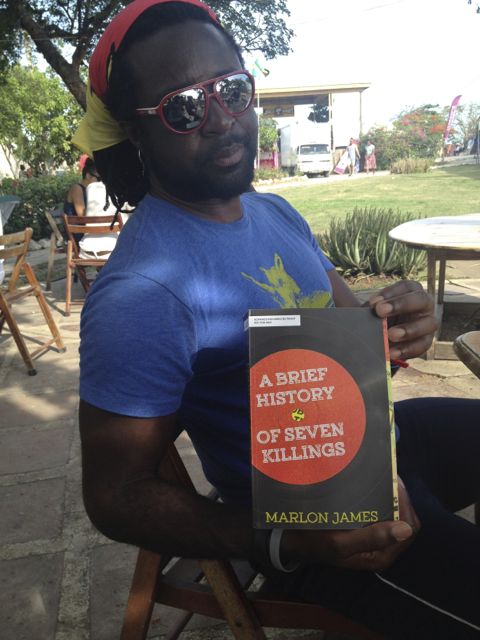


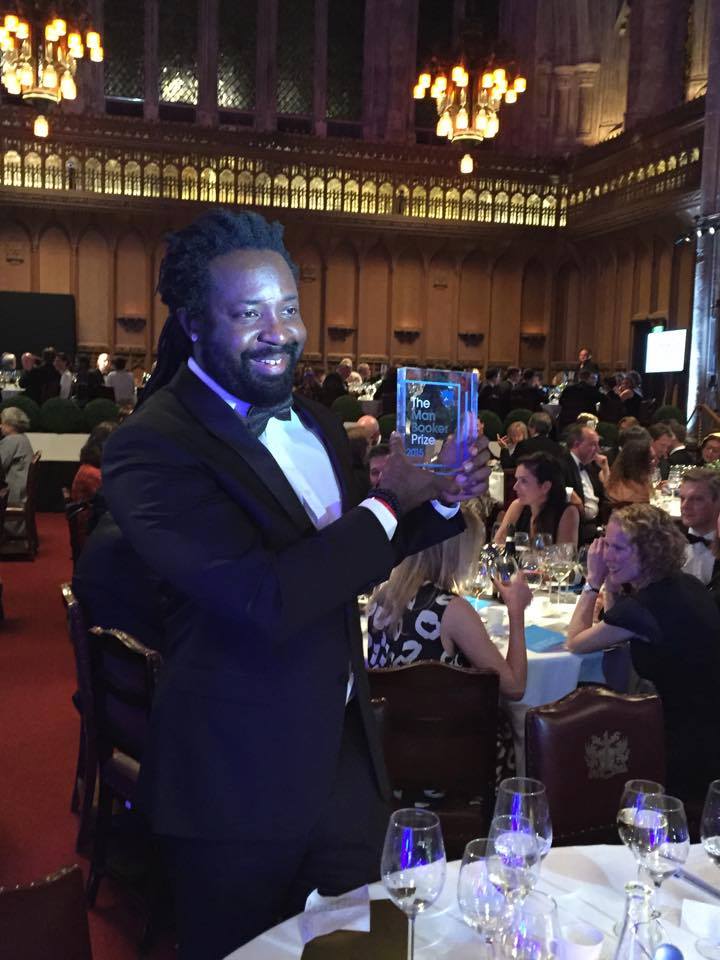


 – RT
– RT 


 Active Voice