A look at the protest march held in Haiti on February 18 against Jamaican treatment of their Under-17 football team and responses in Jamaica to the Haitian outrage.
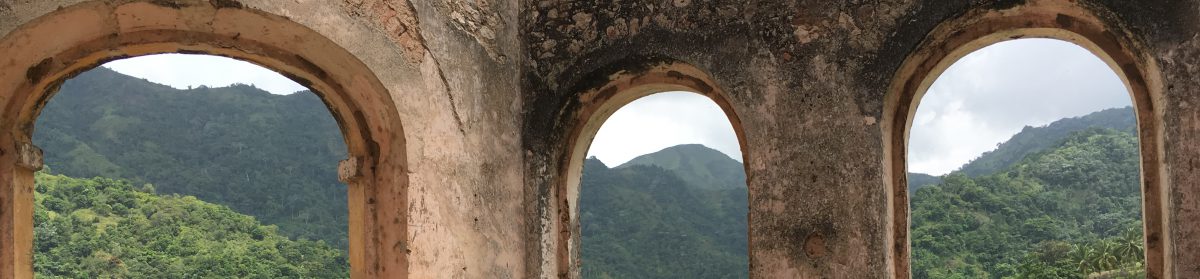
The photos below are from the protest march held in Haiti on February 18 against Jamaican treatment of their Under-17 football team.
Poor John Maxwell must be turning in his grave. Jamaican officials, showing uncommon concern for the nation’s health saw it fit to send back the Haitian Under-17 football team which had come here to participate in the CONCACAF tournament.
According to an Observer source, fears about a potential cholera outbreak escalated after several of the Haitian players, who arrived in Jamaica earlier this month to compete in the tournament, fell ill. Others had symptoms including fever and headaches. Eight of the players were tested and three were found to have malaria. They were slated to be admitted at the Cornwall Regional Hospital, but there were no beds there, the source said.
As a precautionary measure, the team was to be quarantined. But after a day of waiting inside the hospital’s emergency ward, the Haitian coach got angry, left the hospital, and returned to the hotel at which the team was staying, the Observer was told. He was later allegedly handcuffed and forcefully removed from the hotel by representatives from the Ministry of Health, who had quarantined the sick players at the Falmouth hospital between Tuesday night and Wednesday morning last week.
The situation wasn’t helped by language problems and the different responses to malaria in each country. It’s a fact that in Jamaica anyone with malaria is immediately quarantined and in general the health authorities are quite punctilious about keeping the nation free from contagion of various sorts. I remember being astonished once years ago when i had just returned from India to receive a visit from a health official who came to my home to ensure that i wasn’t suffering from any illness i might have brought back with me. I did feel slightly insulted but then decided to look on it as a good thing–one small corner of the governance structure that actually works.
Even so i feel that the Jamaican reaction erred on the side of insensitivity. I was alerted to this situation three days ago when an irate friend in Haiti contacted me. At the time there was hardly anything in the media about it and I myself wasn’t fully pripsed on the situation. I asked him if the events were recieving a lot of attention in Haiti. “Attention? We are very pissed off,” came the annoyed reply.
So i went on Facebook and Twitter to find out what others felt about this and was quite horrified at the overwhelming tendency to simply dismiss the whole affair with a smug “Better safe than sorry” response. According to one tweeter “if it were anywhere else. Like China they would b sent home too. This is not a precedence. Been done b4. Remember swine flu!”
Except that malaria, unlike swine flu, isn’t a contagious disease and China does a lot of things that a democratic country like Jamaica might want to think twice before doing. And of course when Jamaicans are ejected from Cayman, Barbados or the UK for fear of their culture ‘infecting’ local youth, i don’t want to hear any weeping and wailing and gnashing of teeth. Those countries are also thinking “Better safe than sorry!”
Other tweets from the diaspora were more critical of Jamaica:
@public_archive I seriously doubt the Jamaican government would quarantine the Canadians with STDs running around Negril. Yeah, I said it. #haiti
Skin-bleaching and anti-Haitianism go hand in hand. #Haiti #Jamaica
@djaspora: #Jamaica should know/do better. Quarantine Haitian kids cause of suspected malaria? Is it malaria or blackness that is contagious? #Haiti
Incidentally the Haitian team coach is Brazilian. I heard him on RJR a little while ago describing the extremely long waits at the hospital and a clinic, we’re talking about hours, five or six hours, without treatment or explanation.He himself was one of the three sick members of the team and returned to Haiti with a very high fever and profoundly upset.
I would have thought that even if Jamaicans feel that they’re in the right they’d have shown more interest in trying to find out what had caused the Haitians so much offence instead of simply shrugging and saying “Better safe than sorry.” The Haitians are clearly hurt and humiliated. They may be overreacting too, just as the health officials seem to have done. I was surprised at how little attention the Jamaican media paid to this situation over the weekend. It wasn’t until the Haitians really made a big issue out of it that the media, today, started focusing on it.
It’s an extremely vexed situation. Jamaica has the upper hand. Does it cost so much to apologize and try to mend fences?
On the eve of the verdict in the Buju Banton trial in Tampa, FL, Jamaicans wait with bated breath for their beloved singer to be released.
Tears from my eyes could not hold anymore
Cry like a child who has lost his way home
longing to go to that place where I’m from
I’m in bondage, so much bondage…
The above lines are from ‘Bondage’ from Before the Dawn, the album that won Buju the Reggae Grammy last week.
Jamaican reggae artiste Buju Banton, flanked by his lawyer David Oscar Markus (right), waves to journalists as he leaves the Sam M Gibbons Federal Court in Tampa, Florida yesterday afternoon after the adjournment of day 2 of his retrial on drug and gun charges. Banton is pushing a stroller occupied by the baby of his manager, Traci McGregor (2nd right). See court report on Page 4. (Photo: Paul Henry) Read more: http://www.jamaicaobserver.com/news/I-m-fighting--says-Buju-after-tough-2nd-day_8378295#ixzz1EW2y2cUn
Once again the Jamaican nation is on Buju watch. Buju Banton, also sometimes referred to as the Voice of Jamaica has been on trial in the United States on purported charges of intent to distribute drugs there. After an abortive first trial Banton who was put in prison in Tampa, FL in December 2009 was tried again last week. The jury is expected to come to a verdict on Tue, Feb 22nd. Jamaicans are taking this very personally, it is as if the nation itself is on trial. To get a sense of the import of this moment read Marcia Forbes’s post on this blog about the lengths Jamaicans went to to tune in to Buju’s concert some weeks ago, the first since his incarceration. Andrea Shaw who was actually at the event produced an excellent write up:
Buju, the beleaguered reggae star, was arrested in Florida on drug charges in the fall of 2009. After being denied bail he endured prolonged delays in his trial while languishing in a Florida jail for a year before finally being released on bail after a mistrial. His high-profile case has dominated the reggae world since his arrest and has elicited an extraordinary outpouring of support and sympathy from fans all over the world, particularly from the Jamaican Diaspora.
The extent of this support has been extraordinary. I’ve even surprised myself by the intensity of my heartfelt concern and fervent prayers for the star whose music I’ve always loved. But even among Buju non-believers, folks like my mother who have not been seduced by his throaty voice and who can’t name even one of his songs, the wish for his safe and speedy release has been widespread. And here’s the kicker: so many of us are not concerned with whether he is guilty or not. We just want him home.
Sunday’s concert struck me as a performance of Buju’s personal prayers for his release as well as the demonstration of a collective desire for his safety and protection while he prepares for the resumption of his trial and to face newly added gun charges. “Before the Dawn” was a performance of faith and hope, both on stage and amongst the audience, and in many ways it was also a ritualized anointing— a communal laying on of hands on Buju’s besieged shoulders by the screaming, 10,000-plus live audience as well as the thousands more who tuned in via live streams and Facebook updates.
This time round Jamaicans are optimistic that Buju will finally walk free. Television images of him–tall, strapping, healthy and handsome, inexplicably pushing a baby’s pram on his way to court with his lawyer have boosted the nation’s morale. As one tweet, which memorably captures the national mood said: RT @ProdigalJa: Push di pram Buju! Push di pram to victory!
Active Voice is happy to host Sarah Manley who has appeared on this blog before, writing on the subject of Buju Banton, as she shoots off an impassioned message to ‘America’ in which she cogently pleads his case:
Buju Banton is not one of the world’s dangerous drug lords. I say that without hesitation, I state it as a fact, that cannot be disputed. It is not true. It is a fallacy and a falsehood to present him as such. You know, I do not like lawyers. I find them dishonest. They seem to think that because a thing cannot be proven or disproven, it is not true. They have an elastic definition of truth. But! There are things that are true regardless of what loopholes you can conjure up to prove or disprove them. Like Buju is not a drug lord. This is just true.
Inventing new charges against him in some maniacal witch hunt isn’t gonna make him any more guilty.
We are not stupid out here in the world. We know that cocaine is made in Columbia from the leaves of the cocoa tree, grown there, harvested there, processed there, and exported from there up through the poor and tired caribbean to be consumed on a massive and devastating scale in North America and around the world. We know that there are many many hands complicit in its travels throughout the world. We know that on any given day, in almost any city on earth, you can find a coke dealer who will sell you, for usually an exorbitant price, a tiny package of white powder, or some tiny rocks. I have been offered cocaine from total strangers in New York, in London, in Paris, in night clubs, in bars, on the streets. Buju had nothing to do with any of this. Shipping magnates, customs workers, random pilots and corrupt politicians, and drug lords, from the don on top, to the starving little runner, these are the people involved in the drug trade. It’s a multli billion dollar industry that the entire world is complicit in allowing to continue.
To single out Buju Banton, who is Reggae Royalty in his country, to decide to frame him, not even catch him red handed, but frame him with some two bit, low life informant, and then, to add insult to injury having not secured a conviction, to throw more charges at him, well… that’s just pathetic and only something stupid America would come up with. It’s not ok. I object! I protest!
You wanna bring down the coke trade America? Go focus your God forsaken missiles and war mongering army on Columbia. Go blow up the cocoa farms, the drug lord mansions. Putting Buju Banton in prison is not going to even put a tiny dent in the coke trade. It will not affect it one iota. All you will succeed in doing is enraging a people already so pissed off with poverty and injustice we are ready to explode.
And don’t you dare, don’t you dare bring up homosexuality as a justification for this victimization and persecution. I do not agree with Buju’s stance on homosexuality, but i defend his right to have that stance. And to voice it if he feels he must. So if IF this framing of Buju has its roots in some gay rights agenda, well that would be the most pathetic of all. So because a man has openly criticized the gay lifestyle, you have him imprisoned on some trumped up charges of drug dealing. That’s just too crazy to be allowed.
America, why don’t you go fight some real enemies on earth? Starvation? Disease? Poverty? What level of idleness leads you to single out and attack, of all the people on earth, Jamaica’s Buju Banton? Our Poet? Our Artist? Are you jealous because we likkle but we talawah? Because we can out run, out dance, out sing, out vibe, out swagga you on any given stage on any given day in any given arena?
Well I bun dat! Babylon System IS the vampire. We refuse to be what you wanted us to be! We are what we are and that’s the way it’s going to be! Oonu vote One Love as the song of the last millenium, Oonu tink seh One Love is all Bob was talking about? You missed the point. Bob said Get up and stand up for your rights… Reggae music is protest music… Protest… not some pot smoking love in like your Woodstock. And Buju is one of a string of Jamaicans who have voiced that protest in song… protest against poverty, injustice, victimization, imperialism, racism… and this is the final irony of this trial of Buju Banton.
You hear mi sah… I could go on and on… the full has never been told!
A selection of tweets i favourited in the 24 hours leading up 11.2.11 Egypt’s day of reckoning….
Data visualization of Egypt's Tweets:
So the Egyptians got their Friday of Departure after all–congratulations to them! This is a heady moment for all of us, Egyptian or not–
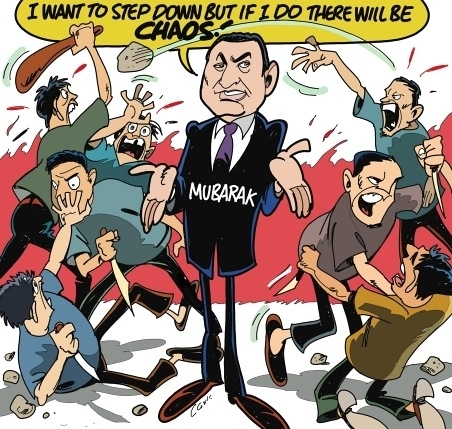
What a rollercoaster of a few days! 11.2.11 has proved to be unforgettable for all Egyptians except one: ex-President Hosni Mobarak who probably wants to erase all memories of Jan 25 and its ineluctable aftermath.
I found Pioneer editor Kanchan Gupta’s analysis of the tumultuous events in the Middle East to be comprehensive and useful (though i don’t share his fear of a Muslim alliance):
…As Egypt burst into celebrations, a bitter realisation began to sink in: If the US could abandon Mubarak, it could also say goodbye to others without allowing friendships of the past to weigh too heavily on its conscience.
Ironically, it is this perceived callous indifference of the US towards a beleaguered Mubarak in his last days in office that has left many flummoxed in Arabia. Egypt under the Mubarak dispensation, backed by the Army, was the best bet for peace in the region, especially in regard to Israel. It was also the best defence against the rise of radical Islamism whose practitioners see themselves as the alternative to incumbent Arab regimes. With Mubarak gone, the Muslim Brotherhood is preparing to make a dramatic appearance either through collaboration or alone in Egyptian politics; through Hamas, an offshoot of the Muslim Brotherhood, Islamists have seized power in Gaza; in Lebanon, the Hizbullah, which has toppled the Hariri Government and put into place a regime controlled by Islamists, increasingly and frighteningly calls the shots; in Tunisia, dormant Islamism has come alive after the long-exiled leader of the till recently outlawed Islamist party Ennahdha, Rachid Ghanouchi, made a triumphant return home; in Jordan, the Friday street protests are being led by Islamists sustained by the Ikhwan’s ideology; in Yemen, Islamists are waiting for the palace to fall under their assault; in Qatar, Bahrain and Kuwait, a deep undercurrent of radical Islamism is waiting to burst forth.
A gleeful Ayatollah Ali Khamenei has described the Egyptian uprising as the unleashing of an “Islamic wave”. His protégé and Iran’s President Mahmoud Ahmadinejad has described the Egyptian uprising and the collapse of the Mubarak regime exactly 32 years to the day of the fall of Shah Mohammed Reza Pahlavi on February 11, 1979, as the “emergence of a new Middle East that will doom Israel and break free of American interference”.
On the subject of social media’s role in the recent ‘revolutions’ I found Global Voices Online co-founder Ethan Zuckerman’s comments thought-provoking:
– While there’s been extensive debate about whether social media helped organize or promote the protests in Egypt, I think the interesting story to watch will be whether social media can help Egypt in the transition to democracy. Power now rests with a council of military leaders, and there have been suggestions that this group could be complemented by a council of civilian “wise men”, giving a seat at the table to figures like Mohamed El-Baradei.
In lieu of having anything compelling to say myself I’ve decided to put up tweets I ‘favourited’ it in the last 24 hours or so (Twitter’s ‘favourite’ feature is a phenomenal tool which i use with abandon). Some of them reference Egyptian events and some don’t, but for what they’re worth here they are…with the most recent ones from this morning leading…
Why Gladwell is wrong about the recent revolts in the Middle East from Iran to Egypt.
Protesters take part in an anti-Mubarak protest at Tahrir square in Cairo February 1, 2011. At least one million Egyptians took to the streets on Tuesday in scenes never before seen in the Arab nation's modern history, roaring in unison for President Hosni Mubarak and his new government to quit. REUTERS/Suhaib Salem58. Protesters hold a banner during a demonstration in Cairo January 30, 2011. Egyptian opposition leader Mohamed ElBaradei told thousands of protesters in central Cairo on Sunday that an uprising against Hosni Mubarak's rule cannot go back. REUTERS/Asmaa Waguih
I’d bet my bottom dollar that somewhere in Tahrir Square today they’re blasting Bob Marley’s revolutionary lyrics while chanting down Babylon. We’re going to chase those crazy baldheads out of town–Get up, stand up, stand up for your rights–Rebel Music–Burnin’ and lootin’–almost every one of his songs yields a line of sheer rebellion and his music is all-pervasive. As @kristainchicago said on Twitter today: Universal truth: no matter what country you’re in, there’s a bar somewhere playing No Woman, No Cry.
Clovis, Sunday Observer, February 6, 2011
Malcolm Gladwell has been shooting off his mouth insistently about whether or not social media played a role in the latest set of insurrections in the Middle East. His thesis is that revolutions took place before Facebook and Twitter from which he concludes that the recent uprisings had nothing to do with social media and even if they did, this is ultimately fundamentally unimportant compared to the reasons for the respective revolts.
People protested and brought down governments before Facebook was invented. They did it before the Internet came along. Barely anyone in East Germany in the nineteen-eighties had a phone—and they ended up with hundreds of thousands of people in central Leipzig and brought down a regime that we all thought would last another hundred years—and in the French Revolution the crowd in the streets spoke to one another with that strange, today largely unknown instrument known as the human voice. People with a grievance will always find ways to communicate with each other. How they choose to do it is less interesting, in the end, than why they were driven to do it in the first place.
A respondent to Gladwell, AliaThabit, succinctly pointed out the flaws in his thesis:
I just got back from Egypt last night. If the internet were of no consequence, the govt would not have shut it down–along w/ the mobile network in Cairo, and FB and the SMS network over the whole country, which is how most people there communicate–everyone has a mobile, and sms are free (calls are not). I spent most of the first week of the revolution in Aswan with a hotel full of Cairo students who were on holiday–we (and the whole town) were all glued to the television, and they were also glued to their phones. Information raced around the country. The French may not have had Twitter, but they would have used it if they had. There are twenty million people in Cairo alone. How many lived in Paris?
There is a crucial point that the prolific Gladwell (whose mother is Jamaican) is missing. The celebrated revolutions of yesteryear all had heroic leaders around whom sustained acts of dissent, rebellion and revolt were mobilized. What is noteworthy about the recent wave of popular uprisings everywhere from Iran to Tunisia to Egypt is that they have been ‘leaderless revolutions’. This marked change in modus operandi between traditional revolution and its contemporary counterpart is worth studying; the reasons for the shift are attributed to the speed with which information is collected and disseminated by groups of people using the new social networks. The era of the charismatic leader may be over.
I’m indebted to Nicholas Mirzoeff and his new blog For the Right to Look for these insights:
Whether or not the revolutions will have been fully successful–and no-one has really defined that success–there is a palpable and electric sense of change, not just in North Africa but globally. The events have revealed that there is already a network for change and how it has worked. One tweet widely circulating from Egypt outlined the method: “Facebook used to set the date, Twitter used to share logistics, YouTube to show the world, all to connect people.” The dispersed co-ordination shows that the network has learned from Iran that social networking can also be used by the police to track down activists. Mubarak tried to cut off all Internet access, hoping that this would quell the street actions. Facebook went first, followed by Twitter, then all connections. It was a revolution watched on social networks, but acted in the streets.
…The result has been the now-characteristic “leaderless” revolutions, as the Western media have depicted them, as if expecting new Castros and Lenins to materialize. Unable to comprehend networked change, those working in hierarchical companies are already writing banal opinion pieces predicting the collapse of the revolutions for lack of the very kind of leadership that provoked the uprisings. Should the revolutions fail, it will be following the combination of local state violence and globalized governmental and corporate hostility. Israel and Saudi Arabia found an unusual point of agreement in opposing the Egyptian revolution, while stock markets plunged on January 29 as it became clear that the revolution was not going to be crushed. Oil prices hit $100 a barrel on January 31, the usual profiteering from democracy. Israel has begun leading a movement to support Mubarak for fear of the unknown.
Tunisia exploded first, and a domino effect spills over multiple countries. Yemen, Algeria, Jordan. And now Egypt, cradle of humanity, that threatens to remove the Mubarak cancer by the force of the protesters…
…I wonder: why not Cuba? As I watch TV, listen to the demands of the volatile Egyptians. Listen, for example: “We got tired of lies, misery. For decades we endured the dictator Mubarak who has ruined this country.” We hear Egyptian scholars say:” I am a lawyer and live like a beggar. I earn $60 a month, and my rent alone is $75.” And we can not avoid the immediate association with our island.
I’ve heard all the arguments of the Egyptians. And I do not think there is one, I repeat — not one — which does not apply to my country. The same hunger and hopelessness, the same distaste for an inept government; the very low wages that don’t stretch even to survive, the underground corruption; the warning, just look at the living standards of the ruling class; and now, ironically, Cuba is also added to the list of countries with high unemployment.
And then there arises, inevitably, the pointed question: Why not Cuba?
If I had to respond I would start by pointing out a subtle reality: The control of information in my tranquilized country is, aberrantly, more fierce than in countries such as those that have just exploded. For those who don’t believe information has such an important role, I suggest they ask themselves: Why has the opening act of every classic dictatorship in History been to seize the methods of communication?
So this is what Gladwell glibly elides–how messages of revolution are transmitted is crucial–this is why as Licea observes dictators and powerbrokers have always tried to control the media, whether these were the drums of the enslaved signaling revolt on Caribbean plantations or more contemporary forms of broadcasting which now include Twitter and Facebook. Sorry Malcolm you can’t just blink this one away…




 Active Voice