Jamaica Jamaica! After all the recent ruction about cross dressers and transvestites I was astonished to hear in the morning news today that a fearsome ‘gunwoman’ nicknamed He-She had been shot in West Kingston. Astonished because you would think that with the supposedly intense homophobia that exists here, and zero tolerance for ambiguous sexualities, you’d hardly come across someone like this. Of course unlike Dwayne Jones, who was a guy who liked to dress like a woman, apparently Bianca was a gal who liked to dress and behave like a guy. Blow wow. An interesting thing I found when looking for an image to go with this post was that gunwomen are almost always portrayed as femme fatales, unlike Bianca Bradley who dressed butch and acted masculine by all accounts.
When I posted about the gunwoman’s shooting on Facebook it led to the following convo between two of my writer friends:
Marlon James Lawd man, me just done write me book, don’t mek me frighten me editor with another chapter…
Garfield Ellis Hold on to yours …let mine publish first…
Terry Lyn by Peter Dean Rickards
At the moment details are pretty sketchy but I promise to find out more and post it asap. In the meantime here’s what the Gleaner had:
Feared 23-y-o gunwoman shot in west Kingston
For the second day running, the Luke Lane/Chancery Lane section of western Kingston erupted into violence when a feared gunwoman was shot in the area.
Twenty-three-year-old Bianca Bradley, who is well known in the community as a notorious member of a feared gang involved in an ongoing feud, was shot multiple times.
Bradley is known in the area as ‘He-She’ because of her masculine appearance – notably her predominantly male clothing and style of walk – as well as her so-called no-nonsense approach.
A large crowd converged at the Kingston Public Hospital as a police team transported the wounded woman to the facility yesterday.
“She nuh afraid to fire di gun,” a member of the community whispered as traffic blocked the area.
The shooting took place 24 hours after two men were shot by the police, one fatally, after they were accosted and two illegal weapons seized.
A closer look at the controversy surrounding Anne Shirley’s Sports Illustrated article on Drug Testing in Jamaica
In mid-July news broke that Tyson Gay had failed a routine drugs test; hot on its heels we heard from local media that Asafa Powell, Sherone Simpson and two other Jamaican athletes had also tested positive for banned substances. In Jamaica the bombshell had fallen a month earlier with local media reporting news of Veronica Campbell-Brown’s failure to pass her drug tests. Newspapers, TV and radio all headlined her story, sensationally portraying her as a cheat, well in advance of the IAAF’s own verdict on the matter.
The VCB story had been leaked to the Jamaican press and the media here ran with it with almost reckless alacrity considering their usual reticence in providing information on matters of public interest. Less than a week later, June 19 to be precise, Sports Illustrated carried an AP story pointing out that according to the IAAF Campbell-Brown’s positive test for a diuretic appeared to be a ‘lesser’ offense attracting a lesser sanction or “reduced penalty – a suspension of a few months to a year or a public warning – rather than a standard two-year ban.”
A subsequent AP article also carried by Sports Illustrated and referring to the five Jamaican cases added, “The known banned substances in these cases, a diuretic and a stimulant, don’t resemble the steroids and designer drugs that took down some of the world’s top athletes – Marion Jones, Tim Montgomery, Ben Johnson, to name a few – over the past years and decades.”
So in fact, far from using these lapses as opportunities to discredit Jamaica’s sprinting programme, Sports Illustrated, by choosing to carry the Associated Press stories mentioned above, seemed to be at pains to draw attention to the slightness of the offences, in a way that Jamaican media was not. So much for the big, bad foreign media theories. On the contrary I remember Tara Playfair-Scott, Asafa’s publicist, pleading on Twitter with local media to be more responsible in their reporting. For an elaboration of the kind of doping irregularities Jamaican athletes stand accused of and how different these are from the more serious infractions Tyson Gay and others are accused of see “Performance-Enhancing Drugs: What Are They and What Are They Not?” by Professor Trevor Hall.
On the very same day the Sports Illustrated (AP) article on VCB came out Anne Shirley posted the following on Facebook upbraiding the local press for prematurely finding the senior athlete guilty of a worse offence than turned out to be the case in the end:
Do we understand that there was no need for the media speculation and hype over the past few days if only we had allowed the IAAF and JAAA to announce the fact that there was an anti-doping rule violation? In our haste to be first and to have all the “facts” before anyone else had the story, information was leaked to the Jamaican media when it should not have been, and we all ran with it. What if we had left it until today so that this was the beginning of the public story?????? Would there have been a difference in the coverage?
I choose to open this post on Anne Shirley’s August 19 Sports Illustrated article thus for several reasons. That article, titled An inside look at Jamaican track’s drug-testing woes has generated so much controversy, condemnation, hysteria and vitriol towards its author that I worried I was witnessing yet another lynching—a virtual one this time.
“We need to lock her up for treason!” exclaimed one young friend on Facebook, a sentiment echoed by an alarmingly large number of Jamaicans judging by statements on radio talk shows, Facebook and Twitter.
The widespread assumption seems to be that Sports Illustrated, an American magazine, is out to get small, hapless Jamaica whose valiant sprinters have brought it so much glory and pride in recent years. The world is jealous of Jamaica, people here think, most of all the United States, whose athletes have by and large been forced to follow in the wake of Jamaica’s triumphant superstars rather than ahead of them.
Why then did Anne Shirley decide to ‘betray’ the nation by going to a large American media conglomerate to complain about the failings of the Jamaica Anti-Doping Commission rather than our own national media, ask her critics. Failing that why didn’t she take her complaints to WADA, the body in charge of regulating drug testing internationally? Why moreover had she chosen this particular time to “besmirch” Jamaica’s reputation internationally by suggesting that JADCO was inadequately equipped to deliver the stringent. internationally compliant, drug testing standards required? Let’s look at these questions one by one.
First, is it true that Anne did not go to the local media? No. Absolutely untrue. When what she calls the Category 5 hurricane hit (the news of the failed drug tests by 5 athletes) Shirley, who headed JADCO for a brief seven months in 2012-13, took to the airwaves trying to alert local media to the dangers that lay ahead if Jamaica continued to operate administrative facilities that fell so far short of the world-class stature of its athletes. I personally heard her on Nationwide Radio on July 17 saying that the local anti-doping regimen wasn’t as up to par or world-class as the athletes themselves and that this would pose a huge problem in future. She warned that international Sport was big business and that Jamaica needs a truly independent, fearless organization with a strong management team and advisory board. The implication of course is that this is not what we have at the moment.
Then on August 7, Shirley wrote a letter to the editor of the Gleaner which was singled out as the Letter of the Day in which she challenged the veracity of statistics provided by JADCO and its chairman, Herb Elliott, to WADA. As a result, she claimed, the numbers in the WADA database did not reflect the true level of testing that JADCO had undertaken in 2012-13:
I contend that JADCO authorised and paid for more tests on Jamaican athletes, particularly in track and field, than have been reported and published in the WADA statistics in 2012, primarily due to a reporting error that has not been corrected in the ADAMS database that was made before I arrived at JADCO in mid-July, 2012.
I further state that these official figures do not show the true picture of the work carried out by the Jamaica Anti-Doping Commission as testing authority on behalf of the Government and taxpayers of Jamaica.
I would challenge the chairman and the board of JADCO to refute my statement. And I suggest, respectfully, that the record needs to be amended by the board of JADCO forthwith to reflect the true level of testing carried out by the commission in 2012.
Finally, on the question of the vexing issue of whether or not JADCO actively conducted testing in the “off-season” (i.e. the October-January period), I can further verify that during the period August-December 2012, in keeping with international best practice to place greater emphasis on out-of-competition testing in the off-season, JADCO conducted a total of 72 tests – with 12 tests conducted in-competition and 60 tests out-of-competition. And this level of testing continued into the first quarter of 2013.
On August 13 the Gleaner again carried a piece by Anne Shirley written in response to an article by Delano Franklyn expressing surprise at the discrepancy between Anne Shirley’s statistics and the official figures put out by JADCO. She provided extensive data to substantiate her claims that JADCO had conducted adequate off-competition testing during her tenure there and that the figures provided to WADA had under-reported this. A table she provided shows a huge increase in off-competition testing during the seven months she was CEO of JADCO. As far as I know no one has been able to refute her figures to date. Her article concluded by saying:
… rather than seeking to crucify the messenger, I would respectfully suggest that Mr Franklyn and other senior technocrats at the Office of the Prime Minister need to review the current state of staffing and organisational depth at JADCO – particularly given the fact that the agency should be far advanced in preparing cases for the six AAFs and one appeal that are on its plate and ensure that the necessary corrective actions are taken with immediate effect.
So we’ve established that Anne Shirley had done more than enough to alert local media as well as the public to the potential problems if JADCO was not rapidly made to comply with international best practices in drug testing. On August 7, the Gleaner wrote an editorial, Get with the programme, JADCO, which corroborated the uncooperativeness and lack of transparency of the JADCO board also highlighted by Shirley:
…While we do not believe that hardcore doping is a feature of Jamaican athletics, it is our view, though, that a robust and transparent programme of testing is not only a deterrent to drug cheating, but the best answer to the Contes and Pounds who may want to believe the worst.
…It was only last week, after our too-many appeals in these columns, and in the face of unfortunate global questioning of the legitimacy of our athletes, that JADCO’s chairman, Dr Herb Elliott, caused it to dribble that the agency performed 106 tests in 2012, 68 of which were in competition. In the five years of its existence, JADCO conducted 860 tests – 504 in competition and 356 out of competition.
The Gleaner went on to say that it didn’t believe that JADCO’s failure to provide the data the media was asking for was necessarily because it had anything to hide but because “it is subject, we believe, to an old-fashion[ed] leadership culture that is uncomfortable with transparency, hamstrung by a fear of criticism, and views the control of information as power.”
This certainly jives with what Anne Shirley said in her Sports Illustratedarticle:
When I took over, in mid-July [in 2012, just before the London Olympics], JADCO did not have a large enough staff in place to carry out rigorous anti-doping programs. The Doping Control/Technical Services and the Education/Communications Units had only one junior staff member each, and the director positions were vacant. There was no Whereabouts Information Officer—in charge of keeping track of athletes so that they could be tested out of competition—and only one full-time doping control officer. The committee in charge of reviewing the legitimacy of medical prescriptions for athletes was without a chairman and had never met.
Other aspects of the program were equally troubled—and troubling. I arrived to find no accounting staff in place, and no monthly financial statements had been produced in the five years since inception. JADCO was behind on payments for a number of its bills.
I urged the authorities in Jamaica to get more serious about anti-doping before a scandal hit us. I had long had reason for concern. I quietly tried to point out the presence of Jamaican threads linked to the BALCO case, via the testimony of Angel (Memo) Heredia about his contacts with elite Jamaican athletes. My position is that these threads, no matter how thin, should not be brushed aside as malice, but treated seriously, as they represent a potential threat to the integrity of our athletes and our nation.
During my time with JADCO, I also voiced concern about internet purchases of drugs and supplements by athletes, as there is reason to believe that some Jamaican athletes have been careless in their Internet purchases of dietary supplements, the ingredients labels of which are not tightly regulated in Jamaica. But despite my efforts I could not get any member of the JADCO board or member of Jamaica’s Cabinet to take it seriously. They believe that Jamaica does not have a problem.
The more frustrated I became about the lack of staff and attention to issues I raised, the worse the working environment became for me, and in February of this year I met with a group of JADCO board members and we agreed it would be best if I stepped aside. Dr. Elliott has voiced his strong opinion that Jamaican anti-doping efforts are satisfactory. But this is not a time for grandstanding. In the wake of both recent achievements on the track and devastating positive tests off it, we need to believe that our athletes are clean and that our anti-doping program is independent, vigorous, and free from any semblance of conflicts of interest.
TIMING
On the question of timing and why Shirley had published such a damning article in the international media at this point, it’s clear that the embattled former JADCO head felt she had no other choice. Having raised her worries locally more than once and seeing no action being taken or credible response provided by JADCO and little or no follow up by media here on the questions she was asking (“I’m giving you the questions that YOU need to be asking.” she said to ace journalist Emily Crooks on TVJ’s Impact), she decided to up the pressure by speaking to Sports Illustrated, an internationally recognized magazine that had previously behaved more responsibly towards the Jamaican athletes accused of failing their drug tests than Jamaican media itself. Let me refer you back to the evidence of this provided at the top of this post.
Let it be noted that it was the American sports magazine that approached Ms. Shirley after reading her Gleaner letters, not the other way around. Note also that virtually none of our local media took the trouble to approach her in a similar way or to follow up on her disclosures with an investigative article or in-depth feature on JADCO and its preparedness either to test the athletes adequately or to put in place the high-level legal defence teams the five found to have breached the code would require.
In a follow up interview conducted with her Anne Shirley told me the following:
One of the critical issues at present facing the current JADCO administration and one of my greatest concerns is that VCB, Asafa, Sherone and the other three athletes are entitled to a fair hearing of their AAFs in a timely manner — this is their careers and livelihood we are talking about. THIS IS PERHAPS THE MAIN REASON FOR THE TIMING OF MY SI ARTICLE!!!!!!
If my information is correct that there is currently no staff in the Doping Control/Results Management area, who is putting together the evidence packages, witness statements, expert analysis etc needed for JADCO to give with instructions to the lawyers who will present the case against each athlete in separate hearings? And have lawyers been retained by JADCO? SOMEONE NEEDS TO ASK JADCO THESE QUESTIONS!!!
Jamaica cannot afford to have any or all of the cases thrown out on a technicality.
And what is the timetable for each Hearing Panel to start the respective hearings? The Dominique Blake appeal is going on now — but the other 5 AAFs (excluding VCB’s) now need to be scheduled. Again time is of the essence.
BTW re the VCB Hearing — under the statute in Jamaica (ie the Anti-Doping Act 2008) — how come JAAA has put together a Hearing Panel? Does JAAA have its own written rules? And who is putting together the case management for the JAAA? Note the testing at the Meet was supervised by an IAAF representative, but the actual tests were carried out by JADCO’s Doping Control teams. Would be interested to know if the witness statements have been taken (and by whom), and look forward to the expert testimonies on both sides. Understand this Hearing will get underway in September.
Re the testing programme — We have to put EPO testing back into our testing programme and now introduce blood testing. All we are doing at this time is plain urine tests which is not enough.
These are some of my major concerns — I felt that I had no choice but to act as I did. And while I am not in a position, even in these comments to go any further, I trust that the investigations will be thorough covering areas and concerns that I have already shared with the powers that be (it was not for a lack of trying!).
Finally — a detailed explanation needs to be made publicly by JADCO as to how the WADA statistics for 2012 state that JADCO conducted 106 tests as Testing Authority and a later news release was issued (August 14?) that I was correct in stating that the total number of tests conducted by JADCO in 2012 was 179. Why the difference since the WADA statistics come from the Lab info that is posted in the ADAMS database.
If the JADCO test numbers in ADAMS and the WADA official 2012 are understated, then are the report of the IAAF tests conducted on Jamaican athletes overstated? Not one journalist has followed up on this logic. No one has sought answers to the questions that I suggested to Delano Franklyn.
These are some of the areas that journalists and others need to probe and ask questions about, not go on about me exposing our dirty linen abroad.
As Dick Pound has publicly stated (his latest comments are in this BBC report) — the world is already watching Jamaica.
I have no regrets for speaking out. On the contrary, I feel that the authorities now have no choice but to act.
WADA
Finally let’s look at the question of why Shirley didn’t go to WADA to complain about the inadequacies of JADCO, typified by the following comments on Twitter and Facebook:
Ingrid Green: If all she was getting at is a dysfunctional JADCO, why go to Sports Illustrated, Why not contact WADA and discuss her concerns with them, ask for help. She put the Athletes under a shadow with her article and did Nothing to help the programme.
Cindy’sDaughter @CindysDaughter: Caller on Nationwide with an excellent point. If you were so concerned Anne Shirley, why not go to WADA?
Perhaps its not widely known here in Jamaica that WADA has its own problems. It is now becoming increasingly clear that doping in Sport is the norm rather than the exception. On August 22, 2013, the New York Times published an article about research commissioned by WADA, the findings of which it was now delaying disseminating.
According to John Hoberman, a University of Texas professor and expert on performance-enhancing drugs, the study’s findings dispelled the notion that doping was a deviant behavior among a few athletes.
“Either the sport is recruiting huge numbers of deviants,” he said, “or this is simply routine behavior being engaged in by, more or less, normal people.”
The article quoted Dick Pound on the current state of drug testing worldwide, the same former WADA chairman who has repeatedly raised concerns about Jamaica’s lack of adequate testing practices.
In part, he and his team concluded, “There is no general appetite to undertake the effort and expense of a successful effort to deliver doping-free sport.”
Pound said in a telephone interview Thursday: “There’s this psychological aspect about it: nobody wants to catch anybody. There’s no incentive. Countries are embarrassed if their nationals are caught. And sports are embarrassed if someone from their sport is caught.”
Hah! Isn’t that exactly what the Anne Shirley saga has proved in the local context? It’s highly unlikely therefore that WADA would have done the needful by putting JADCO’s house in order for us. In any case this is something that Jamaicans themselves should be undertaking, with or without foreign assistance, instead of baying for the blood of the rare citizen willing to stick her neck out and speak the truth. We should also be studying her statements over the last year on Facebook and elsewhere closely. In one of several Facebook posts Shirley asked people to take note of one Patrick Arnold “the mastermind behind a number of the supplements, creams etc… and remember his name.”
In concluding I have to agree with Barry Wade who suggested on his blog that the problem Anne Shirley is faced with is that she has disclosed an inconvenient truth and done so in an international arena. What we really need to fear are not the Anne Shirleys of Jamaica, indeed we need a thousand more like her if we really want to change the rotten state of affairs prevailing in almost all our institutions.
What should worry us is that older generation of technocrats, bureaucrats and leaders unwilling to admit that its time for them to retire and leave the competitive business of sports administration to younger. more savvy professionals just as internationally competitive as Jamaica’s athletes. In the absence of this we are leaving our hardworking, stellar athletes open to the kinds of suspicions leveled by people like Victor Conte, Dick Pound and others. For a neat summary of these watch the video below or read the comments made by Conte in the interview posted below with Scott Ostler done at the end of July. Do we really think JADCO as constituted now is going to serve our athlete’s best interests in the face of such serious allegations?
Anne Shirley’s timing is perfect. We have three years to get our house in order before the next Olympics. Let’s stop abusing her and do it. Below is a partial transcript of the damaging views of Jamaican athletes and their success, that Anne Shirley and others are concerned about.
Is JADCO as it is constituted now really capable of dispelling these rumours if that is what they are? If so could they outline for us their plan of action and strategy to contain them?
Ostler: What about the Jamaican stuff (sprinters busted for alleged use of steroids)?
Conte: Well I’ve believed for a long time that it is state-sponsored doping. I believe the Jamaican Olympic Committee is in on it, I believe the Jamaican Anti-Doping Commision is in on it, I believe they’re being tipped off. When Usain Bolt gets a $6 million piece of beachfront property in exchange for winning the gold medals, this is tremendous for tourism in Jamaica—and understand, these are my opinions, right?—and I said this a long time ago, I’m highly suspicious of this, and I’m going to tell you when it started.
In 2008 I was asked by (British sprinter) Dwain Chambers to write a letter to the UK anti-doping (commission) listing all the drugs that I gave these athletes, the seven or eight different drugs, the purposes, the frequencies, the dosages, etc., which I did. This was in March. Then in May or June when they have the Jamaican Olympic trials, Veronica Campbell. . .competed in the 100 meters, she was already an Olympic gold medalist, she came in fourth and ran 10.88, which is very fast. And I thought, “Who are these other runners, that she doesn’t even make the team?”
Shelly-Ann Fraser, I looked it up and in 2007 her PR was 11.31. Less than a year later she goes to the Olympics and wins in 10.78. Now that is more than five meters faster. Who improves five meters in one year? So I went on the record. . .”Oh, my god, this is highly suspicious.” Bolt’s fastest time was something like 10.03, next thing you know he runs 9.72. It was just too much, too soon.
I worked with a couple athletes from another Caribbean country, and (one of them talked to a friend of mine) who calls me and says, “Oh my god, you’re not going to believe this but. . .they won all the medals in the women’s 100, they read your article that was sent to WADA that you gave to the UK, and they’re using all your protocols, that were used by Dwain Chambers and Kelli White, including the T3, the thyroid medication.” So they followed my blueprint, but WADA didn’t pay any attention to it.
I know all the track writers, and in the mixed zone under the stadium in Beijing, they said when (Jamaican) athletes came into the mixed zone to do interviews with the media, that Herb Elliott, who is the head of (Jamaican anti-doping), the medical director who is in charge of collecting the urine samples from the athletes, was chest-bumping with all the guys on the relay team!
Dick Pound wrote a recent report. Two things. One, he followed my recommendation that they do more CIR testing, and secondly, he said the primary problem was that the WADA officials were really looking the other way, they didn’t really have a genuine interest in catching people, that they’re more worried about the political aspects and receiving funding.
What started out as a pleasant holiday trip to a beach in St Ann over the weekend was suddenly transformed into a nightmare for a 28-year-old father of two when a jet ski raced out of the water on to land and into his children, killing one and leaving another battling for life.
Richard Hyman’s six-year-old daughter, Tonoya, was killed by a deadly blow from the jet ski, while yesterday, it remained touch and go for her four-year-old sister, Remonique.
This story is typical of the farcical reporting that passes for journalism in Jamaica. It focuses completely on the victims and says nothing about the perpetrator of this killing. Instead it makes it sound as if a rogue jet ski emerged from the water and struck this poor family down. Jet skis do not propel themselves. Tell us who was riding it and at exactly what beach this ‘accident’ happened. As usual Jamaican media is more interested in protecting the name and reputation of the wealthy (the owner of the jet ski, its rider, the beach in question). Nowhere in this story is there a sense of the outrage this unnecessary death represents. Disgusted.
Here’s the view of writer Marlon James, who posted the article on Facebook with the following comment:
So you’ve been looking around for an example of Yellow Journalism. Look no further. How do you report on a act of manslaughter without implicating the possibly rich, influential or foreign person responsible? You recast it as a Stephen King Horror story (minus the talent) of a rogue jetski becoming suddenly animated with freak power then charging on its own into an unsuspecting family, killing a kid in the process. Who was the skier? Which beach? Who owned the jet skis? Private or a company? It’s called Journalism, Gleaner. You’re here to give us the news, not protect the interests of whoever’s reputation might be damaged because they slaughtered a child.
Yes, yes I know all about the supposedly draconian libel laws in Jamaica but honestly isn’t this just a case of a senior journalist from the newspaper of record willfully gagging himself? Does the Gleaner realize how ridiculous these stories sound?
And its not just the Gleaner either. A few days ago, reporting on tensions in West Kingston the Observer carried this masterpiece of evasive, or is it defensive, reporting:
“Police intelligence suggests that since the arrest and subsequent extradition of Christopher Coke, individuals said to be related to a prominent family that claimed to rule the community from the nineties to 2010, and others claiming to be relatives of a late well-known resident, who claimed to be a ‘Don’, and was said to be the leader of the community in the1980s have become involved in a deadly battle for control,” a police statement Monday said.
What is this — a suss column?? These families and Dons have no names? In the 21st century is this what passes for reportage? What’s the deal here? Why is it so hard to just say that the descendants of Claudie Massop, the Don who ruled Tivoli Gardens once and those of Christopher ‘Dudus’ Coke, are locked in a deadly power struggle?
Just what we need when the country seems to be going down the tube…a media that won’t call a spade a spade.
Not many people realize that Jamaica is a bilingual society. This isn’t surprising since the Caribbean island goes out of its way to promote itself as a nation of English-speakers; after all English is the language with the greatest global currency today. The problem is that in doing so Jamaicans willfully sweep under the rug their mother tongue– Jamaican Patois or Patwa –the polyglot lingua franca of the hoi polloi or common people. Patwa, which developed over the centuries to negotiate social interaction between slave-owners and the enslaved, is an oral language, a Creole.
Creoles, the hybrid languages of the former slave colonies and plantation societies are routinely devalued in comparison to European languages. They are considered inferior because of not being scribal, making them vulnerable to the widely held prejudice that non-written languages lack conceptual depth, thereby restricting thought itself. Their expressive range is considered too limited to handle technological or scientific subject matter and the numbers of people who speak and understand them too miniscule to make them worth studying or preserving.
Thus in Jamaica English reigns supreme on the patios of the privileged while patois/Patwa rules the street. Touting itself as an English-speaking polity (the only official language of the country) disregard for Patwa, the first language of many Jamaicans, is virtually built into the official institutions of society. This has resulted in the relegation of monolingual Patwa-speakers to second class citizenship, because their language (and by extension their culture) is considered an unsuitable subject for school curricula or for polite or official discourse; thus like the proverbial man without a state, Creole or Patwa speakers are in effect rendered persona non grata at the official level.
Countries such as Haiti and Martinique manifest a similar identity crisis in relation to their Creoles or mother tongues which are deprecated in contrast to the French language inherited from their colonizers. Meanwhile as far away as Australia, a new parliamentary report is challenging the pro-English ‘monolingual mindset’ by constitutionally recognizing its indigenous languages and promoting education in them. The report, Our Land, Our Languages, recognizes that language is “inseparable from culture, kinship, land and family and is the foundation on which the capacity to learn, interact and to shape identity is built.”
The Jamaica Language Unit at the University of the West Indies, an offshoot of the University’s Linguistics Department, has been arguing for years that freedom from discrimination on the ground of language be inserted into the Charter of Rights here. Ironically monolingual Patwa-speakers have more rights in the UK, US or Canada where interpreters are provided if and when one of them appears in court. In Jamaica such citizens have to muddle through on their own with judges and lawyers who refuse to speak anything but the Queen’s English.
Regrettably elite regard for English in Jamaica is almost fetishistic; its hegemonic status and global currency are used to trump any argument for the elevation of Patwa from its lowly status or for its use as an educational tool. In school the medium of instruction is English, a severe disadvantage to the children of monolingual Patwa-speakers, who have the handicap of learning history, science, geography and other subjects in a language they barely know or have enough fluency in. This system benefits middle and upper class children who come from homes where English is learnt as the first language.
MIT-based Haitian linguist Michael deGraffe has identified the same problem in Haiti despite Kreyol being recognized as an official language there. Clearly, changing the status of Jamaican Patwa isn’t enough to correct what has become a deeply entrenched mindset. It must be used, as linguists at the University of the West Indies have been recommending, as the language of instruction for monolingual Patwa-speakers. Meanwhile ventures such as the Patois Bible project (the translation of the Bible into Patwa) initiated by Malcolm Gladwell’s maternal aunt, Faith Linton, are making inroads into the way Jamaicans view their language.
The problem with relying exclusively on any one European language as the official language is that the citadels of so-called Standard English or French can just as quickly become strangleholds when exaggerated respect for it fosters exclusion, conservatism and officiousness rather than the free-wheeling creativity typically associated with Creole or Patwa and the sonic culture it generates.
Born out of forced contact between wildly disparate cultures, Creole vernaculars are actually highly mobile cross-cultural languages capable of rapid change and very comfortable with new technologies and the new media of communication. They are inherently languages of negotiation, barter and accommodation, of finding solutions using the slightest of resources. European languages, on the other hand, especially as spoken, practised and codified in the postcolony, become rigid grammars used to police and enforce formality, bureaucratic privilege and ‘good taste’. As a result the Jamaican postcolonial elite are literally trapped in English–like flies in amber.
Note that in the Jamaican context it is not the English-speaking elites who have put the country on the map so to speak, but the supposedly narrow-in-outlook, less-educated, Patwa-speaking majority whose exploits in music and athletics, areas where their lack of English cannot hold them back, have dominated global attention. The former’s obsession with creating “national” culture for the Creole nation-states of the Caribbean, slavishly dependent on European models, has resulted in a kind of unproductive mimicry, an inflexible adherence to models of governance, aesthetics and literacy which have long been reformatted in their countries of origin. In my opinion the antipathy of such national cultures to the Creole languages native to the region, has also deprived them of the vernacular creativity encoded in such cross-cultural linguistic forms.
At the moment Jamaica is—metaphorically speaking—a tongue-tied nation, with all the problems attendant on such a handicap; Tongue-tied not in the sense of being speechless but in its inability to fluently articulate its disparate selves. Language and identity are locked in a zero-sum game, with Jamaica’s two languages forever pitted against one another like implacably opposed rivals; if one ‘wins’, the other loses. An unproductive stalemate has been reached. There is an urgent need for the country’s vernacular, Patwa, to be given equal status with English and for official recognition of Jamaica as a bilingual society. But any attempt to initiate the first step in this direction is viewed as an assault on English, and by extension, on those who believe or are invested in its superior status.
Perhaps Jamaicans should take the advice of the world’s most famous Patwa-speaker, Bob Marley, who sang “The things people refuse are the things they should use,“ echoing the biblical sentiment that “the stone that the builder refused will always be the head corner stone.” Will Jamaica ever realize its full potential unless it recognizes Patwa as its head corner stone?
An interview with Ezekel Alan, author of Disposable People…
I’ve been sitting on this astonishing interview I did with the mysterious new Jamaican writer, Ezekel Alan, for about two months now (for more information on Alan read Susumba.com‘s interview with him). I had hoped to continue it but time won’t permit so I’m just posting it and stating my intention to follow up with a Part 2 soon. Alan is the author of Disposable People, a novel that first came to attention when it won the Caribbean region award for best first novel in the Commonwealth Book Awards this year. Disposable People was self-published. It’s a book that animates poverty for those of us accustomed to averting our gaze from it, and does so in an imaginative, engaging yet hardcore way. His concept of ‘Nobodyism’ strikes me as the opposite of Rex Nettleford’s ‘Smaddyism’ (Somebodyism).
It would be cool if my readers could suggest questions they’d like me to ask him for Part 2….
AP: Disposable People is a narrative about the soul-wrenching economies of ‘Bare life’ and contemporary poverty isn’t it? As told by someone who has escaped its bony embrace into a life of privilege and policy-making. Did the little boy locked out of his home every time a primal urge took his parents haunt you into writing this book? Is the story as autobiographical as it seems?
Indeed there is some catharsis and exorcism at play – as we have seen with many other writers {Ayn Rand comes to mind}, there is an often an urge to tell a bit of your own story with your first book; this is perhaps because there is such a reservoir of information right there to draw on. In my case, this was both the outcome of that effort to wrestle with demons, and my love for writing. The past was, in a sense, fodder for writing rather than the object of it.
That said, I wanted to make this story noteworthy. Tales of poverty and abuse are as common as teenage sex in our ghettoes; I wanted to find a way to make this story feel new and real. This is partly the reason for the bluntness and the seemingly absurd elements of the story.
But let me also say that I remember going into Riverton City once back in the days and standing there watching some kids who were playing in a body of water that was stagnant and stink. You could see both hogs and plastic bags of faeces floating in it. But these kids were playing and laughing. That is life. The life of the poor is wretched, but it also has its joys. As a poor child you don’t stand around all day contemplating the short, nasty, brutish nature of your life, you live it, with all its pains and joys. This is what I tried to capture – both the suffering and the joys – in almost the same way we lived it.
AP: In many ways this book reminds one of a new genre of no-holds-barred novel writing by former NGO personnel, activists, policy-makers and diplomats. I’m thinking of books like Khalid Hosseini’s Kite Runner, Q and A by Vikas Swarup from which the movie Slumdog Millionaire was made, White Tiger by Aravind Adiga and so on, There’s also a zaniness which has been compared to Kurt Vonnegut. Who were some of your literary influences?
I’ve read and loved all of those books/writers . (I would love to one day join their ranks – they have such incredible skill with the pen.) I particularly like Vonnegut and Richard Brautigan. Anthony Burgess’ A Clockwork Orange is another inspiring masterpiece. Gabriel Garcia Marquez is also another inspiration, I love his surrealism. Junot Diaz is now one of my favourite contemporary Caribbean writers. I grew up on a diet of Roger Mais, Naipaul, and such, but now I find I am completely enthralled by the richness of Diaz’s prose; he’s brilliant (and I suspect rich).
AP: There is a preoccupation with the scatological or excremental imagery in DP. Eg references to shit are plentiful, to people too poor even to produce shit as in “When I lived in Jamaica my ass was often tight and constipated.” Is this because you feel that the acute discomfort of poverty is something you have to force your readers to face in the same way that confronting them with unpleasant images of worms, faeces, cow dung, diarrhoea and so on would make them squeamish? Is this the best allegory for the ‘short, nasty lives’ you’re trying to depict?
Maybe it’s all because the pit toilet was too close to my house – the stench of it was there, every day, for almost twenty years of my life. Indeed, the story was meant to be as blunt and raw as the real experiences were – flies swarming your food; giant mosquitoes biting you like dogs; the daily gambling and dominoes; the sounds of a cousin screwing and accidentally kicking down a part of her flimsy wooden wall (which generated an awful lot of excitement for the rest of us who rushed to watch and laugh.) That was the reality of it, but it is a reality far removed from the lives of many people. I wanted readers to see that life the way it was, and to want to laugh and cry at all its extremities.
By the way, I am still constipated. Some friends of mine back home have said I should try eating muesli every morning, others have recommended some of the “good Jamaican stuff” to loosen me up. I hope to report back on what works.
AP: I like your attempts to pin down the kind of racism that exists in societies such as Jamaica…there’s a tendency to overlook or elide brown identity with everyone claiming ‘blackness’ but you differentiate between the abjectness of being black and the privilege of being brown, with money being the crucial factor in determining brownness, the size of one’s bank account, one’s accent. Could you elaborate on the hypocrisies of race relations in Jamaica and perhaps the Caribbean as you know it?
I grew up with Michael Manley being white and always right, in the eyes of many of the older folks in our village. “Black man cyan run dis country!” was a frequent expression during election and domino arguments. I think much of this has changed since the 70s and early 80s, and I would say Jamaica is now a very different place. Maybe some racism is still there, but it isn’t nearly as pervasive as it once was, and cash now buys colour. The novel, in some sense, is therefore less about racism than it is about ‘nobodyism’. Kenny’s mama dies (this isn’t giving away too much) because she was nobody and they couldn’t afford proper medical care. The story about the old woman coming up to Kenny to ask for directions when Kenny thought she was coming to beg money is also apropos – this wasn’t about race, but identity; some people in our society are identified as nobody worthy of our time, worthy of our attention, worthy of marrying our daughters, worthy of a second thought. One of my favourite bits of the book is when Kenny writes the poem about Georgie and asks if his old friend Georgie is ‘missing’ not as verb (his mother’s love and tenderness) but as a noun – a person unseen and unheard. I felt that was how we lived our lives there on the outskirts of society; missing as a noun.
Jamaican media trips over itself in its haste to curtail freedom of speech
Clovis, Jamaica Observer, July 27, 2013
In the last six months I’ve virtually stopped buying the newspapers completely, even the Sunday papers which was all I had been buying for some years now. Last Sunday I decided to buy the papers just to see if any of our esteemed columnists had mentioned the gruesome mob killing of Dwayne Jones which had occurred less than a week before.
Alas not a single one had commented on it nor did I find anything else pertaining to the cross dresser’s murder in any of the numerous sections which piled up on the floor as I went through them.
I did read something that gave me pause on the Gleaner’s editorial page. The editorial addressed Milton Samuda’s extremely strange behaviour in the wake of a press conference involving Olympians Asafa Powell and Sherone Simpson, and the recent controversy the two were embroiled in. Samuda, a lawyer, is the lead attorney for the two athletes whose ‘A samples’ had tested positive for banned substances.
In what has proven to be a clear case of wearing one hat too many, Mr. Samuda (also the chairman of Television Jamaica (TVJ) and board member of its parent company RJR—virtually the only journalists allowed at the press conference were from these two entities), first demanded that journalists stick to a pre-approved list of questions and when they departed from this, used his managerial clout to demand that the reporters surrender their recording devices to him. Perhaps cowed by his powerful position the journalists meekly handed over their devices. The next day the recordings were returned with the offending questions and answers edited out.
As the Gleaner editorial correctly pointed out “Mr. Samuda’s role as defence lawyer and a custodian of the media collided violently in this case.” He had flouted one of the fundamental rules of journalism–freedom of speech. The journalists concerned were also taken to task for spinelessly submitting to Samuda’s imperious demands.
I then moved on to the bottom two thirds of the editorial page which is devoted to a segment called Public Affairs. ‘Ineptocracy Squared’ blared the headline to an article by Gordon Robinson, who normally writes a regular column in the Gleaner’s In Focus section. The opening of the article informed me that this was a thing of the past.
“People ask me why I no longer write for The Gleaner,” began Robinson, going on to explain the convoluted circumstances which led to his resignation as a Gleaner columnist:
Here’s how it happened. In a column headlined ‘Ineptocracy at the Racetrack’ published May 14, 2013, I took Andrew Azar to task for his silly and baseless comments made before a meeting intended, in my opinion, for Caymanas Track Limited’s (CTL) CEO and “stakeholders” to discuss and explain the board’s previously announced intention to cut purses.
… To my surprise, Andrew, absent when the board’s decision was announced, attended that meeting with “stakeholders” and made inflammatory statements, which could only have the effect of undermining the very board of which he was a member. In that context, as a result of that unexpected input, the meeting (and its purpose) was “crashed”. I pointed out why his public utterances were, in my opinion, inappropriate, inaccurate, reckless and improper. I tried to educate Andrew Azar on how to “separate his personal role from his role as CTL director”. I reminded that no company director is appointed to “serve” any interest but that of the company, and cited Section 174 of the Companies Act as authority for that trite law.
Well, to paraphrase the great Paul Keens-Douglas, who tell me say so? The Gleaner (not me) got a letter from a lawyer. Instead of finding the nearest trash receptacle, most serious newspapers’ preferred place to file lawyers’ letters, it took the letter seriously.
Without going into the ins and outs of this complicated case let me just say I found the irony of the situation quite funny. In the wake of Robinson’s criticisms Azar’s lawyers issued the Gleaner with a defamation claim. According to Robinson the Gleaner rushed to publish an apology without so much as pausing to find out if there was any merit to the claim:
Nobody asked Mr Jobson [Azar’s lawyer] to specify which of my words were defamatory and what defamatory meanings were alleged. Nobody asked to see the alleged invitation. Nobody reminded Mr Franz Jobson that an opinion (that Azar, a public official politically appointed to a government-owned company, “crashed the meeting”) honestly held, based on uncontested published material wasn’t actionable no matter how stubbornly the columnist stuck to the opinion in the face of competing assertions. It never occurred to The Gleaner that it wasn’t in any way demeaning to Azar to allege that he “crashed” a meeting that, as board member, he was absolutely entitled to “crash”.
In a rush, like Beenie Man, The Gleaner‘seditor offered Azar an “apology”. For what? For quoting him accurately? For making a fair and unassailable critique of the nonsense he spouted? The Gleaner‘seditor published an “apology” that asserted the newspaper was “satisfied” Azar was invited to the meeting. Well, whoop-de-doo! Again, so what?
How on earth had Gordon managed to get the Gleaner to carry this Jeremiad detailing their own fecklessness right under an editorial in which they were chiding the board member of a rival entity, RJR’s Milton Samuda, for abusing his powers? The answer came towards the end of the article.
“The Gleaner‘s unnecessary apology damaged my own reputation as a senior counsel and one of Jamaica’s foremost horse-racing experts,” said Robinson who no doubt slapped the newspaper with a defamation claim of his own. And trust me there is nothing that frightens a Jamaican media entity more than the threat of a libel or defamation suit. Merely mention the word ‘libel’ and the editors will be reduced to shivering, quivering wrecks willing to toss freedom of speech out the window along with the baby and its bathwater.
What can one do but laugh at this absurd state of affairs? The Gleaner takes to task the journalists who bowed to Samuda’s edict that they hand over their recordings but when it’s faced with a similar situation jumps with alacrity to offer an apology when none is required. Ay Sah! All I can do is shake my head at the farce that passes for journalism in this country and for the long-suffering, stellar journos who are stuck in this mess.
Jamaican society’s contradictory responses towards its own Trayvon Martins.
The Trayvon Martin case has been keenly followed in Jamaica with people vociferously expressing outrage over the not guilty verdict that allowed Zimmerman to walk free. How could there be no legal penalty for unnecessarily taking a human life? How could the law protect Zimmerman’s right to stand his ground but not Trayvon’s? This was madness. Many Jamaicans keenly identified with Trayvon and his family, imagining that this was something that could easily happen to them or their loved ones in racist North America.
All over the Caribbean those with a human rights perspective were eager to point out that similar outrage was rarely forthcoming in numerous local instances of flagrant injustice, often involving victims of police and vigilante killings where the perpetrators are almost never held responsible for their crimes. Why were such folk, unmoved by the wanton killing of fellow citizens in their own backyard, so willing to take such an interest in a case so distant from their immediate lives and localities?
Clearly we must attribute some or most of that interest to the intense coverage of the case by mainstream media in the United States. Channels such as CNN, MSNBC, ABC and others are available via cable and voraciously consumed in Jamaica and many other parts of the world. It’s not difficult to get sucked in by the wall-to-wall coverage of a murder trial for weeks on end, particularly when its racial component resonates locally. This was the case with the murder of Trayvon Martin.
Let’s also give credit where credit is due. American media excel at focusing attention on the human interest in a story; at laying open the lives and personalities of those concerned, at making the viewer identify with the principals of a high profile news item. This is why the world cares more about 500 victims of a natural disaster in the US as opposed to 150,000 deaths caused by a Bangladeshi cyclone or an earthquake in Turkey. American media puts faces on the victims, details their losses, personalizes them. The 150,000 victims of a distant cyclone remain just that—faceless, lifeless, abstract ciphers.
Not many countries have the sheer heft of media muscle that the USA can lay claim to. Our media in small places like Jamaica lack the infrastructure, the traction and the reach of American media. We also have far more deaths, murders and killings per capita than the media can possibly keep up with even if they had the will and the ability to do so.
Even in the United States there were complaints that cases just as heinous as Trayvon Martin’s or worse had received little or no visibility and thus generated little or no outrage. What makes a particular story a media sensation depends on the number of people who feel affected by it. Can they can identify with it? But this is also a function of how much airtime and column inches the story receives.
In Jamaica the media almost never gives you enough information or gives it to you after the fact as in the case of the Brissett Brothers accused of the vicious rape of 4 women and an 8-year old girl. Now that DNA evidence has proven that they couldn’t have been the perpetrators the media has interviewed them at length, along with their family members who had given them a cast iron alibi, and basically got the story out. Had there been no DNA evidence the brothers would have been wrongfully convicted raising uncomfortable questions about how many such innocent people there are in prison.
The ongoing saga of Vybz Kartel raises similar questions. One murder charge has completely crumbled and the other may do the same, yet Kartel has been held without bail for more than a year now.
Alexis Goffe, a spokesperson for the human rights group Jamaicans for Justice, recently observed that another reason there is little or no outrage about the legion of local Trayvons is that in these situations most educated Jamaicans identify with Zimmerman rather than Trayvon. Jamaicans are not Trayvon Martin, Jamaicans are George Zimmerman said Goffe. After all Trayvon’s profile fits that of the ‘idle youth’ most gated and residential communities in Jamaica remain wary of and police zealously. They want the Jamaican equivalents of Trayvon Martin to be kept in their place, on pain of severe punishment and even death. Since the start of the year Jamaican Police have killed 114 citizens, yet it’s business as usual in this tourist paradise.
For most Jamaicans such deaths when they happen are non-stories–like the slaying of young Dwayne Jones aka Gully Queen a few days ago near Montego Bay. 17-year old Jones was at a party on the night of July 22 dressed as a female and dancing when he was outed by a woman who knew he was cross-dressing. Details are sketchy but early reports said that Jones was killed by a mob that stabbed and shot him to death, flinging his body into nearby bushes.
In most countries a lynching such as this would be front-page news but not in Jamaica, known far and wide for its hostility towards homosexuals. The police have said that they can’t prove that there is a link between Dwayne’s cross-dressing and his murder and the media has barely taken note of the gruesome slaying. Judging by comments made on social media most Jamaicans think Dwayne Jones brought his death on himself for wearing a dress and dancing in a society that has made it abundantly clear that homosexuals are neither to be seen nor heard.
Attempts to portray the mob killing as a hate crime have also been futile. “Dwayne Jones chose to tempt fate” seems to be the popular feeling, “and he got what was coming to him.” Which is like saying Trayvon Martin tempted fate by lingering in the wrong neighbourhood; he got what was coming to him. Dwayne Jones decided to wear a dress and dance and for that he was put to death by a motley crowd. Most Jamaicans seem to think there is nothing at all wrong with this judging by the lack of outrage, scant media attention and silence from the political directorate.
An interview with Jamaican writer, Roland Watson-Grant, about his debut as a novelist.
Before April this year I didn’t know who Roland Watson-Grant was. But we were on a panel together during the Kingston Book Festival and that’s when I found out that he was only Jamaica’s latest novelist, whose book, Sketcher, was about to be launched in England. Subsequently he sent me an advance copy which I was foolish enough to leave in Grenada with a friend, so I haven’t had a chance to read it yet, except for the excellent first chapter which the publisher, Alma Books, has made available online (see excerpt below).
Roland Watson-Grant
I was intrigued by Roland’s unusual trajectory (where had he suddenly appeared from? and how did he snag a UK publisher with his first book?). Yes, yes, I know Peepal Tree is also a UK publisher but Alma Books is a different kettle of fish altogether. Unlike Peepal Tree Alma isn’t dedicated to publishing Caribbean authors, on the contrary, according to their website:
Alma Books publishes from fifteen to twenty titles a year, mostly contemporary literary fiction, taking around sixty per cent of its titles from English-language originals, while the rest are translations from other languages such as French, Spanish, Italian, German and Japanese. Alma Books also publishes two or three non-fiction titles each year.
They’ve also just won the Independent Publisher of the Year award in the UK. So dive into the excerpt from Sketcher immediately below and then my interview with Roland Watson-Grant.
Simple answers. I was only eight, but when my turn came to ask, she had to make it complicated. She said: “Skid, I’m so tired a y’all asking me where he is. Why don’t you all get on that CB radio and holler out your dad’s name and tell him to get himself home.”
So we did. Now, we had a CB radio, and in the Eighties that was a big deal. You had to have a CB nickname and all that fancy stuff. And we called our dad “T-Rex” on the radio. And my pops, he was one of the biggest godfathers of Citizen Band radio technology in the South. People knew him, cos he fixed CB radios and boosted their frequencies, and he invented all these sky-scrapin’ antennae things that could prob’ly pick up as far as China. So when we all got on the radio and switched to Channel 19 and started pressing the hell out of the key on the microphone and jumpin’ up and chantin’ “Breaker, Breaker, T-Rex, you copy? Come on home, T-Rex”, all the truckers and all the cops and the hunters and the shrimp fishermen and people as far as frickin’ California and prob’ly Mexico could hear us. And man, they all started in on the joke, whether they knew T-Rex or not, cos that’s one of the things that CB radio people do.
Well, within fifteen minutes we could hear the Ford Transit engine revvin’ into the swamp and the tires grindin’ and the door slammin’, and the great big ol’ T-Rex came crashin’ into the house with his claws all out and his teeth sharp. He looked across the room and growled at me, cos he said my voice was the loudest on Channel 19. Me? And he made me get back on the CB radio and announce that “T-Rex made it home tonight”, and then I had to speak like I was an AM radio announcer, with a big, dumb radio voice and everything. I had to tell ’em what time it was, and do the weather report and tell ’em to “stay tuned for more news”.
Photo of Roland Watson-Grant, by his brother, Salfrico
The Interview:
Roland where did a writer like you pop out from, fully formed like Athena from the forehead of Zeus? Have you deliberately secreted yourself away from the literary world of Jamaica, small as it is? You know with most other recent writers there’s a loose arc they tend to follow; first publication in Wayne Brown’s writing supplement in the Observer, then appearances at various festivals, participation in Calabash-sponsored events, by the time their first book is published they’re practically household names. You escaped this arc. Tell us about your coming into being as a writer.
It’s the stuff of dreams really. You could say I’ve been “writing in the wings” as an advertising creative director/copywriter since I was 21 years old. Literature was my first love though. When I got into advertising through a voicetape I recorded in a bathroom, I went to UWI the following year. My mother wanted me to become a Professor of English but I didn’t stay that course and decided to stick with Advertising instead (a classmate has called me a sell-out ever since.) My overseas advertising training came from being hired by McCann-Erickson in 2002, which led to more creative discipline and an interest in writing for wider appeal. In 2011 I entered a UK short story competition. When one of my stories won an international prize, I was invited to read at the prize giving ceremony in England that same Fall. A London-based publisher was in the audience and the reading led to a book deal.
Stuff of dreams. As for Greek gods, I feel more like Prometheus, dedicated to progress but bound to be burned by the same fire I want to share. But that’s another story.
I remember a conversation with you in which we were discussing the place you grew up in, in Jamaica, and how it was the inspiration for the Louisiana swampland where Sketcher is set. Did I imagine this? If not, how did it go again?
I grew up in New Haven, Kingston, Jamaica in the 1980s. You won’t see the name appear on Google Earth. It was a swamp when we got there. Wilderness: fish swimming by the side of the ‘roads’, mosquitoes and crocs in the Duhaney River. Reading helped us escape. Olive Senior, William Golding, Salinger, Claude McKay, Hardy Boys. When I read Twain’s “Life on the Mississippi” I started enjoying living in a swamp. We raised chickens, others raised goats and dug wells. We had a “Home Sweet Home” lamp– a real rural existence in the city. A whole different life was happening among the zinc roofs you still see when you fly over from Ferry. Somehow that whole life, fused with what I’d read in books and became the atmosphere of Sketcher.
The house that haunts the pages of Sketcher is the house Watson-Grant grew up in. “I grew up in New Haven, Kingston Jamaica in the 1980s. It was a swamp when we got there. Somehow that whole life, fused with what I’d read in books and became the atmosphere of Sketcher.”
Did you do a course in creative writing somewhere or are you that rare being–a natural writer–who’s able to produce the most lyrically poignant first novel without painful contractions or cramps? Did this novel go through many iterations? Did you work with an editor?
Apart from writing everyday in advertising, I kept journals for a number of years in New Haven, just to practice atmospherics and observe emotions. My mother encouraged it and that was very beneficial. Then I got incredible insights from my tutors, teachers and Professors from Kingston College to University. I always wanted to but never attempted a novel until my publisher/editor Alessandro Gallenzi of Alma Books said I should consider expanding the story. He’s a genius, really. Erudite. Working with him was a great opportunity. We got through the novel in a year. His feedback was and continues to be priceless.
Tell us about your experience with Alma Books. Were you represented by an agent? Did you try to be published in Jamaica or did you always know you wanted a publisher outside the region, a semi-mainstream publisher as it were?
Simon Kerr from the University of Hull in England was responsible for putting all the winning entries into an anthology. He invited industry people to the ceremony hear us read. As I mentioned, Alma Books was in the audience and I got handed a business card and a task to do a draft in a month and submit it for review. Published in Jamaica? I used to write letters to the Gleaner editor in fourth form. So I guess I was ‘published’ in a sense. (I was proud of those letters!) But literary-fiction wise, I entered the Commonwealth Prizes. I went with similar themes about growing up in New Haven, but it wasn’t my time yet, I guess. I wasn’t deterred because I really wanted to see my work (which has the Caribbean at its core) judged in a wide context, win or lose. I’ve always been the David vs. Goliath type of guy.
I’ve gotten incredible support locally though since appearing “out of nowhere”. I wait for the opportunity to name all those people.
I’d like you to expand on Prometheus and your dedication to progress but fear of being burned?
Well, fear is a strong word. But I accept that Sketcher is not your everyday Caribbean novel. It’s about a second generation Caribbean kid growing up in a Louisiana swamp slowly finding out about his heritage by observing seemingly magical occurrences. This is a new approach to talking about cultural identity. And I accept with every new endeavour that takes a different route, there will be controversy. Jamaicans can be very insular. People all over the world imitate our culture but we ourselves are not comfortable behaving like citizens of a wider world. We ignore the fact that Jamaican culture is also made of many others apart from West African: Chinese, Indian, Middle-Eastern, Jewish, English et cetera. In turn, many in positions of influence expect artistes to create art and literature with a kind of Jamaica tourist-brochure agenda. This is the message we send to our literary and visual artistes and also to our children. The ironic result is that out of boredom future generations will ignore Maas Joe, bankra baskets, shet pans, burlap bags, brown paper and bandana (which we should know we got from India). We should declare these things as PART of the amalgam that is our heritage, but who dares suggest to the next generation that sentimental, nostalgic, or even our contemporary local culture is ALL the Jamaican culture is or ever will be? Every culture is in flux. When you don’t allow different expressions of it you end up with cookie cutter artistes who follow a formula like slaves, wondering why they can’t be the next Bob Marley. Screw the formula. Let’s do something new. That’s what Bob did. Big up Bob.
Are you a social media fiend?
Not really. I spend hours on the internet though. Alma Books got me into social media and rightly so. I recognize the communication power of social media and I try to use it as a tool. I respect it as I would fire. A novel like Sketcher with multi-cultural layers might not have been possible without that power or the overall abilities of the internet.
Boy I think you have single-handedly upped the profile of advertising agencies as creative incubators. Am I correct you not only ‘did voices’ or voiced ads for businesses but you also became a copywriter and got into advertising because you sent a voice recording to an ad agency?
Yes. While I was a teacher at my alma Mater, Kingston College, I made a voice tape after my students dared me to do so. I hated the recording. But the Creative Director at Dunlop Corbin at the time saw the writing potential in the scripts I sent in with the tape and they hired me almost immediately. So she opened up the opportunity for a 21 year old to write commercials for big clients even before I did a single voiceover.
How did this preoccupation with ‘doing voices’ come about? Did you listen to ads as a child and think ‘Oh, I can do that better?’
Haha. We used to listen to the news and imitate Charles Lewin and Dennis Hall and recite commercials. My family listened to a radio series on RJR called Mortimer Simmonds and soon we made up and recorded our own stories. We didn’t have a TV. Years later when my brother Seymour, and friends Kevin Day and Horatio Grant wrote and created the Mother’s Patty TV commercial with singing and dancing patties, we could trace it back to those days. It was the natural trajectory.
You also referred to joining McCann-Erickson and getting the chance to go abroad into a more creative atmosphere, this released your creative juices you said. What is the problem with the local advertising industry? What was the crucial difference that enabled you to write fiction abroad?
Well, I don’t want to pontificate and make prescriptions for local advertising, but I will say what I learnt at McCann. 1.Deadlines are crucial. 2. You’re a creative being and a salesman. And most importantly: The IDEA is key. Get your IDEA straight and you can execute it in a thousand ways. But the IDEA must always be singular and original. We have lovely graphics and software and agendas, but what’s your IDEA? Any society that encourages NEW IDEAS will prosper. I recently did an interview where I suggested we call for a Ministry of Imagination in Jamaica. I remember a Creative Director in New York once told us to stand in Times Square and try to recall all the ads we saw on the screens. We couldn’t keep up. He said: “Good, now go do something that people will remember”. You can’t do anything ordinary after that.
SWAMP CHARACTERS (circa 1974): Watson-Grant’s three elder brothers and the blueprints for a trio of personalities from the novel. The tiniest one in the jumpsuit is the template for the Sketcher himself.
How autobiographical is Sketcher? Do you come from a family of several siblings? Did CB Radio play a key role in your life? Can you also draw? And although your Mom is disappointed that you decided not to be a literary professor she must be pleased at your debut as a fiction writer?
My mother is thrilled. My biggest fan. She can recite the short story version by now I’m sure. I would say the feelings, the atmosphere and some familial occurrences are autobiographical. But Skid Beaumont the main character is a completely different animal from me. Bookseller Magazine says he’s “part Scout Finch, part Bart Simpson”. I couldn’t top that when I was nine going on sixteen.
My father was a CB expert in real life. That was the internet those days. He would make antennas and study the weather so he could use atmospheric conditions to talk to people in the Southern United States who couldn’t believe he was in Jamaica.
Did you locate your novel in Louisiana from the get go or was that a suggestion that came from Alessandro Gallenzi, your publisher and editor? In the short story that won the competition what was the location of the story?
Yes, from the short story version Sketcher was always in Louisiana. But in my mind the characters had a Caribbean background and sensibility. This would heighten the plight of them trying to fit into another society. In Sketcher the novel they are still trying. Alessandro never got involved in things like that. He would pull me back and tell me to rewrite chapters only if I started influencing the characters too much with my own politics and thoughts. And he once told me to literally draw a map so I wouldn’t get lost in the swamps when I was writing. I’ve always loved the “bizarre” beauty of New Orleans and how much the magic feels like our own folk belief systems of obeah and the like. There are conversations happening between cultures that we fail to eavesdrop on. For example, hoodoo and folk beliefs in Jamaica are family. So is New Orleans food and Caribbean dishes. In a documentary Cyril Neville, a New Orleans musician calls New Orleans, “the northernmost city in the Caribbean”. He plays lots of reggae and soca. My point is: people borrow from us yet we remain largely insular and frankly, a bit ignorant of how the constantly evolving Jamaican culture really fits into the wider world.
Finally have you read Erna Brodber’s novel Louisiana which is also about these connections? What about Garfield Ellis? Ellis was also inspired as a writer by Mark Twain. Have you read his novel For Nothing At All?
Wow. I have great respect for Erma Brodber but I must admit I haven’t read that. I have shared the stage with Ellis but I haven’t read his either and didn’t know he was inspired by Twain. Olive Senior and William Golding are my biggest influences though. I will look for Brodber’s book right now. That’s refreshing to know. Here’s what Chris Blackwell said in Louisiana one time at Loyola University Chris Blackwell on the Connection between New Orleans Music and Reggae – YouTube
A UK magazine features the Jamaican Press as a pitiful thing, hobbled by poverty and corruption.
A few days ago the June/July 2013 issue of The Journalist, a magazine of the national union of journalists in the UK, carried a sensational article titled “The scourge of poverty” by noted British journalist, Jeremy Dear. In the article Dear, who was the main speaker at the annual National Journalism Week Forum put on by the PAJ and the National Integrity Action last year, outlines the parlous state of the Jamaican media with journalists so poorly paid that they die in poverty and while alive, are susceptible to bribes, threats, and gags of all sorts. In effect the impression is given that the Press corps in Jamaica has been castrated, and is ineffectually limping along, while going through the motions of aping a free and dynamic press.
If what is claimed in the UK article is true then this is an extremely serious situation. Yet top journos like Ian Boyne have scarcely mentioned it or warned the public about this in their columns; Dancehall, it would seem by the inordinately high number of column inches he and other esteemed columnists regularly devote to the subject, is a far more pernicious threat to Jamaican society not the virtual bankruptcy of the media!
In fact instead of trying to rescue this crucial democratic institution Jamaican leaders are busy trying to find better ways to censor dancehall lyrics. You really have to scratch your head wondering about such blatantly misplaced priorities. But maybe there’s some method to the madness after all. For if the media has effectively been gelded (look at the number of posts I’ve written pointing out its inadequacies) into submission by corrupt interests then the next step is to suppress the voice of the people, nah true? And that would be dancehall.
But read the article below for yourselves and see what you think. I had to reproduce it in full as it’s not easily available to post and circulate otherwise. Thanks to Debbie Ransome for originally bringing it to my attention.
It is a universal truth that there can be no press freedom
if journalists live under conditions of corruption,
poverty or fear.
Little wonder then that Jamaica’s journalists are
increasingly concerned that their cherished media
freedoms are under serious threat as low pay and precarious
employment stalk the media.
Five of the last seven editors of Jamaica’s biggest newspaper
have died in poverty, unable to afford the care they need after
a lifetime serving an ungrateful media. Journalists called
out to cover a job are sometimes unable to respond because
they do not have even enough money for petrol for their
car. Others out covering hurricanes have had to leave their
children alone at home in the raging storm because they
cannot afford proper childcare.
And these journalists, fearful about losing their jobs, have
suffered in silence. In Jamaica such issues have only been
whispered about.
Corruption is rife in Jamaican society. In December,
Jamaica was ranked 83 out of 174 countries by Transparency
International. Journalists are the targets of vested interests
– from corporations to politicians to criminal gangs and
even media owners promoting their own business interests.
Widespread poverty among the country’s media workers
opens up the possibility that such vested interests can exert
an undue influence on journalists.
But today, the Press Association of Jamaica, which is
bombarded every week with requests for loans and financial
support from journalists who have fallen on hard times, is
finding its voice. Alongside campaigns to create a joint press
council with media companies and for an end to punitive
criminal libel laws which restrict journalists’ ability to do
their job, it is to launch a nationwide campaign to fight
against the poverty of journalists as a way of working to
improve quality and tackle the possibility of individual
journalists being susceptible to corruption.
The PAJ Executive has declared 2013 the year it “takes the
message to all stakeholders that the under-compensation of
journalists is a threat to the freedom of the media which we
all so treasure”.
Its says: “Any journalist worried about their next meal is
cannon fodder to the corrupt who want to ensure that their
deeds do not make it into the pages of the newspaper or on
the radio and television newscasts. This is an issue which
everyone who wants to ensure a free, fair and independent
media in Jamaica should rally around and one which the PAJ
will champion”.
I heard first-hand stories of journalists who had accepted
money for petrol or loans or financial and other gifts or
discounts from politicians, corporations or other vested
interests while researching this article. Payola is seen by
many businesses as a legitimate way to get things done – and
by some journalists as a way to supplement meagre salaries.
Sometimes the request to handle a story a particular way is
explicit, sometimes implied. But in every case the journalists
know the intention is to attempt to corrupt media coverage.
The International Federation of Journalists recognises that
the poverty and precarious employment of journalists
means journalism is too open to corruption, too reliant on
corrupt practices so its independence can be challenged.
The link between journalists’ working conditions and
their ethical stance is not absolute — but conditions play a
significant part. If journalists feel insecure they are much
less likely to challenge dubious editorial decisions. If they are
very low paid, and journalism is for the most part very low
paid, then they find it harder to develop the independence of
mind on which ethical journalism depends.
That’s why the PAJ’s President Jenni Campbell is so
committed to tackling the financial well-being of her
members. Ms Campbell said: “At the heart of what journalists
do is asking questions on behalf of those who would not
otherwise have access and provide information that allows
people to make critical personal choices.
“But in our quest to be objective at all times, we often
fail to stand up for our own causes. Our failure is in not
recognising that press freedom is as much a matter of
providing access to the public to express themselves freely
and maintaining firewalls to guard against boardroom and
special interests’ abuse, as it is also the ability of journalists
to do their jobs without the deliberate and sometimes
systematic pressures of eking out an existence way beneath
the poverty line.
“We must stand firmly against working in a climate where
payola and other forms of corruption become almost a
necessary consideration as we are called upon to do more,
simply because new and emerging technology demand it,
without any thought of how these new realities impact on
our own already meagre personal resources.
“As role models, we put on a positive face of prosperity
even as we struggle to feed young families and grapple with
too-long working hours.
“We fight for changes to libel laws, we speak out firmly for
the right of freedom of expression, the right to know, then we
go home and suffer in silence….we must be prepared to speak
up for ourselves. It is only then that we can speak up for
others with confidence and without fear or favour”.
The PAJ is already winning widespread backing for its
campaign. Professor Trevor Munroe, executive director
of National Integrity Action, has backed the association’s
demands for more ethical training and support for
journalists so they can increasingly challenge government
officials and others.
And Sandrea Falconer, Jamaican Government Information
Minister and a former journalist, says her government has
listened to the PAJ’s case and will reform the country’s libel
regime – which currently opens the door to media being
sued for criminal libel and facing unlimited fines – before the
endof the current Parliamentary year. But she also challenged
media to provide journalists with practical support to help
them tackle corruption wherever it may appear – including
in the media itself.
“Private power has increased enormously over the years in
our society and private actors have the means to influence
media content and output. Media practitioners themselves
have to exercise considerable moral courage to resist unjust
Jamaican Police’s power to stop and search is challenged by a Supreme Court judge.
Poster by Michael Thompson, Freestylee
In Jamaica its so normal for the police to stop your car and search it if they want that the ruling of a judge saying there is no legal basis for such police action comes as a thunderclap. According to Barbara Gayle, writing in the Gleaner:
A Supreme Court judge has ruled that the police have no power, under the Road Traffic Act, to arbitrarily stop and search motor vehicles, opening the door for a flood of lawsuits.
The police have repeatedly argued that the law gives them the power to stop and search vehicles, and that this has resulted in the apprehension of criminals, the recovery of stolen vehicles and stolen farm produce.
But Justice David Batts says the police are abusing this power.
Batts made the ruling when he ordered the Government to pay $2.8 million in damages to a motorist who was assaulted by the police when he was stopped in St Catherine in May 2007.
The judge’s statement has been refuted by the Police Commissioner who insists that the Police do have the power to stop and search members of the public. On the Jamaica Constabulary Force’s Facebook Page the laws as the Police understand them are set out:
The Police High Command takes note of public reaction to comments attributed to High Court Judge, Mr. Justice David Batts on the powers of the Police to conduct stop and search operations, which were published in the Sunday Gleaner on June 30, 2013. The Judge’s remarks will be examined by the High Command, to determine whether they have implications for how personnel operate on the front line.
In the meantime, the High Command wishes to remind the public and members of the Force of powers given to the Police to conduct stop and search operations as part of their effort to control criminal activities, especially in instances where public thoroughfares are used.
Powers to Stop and Search Vehicles and Occupants (Broad Powers)
Section 19 of the Constabulary Force Act empowers the Police to stop and search, without warrant, vehicles and the occupants thereof, known or suspected to be carrying stolen or prohibited goods, as well as any dangerous or prohibited drugs and gambling materials.
Powers to Stop and Search for Firearms
Section 42 (1) and 42 (2) of the Firearms Act empowers the Police to, without warrant stop and search any vehicle and its occupants on reasonable suspicion that firearms and/or ammunition is being unlawfully conveyed therein.
Four more instances are laid out under which the Police have the power to stop citizens and search them: to verify agricultural produce was legally reaped; under the Customs Act; for goods unlawfully possessed; andunder the Offensive Weapons (Prohibition) Act.
By a startling coincidence, the very day after this was made clear to the public the Police stopped a van on the North Coast of Jamaica and found that it was stuffed with lethal weapons, allegedly imported from Haiti. This reinforces the rationale for giving police such extra-judicial powers, a move supported by many citizens on the grounds of security. The problem is that there seem to be no checks and balances for the many occasions on which the police abuse these powers.
“For a long time, and up to the time I entered Sixth Form, my desire was to serve my country as a police officer or in the military. But I never joined the cadets because they required a clean haircut and in high school I sported an afro,” Batts said.
Please note that clean haircuts are highly over-rated and don’t necessarily go hand in hand with ethical behaviour. See photo below of two eminent Nobel prize winners, Rabindranath Tagore and Albert Einstein, who clearly didn’t bow to the cult of ‘clean haircuts’.
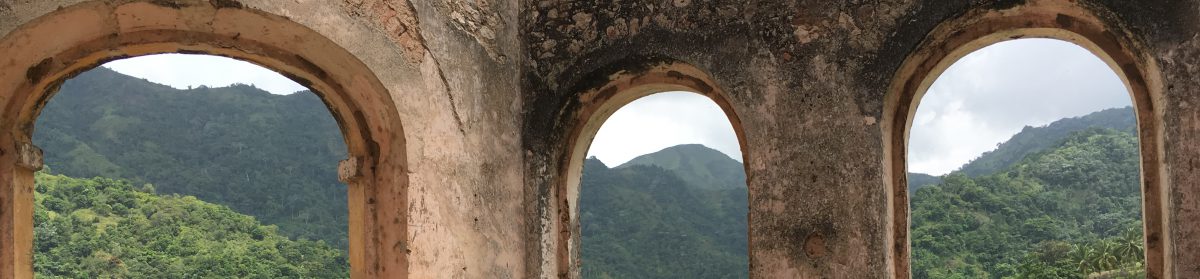



 Active Voice