“…the creation of our collective homophobia?”

Homeless gay youth live on the streets of Kingston and terrorize passers by…what is the solution? Could this problem be a “creation of our collective homophobia?”

Today the Gleaner carried a headline and article which has dominated the talk shows all morning. “Gays Wreak Havoc – Cops Say Homosexuals Too Much To Handle In South East St Andrew“. The first paragraph says it all:

Police personnel assigned to the St Andrew Central Division are admitting they are at their wits’ end in their bid to apprehend members of an ever-increasing group of self-proclaimed homosexuals who are allegedly wreaking havoc in the Golden Triangle and New Kingston communities of South East St Andrew.

Jamaicans have only themselves to blame for this problem of homeless gay street youth. This isn’t the first time we’re hearing about this. Several times last year we heard about the problems police were having with aggressive homeless homosexuals in New Kingston (see above video). JFLAG (the local gay rights lobby group) attempted to mediate but finally threw up their arms in frustration as it seemed there was little they could do to help. The young gay street youth wouldn’t listen to them. People calling up the radio stations are demanding swift punitive action but the Police have nowhere to put the young men if they arrest them and therefore  are ‘at their wits’ end’ as the article startlingly says.

Well this is clearly a case of the chickens coming home to roost. In December I read a blogpost that asked a very pertinent, self-evident  question: “Could this monster, which has come back to haunt us, be the creation of our collective homophobia?”

The writer goes on to point out that if Jamaican attitudes to homosexuality force families to evict members who are gay and if society in general then denies the young men decent jobs and the social wherewithal to make lives for themselves the outcasts will then do what outcasts everywhere do for survival: beg, borrow, steal, harrass, attack and generally ‘get on bad’.

It’s a predictable outcome. Why are we so surprised? Here is a homegrown case for a drastic revision of the counter-productive but widespread local bias against gays. This pressure isn’t coming from the international gay community, there is no foreign hand we can point to accusingly, this is a case of putting our house in order by ensuring that we don’t stigmatize those who are different from us, casting them out of society till they have no choice but to prey on the rest of us. There is not much the police can do about this problem. The solution to this one lies fairly and squarely in the hands of all Jamaicans. Let’s deal with it post-haste by dismantling the atmosphere of hysteria and denial surrounding homosexuality.

Aaron Swartz, JSTOR and academic paywalls…

In the wake of Aaron Swartz’s suicide a look at JSTOR from the point of view of a small journal publisher in the Global South…

Back in 2011 when Aaron Swartz was accused of downloading four million documents from the Massachusetts Institute of Technology and JSTOR, an archive of scientific journals and academic papers, i didn’t know anything else about him. The fact that he was a co-founder of REDDIT and some sort of digital prodigy or cyber whiz kid only came to my attention after his tragic suicide last week. As Deepa Kurup noted in a Hindu article dated January 15, 2013:

On Saturday, the open Internet lost one of its most passionate and talented champions, one who spoke up often against the inequalities of information flow and access on its World Wide Web. Aaron Swartz, all of 26, committed suicide as a result of depression, which many believe was triggered by the federal charges he was facing for hacking into the JSTOR (short for Journal Storage) academic database in 2011. Back then, Swartz had downloaded millions of academic research papers from the subscription database and planned to release them for free. In 2008, he had pulled off a similar hack with public court documents.

Swartz was first noticed when he co-authored the RSS standard (for feeds) at 14, soon after which he became a tireless crusader for free access on the web. He was the chief architect of OpenLibrary.org, a free public catalogue of books under the Internet Archive project, an early member of the Creative Commons team, and more recently, led a successful campaign against two key legislations — SOPA (Stop Online Piracy Act) and PIPA (Protect IP Act) – that sought to clamp down on intellectual property rights violations online.

…So in a fitting tribute on Monday, academics across the world paid tribute to this legendary hacker and advocate of a free and equal Internet by putting up PDFs of their copyrighted works online. On the micro-blogging site Twitter, the hashtag #PDFTribute trended all day, triggering a progressive and open debate on copyright, academic work and access.

In retrospect one is left feeling bereft at the loss of someone so young, gifted and bold; there are also residual questions about his action and his target, JSTOR, which is by no means the Darth Vader of academic archives. That honour better belongs to academic repositories such as EBSCo or journal publishers like Elsevier whose products each cost thousands of dollars in annual subscriptions. In fact Elsevier has come under sustained criticism from the  academic community and others.

JSTOR on the other hand is an entity I’m very familiar with. As managing editor of a small journal published in the global South (Social and Economic Studies, University of the West Indies) archives such as ProQuest, Gale and more recently JSTOR, have proved invaluable resources for making material published in our journals more easily available online. JSTOR in particular undertook the digitization of our entire printed output dating back to 1953, a very valuable archive of social science articles on the Caribbean by some of the most important researchers located here over the past six decades. This has made quite a difference to academic research on and about the region judging from the number of downloads of our articles in the one year since SES has appeared in JSTOR. For every download we get a small fraction of the price charged by JSTOR for its bundled journals, but its a sum that didn’t exist previously and that adds up to a not insignificant amount each year.

JSTOR also allows us to access their usage statistics, showing how many times a particular article was downloaded, what the most accessed article and issues are, month by month. Again for small regional journals such as ours, this kind of information is invaluable and assists in measuring the ‘Impact Factor’ of the research we publish. The huge citation databases of the North rarely take note of journals such as SES which have relatively small subscriber bases and are located in the South.

And that brings me to another thing–the frequently levelled complaint that academic content is inaccessible behind steep paywalls–on the contrary our subscription fees are very reasonable. We charge US$60 for an individual and US$90 for institutional subscriptions of four issues of SES per year. Yet we don’t have a huge subscription base and barely make enough to earn our keep from year to year. Economies of scale are a major problem for us. I wonder how many journals such as ours are included  and made available through JSTOR? Can this be balanced against the price of accessing material through them?

The Hindu article goes on to level another charge: “All the more relevant in the context of a developing country like India, many complained that outside university networks, it was impossible to access academic works.”
Again I can’t overlook a recent JSTOR initiative designed to address this very problem. As publishers we were all informed about the new Register & Read (R&R) program which was launched in early 2012 and now makes 1200 journals available for online reading. Its rationale was explained in an email:

We have an opportunity today that we believe is worth exploring together. Content on JSTOR is increasingly found by people that do not have access to it through a JSTOR participating institution. They do searches on Google, follow links to articles, and are then met with a closed door at JSTOR. In 2010 alone, we turned away nearly 150 million attempts to access our publisher partners’ content.

Rather than turning these people away, we think it makes more sense to welcome them, understand them better, and see if we can’t better meet their needs through a variety of access models developed with our publishers. While we already have in place the ability for publishers to sell single articles to individuals through our Publisher Sales Service and offer individual access to specific journal archives through publishers and societies, these efforts are only meeting the needs of a small number of these potential users.

As a first step, we are planning to launch a new ‘front door’ for JSTOR later this summer with the aim of improving the user experience,  gathering information about users, and testing some ideas about increasing access and publisher revenue. Users coming to the site will have a new option to “Register and Read.” Registering with JSTOR will give them read-only access to 3 articles that can be refreshed every two weeks. The articles can be purchased and downloaded if the publisher has enabled this capability through our Publisher Sales Service. Registered users will also receive unlimited access, including download capabilities, for most journal content published before 1923 in the United States and 1890 elsewhere.

Of course JSTOR wasn’t initiating such a programme for humanitarian reasons. In return for users registering and answering some questions:

…we will be able to: see how many users elect to register; understand who the registrants are; track which articles interest them; and know how frequently they sign on. We will also learn how having the option to read online impacts article purchase, and, working with our publisher partners, try out new promotions of additional articles, journal subscriptions, and society memberships based on their identities and behaviors.

Over time, we will be able to use this data to determine the potential demand for and to test a range of access options, including some that exist today (e.g., single article sales, journal subscriptions, etc.) as well as new models like online article rentals, day passes or even annual individual subscriptions to JSTOR. Our aim will be to meet the needs of more people around the world, in collaboration with and in ways that bring new revenue and readership to our publisher partners.

So this post is just to add some detail to what otherwise  seems like a very black and white scenario and to present for what it’s worth ( a few paisa surely?) the point of view of a small journal editor based in the global South. If Swartz was still around there”s one thing I’d want to ask–how and why did he decide on JSTOR as a target rather than any of the other worse offenders?

Beyond that I also have a doubt about whether  everything published in academic journals has a transparent use value for the public at large. I hear Swartz and others who maintain that information can and must be free. By and large I subscribe to such views myself. But to simply equate academic articles with useful information is misleading and perhaps untrue. Such articles have academic value and value within a citation economy on which universities rely for assessing academic value. That is all. Much of the ‘information’ gets dated very soon and like canned goods has expiry dates beyond which it is of  little or no use to anyone. Except academics. These are issues we need to have  more nuanced discussions about.

An Exemplary Resignation: Colin Channer and Calabash

Colin Channer’s letter of resignation to the Board of Calabash Literary Festival (which he was Chairman of) explaining the reasons for his resignation.

channer

People are always asking me for details about Calabash, the annual literary festival at Treasure Beach, Jamaica, and why suddenly at the peak of its popularity it seemed to stutter. After 10 glorious years there was suddenly no festival in 2011 and then in 2012 there was a reprise which i missed. It was obvious to me from the beginning that the problem was that Channer, the founder and artistic director of Calabash, wanted out and was no longer part of the core crew. Media reports claimed that funding problems were responsible for the decision to halt Calabash in 2011 but that wasn’t the primary cause. Finally Channer has broken his silence and explained why he decided to resign as he did. The Gleaner carried excerpts from his letter to the board yesterday but here is the full, unexpurgated version, courtesy Channer.

The Calabash threesome in happier times...Kwame Dawes, Justine Henzell and in background--Colin Channer
The Calabash threesome in happier times…Kwame Dawes, Justine Henzell and in background–Colin Channer

There may of course be a back story to all this. But even at face value its a move that ought to set a precedent in how to love something and yet be able to move on and allow others to continue what you started. This is something sorely lacking in Jamaica where I’ve just witnessed the most bloody handover of a public institution by its custodian of 35 plus years who having reached retirement age still wasn’t willing to call it quits and allow younger heads a chance to show what they could do. This is detrimental to our institutions, and no matter how brilliant, motivated and exceptional the principal concerned they would do well to take a leaf out of Colin Channer’s book and shuffle off when their time comes if not before their time as Channer has done. The world can and will run without you. Get over yourselves.

Just for the record I was at the first Calabash where the butterflies came out in their numbers–you see them all over Kingston when the Lignum Vitae is in bloom too…It was a magical, intimate Calabash that grew and grew and grew, pollinated by the butterflies as it were…Below is Channer’s letter to the board. Enjoy!

Good people (and bad asses), here is the full text of my recent hello letter to Calabash. A few lines were excerpted in the press today.

———————————————–

Dear Members of the Board:

In preparing to write this letter, I looked through the diary I kept casually in the early years of the festival, and found a note dated Thursday, May 24, 2001. It read: “In your opening remarks mention Nie.” Why did I make that note? And what did it even mean?

In trying to answer these questions I re-read every page of the small red book. What struck me most of all (in addition to the barbed-wire wildness of my urban scrawl), was that I’d made no mention of the 500 pink and yellow butterflies that had descended on Jakes, the festival venue, in that first year.

Do you remember their arrival? They came in the early afternoon on Friday, May 25th, and played with us for the next three days. When the festival was over they were gone.

I don’t know where they came from, or where they went. But I do know why I felt no need to record their presence in ink. In those early days of our journey, believing in the future of an international literary festival rooted in a rural part of a rural parish on the wrong coast of a country not known for order or an extroverted love of books, was as logical as going to an airport with a passport issued by the prince of an imaginary world.

When Calabash began in 2001, we operated alone in a world of our own making. Today, there are festivals in nearly a dozen neighboring countries, including Trinidad, Antigua, Barbados, Dominica and Montserrat. In addition, there are several new ones here at home.

I am happy that we’ve instigated these historic evolutions, that we’ve become a model of change. At the same time, I’m fully aware that we remain the most welcoming, the most inspirational, the most daring, and the most diverse festival of all.

None of these festivals have come close to matching our success. And this is not a boast. It is a simple truth, a truth as simple as the one on which we were built. Calabash was built as a communal space for people to publicly celebrate their private passions and love affairs with books. We have always made it clear through all our actions—including complimentary admission to all events—that we didn’t build this organization for some people, but for all people. And this difference cannot be overemphasized in a country where too many of the most glaring patterns of an unjust history are still in place, constraining and controlling hundreds of thousands of lives.

As the organization’s Founder, Artistic Director and Board Chairman from its inception until now, I’ve experienced our many successes from close range. In addition to the annual gathering of writers to read before thousands in Treasure Beach each year at the end of May, I’ve experienced what it takes to publish two major anthologies, six chapbooks of poetry, and to return three important classics of Caribbean literature to a life in print.

I’ve also experienced the thrill of establishing a writers workshop that has intensified the talent of over 125 writers, including Marlon James, winner of the 2010 Dayton Peace Prize in Literature, and Ishion Hutchinson, winner of the 2011 PEN/Joyce Osterweil Award.

However, my biggest thrill is of kind few leaders are ever fortunate enough to have: the clarity of conscience that comes with ending active tenure with the ledger in the black.

As you know, I brought my active tenure to a close at the end of 2010. Since then two years have gone by. It is now time for me to end my tenure completely and appreciate your efforts from afar. This letter serves as my resignation from the Calabash International Literary Festival Trust and all its related organizations, in all capacities, with immediate effect.

If you should ask me to express my feelings in a single word, it would be joy. The ultimate goal of leadership must never be its own survival, but to become obsolete. I am glad this time has come.

If you should ask me how I’d like to be remembered, I’d be torn between the many silly names you’ve given me to highlight my obsession with getting every detail right. John called me Master and Commander. Justine called me Festival Dictator. To Kwame I was The Architect.

The “Nie” in that diary entry many years ago is almost certainly a reference to Oscar Niemeyer, who designed many of the most important buildings in Brazil. I must have planned to use a quote from him in my first-ever opening remarks. I am not sure which quote I would have chosen, but now in this time, this quotation just feels right: “… from my perspective, the ultimate task of the architect is to dream. Otherwise nothing happens.”

This is not goodbye from me, dear friends. In truth, it is hello. With the passing of two years I can now greet you with the open gaze of an enchanted stranger. In time we’ll get to know each other once again.

I leave you now with something that the world needs more than even love, and that is gratitude. Thanks for 4,380 days of selfless giving.

Sincerely,

Colin Channer (CC)

Cauterizing Jamaica’s Debt Wound

There’s been a bit of an uproar in Jamaica ever since the Chicago Tribune published an editorial on Jan 8, 2013, comparing Jamaica’s parlous financial state to that of Greece, considered the biggest loser of 2012. Provocatively titled Jamaica’s Debt Hurricane the editorial drew attention to Jamaica as another Greek tragedy waiting to happen:

Americans concerned about the impact of public debt on the global recovery have focused — with good reason — on Greece. Closer to home, however, the tourism mecca of Jamaica illustrates the catastrophic effects of borrowing way too much, and the painful choices that follow. This saga, less familiar than Greece’s, is a lesson for lawmakers in the U.S. and elsewhere.

The Caribbean nation actually is in worse financial shape than Greece: Jamaica has more debt in relation to the size of its economy than any other country. It pays more in interest than any other country. It has tried to restructure its loans to stretch them out over more years, at lower interest rates, with no success. Such a move would be risky for its already nervous lenders. So Jamaica is trying to wangle a bailout from a skeptical International Monetary Fund. Another deadline for a potential deal just came and went last week, though negotiations continue.

Jamaica is caught in a debt trap. More than half of its government spending goes to service its loans. The country can spend barely 20 percent of its budget for desperately needed health and education programs. Its infrastructure is faltering. It lacks resources to fight crime. It has little margin to recover from natural disasters such as Hurricane Sandy.

To set itself straight, Jamaica needs a restructuring, and a bailout with significant debt relief. No way can a small economy that has limped along with growth at less than half the global average for two decades pay back the fortune that it owes. But as with Greece, as with America, as with the state of Illinois, government leaders have balked at imposing the inevitable hardships. Saying no to favored constituents is no easier in Kingston than in Springfield.

This bald statement of Jamaica’s stark reality has deeply shaken this nation whose citizens have never had a liking for plain talk. Being a former sugar plantation, the product is abundantly available, and sugar-coating the truth is routine. In the excited chatter that followed, this response by a young friend on Facebook stood out. His name is Samuel Morgan:
Ok – so Jamaica has a serious and critical debt problem. This is therefore the challenge of our time, for our generation to fix and I believe wholeheartedly that we can – why are we educated if not to find solutions? if we don’t, then our children will have to fix it, and if they don’t then theirs will. Could I find just 20 humble and willing people who aren’t motivated by greed and personal welfare, who aren’t caught up with always going to party at maiden cay and getting drunk on Friday nights – who are not so egotistic as to think that they are better than their ordinary countrymen , who are patient and ingenious , who are prepared to sacrifice for the good of those who will come after, whose names will be deserving of marking the halls dedicated to them and their work, and whose names children of the future prosperous Jamaican nation will proudly bear? Could I just find 20 people who understand that things will never get better unless I can find these 20 people? And could those 20 people inbox me with the subject – Revolution!
Its the young who will have to find ways to cauterize our debt wound. If there are enough like Samuel Morgan around there is hope.

Are we listening now?

What will it take to change the status quo in countries with the kind of healthy, flourishing rape culture that accompanies the worst forms of patriarchy?

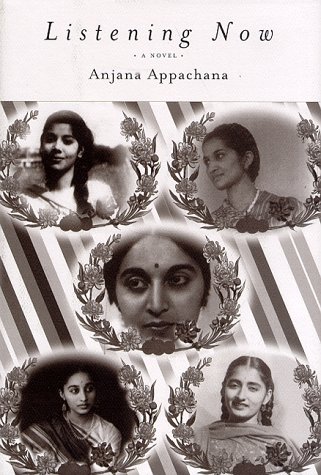
In my last post i quoted a passage from Listening Now, a 1998 novel by Anjana Appachana about women in Delhi in which she captures the kind of lecherous assaults they often face in public. It was a situation we ourselves were familiar with as students at Lady Shri Ram College (LSR) in the 1970s. One intimate of ours was abducted by a hoodlum named Bobby Oberoi and narrowly escaped being raped by him. We later discovered that he was a budding Don, the scourge of Delhi University women, many of whom he had raped at gunpoint. Traumatized, she was afraid to return to Delhi, but luckily for her it was 1975, Indira Gandhi had just declared the Emergency, and most petty criminals and gangsters had decamped from the capital in a hurry: those who didn’t, risked being removed by the armed forces during curfew hours.

Later when some of us moved on to Jawaharlal Nehru University another member of our in-group found herself the victim of a stalker, a fellow JNU student from Aligarh, who became obsessed with her, dogging her footsteps wherever she went and begging her to marry him. It got so bad the university had to intervene, terminating his stay at the university and sending him home. JNU was an experimental university, the first central government funded university i believe, and every single state was scrupulously represented in its student body. This meant that students from rural areas who had never set foot in a big city suddenly found themselves rubbing shoulders with the most hip and sophisticated types from Delhi University, Calcutta, Bombay and the other major cities. It was the female students coming from colleges like LSR, Miranda House, Sophia’s who caused the most consternation for there was no counterpart for them in small-town or village India, where women rarely moved freely in public by themselves.

Anjana, like many other feminists, seethed with anger at the blatant lack of respect women were treated with, and was particularly incensed by the impunity with which men behaved, their actions circumscribing women’s lives in harmful ways. But were only men to blame for this state of affairs? Not at all. Her response to my quoting of the scene in her book makes the point that it’s often women themselves who deny the existence of gender-based violence, thus allowing it to continue without check. As she said:

Yes, that anger still simmers, but the writing helps Annie…but women don’t want to hear about it. When I had my reading at LSR either in ’98 or ’99, many of the girls were upset about that scene, because they felt it was unnecessary and that things were different. I was appalled. In fact I remember one of those girls shaking her head at me in disappointment and asking me why I found it necessary to write that scene. I said, it happens. And she shook her head again. Perhaps they saw me as a “foreign returned” woman who had no right to write these things. And I didn’t want to start justifying my years in India (have been coming here every year, now twice a year and living here not as a tourist but as a constant caregiver), so really, there was nothing to say. Fortunately the other readings went off very well, no one protested about that scene. But imagine, LSR girls! Sometimes I find, even about other things, that it is women who are most incensed by some of the things I write about. It is the attitude of “It-isn’t-like-this-anymore.” And from what I have seen and lived, it is worse now, because we women are going forwards and the men are rapidly going backwards. Also, all these rape protests are good and necessary, but are women making any changes in their own lives? Do they feel passionately about what is right and wrong and then do they try and do something about it?

I think we’re all just beginning to realize that if we–women, that is–want to feel safe and equal, we’re going to have to do something about it ourselves and this includes erasing or reformatting our own socialization. The following blogpost by Neha Dixit speaks eloquently of what will be required, among other things:

Unlearning submission

When the middle class thronged the roads protesting against this rape, they got a first hand taste of the police atrocities. Unlike the Anna movement, here they were ready to face police batons, water cannons, tear gas, which was till now  for them only a romantic image of a revolution. They lived the reality of stone pelting in Kashmir and the autocracy of the Armed Forces Special Power Acts in the Northeast. It may be surface sensitisation, but it was also a moment  to expose the sex terrorism of the state. To discuss custodial rapes, about the rapes of adivasi women like Laxmi Orang, who have been waiting for justice for the last five years or that of Manorama who was raped and killed eight years back by the army. And it is in this light then the middle class may understand the grotesqueness of Central Home Minister, Sushil Kumar Shinde’s statement when he says, “ Tomorrow, if 100 adivasis are killed in Chhattisgarh or Gadchiroli, can the government go there?”  It is this participation, even at a cursory level, that is potent enough to initiate the scrutiny of political representatives and their prejudices.

For a woman who has made the journey from a stereotypical, upper caste patriarchal, middle class, small city person to a person who is still struggling to fight it on a daily basis, to do away with all stereotypes and acknowledge one’s privileges to engage with the working class, I understand the importance of unlearning. In creating an independent life, in awakening one’s own critical consciousness.

It is this unlearning that was instigated by these protests amongst the middle class. The unlearning that teaches to refute, question, assert and empathise. The Indian feminist movement is hidden under these protests.

In addition to unlearning the harmful effects of having learnt to be women in a profoundly patriarchal society we might have to take direct action of the kind outlined on Facebook by my friend, Punam Zuthsi…

On the 3rd I attended the IIC panel discussion moderated by Soli Sorabjee. From amongst the audience there was a suggestion … offered hesitantly that there should be a group of women who should volunteer to spend 12 hours at a time at a police station to ensure that anyone who came to the police station feel reassured and supported… I am told that there is a system by which women who volunteered could be made honorary constables. Reading the account of Nirbhaya’s companion who sat for hours in the ER of Safdarjang without a stitch; and hearing of a man whose head injury was not attended to for the whole day given the rush on the CT Scanner in the Safdarjang/ AIIMS… Apart from police stations there needs to be someone at the Emergency Rooms of Safdarjang and AIIMS and the Trauma Centre as well… Obviously the ‘social work’ segment at the hospitals is not terribly useful… One knew that the ERs did their work but it seems that they seem not to be as reassuring as I thought they were…

Now are we prepared to undertake such a radical rearrangement of our lives? If we want to lead free and unencumbered lives we’ll have to secure it by finding solutions to each of the ways in which society systematically failed that ill-fated young woman who was trying to do something as pedestrian as catch a bus home last December 16. We’ll have to acknowledge that there are fundamental ways in which our culture(s) must change. If not change won’t come in our lifetimes or the next.

Finally some of the change so urgently needed isn’t that difficult. A lesson may be learned from the family of SOHAILA ABDULALI, who lived to write about the horrific rape she suffered at the age of 17, and how she survived to lead a full life because of the empathy of her family and their continuing love and care for her after she was raped. That is what families are supposed to be, nurturing cradles of unconditional love–no matter your gender–especially when life has left you damaged or brittle. Read the following article and see how familial support and love helped to heal a trauma that could have disrupted Sohaila’s life forever. Now why can’t we all take a leaf out of this family’s book?

It’s not exactly pleasant to be a symbol of rape. I’m not an expert, nor do I represent all victims of rape. All I can offer is that — unlike the young woman who died in December two weeks after being brutally gang raped, and so many others — my story didn’t end, and I can continue to tell it.

When I fought to live that night, I hardly knew what I was fighting for. A male friend and I had gone for a walk up a mountain near my home. Four armed men caught us and made us climb to a secluded spot, where they raped me for several hours, and beat both of us. They argued among themselves about whether or not to kill us, and finally let us go.

At 17, I was just a child. Life rewarded me richly for surviving. I stumbled home, wounded and traumatized, to a fabulous family. With them on my side, so much came my way. I found true love. I wrote books. I saw a kangaroo in the wild. I caught buses and missed trains. I had a shining child. The century changed. My first gray hair appeared.
Girls, Interrupted…No City for Women…

Padma began to scream. Then Anu began to scream. As if in slow motion Madhu saw that like boxers in a ring they were in the middle of a crowd of men with avid eyes, yes, it was the eyes that she always remembered, that Padma was bent over, her hands covering her breasts, that Anu lay crouched on the ground in a foetal position, her legs curled, her hands tight around her body. As Padma screamed Madhu saw the thick ring of men around them move back smoothly like a receding wave, then smoothly, in perfect accord, the wave flowed back towards them and they were engulfed. The hands at Madhu’s breasts squeezed and pinched, between her thighs the fingers probed and prodded, they slid down her bra and below her waist under her petticoat, she heard a groan as a hand rubbed her bare bottom up-down, as if it were sandpaper, she struck out with her bag and hit someone and her long nails scratched someone else’s hands, she bent down, her elbows out and hit someone’s stomach and as she did she felt a body moving hard against her back, both his hands holding her thighs, she heard her own scream as she fell on the ground, her head hitting the ground. There was silence. The loudspeaker began its next song from the latest Hindi film. She opened her eyes. It was as if nothing had happened, no one was around them, a few yards away four policemen with lathis stood grinning, and beyond them everyone stared.

Listening Now, Anjana Appachana

listeningnow

The above quote from Anjana’s 1998 novel, Listening Now, set in Delhi, captures the horrors faced by women in India’s capital city where packs of predatory men regularly terrorize women and have done so for decades. Anjana, who was at Lady Shri Ram College (LSR) with me (in the Emergency-prone 1970s) and later at Jawaharlal Nehru University (JNU), right next door to Munirka where a young woman’s innocent decision to board a particular bus interrupted her forever, was always incensed by the overbearing male gaze that ruled our movements, the way we dressed, the way we spoke…what we could and could not do.

Rape statistics from National Crime Records Bureau's Crime in India 2011 report plotted on an interactive map of India. Hover over the map for detailed stats.
Rape statistics from National Crime Records Bureau’s Crime in India 2011 report plotted on an interactive map of India.

The recent fury in India over the gutsy, hard-working  optimistic young woman whose life was so rudely, abruptly,  interrupted by six predatory males in a bus who literally gutted her in the process of sating their lust and rage reminded me of Anjana’s novel and her simmering rage about the traumas and  injustices regularly faced by women in India. I hadn’t read it since 1998 but I knew it wouldn’t take me long to find the relevant passage.  Note that the passage ends by highlighting the indifference of the police to the women’s plight, their grins even signalling a kind of pleasure in what they were witnessing.

And that is what astounds the most; that the Indian Police, those assigned to protect the public from criminals and gangsters, seem not to see anything wrong with sexual predation and rape. Exactly 10 days after the hideous gang rape in Delhi, on December 26, another gang rape victim in North India ended her life, unable to cope with policemen who were more interested in getting her to drop rape charges and marry one of her rapists than uphold law and order. As a New York Times article detailed:

The family of Paramjeet Kaur sat huddled in the dusty courtyard outside their house on Monday afternoon as a stream of senior police officers, politicians and villagers arrived to pay their condolences after Ms. Kaur killed herself on Dec. 26, nearly six weeks after she was raped by two men.

The family kept asking: Where were all these people when their 18-year-old daughter had sought justice from the village council of Badshahpur and the police, only to be humiliated and pressured to strike a deal with her rapists?

“They are all here now, but nobody helped us then,” said Charanjit Kaur, 28, Ms. Kaur’s sister, as she sat against a whitewashed wall, her knees drawn up to her chin. “If the police had done something, she would be alive today.”

The practice of getting rape victims to marry their rapists strikes me as an extremely dangerous one. In effect it acts as an incentive to men to rape women if by doing so, they can expect the woman in question  to legally become theirs. What a bizarre version of crime and punishment. This principle certainly wouldn’t be applied to property would it? Hard to imagine a gang attacking a private home and having terrorized the owners, being allowed to acquire the property for themselves? But that, in effect, is what this complete perversion of justice amounts to.

What makes Delhi such a charming city and one that I keep returning to are the splendid ruins of old tombs and temples that irregularly interrupt the bustling city scape. Reluctantly I’ve come to believe that there are correspondingly ancient, if unlovely, mindsets –steeped in feudal, patriarchal logic and incompatible with the demands of contemporary life in cities such as Delhi. And they occur much more frequently than the occasional picturesque ruin in the postcolonial landscape. What we are confronted with in the case of these violated girls, are archaic psyches interrupted by the postmodern, themselves no doubt the victims of class-based iniquities,  reacting to the assaults with savage violence and cruelty. The failure of the  Police to do the right thing by women is also symptomatic of this time-worn  hoary mentality. We are in the midst of a cultural crisis of no mean proportions. I don’t believe we can legislate our way out of it.

How are we going to repair Indian culture?

So much has been said, so much written, emoted, protested, pronounced and declaimed that you wonder if you should even venture to add anything to the maelstrom surrounding the young woman so brutally violated in Delhi who has now succumbed to her fearsome injuries. Yet not to mark her death with a post would be to disregard her life, to avert my gaze from this youngster who paid so dearly for having been out with her male friend in Delhi on December 16.

Image from Bangalore NH7 Weekender

On that same evening I was in Bangalore, with Achal and Rita, enjoying the stupendous NH7 Weekender music festival. Somewhere in a field near the Yelehanka Airforce Base this superbly organized event featured seven stages or music stations facing different directions each one with a roster of acts simultaneously pumping out a particular genre of music: rock, soul, folk, punk, electronica and of course the Pepsi Dub Station with Reggae-inspired music. In fact i had organized this outing so i could hear the Reggae Rajahs live at the Pepsi Dub Station.

Weekender2

We watched Indian Reggae fans skanking and vybsing to the Reggae Rajahs who put on a great performance. We had barely arrived in time to catch them and missed all the earlier acts but it was wicked to be in Bangalore listening to live Reggae and so much else. The whole event had a mela-like atmosphere, thousands of youngsters, i mean probably 20 thousand young men and women, many of them out with each other and enjoying themselves. There was food, drink, other stuff to buy and the music crashing all around us, what an awesome moment, especially catching just before we left, the amazing Indian Ocean, one of the oldest pop bands in India.

Achal vouchsafed that the experience had restored his faith in Bangalore which in recent years with the explosion of tech industries had become unrecognizable from the gentle, civilized city it used to be. But seeing all these young men and women out having clean, good fun said something for the kind of space still available for non-religious, communal, Western-inflected, almost cosmopolitan recreation. Mind you you had to well-heeled, the tickets weren’t cheap but it wasn’t by any means exclusively an upper-class, English-speaking crowd.

In the aftermath of what took place in Delhi that same night, originating in a part of Delhi i know so well–Munirka–having studied at JNU (Jawaharlal Nehru University), i was haunted by the thought of what a hostile space that city i love so much represented for a young man and woman who had only aspired to see The Life of Pi that evening. Early reports suggested that the rapists had taunted the young woman for being out alone with a man at 10 pm, as if to say she was now fair game for rape. They then had their way with her, expressing on her body and that of her companion, but particularly hers, all the repressed desire and rage engendered by a society that refuses to acknowledge the sexuality of its young, that keeps it pent up beyond all reasonable limits, allowing no space for young women and men to be with each other and enjoy their youth.

Who were these men? How old were they? I bet they didn’t have girlfriends or wives yet…where was their sexual energy supposed to be spent? This isn’t to justify their bestiality…personally i think they should be castrated as an example…but these are questions we need to ask and find answers for.

Ironically the long term cure for the rape culture so cozily nourished by draconian Indian kinship and marriage practices is the very thing this unnamed young woman and her friend were doing that evening. The practice of young men and women going out together before marriage has to be encouraged, cultivated and normalized before there’ll be any reduction in rapes. Look within India at cultures that have space for mating rituals before marriage and see what the correlation with rape is.

Gujarat may feature very high on the rape radar because of the systematic, premeditated rape that accompanied religious and ethnic riots there but if you look at regular, everyday rape statistics there i wonder what it would show. Because Gujaratis are generally very permissive towards their young and have space in their culture for widespread pre-marital mixing. Their garbas and other communal dances are designed i think to engage the sexual energy of young Gujaratis legitimately, within the culture, respecting cultural codes. As long back as the 60s and 70s the prevalence of courting couples had changed the name of Law Gardens in Ahmedabad to Love Gardens.

Look at Bangalore and the NH7 weekender event i described earlier and the vibrant pub culture long associated with this city. In recent years religious fundamentalists have decreed that pubs and other places be closed earlier and earlier, that spaces where the young could dance be shut down, all in the name of some sinister vernacular morality that ultimately begets, actually propagates, widespread rape, much of which takes place within families, with underage children, with the helpless and the most vulnerable in our societies. I haven’t even touched on the dread subject of Dalits all over India and the routine violation and terrorism they face at the hands of ‘moral’, ‘upright’, ‘chaste’ Hindus.

So rage against the government all you want, the problem is really with Indian culture, broadly speaking, despite the preponderance of female gods. Goddesses notwithstanding, as constituted now its a culture that incubates rapists, then trains them and arms them. How are we going to repair that?

nirbhaya_grey1
Nirbhaya image via Deepak’s Lore

Petrine Archer, 1956-2012: Scythed too soon

A note on the passing of Petrine Archer-Straw, British-Jamaican art historian.

petrine

The Caribbean is in mourning at the sudden passing of one its small group of art historians, Dr. Petrine Archer-Straw. Not many of us knew that she suffered from sickle cell disease which literally allowed the grim reaper to scythe her yesterday, on the eve of her 56th birthday. I didn’t know her closely, but we both wrote about art and sometimes found ourselves in the same forum, as in 2002 at the Documenta11 platform on Créolité and Creolization in St Lucia. Our views on art and culture often diverged but i will miss her meticulously kept blog which chronicled most art events worth recording in Jamaica. Her entries were brief, to the point and allowed you to get a quick sense of whatever it was she was documenting.

Interestingly in a recent posting she found herself confronted by the freewheeling  visual prodigy Peter Dean Rickards, who challenged her description of his recent excursion into the English art scene as a ‘claim’ on his part ‘to‘ fame. After a brief back and forth she was forced to alter the preposition ‘to’ to ‘about‘ which more accurately described his engagement with Banksy, and with LA Lewis whose tongue-in-cheek exhibition ‘Almost Famous’ was incorporated into the Nottingham show. Thus her final sentence read:

Rickard’s deliberate destruction of Banksy’s work and his ‘outing’ of the internationally enigmatic artist Banksy has solved a mystery, while also making an ironic statement about Rickard’s own claims about fame. View more works in the show.

One of her most recent projects was a collaboration with Claudia Hucke from the Edna Manley College of art in which they revisited  Jamaica’s first exhibition to tour Europe after gaining independence in 1962, Face of Jamaica, providing rich context and information about it:


Petrine was also responsible for creating a mural at the University of the West Indies’ Taylor Hall, a student dormitory. See image below courtesy Trevor McCain:

petrinetaylorhall

For more about Petrine or Pet as she was known to her close friends read this moving eulogy put out by the Art History Department at the Edna Manley College of the Visual and Performing Arts:

The Art History Department and the School of Visual Arts regret the passing of Dr Petrine Archer-Straw. Dr Archer-Straw passed away in the early morning of 5 December 2012 at UWI Hospital as a result of a sickle cell crisis.

Dr Archer-Straw was the first official Head of the Art History Department here at the College serving as a Consultant from 2002 till 2004. She was responsible for creating the Department, recruited three of the five current staff members and created a long term vision plan for a possible Art History/Visual Culture major.

Dr Archer-Straw has a strong publication and curatorial record including her monograph Negrophilia, the book Jamaican Art, which she co-authored with Kim Robinson, and her exhibitions New World Imagery, Back to Black and Photos and Phantasms. Most recently she co-curated with our member of Department, Dr Claudia Hucke, the online exhibition About Face: Revisiting Jamaica’s First Exhibition in Europe. At the National Gallery of Jamaica she was also directing a major project that would critically engage the visual culture of Rastafari, entitled Rasta! Dr Archer-Straw early on embraced the digital world, excitedly using technology in the classroom and creating and utilising internet resources for Caribbean art. Her blog PetrineArcher.com is especially noteworthy for its entries on Jamaican artists. Dr Archer-Straw has taught at Cornell University in the United States and worked in the Bahamas, helping to create a roadmap for the structure of the National Art Gallery of the Bahamas.

Dr Archer-Straw was a gracious mentor and close friend to us all in the Department. She was a constant source of encouragement and guidance for our work. As a scholar she emphasised the importance of being focused, disciplined, and principled, but noted we should never lose the joy in our work. There was a formality to her demeanour emphasised by her English-Jamaican accent and her graceful poise from years of yoga. But she also knew how to laugh giddily with a girlish charm. Dr Archer-Straw was a model for us, never shying away from starting anew. She took up yoga training in her early forties and became a popular instructor; recently, she also became an art appraiser. Perhaps, because she suffered from sickle cell she emphasised a balanced life and found ways, whether through yoga, gardening or dancing to control her illness rather than having it control her.

 We will miss her dearly.

Resonance…by Jasmine Girvan


Resonance by Jasmine Girvan…, a set on Flickr.

Every year close to Christmas jeweler Jasmine Girvan has a show in Jamaica…This year the show was strong on sculpture as you can see from the photos. These photos were taken at the HiQo Gallery last night during the opening or vernissage of Resonance…one of the highlights of the show was an obvious commentary on some of the political pussyfooting at the 2011 Commission of Enquiry into the Government’s handling of the extradition request for former West Kingston strongman Christopher ‘Dudus’ Coke.

Exhibition runs til 13th December, Tues- Sat. 10 am – 3pm. Do go and check it out.

‘At this school we slap kids’…

An aside on corporal punishment in Jamaican schools with a quote from Professor Orlando Patterson on the terrors of Jamaican childhood as he experienced it.

I find myself bemused by the latest subject of public discussion in Jamaica–whether corporal punishment is a suitable form of discipline for children or not.  Alas it seems that if a poll were taken there would be overwhelming affirmation for this cruel practice despite there being instances of severe abuse, including a young boy who lost his eyesight after being struck with a teacher’s belt.

The subject hit the airwaves after a parent objected to her nine year old daughter being hit for not performing well enough at a popular Jamaican school. The following report in the Sunday Observer tells it all:

At this school we slap kids

THE administration of Kensington Primary School in St Catherine is coming under fire from the parents of a nine-year-old girl who are taking issue with the school’s use of corporal punishment in its administration of discipline.

However, the leadership of the school, which is arguably the best-performing primary institution in Jamaica, is hitting back, insisting that it has done nothing wrong, as the flogging of students plays a key rule in ensuring that they focus and display the behaviours that are conducive to learning.

What I find disturbing is the number of people i know, talk show hosts, Facebook friends and others, who defend the use of corporal punishment. One friend asked:

Shouldn’t we define corporal punishment  I believe there is a qualitative difference between a slap/hit in your palm as opposed to caning on the backside. When my children consistently do something that is wrong, I slap them with a short belt, not to hurt them, but to remind them that that particular behaviour is not what is expected of them. Over the years it seems to have worked. What is the alternative to correcting bad behaviour away from this physical reminder?

I think what I’m dumbfounded by is the fact that normal, responsible, well-educated adults genuinely don’t seem to know that there are other ways to discipline or teach children right from wrong. Another argument that keeps being repeated is:  WE were all brought up on the strap, the switch and the whip and look how well we’ve turned out.

No bredren, you haven’t turned out well, you’ve grown up into someone who thinks that its absolutely fine to beat a child into submission! You’ve taught that child the lesson that violence is the solution to ignorant behaviour not explanation or reasoning or education but application of pain. No wonder Jamaica is such a violent place. Colin Channer even wrote a story once called How to Beat Your Child the Right and Proper Way.

In fact the whole sorry state of affairs reminded me of an email  I recieved from Orlando Patterson some years ago. He was responding to an interview I had done with Rex Nettleford in Caribbean Beat in which Rex had rhapsodized over his idyllic rural childhood in Western Jamaica. Orlando’s memories of growing up in the Jamaican countryside were altogether darker. I hope he won’t mind if I quote the relevant paragraphs here…

It was interesting to read a bit about Rex’s childhood although it is heavily filtered by him. I grew up in rural Jamaica too– May Pen mainly, (then a small village) and Lionel Town (a couple of horrible years; I can still recall the stench of the hospital which suffocated the entire town) and spent holidays in St. Elizabeth. Rural life at that time had its brutal side: hunger, beatings from parents and grandparents who firmly believed in not sparing the rod and spoiling the child; sexual abuse of young girls (and, possibly young boys, although I was spared that), overcrowding and just mindless boredom. Rex and myself were among the very, very lucky ones who escaped through education. What I recall are the farm kids who never turned up to school on Fridays, then never on Thursdays and Fridays, then by age 10 or 11 never at all. The teachers were nearly all pretty sadistic, all of them armed with heavy leather straps, some with forked ends. I just don’t see how one can romanticize most of that.  It was serious alright, seriously oppressive. Sure there were the good moments– the moist light of the early mornings; the evenings before sleep when the older kids told stories; the rainy days when the teachers briefly rediscovered their humanity and treated us like the children we were; the occasional country fair ( in my case, the early days of the Denbigh Agricultural Show). But they were few and far between, and even the public rituals and fairs had a scary element for a young kid: the Jan Cunu and Horsehead  mummeries were genuinely terrifying; the Hussay festival which the Indians in Vere enacted  annually scared me near to death as I gasped at grown men  flagellating themselves and seeming as if they were about to chop each other to pieces; the crop-over market dances which always had at least one fight or worse. For nearly all but the fortunate few, life for a kid growing up in rural Jamaica (it was a lot better in Kingston, then) during the thirties, forties and fifties, was raw, unhealthy, painful, often hellish, and for far too many, brief.

Sorry if this depresses you. I am still reeling from the shock of  New Orleans and the horrible ineptitude of the federal and local governments here.  In a better mood I might perhaps remember rural Jamaica in terms more like Rex’s, but I doubt it.

One good thing is that beatings are no longer administered in most schools in Jamaica after determined efforts by the Ministry of Education to discourage it. The outcry in the media concerning Kensington Primary’s use and defence of corporal punishment is also encouraging.  Hopefully the number of children living in terror of physical violence will continue to decrease.