
“One from ten leaves naught”

Screenshot 2017-11-10 19.00.01_preview

my Gleaner column of October 15, 2017

Research on a great Jamaican scholar who went to Oxford in the fifties has led me face to face with the exciting moment when the political federation of the Anglophone Caribbean was not only seriously being considered, it had briefly become a reality. By Jan 3,1958 the Federation of the West Indies was a functioning political entity and by May 31, 1962, it was no more. Most of us are only familiar with the famous statement made by then-President Eric Williams of the federal government of the West Indies when Jamaica’s departure put paid to the future of Federation: “One from ten leaves naught.” But what exactly were the considerations that led Jamaica to leave the Federation after a referendum by the then JLP government returned a majority vote against it?

Among university students from the Caribbean at Oxford, Cambridge and other universities in England the Federation was a political entity impatient of debate. In the West Indian diaspora that developed in England, migrants from different islands were forced to shed their national identities and band together as West Indians. To begin with, it soon became obvious that to the English they were all seen as having the same racial/ethnic identity—often misidentified as Jamaican.

As they settled into their new homes and workplaces the creolization of English cities began to occur, arousing the resentment of working-class English men and women who viewed the West Indians as interlopers. This pushback further reinforced the sense of a diasporic West Indian identity.

It was natural in such a climate for there to be great sympathy for a federation of the relatively small micro islands of the Caribbean into a larger, more powerful polity. This further united the university students from the Caribbean, who felt that uniting against common adversaries would give the West Indies a better chance of postcolonial prosperity. Today the plans for a Federated West Indies are hardly remembered and it’s well worth lingering on them here to regain a sense of why the idea was so seductive.

The initial push for Federation had been made by the British, who were increasingly reluctant to foot the mounting bills to maintain their fifteen colonies in the West Indies. There were, for example, seventeen governors, eight directly taking orders from Downing Street, complete with their individual staffs, to govern the 15 colonies or ‘units’ as they came to be called.

Many of the West Indians at University in England looked forward to returning to become citizens of the independent “West Indian nation state” proposed at the time. But Federation meant different things to different islands in the Caribbean. In Trinidad and Tobago, it was synonymous with the politics of Chaguaramas, a piece of land leased by the British to the US in 1941 for purposes of maintaining a naval base there. There was tremendous political pressure to recover the leased lands for the site of the Federal Government but Eric Williams, the leader of Trinidad and Tobago was also wary of alienating the Americans by making such a demand.

It fell on J. O’Neil Lewis and William Demas, civil servants who had been sent to university in the UK by their government, now back in Trinidad and Tobago, to write a paper on the Economics of Nationhood laying out an administrative structure for federal governance. Trinidad and Tobago felt that the freedom of movement of persons enabled by Federation without concomitant movement of capital and investment would affect Trinidad the most, with other small islanders flocking to the oil-rich island for jobs. The Federation had to be able to intervene in such a situation by providing aid, funds for which could be found only if the region’s customs and income taxes ended up in its coffers. The Federal entity would also determine industrial policy for member states. Naturally, there was disagreement over such proposals particularly from countries such as Jamaica that felt it had little to benefit from such administrative arrangements.

Screenshot 2017-11-10 18.57.53_preview

There was no agreement among the 10 countries in the Federation as to whether the power to regulate industrial development, freedom of movement and the collection of taxes should rest with the Federal Government or the individual island state governments. For Jamaica, for example, the ability to use its own income tax and country revenues to fund its industrial development was crucial to its economic policy. The Jamaicans countered the strong-Federation model proposed by the Economics of Nationhood with MP18, a proposal for a looser federation of politically powerful units.

There was also disagreement about parliamentary representation for the member states. The Jamaican Premier Norman Manley suggested that it should be proportional to population numbers so that Jamaica with a full half of the population involved in the Federation, ought to have fifty percent of parliamentary seats available. Although a modified version of this and other suggestions of Manley’s were taken on board by the incipient Federation, in 1961, the people of Jamaica voted in a referendum not to remain part of the regional entity. Basically, Jamaicans could not see what advantage there was in a coalition with a number of, what they considered small, insignificant islands, and were suspicious of being governed by a government external to their territory over which they would have little control.

Had British Guiana and British Honduras been part of the Federation the Jamaican decision to leave might not have been so clear-cut for it was felt that their larger markets would have made belonging to such a federation a more economically viable and durable political decision. But for various reasons they were not so Jamaica bowed out, leading to Williams’s immortal statement “One from ten leaves naught.

From Nation to Abattoir?

Chubby


My column of September 6, 2017. The funeral for Leonard Collins “(Chubby”) is this Saturday at Church of Christ, Mona. I still shed tears at the wantonness of his killing.

I didn’t know his given name. On campus he was known as Chubby, a dread with a bicycle and a green thumb, who worked in the Maintenance Department for many years. Involved in a job-related accident some years ago, Chubby was waiting to collect some long overdue compensation monies.

On Friday, the 25th of last month, the money finally arrived in his credit union account and Chubby went and collected it. The first thing he wanted to do was buy a cake for his two-year old son. He sat down outside his August Town home with some friends idly discussing where to buy the cake. Some said Megamart, others said he should get a Cherry Berry cake from Sugar and Spice in Liguanea.

I remember when the ‘yout’, as Chubby called him, was born. The proud father came to my office to see if I could help in any way, as there were complications. I gave him some money. What Chubby really wanted was for me to visit his son in hospital because he said ‘they’ would treat him and his family better if someone like me visited. It haunts me to this day that I allowed my fear and dislike of hospitals to dissuade me from going.

Two years later Chubby did not get to buy his son a cake. The same night he got the money, someone pushed their way into his house and robbed him, viciously shooting and killing him in the process. I don’t think his death made the news. Sometimes I wonder if murders in August Town are under-reported to protect the much vaunted but fragile ‘peace treaty’. I know that not all murders are reported to the media by the Police in time for them to carry the news.

It’s heartbreaking when from he that hath not, even that which he hath not is taken. A good, hard-working man has been struck down, separated from the one thing he could call his own—his life. What lies ahead for Chubby’s son now, joining the legion of fatherless children?

There was a series of gruesome murders in Clarendon during the same period but  it’s human nature to mourn those closest to us, especially if they lived in physical proximity and you knew them. Someone from one’s own family, country, class or caste takes precedence over nameless strangers halfway across the world. The media too spends more column space or airtime on individuals who were prominent because of talent, brains, money or beauty. Thus the murder of designer Dexter Pottinger last week has dominated social media, where shell-shocked Jamaicans have been expressing sorrow, outrage, anger and bewilderment at his killing by a person or persons unknown.

The usual arguments are making the rounds. As Pottinger was openly gay there are those who suspect he was killed directly or indirectly because of his social orientation. Others counter this by saying he was likely killed by a lover in a crime of passion, so this can’t be classified as a homophobic murder. I find the latter a strange claim the fallacy of which is illustrated by looking at women who are murdered by their partners, ex husbands or boyfriends. Does the fact that this might be a crime of passion negate the fact that beneath the casual slaughter of women lies a deep-seated patriarchal belief that they are inferior and therefore expendable? Does it negate the widespread misogyny that permeates such societies and drives violence against women?

“Please don’t make it about the fact that he was gay” implored someone on my Facebook timeline. And I get that people don’t want Jamaica to get bad press again, especially if this was a straight robbery and murder, so to speak. But the fact is if a black man is killed in a racist country, the first thing you’re going to wonder is whether the color of his skin was a contributing factor. If racists view black people as an alien species endangering the public, in much the same way as homosexuals are viewed as dangerous threats to society here, it makes them more vulnerable to violence by those who feel justified in ridding society of the ‘menace’ by killing them.

Thus some men feel justified in killing men who make advances towards them instead of politely brushing them off in the way women do 365 days of the year when men make unwanted passes at them. Imagine what the world would look like if women killed every man who made a pass at them! I’ve never understood the “I killed him because he made an indecent proposal” defence that seems to find such currency here.

We might never know the reason Dexter was killed but in the meantime how about building a nation where people are as concerned to eliminate unwarranted prejudice as they are to protect their country’s reputation?

Routes and Culture

IMG_4655
Cutting a cake for Marcus Garvey at the launch of Cinema Paradiso

Below is my Gleaner column of August 16.

Last weekend I found myself repeatedly being reminded of something the eminent social and cultural theorist Stuart Hall was fond of saying about identity and culture: “If you think of culture always as a return to roots — R-O-O-T-S — you’re missing the point. I think of culture as routes — R-O-U-T-E-S — the various routes by which people travel, culture travels, culture moves, culture develops, and culture changes, cultures migrate, etc.”

I found myself thinking this as I watched Rasta: A Soul’s Journey, a film starring Donisha Prendergast, that kicked off Cinema Paradise, the Portie film festival put on by Portland-based Great Huts Resort. Produced by Patricia Scarlett whose brainchild it was, Rasta tracked the routes taken by Rastafari as it traveled across the world, reincarnating itself in various locations from Ethiopia to South Africa to Canada to England.

Cultural identity, Hall said, is what you make with what you find. Thus Donisha Prendergast, found herself born in Jamaica into the family of Bob Marley, her maternal grandmother being Rita Marley, whose first child Sharon, Donisha’s mother, was adopted by the famous singer. Though not connected to Bob by blood, Donisha grew up identifying with him as her grandfather and Rastafari as her cultural heritage.

The film followed her travel to eight countries linking with those espousing the tenets of Rastafari far from the Caribbean island where it was born. Thus Prendergast was following the routes taken by the culture of Rastafari as it rooted itself in different parts of the world. The second film in the Portie Film Festival, screened the following night at Great Huts, was Shashamane by Giulia Amati, an in-depth look at Jamaican and Caribbean migrants to Ethiopia, who went there in enactment of the Back to Africa ideology so integral to Rastafari.

Theirs was an attempt to return to their roots, to the legendary promised land, “We’re leaving Babylon, We’re going to our Fatherland” as Bob Marley sang in Exodus. But it was a bittersweet experience for the few who survived and remained in Shashamane, especially after Emperor Haile Selassie who had donated the 500 acres of land in 1948 for descendants of the enslaved to repatriate to, was deposed in 1974. The communist government that followed reclaimed most of the land leaving just a little for the Rastafari who had been living there since the early 60s, to call their own.

As Ras Mweya Masimba, the protagonist of the film said: “After being so long in the Western world, it’s a joy to be back in Africa. But it’s a very great challenge. We are coming back here now as foreigners. People don’t remember who we are, or forget that they sold us into slavery, or how we left here. It is a hard task of re-integration with the people on all levels.”

IMG_4679
Dr. Paul Rhodes introducing the film Shashamane at Africana House

The film Shashamane captures exactly why thinking of culture exclusively in terms of one’s biological and ancestral roots is insufficient. The routes Masimba and his ancestors took or were taken on, from Western Africa to Jamaica to the UK, where he lived before migrating to Shashamane, defined his identity and made him who he is just as much as his ancestral origins. What comes across clearly in the film is how Jamaican/Caribbean and Rastafarian the culture of most of those who migrated from this region to Shashamane, has remained.

“I’ve got to go back home, This couldn’t be my home, It must be somewhere else…”, plaintively sang another Jamaican singer, Bob Andy, in his contribution to the back to Africa discourse. But going back is easier to sing about than to accomplish. In the words of Bro Trika, another resident of Shashamane, “It was a complete challenge to make it here to Ethiopia. And a lot of people couldn’t do it. So whenever you see people come from outside to Africa, you have to respect them. Because there are so many people who don′t have the guts to leave the developed countries to come here.”

IMG_4709
A chair by Gilbert Nicely

There was something poetic about viewing Shashamane at Great Huts in Boston Bay, an Afrocentric resort created by an American medical doctor, Paul Rhodes, who first visited Jamaica in 1973 as a medical student. In Brooklyn where he studied, his landlord, Edward Gentles, was a Jamaican. It was a Caribbean neighborhood and Rhodes, a secular Jew, felt a kinship with Rastafari, because of the common histories of persecution and longing for a promised land to call one’s own. “Many Jews would look upon the Rastafari as their brethren,” explained Dr. Paul, the name by which he’s popularly known.

With its ingenious architecture and design, furniture by master carver Gilbert Nicely, statuary by master potter Sylvester Stephens, artworks by Mazola, Alicia Brown and others, Great Huts occupies the land with a lightness of being that’s bracing. If you’re ever in the area you should check it out, it’s a serious hat tip to African roots/routes and culture right here in Jamaica.

A new cadre of investigative journalists

IMG_4809
Zahra Burton of 18 Degrees North

Have been forgetting to update Active Voice with my Gleaner columns. This one is from August 9.

Jamaica consistently ranks highly in global press freedom rankings, yet seems to exploit that freedom too little. There’s a burning need for hard-hitting, in-depth journalism exposing and stemming the rampant white collar crime and corruption we live with yet it’s something our media houses don’t focus on enough, a state of affairs in itself worthy of serious investigation.

So it gladdened my heart when freelance journalist and writer Kate Chappell recently brought a community journalism training program titled Building a Journalist With Integrity and Impact to my attention. Chappell, along with Zahra Burton of Global Reporters for the Caribbean, has been working with Omar Lewis, Civil Society Coordinator at National Integrity Action (NIA) and Ian McKnight, Chief of Party USAID COMET II, to train about 30 community members in investigative journalism and will be publishing 10 pieces (in print, radio and television outlets such as ROOTS FM, MORE FM, The Gleaner and POWER 106) produced by the novice journalists in the next few weeks. The aim of the program is to cultivate investigative skills as well as to hold authorities accountable by using tools such as the Access to Information Act (ATI).

Zahra Burton as many of us know is the star reporter of 18 Degrees North, a TV news magazine inspired by shows such as CBS’s 60 Minutes and ABC’s Nightline. With Zahra’s rigorous approach to journalism and Chappell’s organizational and empathic skills, and the help of mentors such as Dennis Brooks and Kalilah Reynolds, fourteen women and 13 men with a mix of educational levels, mostly in their 20s and 30s, were trained at the end of April and have spent the last three months researching, interviewing, writing and putting together pieces to air or be published in media outlets.

The project coordinators were interested in training community members to report on what happens in their communities with a particular interest in good stories that hold people to account, instead of the standard media fare of “Everybody a tief and rape and kill each other”. One story involved churches and noise pollution. One day Burton received a call from the veteran dub poet Oku Onoura in Portmore saying “18 degrees North I have a story for you…” The story involved a church near Onoura’s house making intolerable noise that he wanted help in curbing. The group investigated the situation and produced a story with a clever lead in: “Oku Onuora has been attending church every Sunday morning, though not by choice. He goes up to four times a week depending on when his neighbour, Harvest Temple Apostolic, chooses to meet.”

“So we’re trying to do the kinds of stories that maybe people do want to tell, but that maybe another outlet may not be interested in because it’s too small an issue, it’s too big an issue, it’s too rural an issue,” said Burton who also arranged for a screening of the film Spotlight, some months ago in Kingston, which focused on the Boston Globe’s exposure of child sexual abuse in the Catholic Church.

I spoke to two participants from the training program, Sharlene Hendricks and Jamaila Maitland, both of whom had studied at CARIMAC. Sharlene described the investigative journalism training as exceptional, especially learning to use the ATI Act to pry out information from tight-lipped government ministries and agencies. A resident of Rae Town in downtown Kingston, Sharlene focused on the adverse effects of the dredging of Kingston Harbor on fishermen who were being insufficiently compensated for the reduction in their fish catch by Kingston Freeport Terminal Limited (KFTL), the entity doing the dredging.

Sharlene’s team started by finding out the process by which fishermen would be compensated, under what legislation the dredging was being undertaken and the terms of the beach license granted. Some of this was obtained from NEPA but the ATI request to KFTL revealed that the company was private, not government-owned which meant that they had to be persuaded to release information. Charlene and her team were eventually successful in getting the information they wanted.

Another aspect of the Rae Town story was environmental as it seemed KFTL was dumping what it was dredging up, in the community, silting up archaeological sites in the process, but doing so legally with NEPA’s permission. An examination of the weekly reports KFTL was required to make showed that complaints were being registered but NEPA advised KPTL to ignore these and proceed, as the beach license granted them leeway to dump there! While NEPA’s ATI officer was forthcoming, Sharlene was unable to get a comment from someone senior at NEPA in charge of monitoring KFTL, a problem Chappell said many of the trainees had when attempting to get interviews with those in charge.

Jamila Maitland and her team’s TV report stemmed from a budget speech made by PM Holness in 2016 after a number of women were brutally murdered by their partners, in which he promised there would be a domestic violence coordinator in every police station in the country. Calls made to 40 police stations a year later revealed only one domestic violence coordinator in place.

Kudos to all concerned for this much-needed fillip to local journalism.

Reggae inna India

IMG_1391IMG_1392

I’ve been enjoying the month of July off from my column, so much that I’ve even forgotten to post the last few columns from June. This is my Gleaner column from June 9. Taru and Samara have received much publicity recently with a really good Guardian article about them last week. 

With all the angst about two Japanese performers supposedly taking over the Jamaican music scene by entering local competitions and dominating them (Japanese sound system Yard Beat beating Jamaica’s Bass Odyssey in the Boom Sound Clash finals, and Japanese reggae/dancehall artiste Rankin Pumpkin, nearly winning Magnum Kings and Queens) I thought I might highlight a happier story about the export of Jamaican music and culture.

Last month Al Jazeera aired a half hour documentary called India’s Reggae Resistance: Defending Dissent Under Modi. The film featured a musician named Taru Dalmia aka Delhi Sultanate and his partner, singer Samara Chopra aka Begum X. Principals in a band named the Ska Vengers, bringing classic Reggae to the masses of India is their mission.

After current Prime Minister of India Narendra Modi was elected the Ska Vengers produced a confrontational video called A Message to You, Modi, with lyrics that went”Stop your fooling around / Messing up our future / Time to straighten right out / You should have wound up in jail.” Like many other artists, writers and musicians they were worried about what the new regime might mean for freedom of speech. The bold song earned the band a lot of attention attracting filmmaker Vikram Singh, who made the Al Jazeera documentary.

I met Delhi Sultanate and Begum X about three years ago when they visited Jamaica. For them it was a pilgrimage, a much cherished visit to the holy land so to speak. For Taru in particular the trip was like living a dream because of the close emotional and psychic connection he feels with Jamaican music. He first encountered Reggae as a young teenager living in Germany where his mother taught Hindi. The bond was immediate and his love for the music followed him to Berkeley in California where his family moved next.

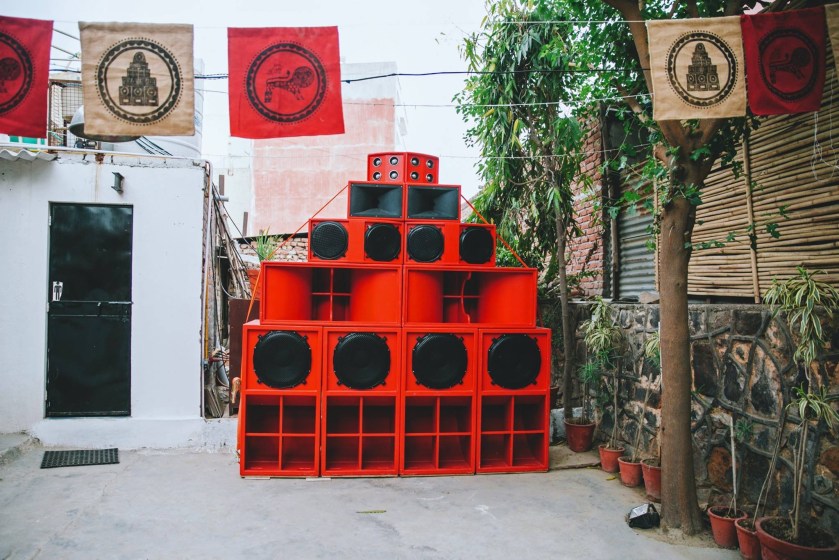
In California Taru hung out with youngsters whose parents had been members of the Black Panthers and continued to nourish his radical roots with Reggae. Fast forward to today and Delhi where he now lives. The documentary showed Taru and Samara in the process of getting a large sound system built called Bass Foundations Roots – BFR Sound System. Their plan is to tour the country with it, visiting sites of environmental and human rights protests bringing Reggae, which they see as the quintessential protest music, to protesters.

An earlier project called World Sound Power, tried to meld Indian folk resistance music with Jamaican sounds, with lyrics focusing on caste violence, state abuse of power and crony capitalism. With the BFR Sound System their intention is quite simple and revolutionary. As Taru explained in an interview on criticallegalthinking.com:

“We can make people dance. Our sound system is powerful and can create a sense of physical well-being and connectedness in listeners. At present, this is one thing that we can contribute to political spaces and gatherings. There is a time for speeches, for critical discourse for discussion, for slogans, but dancing and singing together is also very important. We will only get through these times if we find joy in each other and build strong relationships of trust and care, with each other as well as with the larger community. It’s the only way I find myself being able to not get depressed and to despair.”

Begum X who has a yoga therapy show on TV also sings over the sound. She’s a small woman with a big voice, when you hear her you look around expecting to see someone like Ella Fitzgerald or Sarah Vaughan only to see a petite pixie like figure dancing Jamaican stylee in between belting out lyrics. She designs all the graphics and organizes the shows.

Both Taru and Samara sing in Patwa which the former fluently raps and DJs in, something people are surprised by. According to him if you sing in American English or perform on a theatre stage in India with a British accent it is considered normal, but “speak in English from another colony and people start raising questions at once. JA to my knowledge is the only colony that has managed to export its form of English globally.”

In the criticallegalthinking.com interview Taru elaborated on his unusual identity formation: “I consider the heritage that made Reggae to be part of my heritage, and my work aims to bring this into the Indian context. For me there are also clear links between the forces that underpin Reggae music and things that are happening in India today. The colours red, gold and green have concrete meaning here, incidentally the first national flag of India or the flag of the revolutionary Gaddar party also featured Red, Gold and Green. Red stands for the blood of the martyrs, green stands for natural abundance, and gold stands for the wealth that is inside the earth.”

So what do you say? Are Delhi Sultanate and Begum X not the most unlikely but inspiring Reggae Ambassadors ever? So what if the Japanese are invading Jamaican culture? The groundwork is being laid for access to the second-largest market in the world. Run wid it producers!

Garvey Lite?

Garvey v. 1
Bust of Marcus Garvey v. 1. After a massive protest by Rastas in Papine Square on June 25, 2017, the University of the West Indies agreed to take down the offending bust and replace it with another that would approximate the demands for a big-head, big nosed Garvey more like the photos that exist of him.

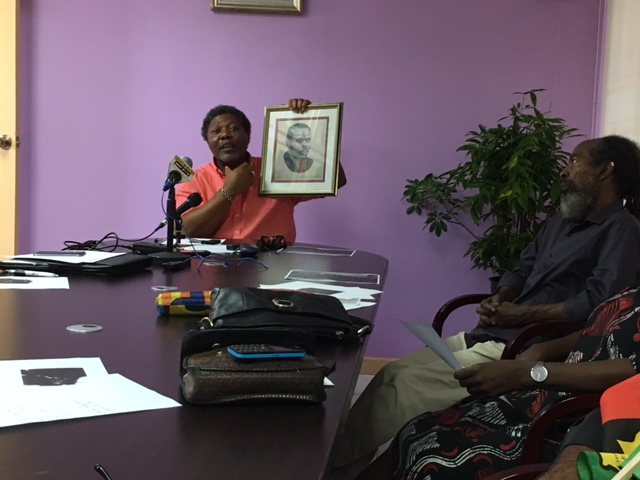
My column of June 2 in the Gleaner. After much public agitation and disapproval the University of the West Indies finally agreed to bow to public pressure and withdraw the offending bust. At a tumultuous press briefing (see video above for a brief taste of the event) the Dean confirmed that a new bust would be produced by August 2017. The sculptor would still be Raymond Watson. At the briefing Watson said that he had tried to create a youthful image of Garvey, to befit the University setting where the bust would be installed.

During his lifetime Garvey was much vilified as those who fight the status quo often are. Born in Jamaica he strode forth boldly into the world and changed it by rallying people of African origin who had been systematically exploited and denigrated by slavery. His influence rebounded all the way from the Americas to Africa, where he promised to take all those who wanted to ‘go back home’ in the immortal words of Jamaican singing star Bob Andy. To the pre-eminent shipping enterprise of the day, White Star Line, he counterpoised his Black Star Line, a fleet of ships that would carry the descendants of slaves back to Africa. The rest is history.

Decades after they’re gone how do we memorialize such individuals? In May 2017 during a short run of Garvey: The Musical at the University of the West Indies in Kingston a bust of the great man was unveiled at the Department of Humanities and Education. Members of the Marcus Garvey Movement on campus had demanded a statue of Garvey after a life-size one of Mahatma Gandhi was installed there a few years ago. How could the University pay tribute to an Indian leader before even nodding in the direction of its own home-grown hero, the first national hero of the country, they asked.

Accordingly the Dean of the Faculty of Humanities and Education (FHE), Professor Waibinte Wariboko, a Nigerian by birth, volunteered to take on the task of arranging for a suitable monument to the great man. A Jamaican sculptor, Raymond Watson, was commissioned to produce a bust, the University’s slender resources not stretching to accommodate the expense of a full-bodied statue in these hard times.

Details of the commission, such as the brief presented to the sculptor, are unknown but on May 19 the bust was duly unveiled in the courtyard of the FHE. The ceremony was timed to coincide with the visit of Professor Rahamon Adisa Bello, vice-chancellor of the University of Lagos in Nigeria, who jointly unveiled it with the Principal of the Mona Campus, Archibald McDonald. When they ritually removed the cover revealing the modest bust underneath a gasp of consternation went up from the audience. Rastafari representatives in the audience started grumbling loudly that this was the statue of an imposter, not Garvey, this slim, unremarkable, downtrodden looking person could never represent the magnificent Marcus. Garvey, they said. Many agreed.

“Garvey seems poorly. His posture conveys passivity. He looks like a weakling,” declared Carolyn Cooper in her column. #NotmyGarvey protested lecturer Isis Semaj-Hall commenting on what she called the “slimmed down interpretation” of the great leader. This is a “UWI interpretation of Garvey” said a Facebook commenter while Xavier Hutchinson accused the sculptor of “fat shaming one of my heroes.”

Suzette Gardner was kinder to Watson: “Maybe he was trying to inspire young people capturing Garvey as a youth. Still, Garvey might have been slimmer but his head was always big. Give us our big headed Garvey so the youth can know him as he was – young or old!”

According to Am’n Ron: “Regardless of the artist’s explanation this presentation should never have been approved. This was a moment for a recognizable rendering that will last through the generations and not a moment for a random artistic interpretation. From what period in Garvey’s life did he take this, and what is the image source he used? This seemingly made a mockery of the whole effort. I fully appreciate the spirit of the mounting of a Garvey bust, and I agree that it was overdue, but I’m in agreement with the woman who calmly said, “tek it dung!”  To those who have the authority, please replace it. It feels disrespectful.”

Another Facebook commenter said: “I’ve been too upset to speak on it but i have  much more to say. I will write and share. The best part of the ceremony for me was catching up with people I have not seen in ages. Unfortunately it was an upsetting occasion for all of us.”

For me the problem wasn’t so much that the bust didn’t look anything like the Garvey we feel we’ve come to know and love. It’s the scale and unambitious scope of the representation that bother me.The only other life-like sculptures on campus are of Mahatma Gandhi (Indian) and Philip Sherlock (white) both full body representations. Then for the champion of black identity you have a modest bust. It’s a problem to say the least.

In the weeks since the unveiling calls have been mounting for the removal of the ‘fake’ statue of Garvey. The Gandhi and Sherlock sculptures were gifts to the university, and it may be that those who feel strongly about this might have to undertake to commission a better representation of Garvey that can be situated at the University of the West Indies or some other location.

IMG_4414
Petrina Dacres, whose Ph.D dissertation, “Modern monuments: Fashioning history and identity in post -colonial Jamaica” documents the furore surrounding almost every public monument in Jamaica, was also at the press briefing.

In future any public commissions of art should be informed by the well-documented history of responses to public monuments in Jamaica. Edna Manley lecturer and first Stuart Hall Fellow Petrina Dacres has written an entire thesis on the subject. There is no excuse to be caught by surprise like this. Contrary to what many seem to think, commissions of public statuary are not occasions for artists to wield artistic license and express themselves as they would with work meant for a gallery or private setting.

Rudies don’t fear…

IMG_1348

My unedited Gleaner column of May 17, 2017

The case of Latoya Nugent, her arrest and trial on three counts of ‘using a computer for malicious communication’ under the Cybercrimes Act came to a head on May 17, 2017. After pleading ‘not guilty’ to the three charges brought against her by the Thompson brothers, the apparently trumped up case against her was finally dismissed.

Essentially Paula Llewellyn, the Director of Public Prosecutions (DPP), who intervened in the case, admitted that Ms Nugent could not be found guilty because her actions had not been criminally liable.  The DPP acknowledged that the postings allegedly made by Nugent were offensive and perhaps intentional but they didn’t come anywhere near meeting the ‘high threshold’ of evidence required by Section 9 of the Cybercrimes Act.

“In other words, it was offensive, but it was not at the level to make it obscene, or threatening, or menacing,” Paula Llewellyn told The Gleaner outside court.

This is interesting in light of the fact that Nugent had not only named alleged sexual predators on social media, she had then responded to their lawyer with an ‘expletive-filled’ letter. Many senior journalists had already pronounced Nugent guilty and seemed to approve of her arrest by the police but surely they must re-assess their understanding of what constitutes cybercrime now? Also what constitutes obscenity?

What Latoya may have been guilty of was offending certain deeply held notions of propriety in Jamaica where cursing is forbidden, no one should be ‘out of order’, especially women, the young should yield to the old, and everyone is referred to as a ‘lady’ or a ‘gentleman’, even crooks and murderers. Advocating on behalf of children and women who have been systematically violated and abused Nugent was in no mood to mince her words or be silenced and for this she was crucified. ‘She had it coming’ thought most of her critics when she was arrested but now they’re confronted with the fact that ‘she had it coming’ doesn’t constitute a criminal charge.

What civil society must ask in the wake of the DPP’s statements about the lack of evidence against Ms. Nugent is what made the Police act in the manner they did? Six heavily armed policemen invaded her home looking for her, then when they couldn’t find her, invaded Mary Seacole Hall, a dormitory on the University of the West Indies campus, where they intimidated her colleague, Student Services Manager, Nadeen Spence. Spence described the terror of those moments and the complete lack of support from civil society going on to say “The media wants to put us in our place and have us speak in proper hushed tones.” Is this the rightful role of the media?

As we all know, Ms Nugent was subsequently arrested and hauled off to a lockup where she was detained overnight. The manner of her arrest, with the Police brandishing high powered weapons suggested they were apprehending a kingfish of organized crime or at the very least a serious menace to the nation. They showed no warrant either when arresting her or seizing her property. Surely this is highly irregular? What does the media have to say about this complete overstepping of bounds by the police? Or is such censure reserved only for women who step out of bounds?

At the same time let’s contrast the extraordinary treatment of Latoya Nugent with the relative lack of resolve of the Police when confronted with actual gangsters and threats to the nation. In such cases Police are impotent, apparently, until some external government flexes its muscles and insists that the Jamaican Police do their job.

Thus the Gleaner recently editorialized about the fact that “since 2006, lottery scammers have operated in St James and other parts of western Jamaica with virtual impunity, and they have been sullying Jamaica’s name internationally.” The scammers have terrorized Western Jamaica unstemmed by police action, as they went about their business of fleecing thousands of elderly Americans. Pointing out that It was the extradition of an alleged mastermind and eight others at the insistence of the US that had finally prompted police action, the Gleaner lambasted “the tepid response of the Jamaican justice system.”

“This newspaper believes it is quite humiliating that our local authorities have been largely impotent in investigating and bringing to justice the people behind scamming, which are said to include police officers… Jamaica… has demonstrated that it is weak in its attempt at reining in criminals, whether they are white-collar offenders who ravage people via Ponzi schemes, or they are heavily armed street gangs.”

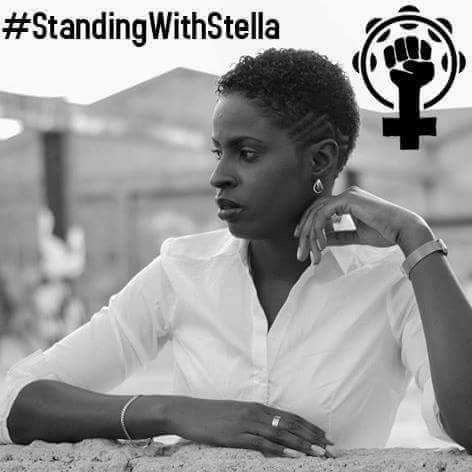
Is it too much to ask that some of the zeal displayed by the Police in arresting and charging impolite women be diverted to the apprehension and prosecution of real criminals? Meanwhile as Stella Gibson, Latoya Nugent’s alter ego said on Facebook:

“As long as I breathe abusers will never silence me.
As long as I breathe paedophiles will never silence me.
As long as I breathe sexual predators will never silence me.
As long as I breathe, the state will never silence me.”

Rudies don’t fear (as the song goes), rudies don’t fear.


Uncivil Disobedience

img_3346.jpg

My Gleaner column of April 5, 2017

It all started with UWI anthropologist Herbert Gayle saying that in his not so humble opinion there is no such thing as violence against women. The Gleaner followed that up with a 24-page supplement this January titled “Light on Violence” based on Gayle’s research. Naturally there was no mention in it of violence against women because as has been made clear, in the Gayle universe such a thing doesn’t exist.

While I can understand and sympathize with the desire to push back at UN-dictated terms of reference in the funding of social research I thought putting out a 24-page document on violence in Jamaica with not one page or section referring to the violence women face daily was going too far. A section called “Four forms of violence we need to worry about” doesn’t identify violence against women or domestic violence as one, despite the fact that in the months preceding this publication and the weeks immediately following it, the news was filled with reports of horrific murders of women very often by men they were close to.

In addition, the number of women and children routinely being raped points to a pervasive ‘rape culture’ that is so deeply ingrained and accepted that there is hardly any outcry against it. A blogger calling herself Natural Icon Beauty recalls at the age of 6 reporting to the family helper that she had been molested by the next-door neighbor and being told that this was normal, that the helper had gone through this too as a child and that it was probably because the man’s wife was away (!)

Because nine out of ten times this is the reaction of adults to whom a child confesses his or her violation the conviction rate for rape and sexual abuse is abominably low; most women don’t even bother to report their rapes because of the tortuous procedures involved that make them relive the trauma in the process of being interviewed by police and legal personnel bristling with disbelief and completely lacking in empathy. So much for the worry that women are going to come out of the woodworks making false accusations when evidence shows that even when there IS a case they are routinely dissuaded from reporting rape or are reluctant to do so because of the loss of reputation they suffer in the process.

Take Larissa Rhone who gathered the courage after 30 years to bring her grandmother’s husband to court in Jamaica for systematically violating her from the age of 5 to 16. For this she was vilified by the defense lawyer, as well as by her grandmother and others who called her wicked for ‘ruining’ an old man’s life, completely oblivious to the number of young lives his marauding libido had wrecked, for it wasn’t just Larissa but her younger siblings, cousins and even her own mother who had been violated by this man. Yet she and the other victims were all urged to remain silent about their traumas.

Matters were bound to come to a head. On March 11 women dubbing themselves survivors, marched in Kingston and all over the Caribbean protesting the violence routinely meted out to them. In Kingston the march was organized under the aegis of a new organization calling itself Tambourine Army. The protest was preceded by much disgruntlement and kass kass within the activist community between what someone referred to as an older, more ‘staid’ form of activism and the bolder, more risk-taking approach of younger activists fed up of a violent status quo immune to the tactics of older activists.

The newcomers were accused of being too angry, emotional and confrontational. Worse they had no qualms about lobbing profanities. But as singer Tanya Stephens, herself a survivor, retorted: “ The question is not why am I so angry. The question is why the f*%$ aren’t you?” To the criticism that the Tambourine Army was born out of an act of violence (what Global Voices called the bonking on the head of one of the accused with a tambourine) Stephens says: “Yes guys, the tambourine army was formed around an act of violence. That act of violence was RAPE.”

It was writer Kei Miller who neatly put his finger on what is important about Tambourine Army’s modus operandi.

“What is truly radical about the Tambourine Army and the #SayTheirNames campaign is not that a raping parson did get kuff by a tambourine, or that they took to the streets to march and make up noise, or that one of their leaders got thrown into jail. All of that is par for the course in social justice movements. So no. The most radical thing about this movement is the simple belief at the heart of their campaign. ‘I choose to believe you.’ Just that. So simple. If you are a victim of rape, and you come to me, ‘I choose to believe you.’”

In the meantime to quote Stella Gibson, the alter ego of Latoya Nugent, who was arrested under the Cyber Crimes Act for naming alleged sexual predators: “I stand with survivors because ‘enough is b0#$%&#@?t enough’.” To my mind the burning question we are left with is this: what exactly are we doing as a society when we penalize the use of words like’ f&^%#g’ while systematically deflecting punishment from the men f&^%#g underage girls and raping women?

Garvey’s Lesson


IMG_3243
Latoya Nugent

My Gleaner column of March 29, 2017 which i wrote in sympathy with human rights activist Latoya Nugent, arrested under the controversial new Cyber Crimes Act in Jamaica is presented below the following commentary on her arrest and detention.

For a relatively minor action (naming three alleged sexual predators online)  that could have been tried under civil libel laws, the Counter-Terrorism and Organised Crime Investigation Branch descended on Nugent and fellow activist Nadeen Spence in a massive show of force, arresting Nugent and keeping her in jail for the night. After attempts to set an unreasonably high bail of over a million Jamaican dollars failed, the police reduced the amount to station bail of J$100,000 and released Ms. Nugent the following day. On a point of comparison, the bail for 64-year old Moravian pastor Rupert Clarke who was caught in flagrante delicto with a 15-year old girl, was only J$800,000. 

Ms Nugent’s case has been postponed twice now with the DPP (Director of Public Prosecutions) taking a personal interest in the matter. The DPP has ruled that the Cyber Crimes Act does not permit criminal prosecution for libel and defamation. With the case now slated to return to court in May we await the outcome of what is looking very much like an attempt by the police to intimidate activists and freedom of speech in cyberspace. Noteworthy is the fact that the new date scheduled for the  case — May 17th — happens to be the International Day against Homophobia and Transphobia when Ms Nugent and others were planning to hold a pride march.

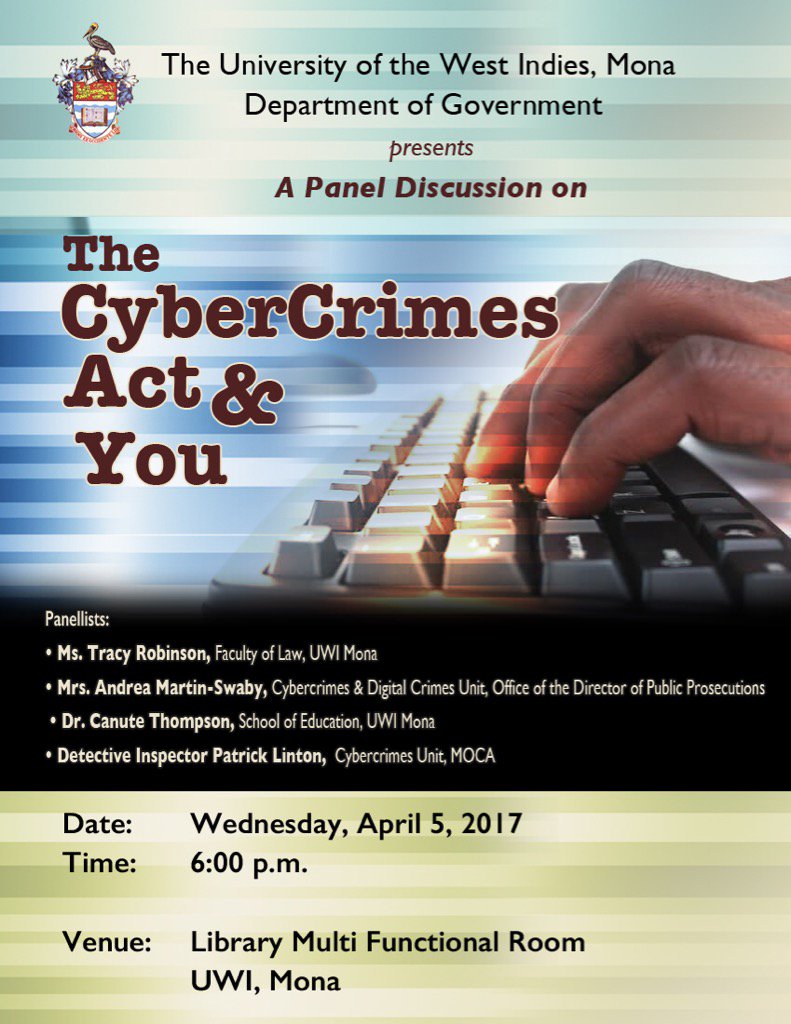
In the meantime a forum has been organized to discuss the Cyber Crimes Act at the University of the West Indies this Wednesday, April 5. Appearing on the forum will be Dr. Canute Thompson, who is suing Nugent for defamation regarding her allegations that he has sexually abused girls.

IMG_1348

The sympathy of the public and the media in Jamaica too often seems to lie with the perpetrators of rape rather than the victims or as Ms. Nugent prefers to call them, the survivors. For instance a Jamaica Observer article covering the statutory rape case of Ruper Clarke headlined the article thus: “Court to hear case of girl in Moravian pastor’s plight tomorrow.”

One radio station kept referring to Ms. Nugent as ‘the controversial Latoya Nugent’ every time they reported on the case. But by that token they should also say ‘the controversial Marcus Garvey’ or ‘the controversial Sam Sharpe’ every time they mention the names of those national heroes because till very recently both had  criminal records. The media of the time vilified them but that hasn’t prevented them from taking their rightful place in the pantheon of Jamaican heroes.

In that sense Latoya is in excellent company…she is a latter-day Nanny, a heroine for our times, a contemporary warner woman. She is exactly the kind of leader Jamaica needs today–independent, uncompromising and fearless. An inspiration. Let the Jamaican state try to arrest or detain that. In fact the powers-that-be should be wary of inadvertently creating a martyr who could easily metamorphose into a new leader. They should learn from history and Mr. Garvey himself.

Below is my column Garvey’s Lesson:

“Real leaders don’t care whom they offend, if in offending they are serving the cause of humanity and working for the good of their country. Jesus Christ was the greatest offender when he was on earth, and we ought to take a leaf out of his book in this respect.”

Marcus Garvey, arguably Jamaica’s premier national hero, certainly knew what it meant to be considered offensive for when he wasn’t being sued for libel he was being denounced as a villain by powerful interests both at home and abroad. One of the more frivolous lawsuits he faced was in 1930 when a Mrs Barnes-Haylett, a dressmaker who lived at the corner of Church and Beeston Street, sued Marcus Garvey’s newspaper The Blackman for libel, demanding damages of £1000, a small fortune in those days.

At the time Etheline Marjory Barnes-Haylett earned only £3 a week yet was represented by none other than his learned counsel, Norman Manley, while Marcus Garvey, in an effort to save money, as he did in the US, represented himself. The Gleaner carried blow-by-blow accounts of the trial with some of the in-jokes traded by Norman Manley and the judge at Garvey’s expense reminding me of the virtual heckling of the lawyer representing Tivoli victims by lawyers for the state at the recent West Kingston Commission of Enquiry.

The offending article in The Blackman described the formation of a new club at premises occupied by Barnes-Haylett, suggesting it was a place that might offer opportunities for whist drives and games of poker and twenty-one. Appearing under a section called Night Life the article said that the club had enlisted a large number of female members and that this itself should contribute to the club’s success promising ‘crazy’ times ahead. The writer of the article, one Thoywell Henry, who affected an American slang style of writing, said he had acquired this information from Clifford Parker, a customs officer, and a member of the club whom he described as a ‘spree’.

Mrs. Haylett complained that this account had damaged her reputation and that of the Amateur Choral Union which she had founded at her home. The word ‘female’ suggested prostitution, she said, and there had never been any mention of whist drives or poker or ‘sprees’. The organist of the club confessed that the mandate of the Choral Union may have been extended somewhat. “We…may have…sung secular songs but the original intention of the organisation was to sing hymns and songs in church, and not on the stage.”

I was struck by the following exchange between Garvey and Mrs. Barnes-Haylett who argued:

“…that false statement about me should not be in the Blackman making attacks on my character and reputation. My character is priceless.”

“Mr Garvey: We know that and would not take that away from you under any circumstances.”

Another striking thing about the reported exchanges is that it seems in those days witnesses were allowed to answer back and even question the lawyers cross-examining them.

Mr. Garvey: You know that Mr. Mends is a politician, don’t you?

Witness: What is a politician? (Laughter.)

Mr. Garvey: A person who indulges in politics.

Witness: And what is politics? (Laughter.)

Mr. Garvey: The science of Government.

Witness: I don’t know about that: I am only a dressmaker (laughter).

Clifford Parker too tried to claim damages of £100 but didn’t get very far with this. Marcus Garvey suggested that the entire libel suit was concocted by a group of people, including Barnes-Haylett and Parker, who thinking that “Mr. Garvey of Somali Court” was a man of means, had planted the story on one of the Blackman’s reporters.

What is curious is that the lawsuit did not allow time for the Blackman to publish an apology before proceeding to court. When a clarification was published after the fact Barnes-Haylett complained that it had caused her more grief, as the police had come to her premises to investigate. She therefore was claiming aggravated libel. Marcus Garvey challenged her to provide evidence of the visit of the police.

After much court time was taken up deciding whether Garvey was even liable for the damages or not, as he insisted he was not the managing editor of the publication, the judge awarded the plaintiff damages of £30, a considerably smaller sum than the £1000 she had demanded.

How interesting that today no one remembers Mrs. Barnes-Haylett or her “priceless” character while the ‘libellous’ Marcus Garvey is a national hero and widely acknowledged as a global leader whose influence far exceeds the shores of the country he was born in. The fact that we keep repeating history suggests we’ve yet to learn from it. Perhaps as someone once said “The only lesson you can learn from history is that it repeats itself.”

See and blind, hear and deaf…

IMG_1343

The following is my unedited Gleaner column of March 22, 2017. Because it goes directly against the anti-Latoya Nugent and anti-#saytheirnames position adopted by the Gleaner this column wasn’t even shown in the Commentary lineup today (the sidebar showing columns published on a particular day), and you would have had to search hard to find it, very odd considering the number of views it has attracted. Anyway, thank the various gods for blogs…i can easily remedy the situation by posting it here.

The latest is that Nugent’s case which was to have been heard today has been postponed to March 31 because DPP (Director of Public Prosecutions) Paula Llewelyn has announced ‘an interest’ in the case. We shall see when the time comes what this ‘interest’ means for issues of libel and defamation in cyberspace. Meanwhile the fate of Latoya Nugent aka as Stella Gibson on Facebook (the name of a hardcore police detective who’s an unapologetic feminist from the British show The Fall) hangs in the balance.

As I pointed out in an earlier column, Jamaican men cry rape every time women say, “Yes, let’s say their names.” A kind of hysteria breaks out because somehow they hear this as women demanding the right to falsely accuse men of raping them. But this is not what women are demanding at all, particularly in the new activism around violence against women.

According to Latoya Nugent, one of the founders of Tambourine Army, most of what has been said in both traditional and social media about the#saytheirnames movement is a damaging and gross misrepresentation. She clarifies that the movement is emphatically not about recklessly calling names without any context:

IMG_3243IMG_3250

When we encourage survivors to say the names of perpetrators we are not telling them where to say that name, when to say that name, we are telling them that if they are ever ready to say the names of their perpetrators in private and/or in public that support is available. Whether you want emotional support, psychological support or legal support, it is available for you. I want folks to appreciate that this is about facilitating the empowerment of survivors and about shifting the blame and shame away from survivors and placing it squarely at the feet of perpetrators and institutions which have allowed folks to abuse their positions of authority and trust because they are aware that we as a society silence our victims and our perpetrators. Our first response when a woman or girl says to us that they have been sexually assaulted or raped is that we don’t believe them and #Saytheirnames is about saying to such women, ‘we believe you, if you decide to come forward we believe you, we will provide the support that you need and if we can’t provide it, we will point you to the entities, or the agencies or the individuals who can give you the support that is needed.’ (Transcribed verbatim from an interview with Nationwide’s Cliff Hughes the day before Latoya Nugent was arrested)

Basically there has been a ‘see and blind, hear and def’ or “see not, hear not, speak not” policy in place in Jamaica for decades. There is widespread buy-in from civil society, the media, the Church, the University, the legal fraternity, you name it. It is enforced by an army of prim citizens, whose first reaction when you speak out about an injustice is to raise their finger to their lips in the universal gesture that means ‘halt your speech’ or ‘stop your noise’ as they say here.

People are socialized to believe that it is fundamentally wrong to ‘call someone’s name’ in public, especially in the media. This should only be done after accusations have been proved in court they say. But court cases take years to be completed in Jamaica and even when they do, often fail to deliver justice. Take the case of the Reverend Paul Lewis, accused of raping a 14-year old girl in Sav-la-Mar, in the presence of another 14-year old girl who testified in court to the rape. Despite the Reverend’s semen being found on the child’s underwear, despite the testimony of an eyewitness, a Jamaican court saw fit to hand down a ‘not-guilty’ verdict.

More often than not rape victims don’t report the crime or give up during the extremely painful, invasive process of going to court to prosecute their attackers. A senior lecturer at UWI says: “I’ve watched helplessly while one of my (now former) students went through 4 years of appearances, delays, and postponements in the courts for the prosecution of two young men whom she had been able to identify as being among her assailants in a gang rape. She eventually decided to pull out of the case. As she put it, they had taken enough of her life, and every time she was required to make another court appearance, she relived the experience. She needed to move on. Justice denied. I wish the perpetrators could be named.”

“Every year, an average of 5,500 people are reporting sexual violence to Canadian police, but their cases are dropping out of the system as unfounded long before a Crown prosecutor, judge or jury has a chance to weigh in,” reports the Globe and Mail. The use of the term ‘unfounded’ to describe cases that the police have dropped due to the inadequacies of their own methods of interviewing victims, taking statements etc has been identified as highly problematic. The article goes on to state:

“True unfounded cases, which arise from malicious or mistaken reports, are rare. Between 2 per cent and 8 per cent of complaints are false reports, according to research from North America, the United Kingdom and Australia.”

There is no reason the numbers would be markedly different in Jamaica. Why then the moral panic about the mere possibility of libel in cyberspace? And why is there not a similar outcry about the out-of-control rape culture here?