First post participating in NaBloPoMo (National Blog Posting Month) in which I feature my first encounter with Central Park in New York City.
Well, it’s November 1 and I’ve decided to take part in NaBloPoMo (National Blog Posting Month). That means I’ll post something on my blog every single day this month. Thousands of people are participating in this event all over the world so the ‘National’ should really be changed to ‘International’ resulting in InBloPoMo. But at the moment it remains the blogging counterpart of NaNoWriMo (National Novel Writing Month) during which hundreds of thousands of would-be novelists churn out 50,000 words during the month of November. Well, i guess they haven’t heard of the demise of the novel…
So I was in New York City last month for about 9 days and found myself staying one short block from Central Park. Before reaching the city I had had ambitions of walking in the Park every single day of the precious 3 days at that particular address. No such thing happened and I found myself hurriedly getting a walk in on the very last day. What surprised me was that even though it was the end of October very few trees had changed to the traditional autumn colours of yellow, orange and red. Was this another sign of the creeping climate change we’ve all been noticing recently?
The apartment I was staying in was at 102nd st very close to the 103d st entrance to the Park. There’s a lovely duck pond there with benches sprinkled here and there. What I hadn’t expected were the little plaques on each bench evidently placed there by the individuals or families who had paid for the particular bench. I’ll post some of the photos I took below:
And soon after getting back to Kingston I came across the article below which I found alarming considering that Central Park in effect constitutes the lungs of the city…are the proposed skyscrapers akin to invasive cancerous growths that will eventually cause the demise of this treasure?
Luxury Skyscraper Shadows Are Devouring Central Park
One57 looms large over Central Park, its shadow resembling an appropriately obscene gesture. (Warren St. John)
The city’s parks are among the few empty spaces protected from New York developers. No parking garages will ever trample Central Park’s Sheep Meadow and no high-rise Walmart’s will ever raze Prospect Park’s Nethermead. But there is one threat to the park’s sanctity that perhaps few people had considered: The Shadows.
It’s not a weird hypothetical sprung from the world of sci-fi. Developers are eying the south side of the park as the new home to seven enormous towers which will serve as second and third homes for as-yet-unborn children of gallingly wealthy oil moguls around the world. The towers, nicknamed Billionaire’s Row, will stand as tall as 1,424 feet, and the shadows they will cast over the park will serve as chilling reminders that their owners are probably on a plane destined for Saint-Tropez anyway, and you’re on the ground shivering under their icy umbra. It’s an allegory for your life.
Looming skyscrapers can make a particular difference in the winter months, Michael Kwartler, the president of the Environmental Simulation Center, told Warren St. John, who penned an op-ed in today’s Times on this very issue. At noon on the winter solstice, Kwartler calculates that the building’s shadows will fall half a mile into the park by noon, and up to a mile as the day wears on. “The cumulative effect of these shadows will be to make the park less usable and less pleasant to be in,” Kwartler said.
Why does environmental activism not register frontally either locally or globally? The politics of climate change
On October 10, 2013, the news agency IPS put out a story sensationally titled The Climate Plague which it described as “a shift to an entirely new climate where the lowest monthly temperatures will be hotter than those in the past 150 years. The shift is already underway due to massive emissions of heat-trapping carbon from burning oil, gas and coal.”
According to the article:
A climate plague affecting every living thing will likely start in 2020 in southern Indonesia, scientists warned Wednesday in the journal Nature. A few years later the plague will have spread throughout the world’s tropical regions.
By mid-century no place on the planet will be unaffected, said the authors of the landmark study.
“We don’t know what the impacts will be. If someone is about to fall off a three-storey building you can’t predict their exact injuries but you know there will be injuries,” said Camilo Mora, an ecologist at University of Hawai‘i in Honolulu and lead author.
Mora goes on to use Jamaica as an example of the kind of change we can expect:
“Within my generation, whatever climate we were used to will be a thing of the past,” he said.
In less than 10 years, a country like Jamaica will look much like it always has but it will not be the same country. Jamaicans and every living thing on the island and in its coastal waters will be experiencing a new, hotter climate – hotter on average than the previous 150 years.
The story hit the Jamaican public sphere a few days later in the form of a wire article in the country’s leading newspaper, The Gleaner, but barely attracted any notice. The Hill 60 Bump blog lamented that there seemed little reaction to the alarming news either in Jamaica or other tropical countries also slated to face steeply rising temperatures:
‘Temperatures Rising: Jamaica To Face Extreme Heat in 10 Years’ – Perhaps this headline was not sensational enough, the text too scientific or there were just too many other news items but for some reason, this article in the Jamaica Gleaner a few days ago seems to have received little attention. We spotted brief discussion on twitter about whether or not this would be good for solar power and a single query about roof insulation but in general, minimal hysteria. The lack of public response seems strange as our immediate thoughts ranged from recollections of the drought of 2009 all the way to Armageddon type blockbuster film scenarios. Online searches returned a myriad of global articles on the matter but little in from the news desks of the tropical countries now considered to be on the climate front line.
It’s an uncomfortable fact that for countries such as Jamaica, India and others in the ‘developing’ world environmental concerns have remained a preoccupation of the elite, those well off enough we think, to worry about changing weather patterns, global warming and the like, in the face of more urgent local problems such as unemployment, hunger and homelessness.
The truth however is otherwise. “People don’t realize that events that seemingly have no connection to activities like drilling the Arctic for oil are actually intimately linked in an interdependent chain of violence and destruction,” says Kumi Naidoo, the outspoken head of Greenpeace International. In a recent interview with US TV journalist Bill Moyers, Naidoo elaborated on this:
Take the genocide in Darfur for instance, in Sudan, the media largely reported it as an ethnic quasi-religious sort of conflict and so on. But, that is your first major resource war brought about by climate impacts because Darfur neighbours Lake Chad. Lake Chad used to be one of the largest inland seas in the world. And the climate scientists warned us decades ago that, as a result of a warming planet, Lake Chad was under risk.
Lake Chad has now shrunk to a size of a pond as the current secretary general of the United Nations, Ban Ki-moon put it recently. So water scarcity, land scarcity and food scarcity as a result of an absence of water and land was the toxic mix that created conditions for identity manipulation by opportunistic politicians that saw the horrific events in Darfur happen.
In three days it will be a month since 30 Greenpeace activists were intercepted by Russian forces during an act of non-violent civil disobedience in which they mounted a peaceful protest against drilling in the Arctic, a region Naidoo refers to as the “refrigerator and air conditioner of the planet”. According to news reports some of the environmental group’s activists scaled the rig, operated by Russian state energy giant Gazprom. The Greenpeace crew were protesting Russia’s plans to drill for fossil fuels in the fragile ecology of the Arctic. The ship was towed to Russia’s Arctic port of Murmansk and the activists bused to the local headquarters of Russia’s Investigative Committee. Despite the fact that the activists posed no threat to property or to people, Russian authorities have imprisoned the 30 citizens from 18 different countries, pending trials which could see some of them receiving up to 15 years in prison.
Marco Weber, one of the detainees, whose first language is not English, has written a letter describing the conditions of his detention and pleading for help from the ‘global public’.:
“I am now for about 12 days alone in a cell. I don’t have books, newspaper, TV or someone to talk to. At the daily walk I am also isolated. The 4×5 metre “walkyard” is surrounded by concrete walls and covered with iron bars. On top is a roof, which doesn’t allow the sunshine in.
“The only sky I can see is out of my cell window, which is placed in the northern wall of the building. This means no sun at all. Days are long! The highlights are weekly visits of my lawyer and consul. And yesterday I got the first bunch of email from the outside! Yehaa…
“The aggressive and unfair acting of the Russian government and Gazprom shows how important it is, that decisions about Arctic and its future are made by global public. And not by states and companies which are blinded by its resources and short term profits.”
What worries me is that the world seems to be paying as little heed to the dangerous drama playing out in Russia and the Arctic as Jamaicans are to the news of their impending descent into a tropical inferno as soon as 2023. Will anyone pay money to visit this tourist haven then, as they do now, just barely keeping this fragile Caribbean economy afloat?
Can those of us from poorer economies afford to avert our eyes from the environmental catastrophes looming on our doorsteps? Can we afford to withhold our activism leaving it to white people and isolated elites around the globe to save this planet from ourselves? What is most disturbing is the precedent this will set and the chilling effect on any kind of activism anywhere if the Greenpeace 30 receive jail sentences. Are we being told that we can’t hold peaceful protests anymore? Is civil disobedience, that cornerstone of democratic liberalism, no longer recognized or allowed? Is the concept of protest being criminalized?
If there’s any danger of this we ought to organize a day of collective protest globally in tribute to the Arctic 30, because their actions symbolize the freedom to register dissent, to draw attention to public bads, to demand our right not to comply with rapacious processes in the name of ‘development’. Unlike the localized protests we’ve seen spreading all over the world from Egypt to Turkey to the USA to Libya, environmental protests such as the one mounted by Greenpeace against oil drilling in the Arctic call on us to respond as concerned citizens of the globe. This is not just about our neck of the woods, it’s about the world we live in and all the creatures in it. Are we going to sit by and allow rich corporations to loot it into oblivion? Shouldn’t we too be willing to risk our lives to safeguard the planet for our grandchildren?
Ever since I heard Robert A. Hill’s lecture in April this year titled ‘The University Report on the Rastafari Movement in Kingston, Jamaica: The half that has never been told’ I’ve wanted to blog about it. I started a post soon after but it remained a draft all this time because I felt quite inadequate to the task of conveying the brunt of what Bobby, a friend of many years standing, was saying.
Robert A. Hill, Professor Emeritus, UCLA; Director, Marcus Garvey Papers Project
That talk, sponsored by the Sir Arthur Lewis Institute of Social and Economic Studies (SALISES), where I happen to work, began with Bobby announcing:
What I’m going to talk about this evening might be rephrased as the hidden history of the University Report on the Rastafari Movement. It is hidden because in my view the report was based on considerable deception. This was not my view going into this research, I’ve spent 6 years probing, researching, trying to understand how this report came to be. It’s only in the last two months that I felt ready to go public with my findings and this evening is the first time an audience will hear the findings and I leave it to you to make your own interpretations.
After that dramatic opening Professor Hill handed out timeline worksheets, essentially Xerox copies of calendar pages with cells displaying the months April–October 1960 along with pens for those who didn’t have their own. It was important Hill said, to keep track of the dates he was going to talk about, the chronology being important, “so that we are all, not just figuratively on the same page, but literally on the same page.”
The impact, influence and staying power of the Rastafari Report, he pointed out, has far outweighed any of the other reports emanating from the University, most of which are collecting dust today. Hill remembered seeing the report for the first time as a 17-year old. “It was like a meteor had crashed into the whole world. Jamaica has never been the same since that August day when i first saw it. ”
Although first published in August 1960 when Rastafari was spelt as two words ‘Ras Tafari’ most people are familiar with the ‘edited, redacted’ version reprinted in 1968 with a Ras Daniel Heartman image on the cover. There were many reprints thereafter with different covers like the one below, reprinted in 1975. What the reprints all have in common is that they spell ‘Rastafari’ as one word, again something pointed out by Hill in the course of his lecture.
The Report was a triumph for the Rastafari movement, Hill claimed. “I’m going to say very carefully that the Report was a propaganda victory for the Rastafari Movement…but I’m not using propaganda in its sinister sense, I’m using it in its classic sense, namely the propagation of one’s beliefs.” Hill then went on to recount how the Report ‘armed the mission’ sent by the Jamaican government to Addis Ababa in 1966 to initiate conversations about the repatriation of Rastafari to Africa.
The first date Hill asked his audience to note on their worksheets was the date renowned Nobel Laureate Arthur Lewis took up his position as Principal of the University of the West Indies. April 16, 1960.
This was where I gave up, unable as i said before, to succinctly convey the gravamen of what Robert Hill was suggesting. Months later I decided to ask Bobby for an interview thinking that would be the best way to capture the sensational charges he was making against the University of the West Indies. He obliged. The interview started modestly but soon swelled to 40 pages. I agonized again over how best to present such a long document here. Finally I realized the simplest way to accomplish this was to publish it as a WordPress ‘page’.
To fully understand some of the points Bobby raises in the interview its important to remember how feared, reviled and despised Rastafarians once were. You can get a good sense of this by reading Roger Mais’s Brotherman, a novel written in the 50s or from Deborah Thomas and Junior Wedderburn’s film Bad Friday, about the Coral Gardens massacre in the 60s. Even VS Naipaul, writing of his visit to Jamaica in 1960, in The Middle Passage, talks about the fear caused by militant Niyabinghi groups pledging ‘death to the whites.’
We’ve certainly come a long way from those days especially when you consider sentiments expressed at the opening of the Rastafari exhibition at the Institute of Jamaica on July 21, 2013. “Rastafari is deeply connected to Brand Jamaica” said Lisa Hanna, Minister of Culture. And at the closing ceremony of the Kingston-leg of the Rastafari Studies Conference and General Assembly, held on the campus of the University of the West Indies (UWI), Mona, on August 15 Prime Minister Portia Simpson Miller said that Rastafari was “an important part of the image of brand Jamaica.”
Pariahs no more…the hidden history of the Rastafari and their relationship to the nation of Jamaica certainly is the perfect illustration of the biblical sentiment Bob Marley made so famous, “The stone that the builder refused, shall be the head cornerstone…
Well folks, it gives me great pleasure to present my interview with Professor Robert Hill, aptly titled Our Man in Mona. As Bobby said at the beginning of his SALISES lecture “I leave it to you to make your own interpretations.” I find Bobby’s research and findings quite persuasive but I’m also willing to be persuaded by a counter-explanation of events that is as painstakingly researched and presented as his. In the meantime I thought it important to make this provocative hypothesis widely available to keep alive that spark of agonistic engagement so lacking in the public sphere today.
Jamaica Jamaica! After all the recent ruction about cross dressers and transvestites I was astonished to hear in the morning news today that a fearsome ‘gunwoman’ nicknamed He-She had been shot in West Kingston. Astonished because you would think that with the supposedly intense homophobia that exists here, and zero tolerance for ambiguous sexualities, you’d hardly come across someone like this. Of course unlike Dwayne Jones, who was a guy who liked to dress like a woman, apparently Bianca was a gal who liked to dress and behave like a guy. Blow wow. An interesting thing I found when looking for an image to go with this post was that gunwomen are almost always portrayed as femme fatales, unlike Bianca Bradley who dressed butch and acted masculine by all accounts.
When I posted about the gunwoman’s shooting on Facebook it led to the following convo between two of my writer friends:
Marlon James Lawd man, me just done write me book, don’t mek me frighten me editor with another chapter…
Garfield Ellis Hold on to yours …let mine publish first…
Terry Lyn by Peter Dean Rickards
At the moment details are pretty sketchy but I promise to find out more and post it asap. In the meantime here’s what the Gleaner had:
Feared 23-y-o gunwoman shot in west Kingston
For the second day running, the Luke Lane/Chancery Lane section of western Kingston erupted into violence when a feared gunwoman was shot in the area.
Twenty-three-year-old Bianca Bradley, who is well known in the community as a notorious member of a feared gang involved in an ongoing feud, was shot multiple times.
Bradley is known in the area as ‘He-She’ because of her masculine appearance – notably her predominantly male clothing and style of walk – as well as her so-called no-nonsense approach.
A large crowd converged at the Kingston Public Hospital as a police team transported the wounded woman to the facility yesterday.
“She nuh afraid to fire di gun,” a member of the community whispered as traffic blocked the area.
The shooting took place 24 hours after two men were shot by the police, one fatally, after they were accosted and two illegal weapons seized.
A closer look at the controversy surrounding Anne Shirley’s Sports Illustrated article on Drug Testing in Jamaica
In mid-July news broke that Tyson Gay had failed a routine drugs test; hot on its heels we heard from local media that Asafa Powell, Sherone Simpson and two other Jamaican athletes had also tested positive for banned substances. In Jamaica the bombshell had fallen a month earlier with local media reporting news of Veronica Campbell-Brown’s failure to pass her drug tests. Newspapers, TV and radio all headlined her story, sensationally portraying her as a cheat, well in advance of the IAAF’s own verdict on the matter.
The VCB story had been leaked to the Jamaican press and the media here ran with it with almost reckless alacrity considering their usual reticence in providing information on matters of public interest. Less than a week later, June 19 to be precise, Sports Illustrated carried an AP story pointing out that according to the IAAF Campbell-Brown’s positive test for a diuretic appeared to be a ‘lesser’ offense attracting a lesser sanction or “reduced penalty – a suspension of a few months to a year or a public warning – rather than a standard two-year ban.”
A subsequent AP article also carried by Sports Illustrated and referring to the five Jamaican cases added, “The known banned substances in these cases, a diuretic and a stimulant, don’t resemble the steroids and designer drugs that took down some of the world’s top athletes – Marion Jones, Tim Montgomery, Ben Johnson, to name a few – over the past years and decades.”
So in fact, far from using these lapses as opportunities to discredit Jamaica’s sprinting programme, Sports Illustrated, by choosing to carry the Associated Press stories mentioned above, seemed to be at pains to draw attention to the slightness of the offences, in a way that Jamaican media was not. So much for the big, bad foreign media theories. On the contrary I remember Tara Playfair-Scott, Asafa’s publicist, pleading on Twitter with local media to be more responsible in their reporting. For an elaboration of the kind of doping irregularities Jamaican athletes stand accused of and how different these are from the more serious infractions Tyson Gay and others are accused of see “Performance-Enhancing Drugs: What Are They and What Are They Not?” by Professor Trevor Hall.
On the very same day the Sports Illustrated (AP) article on VCB came out Anne Shirley posted the following on Facebook upbraiding the local press for prematurely finding the senior athlete guilty of a worse offence than turned out to be the case in the end:
Do we understand that there was no need for the media speculation and hype over the past few days if only we had allowed the IAAF and JAAA to announce the fact that there was an anti-doping rule violation? In our haste to be first and to have all the “facts” before anyone else had the story, information was leaked to the Jamaican media when it should not have been, and we all ran with it. What if we had left it until today so that this was the beginning of the public story?????? Would there have been a difference in the coverage?
I choose to open this post on Anne Shirley’s August 19 Sports Illustrated article thus for several reasons. That article, titled An inside look at Jamaican track’s drug-testing woes has generated so much controversy, condemnation, hysteria and vitriol towards its author that I worried I was witnessing yet another lynching—a virtual one this time.
“We need to lock her up for treason!” exclaimed one young friend on Facebook, a sentiment echoed by an alarmingly large number of Jamaicans judging by statements on radio talk shows, Facebook and Twitter.
The widespread assumption seems to be that Sports Illustrated, an American magazine, is out to get small, hapless Jamaica whose valiant sprinters have brought it so much glory and pride in recent years. The world is jealous of Jamaica, people here think, most of all the United States, whose athletes have by and large been forced to follow in the wake of Jamaica’s triumphant superstars rather than ahead of them.
Why then did Anne Shirley decide to ‘betray’ the nation by going to a large American media conglomerate to complain about the failings of the Jamaica Anti-Doping Commission rather than our own national media, ask her critics. Failing that why didn’t she take her complaints to WADA, the body in charge of regulating drug testing internationally? Why moreover had she chosen this particular time to “besmirch” Jamaica’s reputation internationally by suggesting that JADCO was inadequately equipped to deliver the stringent. internationally compliant, drug testing standards required? Let’s look at these questions one by one.
First, is it true that Anne did not go to the local media? No. Absolutely untrue. When what she calls the Category 5 hurricane hit (the news of the failed drug tests by 5 athletes) Shirley, who headed JADCO for a brief seven months in 2012-13, took to the airwaves trying to alert local media to the dangers that lay ahead if Jamaica continued to operate administrative facilities that fell so far short of the world-class stature of its athletes. I personally heard her on Nationwide Radio on July 17 saying that the local anti-doping regimen wasn’t as up to par or world-class as the athletes themselves and that this would pose a huge problem in future. She warned that international Sport was big business and that Jamaica needs a truly independent, fearless organization with a strong management team and advisory board. The implication of course is that this is not what we have at the moment.
Then on August 7, Shirley wrote a letter to the editor of the Gleaner which was singled out as the Letter of the Day in which she challenged the veracity of statistics provided by JADCO and its chairman, Herb Elliott, to WADA. As a result, she claimed, the numbers in the WADA database did not reflect the true level of testing that JADCO had undertaken in 2012-13:
I contend that JADCO authorised and paid for more tests on Jamaican athletes, particularly in track and field, than have been reported and published in the WADA statistics in 2012, primarily due to a reporting error that has not been corrected in the ADAMS database that was made before I arrived at JADCO in mid-July, 2012.
I further state that these official figures do not show the true picture of the work carried out by the Jamaica Anti-Doping Commission as testing authority on behalf of the Government and taxpayers of Jamaica.
I would challenge the chairman and the board of JADCO to refute my statement. And I suggest, respectfully, that the record needs to be amended by the board of JADCO forthwith to reflect the true level of testing carried out by the commission in 2012.
Finally, on the question of the vexing issue of whether or not JADCO actively conducted testing in the “off-season” (i.e. the October-January period), I can further verify that during the period August-December 2012, in keeping with international best practice to place greater emphasis on out-of-competition testing in the off-season, JADCO conducted a total of 72 tests – with 12 tests conducted in-competition and 60 tests out-of-competition. And this level of testing continued into the first quarter of 2013.
On August 13 the Gleaner again carried a piece by Anne Shirley written in response to an article by Delano Franklyn expressing surprise at the discrepancy between Anne Shirley’s statistics and the official figures put out by JADCO. She provided extensive data to substantiate her claims that JADCO had conducted adequate off-competition testing during her tenure there and that the figures provided to WADA had under-reported this. A table she provided shows a huge increase in off-competition testing during the seven months she was CEO of JADCO. As far as I know no one has been able to refute her figures to date. Her article concluded by saying:
… rather than seeking to crucify the messenger, I would respectfully suggest that Mr Franklyn and other senior technocrats at the Office of the Prime Minister need to review the current state of staffing and organisational depth at JADCO – particularly given the fact that the agency should be far advanced in preparing cases for the six AAFs and one appeal that are on its plate and ensure that the necessary corrective actions are taken with immediate effect.
So we’ve established that Anne Shirley had done more than enough to alert local media as well as the public to the potential problems if JADCO was not rapidly made to comply with international best practices in drug testing. On August 7, the Gleaner wrote an editorial, Get with the programme, JADCO, which corroborated the uncooperativeness and lack of transparency of the JADCO board also highlighted by Shirley:
…While we do not believe that hardcore doping is a feature of Jamaican athletics, it is our view, though, that a robust and transparent programme of testing is not only a deterrent to drug cheating, but the best answer to the Contes and Pounds who may want to believe the worst.
…It was only last week, after our too-many appeals in these columns, and in the face of unfortunate global questioning of the legitimacy of our athletes, that JADCO’s chairman, Dr Herb Elliott, caused it to dribble that the agency performed 106 tests in 2012, 68 of which were in competition. In the five years of its existence, JADCO conducted 860 tests – 504 in competition and 356 out of competition.
The Gleaner went on to say that it didn’t believe that JADCO’s failure to provide the data the media was asking for was necessarily because it had anything to hide but because “it is subject, we believe, to an old-fashion[ed] leadership culture that is uncomfortable with transparency, hamstrung by a fear of criticism, and views the control of information as power.”
This certainly jives with what Anne Shirley said in her Sports Illustratedarticle:
When I took over, in mid-July [in 2012, just before the London Olympics], JADCO did not have a large enough staff in place to carry out rigorous anti-doping programs. The Doping Control/Technical Services and the Education/Communications Units had only one junior staff member each, and the director positions were vacant. There was no Whereabouts Information Officer—in charge of keeping track of athletes so that they could be tested out of competition—and only one full-time doping control officer. The committee in charge of reviewing the legitimacy of medical prescriptions for athletes was without a chairman and had never met.
Other aspects of the program were equally troubled—and troubling. I arrived to find no accounting staff in place, and no monthly financial statements had been produced in the five years since inception. JADCO was behind on payments for a number of its bills.
I urged the authorities in Jamaica to get more serious about anti-doping before a scandal hit us. I had long had reason for concern. I quietly tried to point out the presence of Jamaican threads linked to the BALCO case, via the testimony of Angel (Memo) Heredia about his contacts with elite Jamaican athletes. My position is that these threads, no matter how thin, should not be brushed aside as malice, but treated seriously, as they represent a potential threat to the integrity of our athletes and our nation.
During my time with JADCO, I also voiced concern about internet purchases of drugs and supplements by athletes, as there is reason to believe that some Jamaican athletes have been careless in their Internet purchases of dietary supplements, the ingredients labels of which are not tightly regulated in Jamaica. But despite my efforts I could not get any member of the JADCO board or member of Jamaica’s Cabinet to take it seriously. They believe that Jamaica does not have a problem.
The more frustrated I became about the lack of staff and attention to issues I raised, the worse the working environment became for me, and in February of this year I met with a group of JADCO board members and we agreed it would be best if I stepped aside. Dr. Elliott has voiced his strong opinion that Jamaican anti-doping efforts are satisfactory. But this is not a time for grandstanding. In the wake of both recent achievements on the track and devastating positive tests off it, we need to believe that our athletes are clean and that our anti-doping program is independent, vigorous, and free from any semblance of conflicts of interest.
TIMING
On the question of timing and why Shirley had published such a damning article in the international media at this point, it’s clear that the embattled former JADCO head felt she had no other choice. Having raised her worries locally more than once and seeing no action being taken or credible response provided by JADCO and little or no follow up by media here on the questions she was asking (“I’m giving you the questions that YOU need to be asking.” she said to ace journalist Emily Crooks on TVJ’s Impact), she decided to up the pressure by speaking to Sports Illustrated, an internationally recognized magazine that had previously behaved more responsibly towards the Jamaican athletes accused of failing their drug tests than Jamaican media itself. Let me refer you back to the evidence of this provided at the top of this post.
Let it be noted that it was the American sports magazine that approached Ms. Shirley after reading her Gleaner letters, not the other way around. Note also that virtually none of our local media took the trouble to approach her in a similar way or to follow up on her disclosures with an investigative article or in-depth feature on JADCO and its preparedness either to test the athletes adequately or to put in place the high-level legal defence teams the five found to have breached the code would require.
In a follow up interview conducted with her Anne Shirley told me the following:
One of the critical issues at present facing the current JADCO administration and one of my greatest concerns is that VCB, Asafa, Sherone and the other three athletes are entitled to a fair hearing of their AAFs in a timely manner — this is their careers and livelihood we are talking about. THIS IS PERHAPS THE MAIN REASON FOR THE TIMING OF MY SI ARTICLE!!!!!!
If my information is correct that there is currently no staff in the Doping Control/Results Management area, who is putting together the evidence packages, witness statements, expert analysis etc needed for JADCO to give with instructions to the lawyers who will present the case against each athlete in separate hearings? And have lawyers been retained by JADCO? SOMEONE NEEDS TO ASK JADCO THESE QUESTIONS!!!
Jamaica cannot afford to have any or all of the cases thrown out on a technicality.
And what is the timetable for each Hearing Panel to start the respective hearings? The Dominique Blake appeal is going on now — but the other 5 AAFs (excluding VCB’s) now need to be scheduled. Again time is of the essence.
BTW re the VCB Hearing — under the statute in Jamaica (ie the Anti-Doping Act 2008) — how come JAAA has put together a Hearing Panel? Does JAAA have its own written rules? And who is putting together the case management for the JAAA? Note the testing at the Meet was supervised by an IAAF representative, but the actual tests were carried out by JADCO’s Doping Control teams. Would be interested to know if the witness statements have been taken (and by whom), and look forward to the expert testimonies on both sides. Understand this Hearing will get underway in September.
Re the testing programme — We have to put EPO testing back into our testing programme and now introduce blood testing. All we are doing at this time is plain urine tests which is not enough.
These are some of my major concerns — I felt that I had no choice but to act as I did. And while I am not in a position, even in these comments to go any further, I trust that the investigations will be thorough covering areas and concerns that I have already shared with the powers that be (it was not for a lack of trying!).
Finally — a detailed explanation needs to be made publicly by JADCO as to how the WADA statistics for 2012 state that JADCO conducted 106 tests as Testing Authority and a later news release was issued (August 14?) that I was correct in stating that the total number of tests conducted by JADCO in 2012 was 179. Why the difference since the WADA statistics come from the Lab info that is posted in the ADAMS database.
If the JADCO test numbers in ADAMS and the WADA official 2012 are understated, then are the report of the IAAF tests conducted on Jamaican athletes overstated? Not one journalist has followed up on this logic. No one has sought answers to the questions that I suggested to Delano Franklyn.
These are some of the areas that journalists and others need to probe and ask questions about, not go on about me exposing our dirty linen abroad.
As Dick Pound has publicly stated (his latest comments are in this BBC report) — the world is already watching Jamaica.
I have no regrets for speaking out. On the contrary, I feel that the authorities now have no choice but to act.
WADA
Finally let’s look at the question of why Shirley didn’t go to WADA to complain about the inadequacies of JADCO, typified by the following comments on Twitter and Facebook:
Ingrid Green: If all she was getting at is a dysfunctional JADCO, why go to Sports Illustrated, Why not contact WADA and discuss her concerns with them, ask for help. She put the Athletes under a shadow with her article and did Nothing to help the programme.
Cindy’sDaughter @CindysDaughter: Caller on Nationwide with an excellent point. If you were so concerned Anne Shirley, why not go to WADA?
Perhaps its not widely known here in Jamaica that WADA has its own problems. It is now becoming increasingly clear that doping in Sport is the norm rather than the exception. On August 22, 2013, the New York Times published an article about research commissioned by WADA, the findings of which it was now delaying disseminating.
According to John Hoberman, a University of Texas professor and expert on performance-enhancing drugs, the study’s findings dispelled the notion that doping was a deviant behavior among a few athletes.
“Either the sport is recruiting huge numbers of deviants,” he said, “or this is simply routine behavior being engaged in by, more or less, normal people.”
The article quoted Dick Pound on the current state of drug testing worldwide, the same former WADA chairman who has repeatedly raised concerns about Jamaica’s lack of adequate testing practices.
In part, he and his team concluded, “There is no general appetite to undertake the effort and expense of a successful effort to deliver doping-free sport.”
Pound said in a telephone interview Thursday: “There’s this psychological aspect about it: nobody wants to catch anybody. There’s no incentive. Countries are embarrassed if their nationals are caught. And sports are embarrassed if someone from their sport is caught.”
Hah! Isn’t that exactly what the Anne Shirley saga has proved in the local context? It’s highly unlikely therefore that WADA would have done the needful by putting JADCO’s house in order for us. In any case this is something that Jamaicans themselves should be undertaking, with or without foreign assistance, instead of baying for the blood of the rare citizen willing to stick her neck out and speak the truth. We should also be studying her statements over the last year on Facebook and elsewhere closely. In one of several Facebook posts Shirley asked people to take note of one Patrick Arnold “the mastermind behind a number of the supplements, creams etc… and remember his name.”
In concluding I have to agree with Barry Wade who suggested on his blog that the problem Anne Shirley is faced with is that she has disclosed an inconvenient truth and done so in an international arena. What we really need to fear are not the Anne Shirleys of Jamaica, indeed we need a thousand more like her if we really want to change the rotten state of affairs prevailing in almost all our institutions.
What should worry us is that older generation of technocrats, bureaucrats and leaders unwilling to admit that its time for them to retire and leave the competitive business of sports administration to younger. more savvy professionals just as internationally competitive as Jamaica’s athletes. In the absence of this we are leaving our hardworking, stellar athletes open to the kinds of suspicions leveled by people like Victor Conte, Dick Pound and others. For a neat summary of these watch the video below or read the comments made by Conte in the interview posted below with Scott Ostler done at the end of July. Do we really think JADCO as constituted now is going to serve our athlete’s best interests in the face of such serious allegations?
Anne Shirley’s timing is perfect. We have three years to get our house in order before the next Olympics. Let’s stop abusing her and do it. Below is a partial transcript of the damaging views of Jamaican athletes and their success, that Anne Shirley and others are concerned about.
Is JADCO as it is constituted now really capable of dispelling these rumours if that is what they are? If so could they outline for us their plan of action and strategy to contain them?
Ostler: What about the Jamaican stuff (sprinters busted for alleged use of steroids)?
Conte: Well I’ve believed for a long time that it is state-sponsored doping. I believe the Jamaican Olympic Committee is in on it, I believe the Jamaican Anti-Doping Commision is in on it, I believe they’re being tipped off. When Usain Bolt gets a $6 million piece of beachfront property in exchange for winning the gold medals, this is tremendous for tourism in Jamaica—and understand, these are my opinions, right?—and I said this a long time ago, I’m highly suspicious of this, and I’m going to tell you when it started.
In 2008 I was asked by (British sprinter) Dwain Chambers to write a letter to the UK anti-doping (commission) listing all the drugs that I gave these athletes, the seven or eight different drugs, the purposes, the frequencies, the dosages, etc., which I did. This was in March. Then in May or June when they have the Jamaican Olympic trials, Veronica Campbell. . .competed in the 100 meters, she was already an Olympic gold medalist, she came in fourth and ran 10.88, which is very fast. And I thought, “Who are these other runners, that she doesn’t even make the team?”
Shelly-Ann Fraser, I looked it up and in 2007 her PR was 11.31. Less than a year later she goes to the Olympics and wins in 10.78. Now that is more than five meters faster. Who improves five meters in one year? So I went on the record. . .”Oh, my god, this is highly suspicious.” Bolt’s fastest time was something like 10.03, next thing you know he runs 9.72. It was just too much, too soon.
I worked with a couple athletes from another Caribbean country, and (one of them talked to a friend of mine) who calls me and says, “Oh my god, you’re not going to believe this but. . .they won all the medals in the women’s 100, they read your article that was sent to WADA that you gave to the UK, and they’re using all your protocols, that were used by Dwain Chambers and Kelli White, including the T3, the thyroid medication.” So they followed my blueprint, but WADA didn’t pay any attention to it.
I know all the track writers, and in the mixed zone under the stadium in Beijing, they said when (Jamaican) athletes came into the mixed zone to do interviews with the media, that Herb Elliott, who is the head of (Jamaican anti-doping), the medical director who is in charge of collecting the urine samples from the athletes, was chest-bumping with all the guys on the relay team!
Dick Pound wrote a recent report. Two things. One, he followed my recommendation that they do more CIR testing, and secondly, he said the primary problem was that the WADA officials were really looking the other way, they didn’t really have a genuine interest in catching people, that they’re more worried about the political aspects and receiving funding.
What started out as a pleasant holiday trip to a beach in St Ann over the weekend was suddenly transformed into a nightmare for a 28-year-old father of two when a jet ski raced out of the water on to land and into his children, killing one and leaving another battling for life.
Richard Hyman’s six-year-old daughter, Tonoya, was killed by a deadly blow from the jet ski, while yesterday, it remained touch and go for her four-year-old sister, Remonique.
This story is typical of the farcical reporting that passes for journalism in Jamaica. It focuses completely on the victims and says nothing about the perpetrator of this killing. Instead it makes it sound as if a rogue jet ski emerged from the water and struck this poor family down. Jet skis do not propel themselves. Tell us who was riding it and at exactly what beach this ‘accident’ happened. As usual Jamaican media is more interested in protecting the name and reputation of the wealthy (the owner of the jet ski, its rider, the beach in question). Nowhere in this story is there a sense of the outrage this unnecessary death represents. Disgusted.
Here’s the view of writer Marlon James, who posted the article on Facebook with the following comment:
So you’ve been looking around for an example of Yellow Journalism. Look no further. How do you report on a act of manslaughter without implicating the possibly rich, influential or foreign person responsible? You recast it as a Stephen King Horror story (minus the talent) of a rogue jetski becoming suddenly animated with freak power then charging on its own into an unsuspecting family, killing a kid in the process. Who was the skier? Which beach? Who owned the jet skis? Private or a company? It’s called Journalism, Gleaner. You’re here to give us the news, not protect the interests of whoever’s reputation might be damaged because they slaughtered a child.
Yes, yes I know all about the supposedly draconian libel laws in Jamaica but honestly isn’t this just a case of a senior journalist from the newspaper of record willfully gagging himself? Does the Gleaner realize how ridiculous these stories sound?
And its not just the Gleaner either. A few days ago, reporting on tensions in West Kingston the Observer carried this masterpiece of evasive, or is it defensive, reporting:
“Police intelligence suggests that since the arrest and subsequent extradition of Christopher Coke, individuals said to be related to a prominent family that claimed to rule the community from the nineties to 2010, and others claiming to be relatives of a late well-known resident, who claimed to be a ‘Don’, and was said to be the leader of the community in the1980s have become involved in a deadly battle for control,” a police statement Monday said.
What is this — a suss column?? These families and Dons have no names? In the 21st century is this what passes for reportage? What’s the deal here? Why is it so hard to just say that the descendants of Claudie Massop, the Don who ruled Tivoli Gardens once and those of Christopher ‘Dudus’ Coke, are locked in a deadly power struggle?
Just what we need when the country seems to be going down the tube…a media that won’t call a spade a spade.
A riposte to the suggestion that Dwayne Jones’s killing was no different from the 1000+ murders that happen each year in Jamaica.
Watch incredible CVM video footage of Dwayne Jones, 2 months before his lynching, talking about his fear of being killed at the hands of the police, the difficulties of being homeless and demonstrating his awesome dancing skills for the camera crew. Horrific to think that society could not protect him from his worst fears.
On August 13, after a weekend during which Jamaica got a lot of bad press in the international media over the Dwayne Jones case, BBC Radio’s highly acclaimed programme World Have Your Say, held a half hour discussion on the subject of being gay in Jamaica, triggered by the violent killing of Dwayne Jones on July 22nd. I was invited to be on the show along with local BBC rep Nick Davies, Jalna, convenor of a group called Quality of Citizenship Jamaica, who identified herself as lesbian and Bishop Alvin Bailey from the Portmore Holiness Christian Church. I was invited because the producers had read my blog, Active Voice, and the two posts I did on the Dwayne James murder.
The discussion was quite robust although Bishop Bailey seemed not to realize that this particular gender war is about the freedom of gays/homosexuals to be open about their sexuality in Jamaica. His comments suggested that much ado was being made about nothing and he even asked if he was living in the same Jamaica the rest of us were talking about. His contention was that there are many homosexuals living and working in Jamaica peacefully and that most of the murders of gay people were by fellow gays. When Jalna talked of the fear she felt at having threats directed at her when she had to walk on the street he asked how people knew she was a lesbian (!). This suggests that the good Reverend is unaware that the debate is about gays in Jamaica being able to ‘come out’ (of the closet) without being threatened with bodily harm, something not one of those hundreds of professionals feels comfortable enough to do. Conform to gender norms of dress and behaviour he seems to be saying, and every little thing’s gonna be alright. Three Little Birds…
Here’s an MP3 of the BBC World Have Your Say discussion on being transgender in Jamaica in case you want to listen to it yourselves. There’s a general introduction dealing with international news and then the discussion begins:
Nationwide’s Emily Crooks having listened to part of the BBC discussion, mentioned it on her radio programme the morning after, saying that the world didn’t realize that the lack of reaction to Dwayne Jones’s murder was not to be read as homophobia but as the sign of a population inured and calloused to murder in general…as if a lynching is equivalent to the random murders that take place daily. According to her the lack of outrage at his death was hardly exceptional for a population accustomed to 2-3 murders a day and he wasn’t the only child who had been murdered recently either, she added, just look at the shooting of 11 year old Tashanique James, in the west Kingston community of Denham Town on August 1.
I found this interesting. In an earlier discussion I’d had with the intrepid Simon Crosskill, a prominent TV journalist here, he made a similar point, claiming that he didn’t understand why Dwayne’s murder was any different or more deserving of attention than that of Tashanique James. Both Crosskill and Crooks claim like many others that there is simply no difference between Dwayne’s murder and all the other horrible murders that happen regularly in Jamaica. This view is also very widespread on social media and for that matter in traditional media.
Human rights campaigners tried to point out that Dwayne Jones’s murder qualified as a ‘hate crime’ but this didn’t help either. Many Jamaicans on social media were adamant that Jones’s death merited no special concern or attention. In the next paragraph I quote a few tweets that illustrate this sentiment.
A couple of days after the lynching former deputy police commissioner Mark Shields, who came here on loan from Scotland Yard 10 or so years ago, and is now resident in Jamaica, tweeted the following:
Mark Shields @marxshields: The lack of condemnation by political & church leaders re#DwayneJones murder is sending a message to Jamaica that it condones hate crimes.
And he received what now seems to me to be the standard party line in Jamaica from my good friend @Grindacologist. To wit:
Grindacologist @Grindacologist: RT @marxshields: lack of condemnation by political & church leaders re #DwayneJones murder ¤ 1000+ murders a year…why this one special?
The two following tweets came weeks later, during or immediately after the BBC show, but they express almost exactly the same view:
Dat Mawga Bwoi @MrKritique
What is different about this 17 year old that has been killed tho why this much publicity? 17 year old die everyday in JA @anniepaul
Dennis Marlon @dennisbroox
…The retired Priest was killed too. That was sad too. Jamaicans moved on too. Not that special in the indifference dept
So what’s going on here? Surely even an imbecile can see that there’s a difference between an ordinary murder and a lynching. Neither Emily Crooks nor Simon Crosskill could ever be mistaken for imbeciles. What is the blind spot that makes top Jamaican journalists and others oblivious to this difference? On the grounds of that fact alone the Dwayne Jones killing is immediately in a separate category from shootings like that of Tashanique James who was killed by a stray bullet in a gang war in Denham Town. Everyone is in agreement that killings such as that of young Tashanique are wrong. Gangs have been targeted by police for years now and there are policies in place (as ineffectual as they may seem) to remedy this situation.
There are no such policies in place to deter mob killings, which have been on the rise in the last few years. It’s barely a year since that horrific attack by a mob on a man and his daughter in Trelawny, in which the father was chopped to death, his daughter left severely injured and their house burnt to the ground. Their sin? They had the misfortune to be related to a young man suspected by the mob of having ‘sodomized’ two young boys who had drowned in a nearby river. The man who was killed was the young man’s stepfather, not even a blood relative. But here’s the clincher: Police reports said that there was no sign whatsoever that the drowned boys had been sodomized (buggered). Yet this mob descended on the house of a young man they insisted had violated the boys and when they didn’t find him there put to death his stepfather and slashed his sister with machetes.
THAT was a good occasion to talk about homophobia but did we? NO. We shoved it under the carpet, pretended that all was normal in good old Jamdown, and moved right along. We certainly never got to hear the kind of details about the victims of that mob killing we’ve seen about Tashanique James, the 11 year old girl mentioned earlier.
Similarly we know far more about Dwayne Jones, the family he came from, the circumstances of his abandonment at their hands, who his friends were, the kind of person he was, from international media who were able to glean all this from as far away as Canada where the Toronto Star devoted the entire front page of last Sunday’s paper to this story. None of the media houses here considered it worth their while to humanize him by letting us know these details about him. Contrast this with the killing of Tashanique James which prompted the Gleaner to devote its senior-most journalist, Arthur Hall, to the story, in which he proceeded to do just that. His front page story, Outspoken child becomes victim of gunman’s bullet, showed us the human face of the little girl who had been so brutally cut down and then did a follow up story on the gang warfare that had resulted in her death.
No such consideration for Dwayne Jones. Not even though he died in extraordinary circumstances which in themselves merited front page coverage. But oh no, how dare you say this lack of media attention was because we’re homophobic? It’s just that the media can’t keep up with all the murders that take place here everyday.
In a sensational posthumous scoop CVM TV announced on its main newscast two days ago that they had just realized that in covering another story in the St James area two months ago, their reporters had actually met Dwayne Jones and done an in-depth interview with him. Not only that, he dances for their camera, extraordinarily lithe, bouncing with life–so hard to imagine such vitality snuffed out for nothing at all. It’s a measure of the dysfunctionality of our main media houses, and the class and gender biases they suffer from, that it took them three weeks to realize they had this stunning footage. You can watch it in the video below. The TV host is none other than my good friend Simon Crosskill, mentioned earlier in this post. This is how Jamaican media should have covered this terrible killing from the beginning.
In case anyone thinks I harp too much on the shortcomings of the media let me point out one of the dangers of local press not recording a murder in all its gory detail especially when you know that it’s likely to attract international attention. Look at this conversation I came across on Facebook, posted on the wall of a group calling itself I AM JAMAICA, the day the Associated Press story hit the news all over the world about a week ago. A woman named Greta asks if anyone’s seen the story which appeared on Yahoo.com and posts it. Another person named Dean reassures her that the foreign media has made all this up pointing to the lack of eyewitness accounts, photographs and generally coverage of the murder by local media to make his argument(!):
Greta Mellerson: I AM JAMAICA
Did you hear about this, got this from yahoo http://news.yahoo.com/jamaica-transgender-teen-murdered-mob-070446416.html
In Jamaica, transgender teen murdered by mob
news.yahoo.com
MONTEGO BAY, Jamaica (AP) — Dwayne Jones was relentlessly teased in high school for being effeminate until he dropped out. His father not only kicked him out of the house at the age of 14 but also helped jeering neighbors push the youngster from the rough Jamaican slum where he grew up.
Greta Mellerson: Even though I am anti-gay, I don’t think we should go as far as to kill people for what they want to become or do in life. As long as it does not hurt anyone in the interim.
Dean Strachan: its false reporting generated by the gay lobby similar to how the republicans and Faux news creates stories that doesnt relate to the real events.
the gay teen was shot to death and dumped by his friends.
then they made up this story about him being attacked by a straight mob in a dancehall on** a monday night at 3 am.
Yet there is no eye witness report nor pictures.
with all the cellphone cameras in jamaica and cheap phone credits.
not even the owners of the dancehall.
moreover permits have to br issued to have dance.
and no permit would be issued by the police for a monday night dance.
it also have the teen beaten and chopped.
Only he was killed by the bullets or five gun shots.
its just another murdoch type entertainment for news.
Greta Mellerson: You see de now Dean Strachan, people reading this would believe it and don’t have somebody like you fe straighten out de story! Now this is coming from yahoo (USA), that means lots of people maybe cancelling their trips to the island because of this, that means less $. So it could be a political move! thanks for straightening out dis story ya!
Dean Strachan: the story has been all over the place, but the government dont think it is important enogh to deal with it before it start affect the revinues. then they wiill spend millions to mop up it.
Incredibly the group’s catchline says “I AM JAMAICA is responsible for attracting and developing foreign investments. We will guide you throughout your decision making process.” Not sure why they think investors would be attracted to a country where occasional lynchings take place, homosexuals are told they’re not wanted, there are so many murders the media can’t keep up and the justice and police system are shambolic.
Are we ever going to give up the fondly held myth that Jamaica is an English-speaking, heterosexual, devoutly Christian nation of polite people who run fast and make great music? Your guess is as good as mine.
Not many people realize that Jamaica is a bilingual society. This isn’t surprising since the Caribbean island goes out of its way to promote itself as a nation of English-speakers; after all English is the language with the greatest global currency today. The problem is that in doing so Jamaicans willfully sweep under the rug their mother tongue– Jamaican Patois or Patwa –the polyglot lingua franca of the hoi polloi or common people. Patwa, which developed over the centuries to negotiate social interaction between slave-owners and the enslaved, is an oral language, a Creole.
Creoles, the hybrid languages of the former slave colonies and plantation societies are routinely devalued in comparison to European languages. They are considered inferior because of not being scribal, making them vulnerable to the widely held prejudice that non-written languages lack conceptual depth, thereby restricting thought itself. Their expressive range is considered too limited to handle technological or scientific subject matter and the numbers of people who speak and understand them too miniscule to make them worth studying or preserving.
Thus in Jamaica English reigns supreme on the patios of the privileged while patois/Patwa rules the street. Touting itself as an English-speaking polity (the only official language of the country) disregard for Patwa, the first language of many Jamaicans, is virtually built into the official institutions of society. This has resulted in the relegation of monolingual Patwa-speakers to second class citizenship, because their language (and by extension their culture) is considered an unsuitable subject for school curricula or for polite or official discourse; thus like the proverbial man without a state, Creole or Patwa speakers are in effect rendered persona non grata at the official level.
Countries such as Haiti and Martinique manifest a similar identity crisis in relation to their Creoles or mother tongues which are deprecated in contrast to the French language inherited from their colonizers. Meanwhile as far away as Australia, a new parliamentary report is challenging the pro-English ‘monolingual mindset’ by constitutionally recognizing its indigenous languages and promoting education in them. The report, Our Land, Our Languages, recognizes that language is “inseparable from culture, kinship, land and family and is the foundation on which the capacity to learn, interact and to shape identity is built.”
The Jamaica Language Unit at the University of the West Indies, an offshoot of the University’s Linguistics Department, has been arguing for years that freedom from discrimination on the ground of language be inserted into the Charter of Rights here. Ironically monolingual Patwa-speakers have more rights in the UK, US or Canada where interpreters are provided if and when one of them appears in court. In Jamaica such citizens have to muddle through on their own with judges and lawyers who refuse to speak anything but the Queen’s English.
Regrettably elite regard for English in Jamaica is almost fetishistic; its hegemonic status and global currency are used to trump any argument for the elevation of Patwa from its lowly status or for its use as an educational tool. In school the medium of instruction is English, a severe disadvantage to the children of monolingual Patwa-speakers, who have the handicap of learning history, science, geography and other subjects in a language they barely know or have enough fluency in. This system benefits middle and upper class children who come from homes where English is learnt as the first language.
MIT-based Haitian linguist Michael deGraffe has identified the same problem in Haiti despite Kreyol being recognized as an official language there. Clearly, changing the status of Jamaican Patwa isn’t enough to correct what has become a deeply entrenched mindset. It must be used, as linguists at the University of the West Indies have been recommending, as the language of instruction for monolingual Patwa-speakers. Meanwhile ventures such as the Patois Bible project (the translation of the Bible into Patwa) initiated by Malcolm Gladwell’s maternal aunt, Faith Linton, are making inroads into the way Jamaicans view their language.
The problem with relying exclusively on any one European language as the official language is that the citadels of so-called Standard English or French can just as quickly become strangleholds when exaggerated respect for it fosters exclusion, conservatism and officiousness rather than the free-wheeling creativity typically associated with Creole or Patwa and the sonic culture it generates.
Born out of forced contact between wildly disparate cultures, Creole vernaculars are actually highly mobile cross-cultural languages capable of rapid change and very comfortable with new technologies and the new media of communication. They are inherently languages of negotiation, barter and accommodation, of finding solutions using the slightest of resources. European languages, on the other hand, especially as spoken, practised and codified in the postcolony, become rigid grammars used to police and enforce formality, bureaucratic privilege and ‘good taste’. As a result the Jamaican postcolonial elite are literally trapped in English–like flies in amber.
Note that in the Jamaican context it is not the English-speaking elites who have put the country on the map so to speak, but the supposedly narrow-in-outlook, less-educated, Patwa-speaking majority whose exploits in music and athletics, areas where their lack of English cannot hold them back, have dominated global attention. The former’s obsession with creating “national” culture for the Creole nation-states of the Caribbean, slavishly dependent on European models, has resulted in a kind of unproductive mimicry, an inflexible adherence to models of governance, aesthetics and literacy which have long been reformatted in their countries of origin. In my opinion the antipathy of such national cultures to the Creole languages native to the region, has also deprived them of the vernacular creativity encoded in such cross-cultural linguistic forms.
At the moment Jamaica is—metaphorically speaking—a tongue-tied nation, with all the problems attendant on such a handicap; Tongue-tied not in the sense of being speechless but in its inability to fluently articulate its disparate selves. Language and identity are locked in a zero-sum game, with Jamaica’s two languages forever pitted against one another like implacably opposed rivals; if one ‘wins’, the other loses. An unproductive stalemate has been reached. There is an urgent need for the country’s vernacular, Patwa, to be given equal status with English and for official recognition of Jamaica as a bilingual society. But any attempt to initiate the first step in this direction is viewed as an assault on English, and by extension, on those who believe or are invested in its superior status.
Perhaps Jamaicans should take the advice of the world’s most famous Patwa-speaker, Bob Marley, who sang “The things people refuse are the things they should use,“ echoing the biblical sentiment that “the stone that the builder refused will always be the head corner stone.” Will Jamaica ever realize its full potential unless it recognizes Patwa as its head corner stone?
An interview with Ezekel Alan, author of Disposable People…
I’ve been sitting on this astonishing interview I did with the mysterious new Jamaican writer, Ezekel Alan, for about two months now (for more information on Alan read Susumba.com‘s interview with him). I had hoped to continue it but time won’t permit so I’m just posting it and stating my intention to follow up with a Part 2 soon. Alan is the author of Disposable People, a novel that first came to attention when it won the Caribbean region award for best first novel in the Commonwealth Book Awards this year. Disposable People was self-published. It’s a book that animates poverty for those of us accustomed to averting our gaze from it, and does so in an imaginative, engaging yet hardcore way. His concept of ‘Nobodyism’ strikes me as the opposite of Rex Nettleford’s ‘Smaddyism’ (Somebodyism).
It would be cool if my readers could suggest questions they’d like me to ask him for Part 2….
AP: Disposable People is a narrative about the soul-wrenching economies of ‘Bare life’ and contemporary poverty isn’t it? As told by someone who has escaped its bony embrace into a life of privilege and policy-making. Did the little boy locked out of his home every time a primal urge took his parents haunt you into writing this book? Is the story as autobiographical as it seems?
Indeed there is some catharsis and exorcism at play – as we have seen with many other writers {Ayn Rand comes to mind}, there is an often an urge to tell a bit of your own story with your first book; this is perhaps because there is such a reservoir of information right there to draw on. In my case, this was both the outcome of that effort to wrestle with demons, and my love for writing. The past was, in a sense, fodder for writing rather than the object of it.
That said, I wanted to make this story noteworthy. Tales of poverty and abuse are as common as teenage sex in our ghettoes; I wanted to find a way to make this story feel new and real. This is partly the reason for the bluntness and the seemingly absurd elements of the story.
But let me also say that I remember going into Riverton City once back in the days and standing there watching some kids who were playing in a body of water that was stagnant and stink. You could see both hogs and plastic bags of faeces floating in it. But these kids were playing and laughing. That is life. The life of the poor is wretched, but it also has its joys. As a poor child you don’t stand around all day contemplating the short, nasty, brutish nature of your life, you live it, with all its pains and joys. This is what I tried to capture – both the suffering and the joys – in almost the same way we lived it.
AP: In many ways this book reminds one of a new genre of no-holds-barred novel writing by former NGO personnel, activists, policy-makers and diplomats. I’m thinking of books like Khalid Hosseini’s Kite Runner, Q and A by Vikas Swarup from which the movie Slumdog Millionaire was made, White Tiger by Aravind Adiga and so on, There’s also a zaniness which has been compared to Kurt Vonnegut. Who were some of your literary influences?
I’ve read and loved all of those books/writers . (I would love to one day join their ranks – they have such incredible skill with the pen.) I particularly like Vonnegut and Richard Brautigan. Anthony Burgess’ A Clockwork Orange is another inspiring masterpiece. Gabriel Garcia Marquez is also another inspiration, I love his surrealism. Junot Diaz is now one of my favourite contemporary Caribbean writers. I grew up on a diet of Roger Mais, Naipaul, and such, but now I find I am completely enthralled by the richness of Diaz’s prose; he’s brilliant (and I suspect rich).
AP: There is a preoccupation with the scatological or excremental imagery in DP. Eg references to shit are plentiful, to people too poor even to produce shit as in “When I lived in Jamaica my ass was often tight and constipated.” Is this because you feel that the acute discomfort of poverty is something you have to force your readers to face in the same way that confronting them with unpleasant images of worms, faeces, cow dung, diarrhoea and so on would make them squeamish? Is this the best allegory for the ‘short, nasty lives’ you’re trying to depict?
Maybe it’s all because the pit toilet was too close to my house – the stench of it was there, every day, for almost twenty years of my life. Indeed, the story was meant to be as blunt and raw as the real experiences were – flies swarming your food; giant mosquitoes biting you like dogs; the daily gambling and dominoes; the sounds of a cousin screwing and accidentally kicking down a part of her flimsy wooden wall (which generated an awful lot of excitement for the rest of us who rushed to watch and laugh.) That was the reality of it, but it is a reality far removed from the lives of many people. I wanted readers to see that life the way it was, and to want to laugh and cry at all its extremities.
By the way, I am still constipated. Some friends of mine back home have said I should try eating muesli every morning, others have recommended some of the “good Jamaican stuff” to loosen me up. I hope to report back on what works.
AP: I like your attempts to pin down the kind of racism that exists in societies such as Jamaica…there’s a tendency to overlook or elide brown identity with everyone claiming ‘blackness’ but you differentiate between the abjectness of being black and the privilege of being brown, with money being the crucial factor in determining brownness, the size of one’s bank account, one’s accent. Could you elaborate on the hypocrisies of race relations in Jamaica and perhaps the Caribbean as you know it?
I grew up with Michael Manley being white and always right, in the eyes of many of the older folks in our village. “Black man cyan run dis country!” was a frequent expression during election and domino arguments. I think much of this has changed since the 70s and early 80s, and I would say Jamaica is now a very different place. Maybe some racism is still there, but it isn’t nearly as pervasive as it once was, and cash now buys colour. The novel, in some sense, is therefore less about racism than it is about ‘nobodyism’. Kenny’s mama dies (this isn’t giving away too much) because she was nobody and they couldn’t afford proper medical care. The story about the old woman coming up to Kenny to ask for directions when Kenny thought she was coming to beg money is also apropos – this wasn’t about race, but identity; some people in our society are identified as nobody worthy of our time, worthy of our attention, worthy of marrying our daughters, worthy of a second thought. One of my favourite bits of the book is when Kenny writes the poem about Georgie and asks if his old friend Georgie is ‘missing’ not as verb (his mother’s love and tenderness) but as a noun – a person unseen and unheard. I felt that was how we lived our lives there on the outskirts of society; missing as a noun.
Jamaican media trips over itself in its haste to curtail freedom of speech
Clovis, Jamaica Observer, July 27, 2013
In the last six months I’ve virtually stopped buying the newspapers completely, even the Sunday papers which was all I had been buying for some years now. Last Sunday I decided to buy the papers just to see if any of our esteemed columnists had mentioned the gruesome mob killing of Dwayne Jones which had occurred less than a week before.
Alas not a single one had commented on it nor did I find anything else pertaining to the cross dresser’s murder in any of the numerous sections which piled up on the floor as I went through them.
I did read something that gave me pause on the Gleaner’s editorial page. The editorial addressed Milton Samuda’s extremely strange behaviour in the wake of a press conference involving Olympians Asafa Powell and Sherone Simpson, and the recent controversy the two were embroiled in. Samuda, a lawyer, is the lead attorney for the two athletes whose ‘A samples’ had tested positive for banned substances.
In what has proven to be a clear case of wearing one hat too many, Mr. Samuda (also the chairman of Television Jamaica (TVJ) and board member of its parent company RJR—virtually the only journalists allowed at the press conference were from these two entities), first demanded that journalists stick to a pre-approved list of questions and when they departed from this, used his managerial clout to demand that the reporters surrender their recording devices to him. Perhaps cowed by his powerful position the journalists meekly handed over their devices. The next day the recordings were returned with the offending questions and answers edited out.
As the Gleaner editorial correctly pointed out “Mr. Samuda’s role as defence lawyer and a custodian of the media collided violently in this case.” He had flouted one of the fundamental rules of journalism–freedom of speech. The journalists concerned were also taken to task for spinelessly submitting to Samuda’s imperious demands.
I then moved on to the bottom two thirds of the editorial page which is devoted to a segment called Public Affairs. ‘Ineptocracy Squared’ blared the headline to an article by Gordon Robinson, who normally writes a regular column in the Gleaner’s In Focus section. The opening of the article informed me that this was a thing of the past.
“People ask me why I no longer write for The Gleaner,” began Robinson, going on to explain the convoluted circumstances which led to his resignation as a Gleaner columnist:
Here’s how it happened. In a column headlined ‘Ineptocracy at the Racetrack’ published May 14, 2013, I took Andrew Azar to task for his silly and baseless comments made before a meeting intended, in my opinion, for Caymanas Track Limited’s (CTL) CEO and “stakeholders” to discuss and explain the board’s previously announced intention to cut purses.
… To my surprise, Andrew, absent when the board’s decision was announced, attended that meeting with “stakeholders” and made inflammatory statements, which could only have the effect of undermining the very board of which he was a member. In that context, as a result of that unexpected input, the meeting (and its purpose) was “crashed”. I pointed out why his public utterances were, in my opinion, inappropriate, inaccurate, reckless and improper. I tried to educate Andrew Azar on how to “separate his personal role from his role as CTL director”. I reminded that no company director is appointed to “serve” any interest but that of the company, and cited Section 174 of the Companies Act as authority for that trite law.
Well, to paraphrase the great Paul Keens-Douglas, who tell me say so? The Gleaner (not me) got a letter from a lawyer. Instead of finding the nearest trash receptacle, most serious newspapers’ preferred place to file lawyers’ letters, it took the letter seriously.
Without going into the ins and outs of this complicated case let me just say I found the irony of the situation quite funny. In the wake of Robinson’s criticisms Azar’s lawyers issued the Gleaner with a defamation claim. According to Robinson the Gleaner rushed to publish an apology without so much as pausing to find out if there was any merit to the claim:
Nobody asked Mr Jobson [Azar’s lawyer] to specify which of my words were defamatory and what defamatory meanings were alleged. Nobody asked to see the alleged invitation. Nobody reminded Mr Franz Jobson that an opinion (that Azar, a public official politically appointed to a government-owned company, “crashed the meeting”) honestly held, based on uncontested published material wasn’t actionable no matter how stubbornly the columnist stuck to the opinion in the face of competing assertions. It never occurred to The Gleaner that it wasn’t in any way demeaning to Azar to allege that he “crashed” a meeting that, as board member, he was absolutely entitled to “crash”.
In a rush, like Beenie Man, The Gleaner‘seditor offered Azar an “apology”. For what? For quoting him accurately? For making a fair and unassailable critique of the nonsense he spouted? The Gleaner‘seditor published an “apology” that asserted the newspaper was “satisfied” Azar was invited to the meeting. Well, whoop-de-doo! Again, so what?
How on earth had Gordon managed to get the Gleaner to carry this Jeremiad detailing their own fecklessness right under an editorial in which they were chiding the board member of a rival entity, RJR’s Milton Samuda, for abusing his powers? The answer came towards the end of the article.
“The Gleaner‘s unnecessary apology damaged my own reputation as a senior counsel and one of Jamaica’s foremost horse-racing experts,” said Robinson who no doubt slapped the newspaper with a defamation claim of his own. And trust me there is nothing that frightens a Jamaican media entity more than the threat of a libel or defamation suit. Merely mention the word ‘libel’ and the editors will be reduced to shivering, quivering wrecks willing to toss freedom of speech out the window along with the baby and its bathwater.
What can one do but laugh at this absurd state of affairs? The Gleaner takes to task the journalists who bowed to Samuda’s edict that they hand over their recordings but when it’s faced with a similar situation jumps with alacrity to offer an apology when none is required. Ay Sah! All I can do is shake my head at the farce that passes for journalism in this country and for the long-suffering, stellar journos who are stuck in this mess.





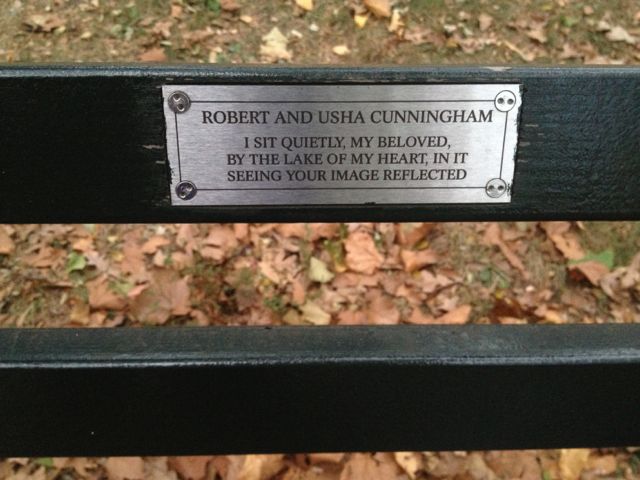

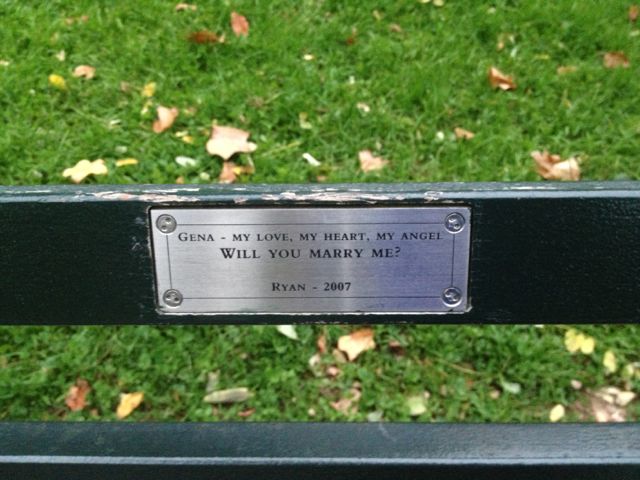




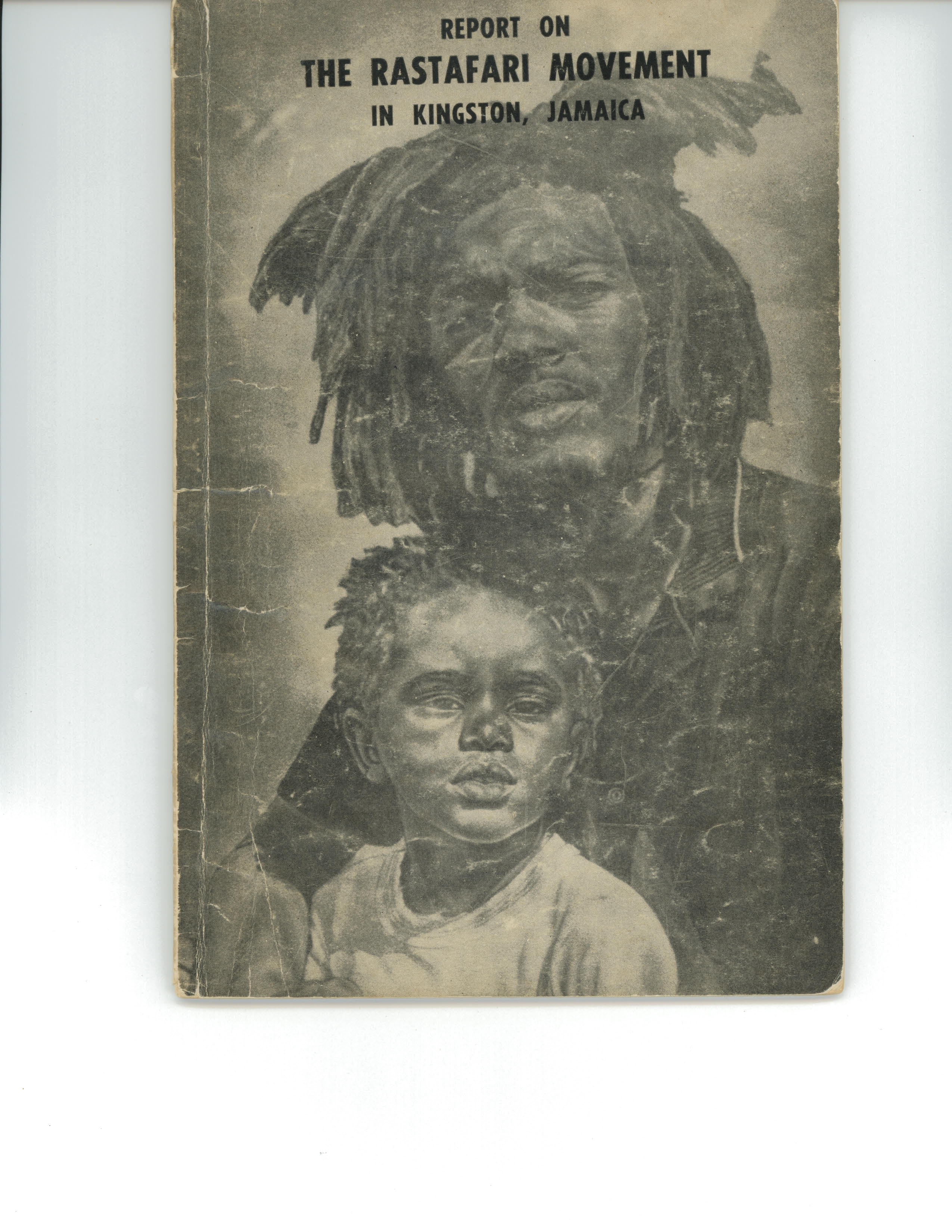


 Active Voice