An account of the launch of Hilary Beckles’s book, Britain’s Black Debt, in Jamaica
The launch of the book Britain’s Black Debt by historian Hilary Beckles, Principal of the Cave Hill Campus on May 2 was as solemn and grand an event as the weight of reparations from Britain for the crime of slavery demanded. The auditorium of the New Medical Sciences Building on the Mona Campus of the University was full, with ushers politely showing attendees to their seats. Here and there you could see clumps of Rastafarians equipped with small drums and instruments which they shook and beat whenever a speaker said something they approved of.
Kellie Magnus @kelliemagnus
Beckles: 300 years of salt pork has led to chronic illnesses. Rasta man shouts out: fire bun!
@chicab_1
@kelliemagnus I find huge flags waved at high speeds right by the ear more dramatic #strategiestosurvive3hourbooklaunch
Kellie Magnus @kelliemagnus
Gonsalves calls for intl conference on reparations. Offers St Vincent and the Grenadines as host #britainsblackdebt
anniepaul @anniepaul
Sigh RT @kelliemagnus: After 67 minutes Gonsalves says, “I turn now to part two of the book.” #britainsblackdebt
RT @keimiller: Gonzales has moved on to 2nd topic: slavery. Hope its not as long as Roots.
@touchofallright to @BigBlackBarry
dude–you shld be at this launch for “britain’s black debt: reparations for caribbean slavery and native genocide”
BigBlackBarry @BigBlackBarry
@touchofallright nobody doan invite me to these jiggy functions. How it can name black an Barry nat dere?
The flippancy of the tweets I’ve chosen to quote above are no reflection on the subject of the book itself but more the outcome of a captive audience equipped with social media and able to chafe publicly at the undue length of the ceremonies. Lord Anthony Gifford who has researched the subject of reparations extensively and campaigned for it, was short and incisive but by the time the guest speaker, the Honorable Ralph Gonsalves, Prime Minister of St. Vincent and the Grenadines, finished his expansive official speech many of us had to leave without hearing the author of the book respond. This was a pity because I had come mainly to hear Beckles on a subject that I’ve thought and written about myself.
In fact the event reminded me that one of the earliest columns I wrote for the Sunday Herald (March 10, 1996) was titled The Logic of Reparation. I remember being stunned at the time when Rupert Lewis congratulated me on being the first columnist to tackle this troublesome issue in the mainstream media (Jamaica’s come a long way since the mid-nineties). My own interest in Reparations was sparked by my conversations with a family friend, Ras Makonnen, aka George Nelson, a feisty Rastafarian public figure who had he not succumbed to cancer would probably have been Mayor of Portmore today. Big George as he was known, founded the Committee on Reparations in Jamaica in 1991 and had attended the First Pan-African Conference on Reparations held in Abuja, Nigeria, April 27-29, 1993, out of which came the Abuja Proclamation, part of which i quote below.
…Fully persuaded that the damage sustained by the African peoples is not a “thing of the past’ but is Painfully manifest in the damaged lives of contemporary Africans from Harlem to Harare, in the damaged economies of the Black World from Guinea to Guyana, from Somalia to Surinam.
Respectfully aware of historic precedents in reparations, ranging from German Payment of restitution to the Jews for the enormous tragedy of the Nazi Holocaust to the question of compensating Japanese-Americans for injustice of internment by Roosevelt Administration in the United States during the World War II.
Cognizant of the fact that compensation for injustice need not necessarily be paid only in capital but could include service to the victims or other forms of restitution and readjustment of the relationship agreeable to both parties.
Emphatically convinced that what matters is not the guilt but the responsibility of those states and nations whose economic evolution once depended on slave labor and colonialism, and whose forebears participated either in selling and buying Africans, or in owning them, or in colonizing them…
Well, I missed what Professor Beckles had to say on the occasion of the launch but at least i can buy the book and read it. It was only the other day that a conversation on Facebook about Reparations inevitably led to the argument by a ‘Jamaica white’ that s/he was a mixture of both black and white. So which part was going to pay which part? This kind of trivialization of reparative justice is quite common but the fact is that reparations need not be thought of as individual payouts such as the former slave-owning planters received, but as investments in public goods, like education, health and infrastructure. This would go a long way toward repairing the historical injustice Britain benefited from and inflicted on the Caribbean islands it once controlled.
English historians have recently uncovered the links between prominent British public figures and their slave-owning antecedents. From David Cameron, the Prime Minister, to highly regarded writers such as George Orwell and Graham Greene, the list is a long one. According to Nick Draper from University College London, who along with historian Catherine Hall and others studied the compensation papers “… as many as one-fifth of wealthy Victorian Britons derived all or part of their fortunes from the slave economy.”
Much ado about contaminated toilet paper in Jamaica
This week Jamaicans are convulsed about substandard toilet paper on supermarket shelves that may have caused a rash of vaginal infections. The truth is we don’t know much. The Bureau of Standards claims to have found four brands that may be ‘contaminated’ but refuses to name them. Instead they are laboriously naming dozens of other loo paper that have alledgedly passed their tests. It leaves Jamaicans in a quandary. Should people like my friend Heather who invested in a case of toilet paper dump the lot because its not on the BOS list of safe tissues? Is it even safe to take a dump? The selection of tweets below, all dated today, will fill give some idea of the extent of the problem:
Dionne JacksonMiller @djmillerJA
Coming up at 5.30 – the toilet tissue issue @RJR94fm Beyond the Headlines
Deika Morrison @deikamorrison
Toilet paper with expiry date? Huh? #TissueIssue
@BigBlackBarry How yu can have a female PM silent when women in this country are being subjected to bacterial assaults on their vaginas?
Dionne JacksonMiller @djmillerJA
Next – a local manufacturer on the toilet tissue issue @RJR94fm Beyond the Headlines
YoGyLe @jahmekyagyal
Does the BSJ have lawyers? have said lawyers told them that truth is a defense? or is it that BSJ don’t trust their own tests?
Emma Lewis @Petchary
Does the Bureau of Standards test baby diapers too? Just wondering…
BigBlackBarry @BigBlackBarry
This bredda is a kratches….him need fi wipe up with tainted tissue
KimberlyRacquel @KRSeymour
The Bureau of Standards are a spineless set of BUREAUCRATS who refuse to protect the public out of fear. Shame on Dr. Davidson! #tissueissue
@Sarahjah: Tissuegate. Smh.
Julian Cresser @JulianCresser
@anniepaul Why aren’t they being fair? They have told us what is safe. They don’t need to name the unsafe ones.
May i recommend a ‘lota‘ to Jamaicans distressed by the #TissueIssue. As the Mighty Sparrow said to his would-be Dulaheen:” I’ll gladly trade my toilet paper for some water!”
Lota
And beyond that perhaps we should consider whether this whole folderol is just a tissue of lies concocted by local toilet paper manufacturers to protect themselves against ‘foreign’ (read Chinese) imports of the sanitary product.
It was news to me to find out that this tissue issue had reared its head as far back as February this year albeit in a slightly different context. As a Gleaner article dated Feb 3, 2013, Shoddy imported tissue raises stink, has it:
Scores of Jamaicans are purchasing substandard toilet tissues and putting themselves at risk of serious health problems.
Sources in the health and manufacturing sectors last week confirmed that a large quantity of substandard toilet tissues is being imported into the island, mainly from Asia.
The Jamaica Customs Department also confirmed that there are indications that the quality of some of the tissues being imported from China is less than acceptable.
A Sunday Gleaner probe revealed that the three major local manufacturers of toilet tissues have been lobbying the Government for changes to the import regulatory framework.
The manufacturers have also dispatched complaints to the Customs Department about the inequality inherent in the system.
They have claimed that the labels on some of tissues from Asia are not written in English.
In addition, local regulation states that the minimum sheet count allowed in Jamaica is 300, while the sheet count of tissues from Asia is between 200 and 240.
In the meantime the Jamaican Bureau of Standards (BOS) is digging in its heels and refusing to divulge the names of the contaminated toilet tissue brands. According to this Radio Jamaica (RJR) report:
While the names of the four brands of toilet paper have not been released, RJR news has learnt that one brand is imported from within the Caribbean Community (CARICOM).
Last week the Bureau of Standards said it was waiting for conclusive scientific tests to be done overseas, before revealing the brand of contaminated toilet paper.
However, Professor Winston Davidson – the Chairman of the Bureau of Standards now says the names may not be released due to legal concerns.
He argues that the Bureau never asked the manufacturers of toilet paper to meet microbiological standards – similar to what is required for food imports.
Concerning reports that some supermarkets still had contaminated toilet paper on their shelves – Davidson admitted that this was true.
However, the Ministry of Health has stepped in and revealed that it will be removing the affected toilet paper brands from the public domain.
The excerpt below is from a Neiman Journalism Lab article on Indian journalists and their use or non-use of social media. I was struck by the following paragraphs because of the connection to my previous post Why Twitter is Essential for Journalists in which i asked when the top brass of Jamaican journalism was going to start using Twitter, one of the most revolutionary new news-gathering tools available today.
The Delhi gang rape case prompted many journalists to use Twitter for updates on events and immediate responses from activists. To a greater extent than in previous protests, social media helped journalists keep a finger on the pulse of middle class India and get their immediate feedback on important issues. An Australian reporter said that “Twitter was really helpful to get a sense of the public sentiment and developments.” He followed the #delhigangrape hashtag, the official Twitter account of the Indian government, women’s groups, pressure groups, and Indian media on the subject.
Venkataramakrishnan, the journalist who found 140 characters limiting, nonetheless said that the protests have been incubators for social media sophistication in India. “Following the Anna Hazare case and the Delhi gang rape case, social media began to achieve a critical mass,” he told us.
Many journalists cited the importance of social media for background information. A journalist from The Hindu told us “I look at tweets by our own editor, editors from other newspapers, well known journalists such as Pritish Nandy [a columnist with The Times of India and the Hindi newspaper Dainik Bhaskar], Abhijit Majumder [editor of the Delhi edition of the Hindustan Times], and Saikat Dutta [a Delhi-based editor of the newspaper DNA]. I also look up tweets by television journalists such as Shiv Aroor [deputy editor at Headlines Today]. You get a mix of opinions from their tweets. Knowing these people’s perspectives helps me during coverage — but only indirectly…I rely on what I see when I am on the ground.”
Interestingly the overall thrust of the article I’m quoting is that in countries like India social media only reaches a tiny percentage of people and therefore may legitimately be overlooked. In Jamaica the number of people who have access to the internet and use social media via cellphones is much higher. Low internet penetration is all the more reason for media heads and top journalists to be au fait with the latest technologies so they can use it to inform themselves and their audiences who aren’t as well linked.
An attempt (once again) to rally our top journalists to start using Twitter, the definitive newsgathering tool, before its too late.
2012 was the year a handful of name-brand Jamaican journalists decided it was time to start using Twitter. That was pretty late in the day already. The majority however are still holding back, perhaps signalling their impending mortality or the end of their shelf lives as journalists to take seriously? We still have no @ianboyne, @markwignall, @cliffhughes, @MartinHenry (perhaps the only local science writer!) and many others who straddle traditional media like local giants.
This post is dedicated to all the non-tweeting local giants of Jamaican journalism: The following quote from How to break into science writing using your blog and social media (#sci4hels), a Scientific American article should clue you in on why you’re shortchanging your audiences by continuing to spurn the latest newsgathering technologies such as Twitter. In addition this useful but long article provides a lot of great information for journalists in general on how to use social media to find new audiences and outlets.
“Let’s focus on Twitter now. It is essential for a journalist. Not having – and using – a Twitter account today is like not having an email address ten years ago (and yes, some cutting-edge people are completely abandoning email and doing all of their communications over social media).
Big companies have suffered losses because their old-timey PR teams were unaware of the backlash on social media, and then incapable of responding correctly on social media. Businesses can lose money if they are missing key information that appears only on social media. Academia is especially horribly insulated and way behind the times. But nowhere is use of social media as important as in journalism. Don’t be this guy who was completely oblivious that his newspaper was in the center of national maelstrom of harsh criticism, because “I only deal with what’s on paper”.
When an airplane skidded off the runway in Denver, I knew it, along with 100,000s of other people, 12 minutes before everyone else. A passenger tweeted about it, and it spread like wildfire, including his updates, blurry photos, etc. CNN had a brief piece 12 minutes later. The accidental “citizen journalist” scooped them. Sometimes, for some news, these 12 minutes may be crucial for you.
Twitter and Facebook were key methods of communication not just between participants, but also to the outside world, during the Mumbai attacks and the Arab Spring.
Journalists who observed the massive, instant, intense and scathing reactions of experts to #arseniclife or #Encode did not make the mistake of filing their positive stories and then having to backpedal later.
If all you see on Twitter is garbage, you are following the wrong people. You have to carefully choose who to follow, and then learn how to filter. Unfollowing is easy, and polite. You are not dissing your Mom, as if you would if you unfriended her on Facebook.”
And guess what the best thing about this most cutting-edge tool for journalists is? It’s free!
An attempt to redeem from the dustbin of history the back story and some of the principals left out of the highly touted new film, Songs of Redemption
Some weeks ago I went to see Songs of Redemption (Hereafter SOR) with a couple of friends, one of them an anthropologist who has written extensively about Jamaica and recently made her first film, the other an activist, both Jamaican. The film, set in Kingston’s legendary General Penitentiary (GP), is about an innovative rehabilitation programme that uses music as a tool, helping a set of inmates serving time for everything from petty theft to murder most foul, to discover and hone their musical talent. The film is a stunning production by Fernando Guereta, whose earlier film Why Do Jamaicans Runs so Fast, many of us have seen and appreciated. SOR takes us right into GP, an institution that has been a reference point in many a classic Jamaican song and into the lives of a group of prisoners who absolutely transfix you with their dramatic stories and songs, their humanity, their selves. The scenes of imprisoned men milling around the compound of GP in rag tag bunches is, to me, unforgettable.
The quote below accompanies the Youtube video trailer of the film (embedded beneath the quote):
“Songs Of Redemption” is a documentary that captures the story of redemption and rehabilitation of Jamaican inmates of the General Penetentiary in Kingston. It features riveting interviews and powerful original Reggae music created, performed and produced by inmates wardens and Local Producers.
This documentary is dedicated to
the extraordinary work of human rights activist, Carla Gullotta.
After viewing SOR the three of us discussed the film over dinner. While I thought it documented an important initiative that definitely needs wider support and awareness i felt uncomfortable about the fact that all the principals behind actualizing the film and the project appeared to be Europeans and that in an unfortunate way the film therefore reproduced the stereotype or trope of the white saviour rescuing abject black subjects and promising salvation. The latter are revealed to Jamaican society and the world as helpless, incarcerated subjects worthy of being heard and ‘redeemed’.
The one black subject with some authority in the film is a Superintendent Fairweather, on the verge of retirement, who by his own account, had always been a champion of prisoner rehabilitation. The impression the film leaves you with is that Carla Gullotta, a Jamaicanized Italian activist, spearheaded this innovative programme under the approving eye of Supe Fairweather sometime in 2007.
Imagine my surprise therefore to find out that a rehabilitation programme had actually been in place in the prison system since the late 90s when Desmond Green, founder of the Reverence for Life Foundation, started a branch at South Camp Road (formerly the Gun Court, now The Peace Centre). Louise Frazer-Bennett, who used to manage Ninjaman and Bounty Killer was part of that project and literally pioneered the introduction of music-related programming here. In 2000 Kevin Wallen, a former street kid who had later gone to school in Canada and become a motivational speaker, returned to Jamaica with his brothers hoping to contribute towards the nation in a meaningful way. They started and ran a computer boutique, One Stop Computers, at the New Kingston Mall. While in Canada Kevin had become close to Rubin ‘Hurricane’ Carter, a prominent boxer who had been controversially imprisoned in the United States for 20 years before being freed, an experience that had turned him into a campaigner for prisoners’ rights and rehabilitation. Bob Dylan famously wrote and sang the song ‘Hurricane’ in his honour.
Wallen describes how it all began:
In 1989, when Reuben Carter’s movie was coming out, I brought him to Jamaica to speak. We agreed to give free tickets to some inmates to hear Reuben speak. The inmates came on the bus from the prison, part of a program called Reverence For Life, run by Desmond Green. After Ruben spoke, one of them stood up and told his story. I remember Ruben said to him, “You know, the one thing you have where you are is time! So what ever it is that you need to figure out, that’s where you should to start. Start by using your time.”
Seeing the inmates’ passion and listening to them talk with Ruben, I volunteered to work with them at the South Camp Prison. I was looking for something more meaningful than computer sales, and I wanted to understand why my life had turned out good and they were suffering. Maybe by sharing my journey with them that would make a difference (source: Kevin Wallen’s forthcoming autobiography co-authored with Fern Nesson).
Influenced by Carter, Wallen started getting involved with prisoners in the correctional system here, first giving motivational talks, then building a library, introducing computers into the prison and gradually working with a group of inmates who had formed a self-help unit called SET (Students Expressing Truth). SET, which was highly organized and completely inmate-driven had started holding quiz competitions, spelling bees and other activities in prison.
Along with Charlie Nesson, a Harvard Law School professor who had also been working in the Jamaican prison system Wallen turned the computer lab into a transformational project. Nesson is the founder of the Berkman Center for Internet and Society, one of the earliest outfits “to demonstrate the transformative potential of the cyber environment“. The self-styled ‘Dean of Cyberspace’ set up a programme using Harvard personnel and resources to introduce Jamaican inmates to cyberspace.Provided with the latest technologies inmates learnt video editing, Photoshop, graphic design, built 3-d houses, wrote syllabuses and taught each other to use the programmes. Most of this work was done at the South Camp Road prison facility.
After his success at South Camp Wallen built a computer lab at Fort Augusta, the women’s prison, which was also hugely successful and by 2006 tried to introduce the programme to the GP by starting a small project there but to his surprise met with resistance, including from Superintendent Fairweather, presented in Songs of Redemption as a champion of prison rehab programmes. “It seemed like the powers that be liked things the way they were.” Wallen said. Doggedly sensitising the authorities to the benefits of rehabilitation and restorative justice Wallen built a computer lab that could hold 30 inmates at a time at GP. Nesson and Wallen then started thinking about the possibility of starting a radio station at the prison, researching it on the internet and finally with permission from the Commissioner of Corrections and funding from UNESCO which provided the equipment and training, CEDA providing funds for building the space, the radio station was established. The motivation for starting the station was a particular inmate named Serano (who plays a leading role in Songs of Redemption) whose voice and singing had made an impression as early as 1999 when he sang with the Reverence for Life project.
in 2008 David Sasaki, known to me from Global Voices Online took note of the innovative rehabilitation programme on a PBS blog site called Idea Lab:
When thinking of Kingston, Jamaica, blogging and podcasting are far from the first words to come to mind. “Murder capital of the world”, sure. Bob Marley and reggae music, of course. But a cutting edge prison rehabilitation program, which teaches prisoners at a maximum security correctional institute how to blog, podcast, and even participate in Second Life?
…
Kevin Wallen, the current director of S.E.T. first became involved in the organization after reading an inspirational book by Rubin “Hurricane” Carter, a former American middleweight boxer who was released from prison and pronounced not guilty after spending nearly 20 years behind bars. Wallen, then living in Canada, returned to his native Jamaica and took over the leadership of S.E.T. in June of 2000. Since Wallen’s involvement in the program, over 100 prisoners have passed through the S.E.T. program and not a single one has returned to prison. That is a stark contrast to Jamaica’s traditionally high rates of recidivism (50% in 1993).
Viewing Songs of Redemption you wouldn’t get even a hint of this rich history. The impression one gets is that an Italian activist, Carla Gulotta, arrived at the General Penitentiary in 2007 and set up the music studio and programme with help from various NGOs. In fact it was Kevin Wallen who introduced Carla to the SET project at GP in 2007. Shortly after that his involvement in the programme was terminated by Superintendent Fairweather and Carla took over the project. Wallen was by now bankrupt after 10 years of putting his own resources into the various computer labs he had built. Unable to repay money he had borrowed from Carla, he retreated to the hills, literally to lick his wounds and recover. As Wallen says in his forthcoming autobiography, co-authored with Fern Nesson:
Over the years, it became harder and harder to work in the prisons. The Administration gave me such a hard time. They preferred programs that made big splashes rather than SET. They didn’t care that a SET member had reconciled with the person that he had harmed or that he had called his mother just to say thank you. I saw a lot of changes in these men but the institution was so caught up in punishment that they were not ready to appreciate SET.
Charlie Nesson corroborates the sequence of events retailed by Wallen. He recalls how Superintendent Fairweather would refuse to send inmates to the computer lab when it was first constructed and had to be persuaded of the importance of rehabilitation for prisoners. Asked in a Gleaner interview to name five things that could reform Jamaica’s prison system Nesson replied, “Number One would be to change the real mission of the correctional services from warehousing to rehabilitating prisoners, which means helping them to rehabilitate themselves.” That was in 2010. Yet by January 2013 SOR was portraying the person in charge of GP as a veritable champion of restorative justice–as always having had the philosophy that prisoners needed active programming to help them rehabilitate themselves. What a farce.
I emailed Fernando Guereta to ask if I could talk to him about the film but received no reply. Am still willing to carry his side of the story if he makes contact.
Finally, just to remind myself I asked my anthropologist friend who teaches at an Ivy League university in the US and has written extensively on violence, reparative justice and such things, why she, like me, had been skeptical of SOR. This was her response:
Re. film, I think I felt uneasy about the lack of context, and the framing of redemption (rather than rehabilitation), and what that meant. Also, wasn’t thrilled about the implicit thing of the white woman “savior” introducing the program and no follow up on what was going to happen now that the superintendent was leaving — will it continue? Who will run it? Who was she and why do we not see her except in the beginning, etc.?
Another friend, Garnette Cadogan, who is here writing a story on the Patois Bible for the Paris Review had similar questions. Where was the context? Why wasn’t the programme historicized properly? Why was the whole story so vague?
You didn’t have a sense of a point of view; you didn’t have a sense who was doing the programmes; there were all these invisible people–who was teaching the music programmes? how many prisoners were involved? how much time did they spend? Its ostensibly about the reform of prisoners through music programmes but we got no information really about the music programme, we got no information about who was teaching them,or recruiting them, we got no sense of the history, how did it fit in with the other programmes that were there? it was too acontextual. You find yourself wondering is this the programme Jah Cure, the famous Reggae singer who recorded his megahits while in prison emerged from? was it an offshoot of it?
I had wondered too why there was no mention of Jah Cure, it seemed an obvious reference. According to Wallen Cure’s trajectory is different because producer Bogdanovich and others were involved in his musical rebirth but that’s another story.
According to the film’s direcor, Nando Guereta (see comments), the EU did not fund this film as i had said earlier so I withdraw that statement. He also points out that he was commissioned to make a film about Ms. Gulotta’s work therefore he didn’t see the need to focus on Wallen. I think he misses the point that Wallen ought to have been at least mentioned when setting the context for Gulotta’s work here. But of course as more than one person has complained the film is acontextual which is such a pity and not characteristic of Nando’s earlier films. This post is merely an attempt to historicize SOR, to provide some of the fascinating background to a restorative justice initiative that needs to be known more widely, both here in Jamaica and the rest of the world.
The Barbados Tourism Authority vs The Jamaica Tourist Board. A comparison of two advertising strategies….
The above ad featuring the ‘Minnesotan Jamaican’ of VW ad fame was produced by the Jamaica Tourist Board (JTB).
And this one featuring Rihanna was produced by Barbados’s tourism entity–the Barbados Tourism Authority.
Do you see a difference in strategy, production values, script and use of each island’s natural assets? Why does the Jamaican ad seem lame, insipid and bereft of imagination? why is the Barbadian ad on the contrary so perfect that it could be a global model on how to sell yourselves? And contrastingly how and why does the JTB ad sell the country short?
After 50 years of Independence is this the best our creative class can do? or is JTB hiring friends and relatives and not the pros that we need and have?
Discuss.
PS: This post came out of a discussion on Twitter and is indebted to @Gordonswaby, Erin MacLeod @touchofallright for drawing my attention to the Rihanna ad and @drewonline.
After Dan Rather’s in-depth coverage of the Lotto Scam in Jamaica might it be a good time to ask why local media doesn’t produce similarly aggressive, investigative reporting?
News outlets in Jamaica this week were inundated with coverage of and responses to the US media’s unprecedented focus on the Lotto Scam, a locally generated con game, whose victims are elderly Americans. Former 60 Minutes stalwart Dan Rather visited Jamaica some weeks ago so his in-depth exposé of the scam, Just Hang Up, which aired on March 12, complete with heart-rending interviews with some of the victims didn’t come as a surprise. The documentary was timed to air in tandem with evidence presented to the US Senate’s Committee on Ageing yesterday. At least two other major US channels also aired stories on the scam.
The US Embassy in Jamaica obligingly posted links on Facebook with the following note:
As you are aware, there has been a great deal of U.S. media attention focused on advanced-fee fraud (also known as “lotto scams”) recently. Below are the links to the Dan Rather, CBS and NBC stories.
I haven’t yet seen the entire documentary featuring Rather (its available free on iTunes though only in the US not in Jamaica) but the excerpts shown on TV here have been riveting. The American TV team even lured a scammer, tracked down by his IP address, to a meeting in Montego Bay, showing him live and direct for all to see. Naturally the impact has been sensational especially because this well-crafted documentary was shown on prime time TV in the United States. It suddenly came home to Jamaicans that ‘Brand Jamaica’, as local technocrats and the media in general have taken to calling it, was going to take a battering.
Relying on tourism and American visitors as much as Jamaica does this could be potentially devastating.
What does it mean that serious crimes like the Lotto Scam and the Tivoli genocide (the 2010 killing of 73 plus citizens by the State in its pursuit of fugitive don, Christopher Coke) are exposed by foreign not local media I asked on Twitter yesterday. For although the media here has carried any number of stories on the Lotto Scam, many of them bizarrely claiming that most of the scammers are gay, we’ve never been given a true idea of the scale of the problem, affecting enough Americans for their political representatives to start raising the alarm about it.
Several media folk I follow on Twitter reacted negatively to my question, interpreting it as a slight or a claim that there had been no local media attention to the scam. It s true that there have been many stories about the Lotto scam here. To my mind however there’s a qualitative difference in the way the story was investigated and reported on American TV and the way it’s been carried in the local media which mainly focused on the scam when police action brought it to the forefront. Piqued by public criticism Simon Crosskill played some of CVM’s previously aired coverage of the Lotto Scam last night. It did cover much of the same ground as Rather’s documentary but the audio was poor and too many of the people interviewed had their faces obscured and voices disguised, thus robbing it of the impact it could have had.
Are there some stories local media consider too dangerous to touch? or don’t have the resources to I wondered puzzling over this variance in the quality of media coverage. In the case of the 2010 Tivoli carnage also there had been nothing in local media to approach the in-depth investigative article by American journalist Mattathias Schwartz whose exposé provided evidence that the US had given Jamaica military assistance in the May 2010 incursion into Tivoli despite the Jamaican government’s claims to the contrary. In both cases it was the American media that brought these stories to international attention, and sustained interest in them, not local media.
Let it be noted that Jamaican media are perfectly capable of executing well-researched, hard-hitting, in-depth stories when they’re ready to. In 2004 Cliff Hughes’s TV programme Impact won an Emmy in the United States for its documentary on sniper Lee Boyd Malvo called ‘The Potter and the Clay’. It was so good it not only attracted the attention of the US media, it won one of the most coveted journalism awards there. Other journalists such as Earl Moxam, Simon Crosskill, Dionne Jackson-Miller and Emily Crooks are as good as or better than their American peers.
Is it that there’s a lack of political will from the big media houses to provide the best journalists with the required resources and time to follow up the really important stories? Or are there more sinister reasons why Jamaica doesn’t have aggressive, exposé-driven investigative news outlets such as 60 Minutes and ABC’s 20/20?
The closest thing Jamaica has had in recent times to similar hard-hitting TV newsmagazines, was Doubletake, produced by Anthony Miller and CARIMAC lecturer Yvette Rowe for TVJ in 2000-2001. Despite winning awards the programme was phased out after only 8 or 9 episodes because it was considered too hard hitting and perhaps too close to the truth for comfort. It was felt that the broadcasters’ relentless focus on corruption and calling out politicans and others without fear or fanfare was ‘mashing too many corns’. This was the perception of the hosts of the programme; the station apparently discontinued it for lack of sponsorship although it was extremely popular and well-received by the public. Why a popular, well-made documentary programme would have difficulty finding sponsors is anybody’s guess. But it reinforces the point I’m making about the lack of will on the part of those with the means to enable and sustain high quality, hard-hitting journalism.
Among other subjects Doubletake covered, were the death and funeral of Grants Pen area leader Andrew Phang in Death of a Don, colour and race issues in The Browning Syndrome, the politics of the 100 Lane Massacre and other such matters. Whatever was the issue of the day was grist for their mill and with a miller like Anthony, no holds were barred. We desperately need a show like Doubletake again.
A look at the Shanique Myrie case and how class and taste impinge on it.
Shanique Myrie, circa the time of deportation from Barbados
There’s a landmark case being heard in Kingston, Jamaica, at the first sitting of the Caribbean Court of Justice (CCJ ) here. In March 2011, Jamaican Shanique Myrie landed in Barbados to visit a friend there (by her own account). Instead of the usual sedate Barbadian welcome Myrie was treated to a cavity search, kept in a dark room and deported the next morning to Jamaica although nothing illegal was found on her person or in her possession.
After this unceremonious return to the country of her birth Myrie charged that in the process of the cavity search she had been finger-raped by the immigration officials concerned. Her lawyers took the case to court claiming that her rights as a CARICOM citizen were abused, and that she was discriminated against because she is Jamaican. The CCJ argued that Myrie does indeed have a case against Barbados and the trial began yesterday morning at the Jamaica Conference Centre in downtown Kingston.
Photo of Myrie (r) from the Jamaica Observer
When one of my favourite Jamaican journalists who was present in court yesteday tweeted the link to her post on the proceedings of the first day I clicked on it rather eagerly but was repelled by her opening sentence:
A beautiful fair skinned pony tailed, black suit, white inside blouse wearing young woman in a medium heeled closed up black shoes, Shanique Myrie is called into conference room 2 at the Jamaica Conference Centre, in a fight for her rights as guaranteed under the Revised Treaty of Chaguaramas which establishes the Caribbean Court of Justice, CCJ.
In the first place, the Grammar Nazi in me was offended by the overladen, clumsy, grammatically dubious lead-in to the report. How on earth could “white inside blouse wearing young woman” be considered acceptable English by anyone but particularly a journalist? Was there a moratorium on fullstops, commas and hyphens? How could a black suit ever be described as beautiful, fair-skinned and pony-tailed?!
Second, why was it important to know what the claimant was wearing? would a male petitioner’s clothing have been described in such tiresome detail? Later in the same post the journalist went on to note:
Wearing a diamond shaped gold looking clip on earring, Miss Myrie recites her full name as Shanique Samantha Myrie who though unemployed now works in food and beverage in better times.
I was dumbfounded and took to Twitter challenging this gendered depiction of events. Why not focus on the substance of what was unfolding in court and leave sartorial detail to be captured by TV cameras ? The journalist responded saying “I believe it is important to paint a full pic for all.” She appeared puzzled by my objections.
I was even more puzzled by the reaction of another tweep, @diva_simmo, who argued that “in the court room image is everything. Even Vybz Kartel choose jacket and tie over – straight jeans and fitted.” Her next tweet said “as a listener I found the information very useful especially the ‘medium heel shoe’. Image matters.”
Curiouser and curiouser. Pray how did it help to know that the claimant wore a medium heel shoe I tweeted back.
Because “if she wore 6″red wedge with mini green dress and blue wig it would indicate the direction her legal team is taking” responded @diva_simmo, “…her attire in court says legal team is portraying self respecting, mature professional.”
The penny dropped.
This landmark case is not only about nationality, it’s also about ‘class’, the ungainly elephant in the room no one wants to explicitly mention. It is important to portray Myrie as ‘decent’ ‘respectable’ and ‘sober’ because the image of Jamaicans in the region is overwhelmingly influenced by the higglers, DJs and hustlers who often represent the face of Jamaica, visiting, even migrating to other countries, where they are not always welcome.
Why? because these enterprising but capitally-challenged individuals (ie owning little capital, whether financial or social) often violate all the dearly held norms of ‘decency’ ‘respectability’ and ‘good taste’ with their choice of garments, raw speech and boisterous behaviour. They regularly transgress the zealously guarded borders of civility and decorum as much as the borders of nation states which under the new Chaguaramas Treaty they now have a right to breach.
Perhaps this was why Myrie was given the finger when she arrived in prim and proper Barbados, regionally glossed as ‘Little England’. Not just because she was Jamaican but because she was perceived to be a particular kind of Jamaican. So @Emilynationwide was right to emphasize the outfit and demeanour of Ms Myrie. It may be extremely germane in the instant case.
PS: The overall point I’m making in this post is not to dis the journalist concerned or claim that there was no substance to her post. Far from it. When i said let’s focus on substance rather than style or appearance it hadn’t yet occurred to me that in this case style IS the substance or a substantial part of what’s at stake. I realized belatedly based on something @diva_simmo said that the reason for the focus on Myrie’s dress was because class prejudice is a real danger here and Myrie’s appearance is material evidence that may well influence the jurists involved, so much so that her legal counsel went to great pains to counter this by dressing her ‘classily’. So Emily was right to focus on how this was achieved. Being somewhat resistant if not immune to the strictures of fashion this wasn’t obvious or self-evident to me. My point is simply that if class is an issue let’s explicitly state it and discuss it because that’s the substance of what we’re getting at by extensively describing Myrie’s carefully assembled clothing. Profound apologies for any distress I caused Emily Crooks.
A note on noted jazz arranger Melba Liston and her stint in Jamaica.
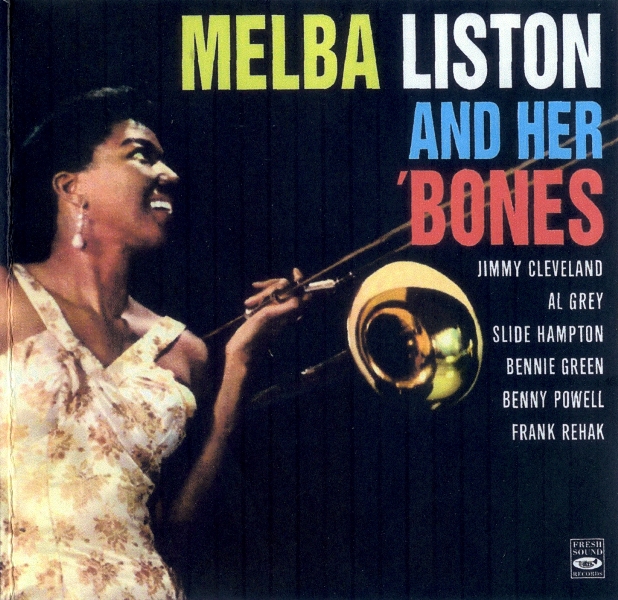
One of the highlights of my trip to New York City last week to attend the CAA2013 conference was a visit to the Whitney Museum to see a show called Blues for Smoke. I was with art historian friends Krista Thompson and Amy Mooney. Amy asked if i had heard of Melba Liston. No, who was she i asked. A trombonist, music composer and arranger who had performed or written music for all the now legendary figures of American jazz as it turns out.
Melba Liston certainly saw every side of show business. On one occasion she was stranded with Billie Holiday, both of them broke, in a hostile South Carolina, and on another she walked about playing a harp in the film “The Ten Commandments” (1956).
It was her talents as a composer and arranger that distinguished her, rather than her work as an instrumentalist. She wrote scores for innumerable big bands including those of Quincy Jones, Count Basic, Duke Ellington and Dizzy Gillespie. Her long association with her mentor the pianist and composer Randy Weston took her to the forefronts of modern jazz and Tony Bennett, Billie Holiday, Abbey Lincoln and Diana Ross were amongst the vocalists that commissioned work from her.
In the late 60s Melba seemed to fade away, hardly making an appearance on stage or behind it anymore. What is less known about Melba Liston is that in 1973, invited by the Government of Jamaica (“which was anxious to provide facilities where young Jamaican musicians could learn about a wide range of modern music forms”), she took up a 6-year contract at the Jamaica School of Music where she headed the Department of Afro-American Pop and Jazz.
In recent years an increasing number of seasoned professional Jamaican musicians have enrolled in the department’s advanced courses in theory, harmony, improvisation, jazz choir and jazz history. The students have also benefited from private seminars with artists such as saxophonist Frank Foster, drummer Elvin Jones and trumpeter Lester Bowie.
Who were all these professionals i wonder, and how come we hear so little about pioneering figures like Liston, especially when they play pivotal roles in our cultural development?
Wikipedia provides more information about Liston’s work in Jamaica:
During her time in Jamaica, she composed and arranged the music for the classic 1975 comedy film Smile Orange (starring Carl Bradshaw, who three years earlier starred in the very first Jamaican film, The Harder They Come). The Smile Orange experience was probably her only known venture into composing reggae music (on which, in this case, she collaborated with playwright Trevor Rhone for the lyrics). Sadly, a soundtrack album for Smile Orange was never released or made available.
Here’s an excellent NPR documentary on Liston full of the most entrancing samples of her music. The set called Melba! was produced by Chicago musician Geof Bradfield, who incidentally is married to Amy Mooney (go back to top), which is how i came by her story.
Javed Jaghai’s brilliant video intervention asking for respect for Jamaican homosexuals is part of a sustained and unprecedented campaign by Jamaican gays asking for recognition as Jamaican citizens.
Jamaica’s LGBT community has come up with the most imaginative and moving campaign called We Are Jamaicans to deal with the widespread local hostility towards homosexuals. It is a series of videos in which young Jamaican gays come out on camera, in an effort to directly put their case to the nation as it were; some like Javed in the video above reveal their faces, others simply use index cards. These YouTube videos have been circulating widely on social media but as many have pointed out in all the fuss traditional media made about the New Kingston street gays and the problem they were causing in the most expensive part of the city, the Golden Triangle–none of them even took note of this unprecedented campaign by the local gay community and JFLAG.
Javed Jaghai’s video above is a must see. It is a brilliant and provocative plea. And a very brave one for in it he squarely faces the camera and identifies himself–and his posture is not that of a supplicant, an outcast begging to be let in–there is a more than a hint in it of that very Jamaican quality–defiance. Watch it and see what you think…










 Active Voice