MPs should be banned from speaking in English in Parliament, Samajwadi Party supremo Mulayam Singh Yadav has said.
“There should be a ban on English address in Parliament. Countries which use their mother tongue are more developed. It’s the need of the hour to promote Hindi,” Yadav said in a function here last night.
…
“The leaders of the country have double character as far as Hindi is concerned. They ask for vote in Hindi but give address in Parliament in English. This should be stopped,” he said, clarifying that he was not against English language per se.
Excellent point I thought recalling that it was only a few months ago that the opposite scenario played itself out in Jamaica:
was the astonishing headline in the Jamaica Gleaner.
President of the Senate Stanley Redwood had interrupted Justice Minister Mark Golding as he used patois (also called Jamaican, and Patwa, the unofficial mother tongue of the land) to thank bondholders and workers. As the article reported:
This morning, Justice Minister Mark Golding, who was in his element was stopped in his track as he thanked bondholders and workers for their role in ensuring that Jamaica fulfills prior actions requirement for an agreement with the International Monetary Fund.
“Respec’ due to those patriotic Jamaicans,” Golding said when Senate President Reverend Stanley Redwood broke his strides.
“Sorry to break your flow but the language used in the Senate must be standard English,” Redwood told Golding.
The minister had no choice but to relent, and instead of saying respec’ due, resorted to respect is due.
What a farce! Especially since the esteemed Mr. Redwood migrated to greener pastures within a few weeks of making his startling intervention. To be noted is what the Indian politico said: “Countries which use their mother tongue are more developed.” I firmly believe that half of Jamaica’s problems stem from its linguistic identity crisis, insisting its mother tongue is English when a huge proportion of the population can only speak Patois. As if that weren’t bad enough the mother tongue of the majority is not recognized as an official language in its own country. Meanwhile the airwaves are full of English-speakers gnashing their teeth over the ‘growth and development’ that eludes the country. smh. They don’t seem to realize that there’s a causal relationship at work here. Jamaica needs to be declared the bilingual state it is asap.
Being analog in a digital world….TV Jamaica’s acquisition of exclusive rights to The Voice…and how they had to change their tune.
A few weeks ago, when the current season of The Voice had just begun there was a bit of an uproar in Jamaica because one of the two local TV stations, TVJ, bought exclusive rights to it and then refused to show it live. They showed it two hours later when they figured they would snare the largest number of viewers. What made matters worse was that those who normally watch the show on cable as part of a bundle of American programming they have paid for suddenly found their access to NBC’s broadcast of The Voice denied simply because TVJ had bought exclusive rights to the show.
Infuriated viewers took to social media and complained enough that by the second week’s broadcast TVJ had agreed to carry the show live on one of its subsidiaries. The problem was that there was some kind of technical snafu that prevented The Voice being broadcast till an hour into the show.
People who had looked forward to watching Jamaican singer Tessanne Chin wow the judges for the second week running were upset and once again took their complaints to Twitter and Facebook. TVJ management later said it was shocked by the intensity of the reactions and the vitriol expressed by viewers. In retaliation TVJ executives tried to pit cable viewers against non-cable viewers by suggesting that somehow the former (privileged fatcats) wanted to deprive the latter (downtrodden masses with no options but local TV) of the pleasure of watching The Voice.
How they figured this is beyond me. The cable viewers didn’t object to TVJ broadcasting the Voice, what they objected to was being deprived of access to the cable channel they normally watch the show on. Similarly there was a strong suggestion that those who objected to TVJ’s buying the exclusive rights to The Voice and then not showing it live were somehow encouraging theft of intellectual Property.
I found myself in a radio discussion on RJR (Radio Jamaica) with Oliver McKintosh, President and CEO of Sportsmax, Chris Dehring of the West Indies Cricket Board and Gary Allen, Managing Director of the RJR Group that owns TVJ, where there was a tendency by the corporate representatives to lecture listeners about IP rights, about respecting rightsholders, about how this was no different from stealing physical property etc etc.
I was more than a little bewildered. Had anyone suggested that TVJ steal rights to The Voice? When?? Who?
Judging by Gary Allen’s statements on radio that evening, RJR’s motives for buying exclusive rights to The Voice were largely humanitarian. They had noticed that the participation of a local singer, Tessanne Chin, was exciting a bit of interest amongst Jamaicans and felt called upon to respond. As Allen elaborated:
When we recognized that this programme is one which is going to expose the talent of one of our artistes and that it is creating so much interest, our primary thing was, at that stage–not everybody has access to cable, we have a responsibility and a mission as broadcaster to try and bring content that is of interest to the widest possible audience. And therefore we were also very interested in exposing this beyond the cable audience. People who have cable very often forget that there are tens of thousands of people in Jamaica who do not have that access and to whom we should extend our services.
Aren’t Jamaicans lucky to have such a magnanimous TV station, one willing to spend millions of dollars buying exclusive rights just so their viewers can have access to Prime Time American TV programming without depending on cable? Conversely how quick TVJ’s top honchos were to throw us cable viewers under the bus! How little we matter to them. Tsk tsk tsk. Perhaps they’re not aware that the number of Jamaicans watching cable is as high as 70% according to some cable providers.
When it was President and CEO of Sportsmax Oliver MckIntosh’s turn to speak, he said he was a ‘bit disappointed’ with the reactions of those who had protested on social media and promptly went on to talk of piracy of content. Chris Dehring interrupted, objecting to the use of the term piracy because “it makes it sound almost romantic”, and insisted that it–whatever ‘it’ was– be called stealing.
“Just because there are a number of cars sitting on the wharf for 9, 10 months, you can’t just jump into a car and drive it off…If everyone’s allowed to steal which is essentially what is being proposed here…” he continued.
How analog they all sound I thought, futilely trying to point out that TVJ’s cardinal sin had been acquiring exclusive rights to a popular show and then not showing it live, particularly when it was the kind of reality show that demanded audience participation in the form of texting, voting and tweeting. It’s called interactivity and it has revolutionized the way content is presented, consumed and distributed globally. Those who want to profit from making content available, from providing access to it, cannot afford to overlook the huge transformation sweeping the creative industries.
I remembered all this as I listened to David Pakman (@Pakman), the keynote speaker at JSTOR’s Ithaka Sustainable Scholarship Conference in New York City recently. Pakman co-founded the Apple Music Group in 1995, co-founded MyPlay (pioneer of digital music locker), and was COO/CEO of eMusic for five years.
Pakman talked of the profound technological shifts that have taken place, the move from analog to digital for instance, and the tendency nowadays toward something he called ‘mass customization’. It had all started with the internet and its effects on the way music was consumed–in essence the fallout of ‘debundled’ content being made available. “The story of music is the story of unbundling,” said Pakman as he moved into explanatory mode.
The CD or music album was a bundle; you had no choice but to buy 10 songs bundled together for the one or two hits among them. “Then singles came along and ruined the bundle,” he said. The sale of albums had shrunk not because of piracy but because of debundling. Traditional incumbents try to bundle and the legacy costs of businesses are predicated on bundling.
Bundling is more expensive, it artificially raises overall costs. Information wants to be distributed friction free–and what flows best? Atomic units–which are more user-friendly.
The world is moving towards debundled content, journals too will be unbundled, with articles not papers, being the units of sale, Pakman said, making the link to the field of scholarly publishing that had brought together his audience of journal editors, librarians and publishers.
The Internet is a bi-directional medium–the user is also a producer, he explained, bringing up the interactivity I mentioned earlier. New aggregators are the social platforms not the publishers, and content discovery has shifted to social media where those with Twitter and Facebook clout have become the new ‘influencers’.
The latest American shows are fully aware of these new trends and have adapted to them, sensitive to the bi-directionality or interactivity mentioned earlier. The last episode of The Voice even incorporated Twitter into its voting process.
You can buy the exclusive rights to such shows but you can’t do that and treat them as if they’re the kind of traditional uni-directional, analog content that’s on its way out without raising the ire of your viewers. The sooner management of all the top media entities here realize this the better it’ll be for all concerned.
Sezi’s instructions to Tessanne Chin’s numerous supporters in Jamaica and Adam Stewart’s Instagram are a hint of the Voice mania that has overtaken the country. This evening NBC’s popular singing reality show introduces a first-of-its-kind Twitter vote using the hashtag #VoiceSave. This will allow tweeters to keep one contestant from joining the reject heap in an ‘instant save’ during a five-minute voting window toward the end of the results show.
I’ve been quite amused by the national frenzy to make sure Tessanne Chin, the popular Jamaican singer on this season’s Voice, is not eliminated due to a shortage of votes. Everyone from radio talk show hosts to scholars to teachers is busy devising methods to beat Jamaica’s inherent ‘economy of scale’ problem. How else could a small country with a population of 2.5 million, three at the most, compete in generating the required votes for their favourite singer?
You just have to admire the ingenuity called forth by everyone and their grandmother, check out these tweets to see what i mean:
@SadeSweetness: My co-worker in Trinidad just gave me remote control of her pc via #Lync to vote for @TessanE via @Skype
@mamachell Bitch! Lol RT @thtGrlDanielle: Every email in my contact list going vote fi tessanne whether u like it or not
@Dale_Gonsalves
Come on peeps, buy @Tessanne’s #thevoice songs on itunes, we need to get her numbers up. NO, downloading it illegally wont help. Ole Teef
@taraplayfair
Morning! We have until 11am.. Get up. Get voting. Or get friends/family in USA/CAN to vote for… instagram.com/p/gnXW0XBI2a/
@cucumberjuice Purchase during the voting period for the purchase to count for Tessanne’s votes. Voting period begins @ 9:55 PM.
@ingridriley And di las lick before me really gone to mi bed…Mek sure oonu vote, and tell your friends and family in the USA to vote for #tessanne
@ThisisPreki Right now Cuffe cant go outta road and do nuh wrongs cuz di whole world know him now and to how dem luv Tess dem wudda buss pon him
A brief look at the University of the West Indies forum on the proposed logistics hub at Goat Islands
I didn’t actually make it to UWI’s one day colloquium on the proposed Goat Islands logistics hub today but tried to keep track through those who were live tweeting it. Below is a selection of tweets from the event, unfortunately all the tweeters seem to be critics of the project. I’m no environmentalist myself but am sympathetic to arguments on behalf of preserving its integrity against rapacious ‘developers’. It’s unfortunate that such projects inevitably portray environmental activists as ‘anti-development’ or ‘anti-economic growth’. In fact what we need to do is look at the last 10 projects that environmentalists protested about and see whether the claims of economic developments, ‘job-creation’ etc actually stand up to scrutiny now that those projects have steamrolled ahead. Can the cruise ship terminal at Falmouth be called a success? For whom? Have the big Spanish hotels been good for the economy? or are local tourist interests hurting and unable to keep up with the cheap rates they offer? Is anyone doing the cost-benefit analyses needed?
What i found amusing was Nature being invoked by the developmentalists when someone said ‘Nature abhors a vacuum’ in arguing the urgency of pursuing the hub. Hopefully Nature’s potential wrath will also be taken into consideration when turning the proposed Iguana sanctuary into a logistics hub, so that it is done with the least amount of damage to the surrounding areas. One can hope, can’t one?
PS: Nov 10. Top journo Dionne Jackson-Miller’s takeaways from the forum under discussion at which she actually chaired a panel, give a fuller picture of the day’s discussons. Check her post out.
Diana McCaulay @dmccaulay
Beautiful Sat morning – heading to all day UWI session on the logistics hub billed as economy vs environment? Sigh
Damien King @DamienWKing
At UWI forum on the logistics hub. Still don’t know if hub will be a facilitator for the broader economy or an enclave that will burden it.
@DamienWKing when we hear special economic zone it means enclave of no taxes that everyone else will have to pay taxes for #LogisticsHub
@DamienWKing : we nd to know why ja has bn worst performing economy over past 40 yrs so we can know if #LogisticsHub will solve the problems
Diana McCaulay @dmccaulay
100% all male panel at the head table for opening session. Does UWI not have a Gender Studies Dept??
Diana McCaulay @dmccaulay
Am musing on what Easton and Conrad Douglas talk about over dinner..
Diana McCaulay @dmccaulay
World can’t wait for opening of Jamaica’s logistics hub – nature abhors a vacuum. Folks have options – will make other plans
Jherane @Jherane_
Wow. After showing the massive harbours that will be built they show pretty pictures of the local beaches we have…
Jherane @Jherane_
There’s only one female panellists today. Out of 24 panellists, only one female. Wow.
Diana McCaulay @dmccaulay
Usual story: Since we’re running late, Q&A will be shortened
Jherane @Jherane_
“[Jamaica] has a stable political and social culture” –> hysterical laughter from the audience.
Diana McCaulay @dmccaulay
Logistics hub task force has 12 sub committees – none on the environment
Jherane @Jherane_
Caribbean Coastal Area Management (C-CAM) lists storm surges, tsunamis, flooding, sea level rise amongst the climate change risk.
A Jamaican Minister inexplicably asks for a police oversight body to be shut down. what does this mean??
What a disappointment Member of Parliament and Minister of State for Entertainment & Tourism, Damion Crawford, is turning out to be. Check out his tweet, pictured above, about closing down INDECOM, before its had a real chance to show what it can do. Why such unseemly haste Mr. Crawford? Why aid and abet police men and women who may be abusing their powers, by shutting down the one agency empowered to investigate police killings and other crimes?
Clovis. Jamaica Observer. Nov. 12, 2013
Earlier this year, on May 23 to be precise (the third anniversary of the Tivoli Massacre), a group of us decided to make extra-judicial killings by the police and security forces the subject of Jamaica’s first Blogging Day. We did this because the police seemed out of control, there is no accountability for such killings, and no police personnel are ever held responsible, emboldening the police to kill more wantonly, more frequently, more brazenly.
The only ray of hope recently has been the creation 3 years ago of a unit called INDECOM, an independent commission to investigate cases of police abuse, and prosecute officers guilty of corruption and murder. Although their success rate has been less than stellar there has been so much pushback recently from within the police, now escalating all the way to the level of a state minister that it makes you wonder if they may not be on the verge of making an example of some bad cops.
In fact I’m beginning to wonder in the wake of MP Crawford’s astonishing tweet whether what my Labourite friend has been telling me for years isn’t true. He claims that police killings go up astronomically once the PNP are in power, because the police feel licensed to terrorize the population under the guise of hard policing. If this is true then its up to us the citizenry to muzzle those who represent us in Parliament, to let them know in no uncertain terms that we will NOT put up with the casual murder of so many citizens by those the state has hired to protect us.
Some months ago Baroness O’Loan, a former police ombudsman of Northern Ireland spoke in Montego Bay during an Independent Commission of Investigations (INDECOM) Open Day held at the Old Hospital Park. Her speech was reported in the Jamaica Observer and is well worth noting:
“There is an unparalleled level of police shootings in Jamaica,” she said, citing figures in a 2002 paper presented by the local human rights group Jamaican for Justice, which showed that “police killings of civilians were running at around 150 a year.”
“In the 10 years since then that number has almost doubled. In 2011 there were about 210 shootings, in 2012, 219 police fatal shootings and between January and June this year there were 147 fatal shootings by police,” lamented Baroness O’Loan.
Baroness O’Loan said she has worked across the world, even in places like Liberia and in Timor Leste when there was an attempt to assassinate the president, yet she has not seen police fatal shootings in the numbers as she has seen them here.
She underscored the need for a thrust by INDECOM, to not only identify the cops involved in shootings, but also their commanders.
“They will need to see the intelligence or information which the police had before and after the shootings. My experience was that once the police concentrated on proper planning of operations; once they risk-assessed each planned operation and send police officers out — briefed to use minimum force to carry out the arrests or searches — the level of police violence dropped dramatically,” Baroness O’Loan argued.
She noted also that proper proactive police management, modern intelligence-led policing, human rights compliant policing — rather than just sending squads of heavily armed police officers out to do a job — can save lives, and make people more trusting of the police.
“When that happens people support the police more and are prepared to come forward as witnesses, and then the police can do their job better,” she said.
Among other measures she recommended was for Government to increase the staff at INDECOM.
“INDECOM needs more resources. They don’t have enough investigators to do this work. They have only 37. I had 91 in a country with fewer fatal police shootings and a smaller geographical territory and I did not have enough,” Baroness O’Loan argued, adding that civilians and members of the JCF should also report police officers involved in wrongdoing.
Also check out Think Jamaica’s blogpost on INDECOM for more statistics on police killings.
Revelling in having delivered my review of the Stuart Hall Project I rue the fact that he’s so little known in Jamaica…
Deadlines…what would I do without them? They hem my life into productive segments and I feel slightly lost when I’ve just slain a big one. Like now. I was asked to review The Stuart Hall Project, for the Caribbean Review of Books–in case you don’t know that’s the new John Akomfrah film about one of the major intellectuals of the 20th century–the deadline dogged me all through my recent trip to New York and back. I finally delivered it today and now feel light as air, positively giddy at the thought that for the rest of the week, i can read what i want, watch what I want and basically lounge about as much as I want.
One of the most influential thinkers of the twentieth century, Stuart Hall, was born and brought up here, made his career in Britain, become an intellectual powerhouse there, and is virtually unknown in the land of his birth. So true what Jesus said: A prophet is not without honour, save in his own country. Ah well.
Here’s a handful of links to articles in case you want to know more about him:
From 50s migrant to 80s Thatcher critic, the cultural theorist has long led the debate on race and politics. A new film charts his life and his decades-long influence on the culture of modern Britain (UK Guardian)
Born in Jamaica, Stuart Hall is the éminence grise of the British intellectual left and one of the founders of cultural studies. He coined the word “Thatcherism” and, aged 80, he remains one of our leading thinkers. (New Statesman)
Stuart Hall was born in Jamaica in 1932 and came to England to study at Oxford in 1951, as a Rhodes Scholar. His curriculum vitae is an awe-inspiring document. The list of publications, honorary degrees, awards, and teaching positions span 24 pages. A sociologist, writer, film critic and political activist, his achievements are an extension of the work of a man he greatly admired, the Trinidadian intellectual, C.L.R. James.
I remember back in 1979, during my final year as a student at Oxford, contemplating whether to take the low road toward a career as a writer, or stay on the academic high road and attempt to put some more initials after my name. Stuart Hall, at that time Director of the Centre for Cultural Studies at the University of Birmingham, was the only person that I wanted to study with. I applied to his Centre and then, at the last minute, changed my mind and opted for the low road.
Just thought I’d share this so that young people here realize that Jamaicans excel not only in track and field and music but also in the intellectual arena…
I flew Fly Jamaica on my recent trip to New York. I chose it because the return flight from JFK is at noon rather than 6 am like American Airlines or Jet Blue. AA even forces you to negotiate Miami’s vast and boring airport, it has no direct flight from Kingston to New York.
I had no idea what to expect with Fly Jamaica as its fairly new and is a collaborative venture between Jamaican and Guyanese interests. In fact i was taken aback by the number of Indian-looking passengers on board till i remembered that the flight originated in Georgetown, Guyana.
By coincidence the lady sharing my row also looked Indian. We both assumed the other was Guyanese till we started talking; she turned out to be Indo-Jamaican while I’m from the subcontinent itself, though resident in Jamaica for 25 years now.
The plane seemed much larger than the ones that usually ply between the Caribbean and North America. It was a Boeing 757. No wonder Fly Jamaica can afford to allow Economy passengers two check in items instead of the measly one almost all airlines now allow you. What’s the point of travelling if you can’t bring back all kinds of goodies with you?
And perhaps because they’re new and want to make an impression Fly Jamaica also serves a hot meal in-flight. On the way there it was delicious ackee and saltfish and on the return leg I had curry chicken. Good quality too. The film showing wildlife in Guyana looked fascinating but i’d forgotten to get one of the free earphones so couldn’t hear the soundtrack. The images were truly compelling, i couldn’t believe the wide variety of creatures you can find in Guyana. I’ll definitely visit now that there’s a direct flight.
Curry chicken lunch on Fly Jamaica
Out of curiousity I looked up Fly Jamaica’s website to find out more about their background. I had heard that it was a former Air Jamaica pilot and a Guyanese pilot who started the airline. Here’s what the website says:
Fly Jamaica Airways began with a dream to create a truly regional airline, using local talent and with an emphasis on providing a truly local experience to its customers. A full-service, local airline that would bring the Diaspora, and the world, home to the Caribbean.
Fly Jamaica Airways is a partnership between Chief Executive Officer and Guyanese-born Captain Paul Ronald Reece, and Jamaican shareholders, including Chief Operating Officer, Captain Lloyd Tai and Manager of In-Flight Services, Christine Steele. The Company was incorporated in Kingston, Jamaica on September 7, 2011 and started with a Boeing 757 aircraft. We faced a rigorous start-up process, including meeting national and international requirements.
Through the stewardship of our experienced management and dedication of our amazing employees, we proved to aviation regulators that we have what it takes to be a world-class airline.
On August 24, 2012, Fly Jamaica Airways conducted its demonstration flight from Kingston, Jamaica to Georgetown, Guyana, as part of the Jamaica Civil Aviation Authority’s (JCAA) approval process. On August 31, 2012 the JCAA issued our Air Operators Certificate (AOC). Fly Jamaica Airways has also satisfied rigorous requirements for the US Federal Aviation Administration (FAA), Department of Transportation (DOT), and Transportation and Security Administration (TSA), in order to operate as a commercial US-registered carrier. Now, we look forward to taking to the skies and sharing our passion for safe, reliable and enjoyable aviation with the world!
I generally don’t buy things just because they’re locally produced but if you give me local AND good you have my vote. The service on Fly Jamaica was warm, friendly and efficient. I would fly them again. And again.
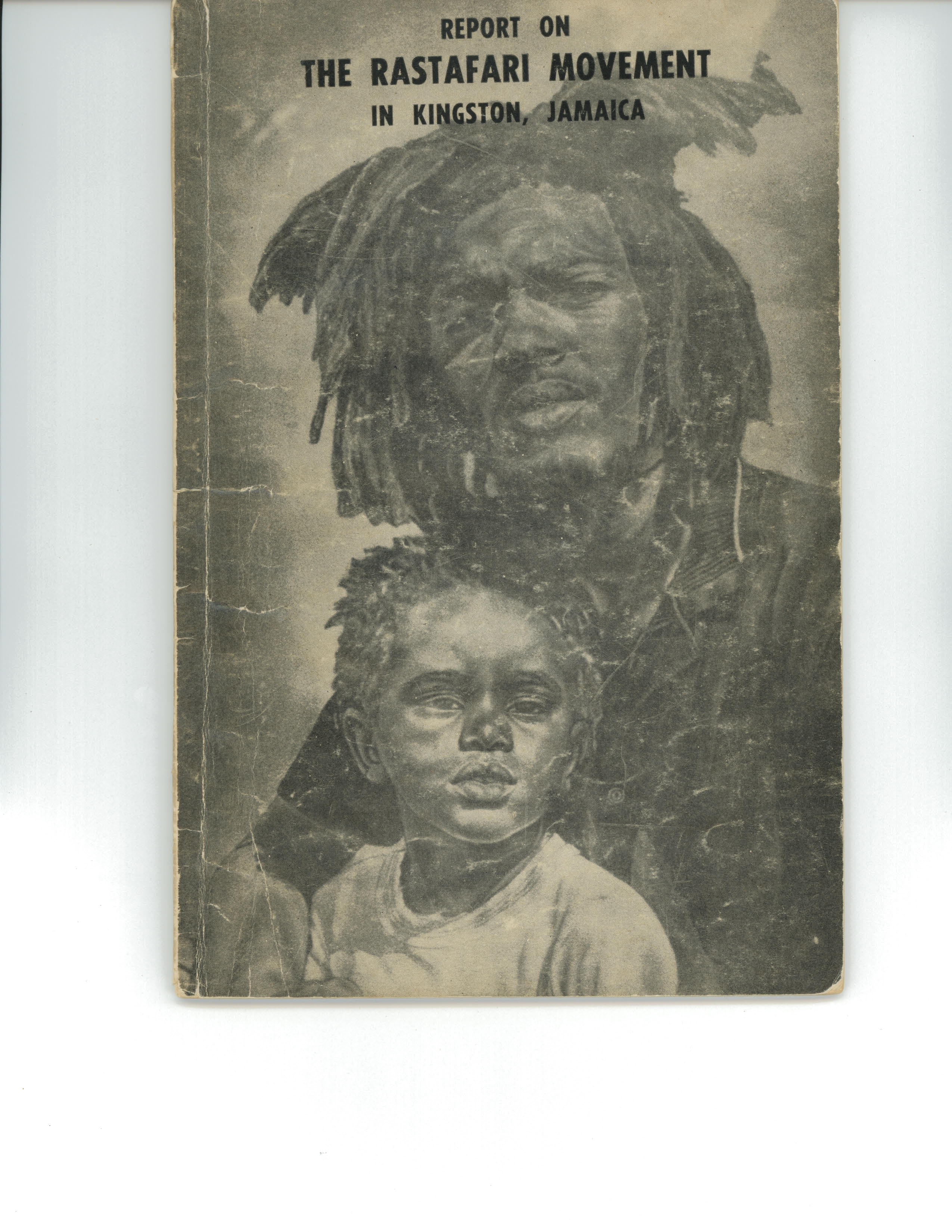
Ever since I heard Robert A. Hill’s lecture in April this year titled ‘The University Report on the Rastafari Movement in Kingston, Jamaica: The half that has never been told’ I’ve wanted to blog about it. I started a post soon after but it remained a draft all this time because I felt quite inadequate to the task of conveying the brunt of what Bobby, a friend of many years standing, was saying.
Robert A. Hill, Professor Emeritus, UCLA; Director, Marcus Garvey Papers Project
That talk, sponsored by the Sir Arthur Lewis Institute of Social and Economic Studies (SALISES), where I happen to work, began with Bobby announcing:
What I’m going to talk about this evening might be rephrased as the hidden history of the University Report on the Rastafari Movement. It is hidden because in my view the report was based on considerable deception. This was not my view going into this research, I’ve spent 6 years probing, researching, trying to understand how this report came to be. It’s only in the last two months that I felt ready to go public with my findings and this evening is the first time an audience will hear the findings and I leave it to you to make your own interpretations.
After that dramatic opening Professor Hill handed out timeline worksheets, essentially Xerox copies of calendar pages with cells displaying the months April–October 1960 along with pens for those who didn’t have their own. It was important Hill said, to keep track of the dates he was going to talk about, the chronology being important, “so that we are all, not just figuratively on the same page, but literally on the same page.”
The impact, influence and staying power of the Rastafari Report, he pointed out, has far outweighed any of the other reports emanating from the University, most of which are collecting dust today. Hill remembered seeing the report for the first time as a 17-year old. “It was like a meteor had crashed into the whole world. Jamaica has never been the same since that August day when i first saw it. ”
Although first published in August 1960 when Rastafari was spelt as two words ‘Ras Tafari’ most people are familiar with the ‘edited, redacted’ version reprinted in 1968 with a Ras Daniel Heartman image on the cover. There were many reprints thereafter with different covers like the one below, reprinted in 1975. What the reprints all have in common is that they spell ‘Rastafari’ as one word, again something pointed out by Hill in the course of his lecture.
The Report was a triumph for the Rastafari movement, Hill claimed. “I’m going to say very carefully that the Report was a propaganda victory for the Rastafari Movement…but I’m not using propaganda in its sinister sense, I’m using it in its classic sense, namely the propagation of one’s beliefs.” Hill then went on to recount how the Report ‘armed the mission’ sent by the Jamaican government to Addis Ababa in 1966 to initiate conversations about the repatriation of Rastafari to Africa.
The first date Hill asked his audience to note on their worksheets was the date renowned Nobel Laureate Arthur Lewis took up his position as Principal of the University of the West Indies. April 16, 1960.
This was where I gave up, unable as i said before, to succinctly convey the gravamen of what Robert Hill was suggesting. Months later I decided to ask Bobby for an interview thinking that would be the best way to capture the sensational charges he was making against the University of the West Indies. He obliged. The interview started modestly but soon swelled to 40 pages. I agonized again over how best to present such a long document here. Finally I realized the simplest way to accomplish this was to publish it as a WordPress ‘page’.
To fully understand some of the points Bobby raises in the interview its important to remember how feared, reviled and despised Rastafarians once were. You can get a good sense of this by reading Roger Mais’s Brotherman, a novel written in the 50s or from Deborah Thomas and Junior Wedderburn’s film Bad Friday, about the Coral Gardens massacre in the 60s. Even VS Naipaul, writing of his visit to Jamaica in 1960, in The Middle Passage, talks about the fear caused by militant Niyabinghi groups pledging ‘death to the whites.’
We’ve certainly come a long way from those days especially when you consider sentiments expressed at the opening of the Rastafari exhibition at the Institute of Jamaica on July 21, 2013. “Rastafari is deeply connected to Brand Jamaica” said Lisa Hanna, Minister of Culture. And at the closing ceremony of the Kingston-leg of the Rastafari Studies Conference and General Assembly, held on the campus of the University of the West Indies (UWI), Mona, on August 15 Prime Minister Portia Simpson Miller said that Rastafari was “an important part of the image of brand Jamaica.”
Pariahs no more…the hidden history of the Rastafari and their relationship to the nation of Jamaica certainly is the perfect illustration of the biblical sentiment Bob Marley made so famous, “The stone that the builder refused, shall be the head cornerstone…
Well folks, it gives me great pleasure to present my interview with Professor Robert Hill, aptly titled Our Man in Mona. As Bobby said at the beginning of his SALISES lecture “I leave it to you to make your own interpretations.” I find Bobby’s research and findings quite persuasive but I’m also willing to be persuaded by a counter-explanation of events that is as painstakingly researched and presented as his. In the meantime I thought it important to make this provocative hypothesis widely available to keep alive that spark of agonistic engagement so lacking in the public sphere today.
Jamaica Jamaica! After all the recent ruction about cross dressers and transvestites I was astonished to hear in the morning news today that a fearsome ‘gunwoman’ nicknamed He-She had been shot in West Kingston. Astonished because you would think that with the supposedly intense homophobia that exists here, and zero tolerance for ambiguous sexualities, you’d hardly come across someone like this. Of course unlike Dwayne Jones, who was a guy who liked to dress like a woman, apparently Bianca was a gal who liked to dress and behave like a guy. Blow wow. An interesting thing I found when looking for an image to go with this post was that gunwomen are almost always portrayed as femme fatales, unlike Bianca Bradley who dressed butch and acted masculine by all accounts.
When I posted about the gunwoman’s shooting on Facebook it led to the following convo between two of my writer friends:
Marlon James Lawd man, me just done write me book, don’t mek me frighten me editor with another chapter…
Garfield Ellis Hold on to yours …let mine publish first…
Terry Lyn by Peter Dean Rickards
At the moment details are pretty sketchy but I promise to find out more and post it asap. In the meantime here’s what the Gleaner had:
Feared 23-y-o gunwoman shot in west Kingston
For the second day running, the Luke Lane/Chancery Lane section of western Kingston erupted into violence when a feared gunwoman was shot in the area.
Twenty-three-year-old Bianca Bradley, who is well known in the community as a notorious member of a feared gang involved in an ongoing feud, was shot multiple times.
Bradley is known in the area as ‘He-She’ because of her masculine appearance – notably her predominantly male clothing and style of walk – as well as her so-called no-nonsense approach.
A large crowd converged at the Kingston Public Hospital as a police team transported the wounded woman to the facility yesterday.
“She nuh afraid to fire di gun,” a member of the community whispered as traffic blocked the area.
The shooting took place 24 hours after two men were shot by the police, one fatally, after they were accosted and two illegal weapons seized.
A closer look at the controversy surrounding Anne Shirley’s Sports Illustrated article on Drug Testing in Jamaica
In mid-July news broke that Tyson Gay had failed a routine drugs test; hot on its heels we heard from local media that Asafa Powell, Sherone Simpson and two other Jamaican athletes had also tested positive for banned substances. In Jamaica the bombshell had fallen a month earlier with local media reporting news of Veronica Campbell-Brown’s failure to pass her drug tests. Newspapers, TV and radio all headlined her story, sensationally portraying her as a cheat, well in advance of the IAAF’s own verdict on the matter.
The VCB story had been leaked to the Jamaican press and the media here ran with it with almost reckless alacrity considering their usual reticence in providing information on matters of public interest. Less than a week later, June 19 to be precise, Sports Illustrated carried an AP story pointing out that according to the IAAF Campbell-Brown’s positive test for a diuretic appeared to be a ‘lesser’ offense attracting a lesser sanction or “reduced penalty – a suspension of a few months to a year or a public warning – rather than a standard two-year ban.”
A subsequent AP article also carried by Sports Illustrated and referring to the five Jamaican cases added, “The known banned substances in these cases, a diuretic and a stimulant, don’t resemble the steroids and designer drugs that took down some of the world’s top athletes – Marion Jones, Tim Montgomery, Ben Johnson, to name a few – over the past years and decades.”
So in fact, far from using these lapses as opportunities to discredit Jamaica’s sprinting programme, Sports Illustrated, by choosing to carry the Associated Press stories mentioned above, seemed to be at pains to draw attention to the slightness of the offences, in a way that Jamaican media was not. So much for the big, bad foreign media theories. On the contrary I remember Tara Playfair-Scott, Asafa’s publicist, pleading on Twitter with local media to be more responsible in their reporting. For an elaboration of the kind of doping irregularities Jamaican athletes stand accused of and how different these are from the more serious infractions Tyson Gay and others are accused of see “Performance-Enhancing Drugs: What Are They and What Are They Not?” by Professor Trevor Hall.
On the very same day the Sports Illustrated (AP) article on VCB came out Anne Shirley posted the following on Facebook upbraiding the local press for prematurely finding the senior athlete guilty of a worse offence than turned out to be the case in the end:
Do we understand that there was no need for the media speculation and hype over the past few days if only we had allowed the IAAF and JAAA to announce the fact that there was an anti-doping rule violation? In our haste to be first and to have all the “facts” before anyone else had the story, information was leaked to the Jamaican media when it should not have been, and we all ran with it. What if we had left it until today so that this was the beginning of the public story?????? Would there have been a difference in the coverage?
I choose to open this post on Anne Shirley’s August 19 Sports Illustrated article thus for several reasons. That article, titled An inside look at Jamaican track’s drug-testing woes has generated so much controversy, condemnation, hysteria and vitriol towards its author that I worried I was witnessing yet another lynching—a virtual one this time.
“We need to lock her up for treason!” exclaimed one young friend on Facebook, a sentiment echoed by an alarmingly large number of Jamaicans judging by statements on radio talk shows, Facebook and Twitter.
The widespread assumption seems to be that Sports Illustrated, an American magazine, is out to get small, hapless Jamaica whose valiant sprinters have brought it so much glory and pride in recent years. The world is jealous of Jamaica, people here think, most of all the United States, whose athletes have by and large been forced to follow in the wake of Jamaica’s triumphant superstars rather than ahead of them.
Why then did Anne Shirley decide to ‘betray’ the nation by going to a large American media conglomerate to complain about the failings of the Jamaica Anti-Doping Commission rather than our own national media, ask her critics. Failing that why didn’t she take her complaints to WADA, the body in charge of regulating drug testing internationally? Why moreover had she chosen this particular time to “besmirch” Jamaica’s reputation internationally by suggesting that JADCO was inadequately equipped to deliver the stringent. internationally compliant, drug testing standards required? Let’s look at these questions one by one.
First, is it true that Anne did not go to the local media? No. Absolutely untrue. When what she calls the Category 5 hurricane hit (the news of the failed drug tests by 5 athletes) Shirley, who headed JADCO for a brief seven months in 2012-13, took to the airwaves trying to alert local media to the dangers that lay ahead if Jamaica continued to operate administrative facilities that fell so far short of the world-class stature of its athletes. I personally heard her on Nationwide Radio on July 17 saying that the local anti-doping regimen wasn’t as up to par or world-class as the athletes themselves and that this would pose a huge problem in future. She warned that international Sport was big business and that Jamaica needs a truly independent, fearless organization with a strong management team and advisory board. The implication of course is that this is not what we have at the moment.
Then on August 7, Shirley wrote a letter to the editor of the Gleaner which was singled out as the Letter of the Day in which she challenged the veracity of statistics provided by JADCO and its chairman, Herb Elliott, to WADA. As a result, she claimed, the numbers in the WADA database did not reflect the true level of testing that JADCO had undertaken in 2012-13:
I contend that JADCO authorised and paid for more tests on Jamaican athletes, particularly in track and field, than have been reported and published in the WADA statistics in 2012, primarily due to a reporting error that has not been corrected in the ADAMS database that was made before I arrived at JADCO in mid-July, 2012.
I further state that these official figures do not show the true picture of the work carried out by the Jamaica Anti-Doping Commission as testing authority on behalf of the Government and taxpayers of Jamaica.
I would challenge the chairman and the board of JADCO to refute my statement. And I suggest, respectfully, that the record needs to be amended by the board of JADCO forthwith to reflect the true level of testing carried out by the commission in 2012.
Finally, on the question of the vexing issue of whether or not JADCO actively conducted testing in the “off-season” (i.e. the October-January period), I can further verify that during the period August-December 2012, in keeping with international best practice to place greater emphasis on out-of-competition testing in the off-season, JADCO conducted a total of 72 tests – with 12 tests conducted in-competition and 60 tests out-of-competition. And this level of testing continued into the first quarter of 2013.
On August 13 the Gleaner again carried a piece by Anne Shirley written in response to an article by Delano Franklyn expressing surprise at the discrepancy between Anne Shirley’s statistics and the official figures put out by JADCO. She provided extensive data to substantiate her claims that JADCO had conducted adequate off-competition testing during her tenure there and that the figures provided to WADA had under-reported this. A table she provided shows a huge increase in off-competition testing during the seven months she was CEO of JADCO. As far as I know no one has been able to refute her figures to date. Her article concluded by saying:
… rather than seeking to crucify the messenger, I would respectfully suggest that Mr Franklyn and other senior technocrats at the Office of the Prime Minister need to review the current state of staffing and organisational depth at JADCO – particularly given the fact that the agency should be far advanced in preparing cases for the six AAFs and one appeal that are on its plate and ensure that the necessary corrective actions are taken with immediate effect.
So we’ve established that Anne Shirley had done more than enough to alert local media as well as the public to the potential problems if JADCO was not rapidly made to comply with international best practices in drug testing. On August 7, the Gleaner wrote an editorial, Get with the programme, JADCO, which corroborated the uncooperativeness and lack of transparency of the JADCO board also highlighted by Shirley:
…While we do not believe that hardcore doping is a feature of Jamaican athletics, it is our view, though, that a robust and transparent programme of testing is not only a deterrent to drug cheating, but the best answer to the Contes and Pounds who may want to believe the worst.
…It was only last week, after our too-many appeals in these columns, and in the face of unfortunate global questioning of the legitimacy of our athletes, that JADCO’s chairman, Dr Herb Elliott, caused it to dribble that the agency performed 106 tests in 2012, 68 of which were in competition. In the five years of its existence, JADCO conducted 860 tests – 504 in competition and 356 out of competition.
The Gleaner went on to say that it didn’t believe that JADCO’s failure to provide the data the media was asking for was necessarily because it had anything to hide but because “it is subject, we believe, to an old-fashion[ed] leadership culture that is uncomfortable with transparency, hamstrung by a fear of criticism, and views the control of information as power.”
This certainly jives with what Anne Shirley said in her Sports Illustratedarticle:
When I took over, in mid-July [in 2012, just before the London Olympics], JADCO did not have a large enough staff in place to carry out rigorous anti-doping programs. The Doping Control/Technical Services and the Education/Communications Units had only one junior staff member each, and the director positions were vacant. There was no Whereabouts Information Officer—in charge of keeping track of athletes so that they could be tested out of competition—and only one full-time doping control officer. The committee in charge of reviewing the legitimacy of medical prescriptions for athletes was without a chairman and had never met.
Other aspects of the program were equally troubled—and troubling. I arrived to find no accounting staff in place, and no monthly financial statements had been produced in the five years since inception. JADCO was behind on payments for a number of its bills.
I urged the authorities in Jamaica to get more serious about anti-doping before a scandal hit us. I had long had reason for concern. I quietly tried to point out the presence of Jamaican threads linked to the BALCO case, via the testimony of Angel (Memo) Heredia about his contacts with elite Jamaican athletes. My position is that these threads, no matter how thin, should not be brushed aside as malice, but treated seriously, as they represent a potential threat to the integrity of our athletes and our nation.
During my time with JADCO, I also voiced concern about internet purchases of drugs and supplements by athletes, as there is reason to believe that some Jamaican athletes have been careless in their Internet purchases of dietary supplements, the ingredients labels of which are not tightly regulated in Jamaica. But despite my efforts I could not get any member of the JADCO board or member of Jamaica’s Cabinet to take it seriously. They believe that Jamaica does not have a problem.
The more frustrated I became about the lack of staff and attention to issues I raised, the worse the working environment became for me, and in February of this year I met with a group of JADCO board members and we agreed it would be best if I stepped aside. Dr. Elliott has voiced his strong opinion that Jamaican anti-doping efforts are satisfactory. But this is not a time for grandstanding. In the wake of both recent achievements on the track and devastating positive tests off it, we need to believe that our athletes are clean and that our anti-doping program is independent, vigorous, and free from any semblance of conflicts of interest.
TIMING
On the question of timing and why Shirley had published such a damning article in the international media at this point, it’s clear that the embattled former JADCO head felt she had no other choice. Having raised her worries locally more than once and seeing no action being taken or credible response provided by JADCO and little or no follow up by media here on the questions she was asking (“I’m giving you the questions that YOU need to be asking.” she said to ace journalist Emily Crooks on TVJ’s Impact), she decided to up the pressure by speaking to Sports Illustrated, an internationally recognized magazine that had previously behaved more responsibly towards the Jamaican athletes accused of failing their drug tests than Jamaican media itself. Let me refer you back to the evidence of this provided at the top of this post.
Let it be noted that it was the American sports magazine that approached Ms. Shirley after reading her Gleaner letters, not the other way around. Note also that virtually none of our local media took the trouble to approach her in a similar way or to follow up on her disclosures with an investigative article or in-depth feature on JADCO and its preparedness either to test the athletes adequately or to put in place the high-level legal defence teams the five found to have breached the code would require.
In a follow up interview conducted with her Anne Shirley told me the following:
One of the critical issues at present facing the current JADCO administration and one of my greatest concerns is that VCB, Asafa, Sherone and the other three athletes are entitled to a fair hearing of their AAFs in a timely manner — this is their careers and livelihood we are talking about. THIS IS PERHAPS THE MAIN REASON FOR THE TIMING OF MY SI ARTICLE!!!!!!
If my information is correct that there is currently no staff in the Doping Control/Results Management area, who is putting together the evidence packages, witness statements, expert analysis etc needed for JADCO to give with instructions to the lawyers who will present the case against each athlete in separate hearings? And have lawyers been retained by JADCO? SOMEONE NEEDS TO ASK JADCO THESE QUESTIONS!!!
Jamaica cannot afford to have any or all of the cases thrown out on a technicality.
And what is the timetable for each Hearing Panel to start the respective hearings? The Dominique Blake appeal is going on now — but the other 5 AAFs (excluding VCB’s) now need to be scheduled. Again time is of the essence.
BTW re the VCB Hearing — under the statute in Jamaica (ie the Anti-Doping Act 2008) — how come JAAA has put together a Hearing Panel? Does JAAA have its own written rules? And who is putting together the case management for the JAAA? Note the testing at the Meet was supervised by an IAAF representative, but the actual tests were carried out by JADCO’s Doping Control teams. Would be interested to know if the witness statements have been taken (and by whom), and look forward to the expert testimonies on both sides. Understand this Hearing will get underway in September.
Re the testing programme — We have to put EPO testing back into our testing programme and now introduce blood testing. All we are doing at this time is plain urine tests which is not enough.
These are some of my major concerns — I felt that I had no choice but to act as I did. And while I am not in a position, even in these comments to go any further, I trust that the investigations will be thorough covering areas and concerns that I have already shared with the powers that be (it was not for a lack of trying!).
Finally — a detailed explanation needs to be made publicly by JADCO as to how the WADA statistics for 2012 state that JADCO conducted 106 tests as Testing Authority and a later news release was issued (August 14?) that I was correct in stating that the total number of tests conducted by JADCO in 2012 was 179. Why the difference since the WADA statistics come from the Lab info that is posted in the ADAMS database.
If the JADCO test numbers in ADAMS and the WADA official 2012 are understated, then are the report of the IAAF tests conducted on Jamaican athletes overstated? Not one journalist has followed up on this logic. No one has sought answers to the questions that I suggested to Delano Franklyn.
These are some of the areas that journalists and others need to probe and ask questions about, not go on about me exposing our dirty linen abroad.
As Dick Pound has publicly stated (his latest comments are in this BBC report) — the world is already watching Jamaica.
I have no regrets for speaking out. On the contrary, I feel that the authorities now have no choice but to act.
WADA
Finally let’s look at the question of why Shirley didn’t go to WADA to complain about the inadequacies of JADCO, typified by the following comments on Twitter and Facebook:
Ingrid Green: If all she was getting at is a dysfunctional JADCO, why go to Sports Illustrated, Why not contact WADA and discuss her concerns with them, ask for help. She put the Athletes under a shadow with her article and did Nothing to help the programme.
Cindy’sDaughter @CindysDaughter: Caller on Nationwide with an excellent point. If you were so concerned Anne Shirley, why not go to WADA?
Perhaps its not widely known here in Jamaica that WADA has its own problems. It is now becoming increasingly clear that doping in Sport is the norm rather than the exception. On August 22, 2013, the New York Times published an article about research commissioned by WADA, the findings of which it was now delaying disseminating.
According to John Hoberman, a University of Texas professor and expert on performance-enhancing drugs, the study’s findings dispelled the notion that doping was a deviant behavior among a few athletes.
“Either the sport is recruiting huge numbers of deviants,” he said, “or this is simply routine behavior being engaged in by, more or less, normal people.”
The article quoted Dick Pound on the current state of drug testing worldwide, the same former WADA chairman who has repeatedly raised concerns about Jamaica’s lack of adequate testing practices.
In part, he and his team concluded, “There is no general appetite to undertake the effort and expense of a successful effort to deliver doping-free sport.”
Pound said in a telephone interview Thursday: “There’s this psychological aspect about it: nobody wants to catch anybody. There’s no incentive. Countries are embarrassed if their nationals are caught. And sports are embarrassed if someone from their sport is caught.”
Hah! Isn’t that exactly what the Anne Shirley saga has proved in the local context? It’s highly unlikely therefore that WADA would have done the needful by putting JADCO’s house in order for us. In any case this is something that Jamaicans themselves should be undertaking, with or without foreign assistance, instead of baying for the blood of the rare citizen willing to stick her neck out and speak the truth. We should also be studying her statements over the last year on Facebook and elsewhere closely. In one of several Facebook posts Shirley asked people to take note of one Patrick Arnold “the mastermind behind a number of the supplements, creams etc… and remember his name.”
In concluding I have to agree with Barry Wade who suggested on his blog that the problem Anne Shirley is faced with is that she has disclosed an inconvenient truth and done so in an international arena. What we really need to fear are not the Anne Shirleys of Jamaica, indeed we need a thousand more like her if we really want to change the rotten state of affairs prevailing in almost all our institutions.
What should worry us is that older generation of technocrats, bureaucrats and leaders unwilling to admit that its time for them to retire and leave the competitive business of sports administration to younger. more savvy professionals just as internationally competitive as Jamaica’s athletes. In the absence of this we are leaving our hardworking, stellar athletes open to the kinds of suspicions leveled by people like Victor Conte, Dick Pound and others. For a neat summary of these watch the video below or read the comments made by Conte in the interview posted below with Scott Ostler done at the end of July. Do we really think JADCO as constituted now is going to serve our athlete’s best interests in the face of such serious allegations?
Anne Shirley’s timing is perfect. We have three years to get our house in order before the next Olympics. Let’s stop abusing her and do it. Below is a partial transcript of the damaging views of Jamaican athletes and their success, that Anne Shirley and others are concerned about.
Is JADCO as it is constituted now really capable of dispelling these rumours if that is what they are? If so could they outline for us their plan of action and strategy to contain them?
Ostler: What about the Jamaican stuff (sprinters busted for alleged use of steroids)?
Conte: Well I’ve believed for a long time that it is state-sponsored doping. I believe the Jamaican Olympic Committee is in on it, I believe the Jamaican Anti-Doping Commision is in on it, I believe they’re being tipped off. When Usain Bolt gets a $6 million piece of beachfront property in exchange for winning the gold medals, this is tremendous for tourism in Jamaica—and understand, these are my opinions, right?—and I said this a long time ago, I’m highly suspicious of this, and I’m going to tell you when it started.
In 2008 I was asked by (British sprinter) Dwain Chambers to write a letter to the UK anti-doping (commission) listing all the drugs that I gave these athletes, the seven or eight different drugs, the purposes, the frequencies, the dosages, etc., which I did. This was in March. Then in May or June when they have the Jamaican Olympic trials, Veronica Campbell. . .competed in the 100 meters, she was already an Olympic gold medalist, she came in fourth and ran 10.88, which is very fast. And I thought, “Who are these other runners, that she doesn’t even make the team?”
Shelly-Ann Fraser, I looked it up and in 2007 her PR was 11.31. Less than a year later she goes to the Olympics and wins in 10.78. Now that is more than five meters faster. Who improves five meters in one year? So I went on the record. . .”Oh, my god, this is highly suspicious.” Bolt’s fastest time was something like 10.03, next thing you know he runs 9.72. It was just too much, too soon.
I worked with a couple athletes from another Caribbean country, and (one of them talked to a friend of mine) who calls me and says, “Oh my god, you’re not going to believe this but. . .they won all the medals in the women’s 100, they read your article that was sent to WADA that you gave to the UK, and they’re using all your protocols, that were used by Dwain Chambers and Kelli White, including the T3, the thyroid medication.” So they followed my blueprint, but WADA didn’t pay any attention to it.
I know all the track writers, and in the mixed zone under the stadium in Beijing, they said when (Jamaican) athletes came into the mixed zone to do interviews with the media, that Herb Elliott, who is the head of (Jamaican anti-doping), the medical director who is in charge of collecting the urine samples from the athletes, was chest-bumping with all the guys on the relay team!
Dick Pound wrote a recent report. Two things. One, he followed my recommendation that they do more CIR testing, and secondly, he said the primary problem was that the WADA officials were really looking the other way, they didn’t really have a genuine interest in catching people, that they’re more worried about the political aspects and receiving funding.









 Active Voice