Publication of Tanya Shirley’s poem The Merchant of Feathers II in response to the brutal beating of an allegedly gay student on a Jamaican university campus…
The Merchant of Feathers II
Is the mother whose son is found
in a compromising position with a man
in a university bathroom
and is beaten by security guards
who police anuses
while girls walk unguarded in the night
and a mob of educated fools chant
for more blood, more fire.
This mother must put her son back together again
paint his wounds with Gentian Violet
ice swollen tendons, protuberant eyes
find the scars deeper than skin
and like a seamstress mend what’s broken within
and when his father who isn’t worth two dry stones
or a shilling sees his son on the news and appears
at her door to beat her son some more
she will turn herself into serrated edges
stand sharp and poised to kill
for her son is her only gold
and if the father’s thirst for blood is too great
she will pacify him with what he needs
to prove he is not like his son.
In her, he will bury the fear.
And in the morning she will stir soft words into
the cornmeal porridge, carry it to her son’s bed
blow a benediction into each spoon full she brings
Shirley’s poem quoted in full above with her permission is a timely intervention into the barbarism threatening to drown us. She speaks eloquently for those of us who yearn for a healing of the nation not unlike the one administered by the mother in this poem.
The fish in this cartoon references current Jamaican slang for male homosexuals; in addition to ‘batty bwoy’ ‘fish’ is a popular synonym for gay men here. So the security guards at UTECH were exhorted to ‘Beat di fish!’ by the mob. Obviously the common expression ‘like a fish out of water’ would also apply to this cartoon by Clovis, November 05, 2012, Jamaica Observer.
And a postscript to my previous post on whether gay bashing is a national policy. No, it isn’t. Here is what the education minister said as a coda to the whole ‘sex text’ imbroglio (as reported in the Gleaner):
“The principles that must be at all times respected is that the Ministry of Education promotes sexually responsible behaviour in the context of faithful union between a man and woman while offering respect and compassion to those who adopt a different lifestyle.”
It’s how to get more Jamaicans to adopt this reasonable outlook that is the problem. The visual below captures the absurdity of the Jamaican lynch mob well.
There is no agenda for change in relation to attitudes towards homosexuals in Jamaica, in effect this resulted in the beating of allegedly gay student on the University of Technology campus.
Clovis, The Jamaica Observer
Personally i think the right punishment for the University of Technology (UTECH) students so eager to lynch an allegedly gay student should be a year’s community service at JFLAG…that’s the Jamaica Forum for Lesbians, Allsexuals and Gays. I also think that all of Jamaica’s major institutions, its leaders and its citizens are responsible for the beating the unfortunate UTECH student received. I’ll explain in a minute but first for anyone who doesn’t have the requisite background on this latest episode of homophobic violence in Jamaica please read Petchary’s Blog and the post titled Sticks and Stones for details.
Here’s why i say almost everyone is to blame for the violence that exploded on the UTECH campus this Thursday. The Education Minister Ronald Thwaites was on air yesterday righteously denouncing the episode and calling for the mob of students to be expelled. Yet only a few days before that he was in the media talking about a ‘gay agenda’ which had apparently had a sinister hand in the reform of the health and family life education curriculum for high schools in Jamaica.
Las May, The Gleaner, March 4, 2011
To quote the Gleaner article which reported on this at the time:
The Sexuality and Sexual Health: Personal Risk and Assessment Checklist segment of the third edition of the curriculum geared at grades seven to nine was what caused the uproar.
Contentious Questions
Among the questions posed to students were: Have you ever had sexual intercourse? Have you ever had anal sex without a condom? What caused you to be a heterosexual? When and how did you first discover you were heterosexual? If you have never slept with a member of your own sex, is it possible you might be gay if you tried it? Why do heterosexuals seduce others into their lifestyle?
The book also instructed students to perform a number of exercises to better understand their sexuality.
Yesterday, Minister of Education Ronald Thwaites ordered the curriculum pulled, saying some of the material was “inappropriate”.
“I have been made aware of widespread public concern about certain sections of the health and family life education programme curriculum used in Jamaican schools. There is strong objection to some of the questions on sexual behaviour and the commentary on heterosexuality/homosexuality,” the minister said.
“I consider sections of the material inappropriate for any age and certainly for the grade seven and eight students for which it is designed.”
He added, “I have instructed that the material be withdrawn from all schools and rewritten then redistributed so as to prevent disruption of the health and family life education instruction.”
Meanwhile the Jamaica Observer devoted an editorial, Not Enough Mr. Thwaites, to denouncing the sinister plot to sensitize Jamaican children to alternative sexualities. Here is part of what it said:
WHILE the practice of homosexuality is accepted and considered a basic human right in many other countries, Jamaican law and cultural norms disapprove.
The situation as it relates to Jamaica will perhaps change in time to come; but not yet, and not, we believe, for some time yet.
We should recall that this newspaper is on record — as is the current Prime Minister Mrs Portia Simpson Miller — as saying that the country needs to revisit the archaic, centuries-old buggery law.
However, in the meantime, Jamaican law and culturally accepted behaviour should be respected.
In that respect, we are unsurprised by the suggestion from Minister of Education Rev Ronald Thwaites that at least two persons involved in the drafting of the Health and Family Life Education Programme (HFLEP) curriculum, recently pulled from local high schools because of what can perhaps best be described as ‘gay friendly’ sexual content, “had a particular agenda and were able to embed it in the curriculum”.
For, in our view, loaded questions for teenagers, which were reportedly included in the rejected curriculum, such as “have you ever had anal sex?” and “if you have never slept with a member of your own sex, is it possible that you might be gay if you tried it?” suggest an agenda of sorts. We say this particularly in light of the Jamaican context.
Also, this was clearly not a stand-alone case. The minister tells us that “it does appear that there were previous instances, and there were warnings, and it was a clear intention of some who have very clear predispositions regarding sexual conduct… who got away on this one”.
A look back to 2007 will reveal that the then Minister of Education Mr Andrew Holness felt compelled to tell the country that a book on home economics was not endorsed by his ministry. This followed revelation of a section which claimed that “when two women or two men live together in a relationship as lesbians or gays, they may be considered a family”.
The problems with the withdrawal of the revised curriculum are succinctly stated by Maurice Tomlinson, a former UTECH lecturer, who had to flee Jamaica when he recently married his partner in Canada. In a post titled Countdown to Tolerance Tomlinson points the finger at the brands of Christianity practised in the country for this interference in school curricula.
The situation in Jamaica concerning the status and well-being of its homosexual citizens continues to evolve in a one step forward-two steps backward manner. The video above, featuring former Miss Jamaica World (1998) and Miss Jamaica Universe (2004) Christine Straw with her gay brother, Matthew, was launched by the advocacy group Jamaica Forum for Lesbians, All-Sexuals, and Gays (J-FLAG) at the beginning of this month.
The video was designed as a PSA (Public Service Announcement) and was intended for airplay on Jamaica’s main TV stations, CVM and TVJ. Apparently in yet another display of media gutlessness both stations have declined to air the PSA in fear of public reaction.
So the point I’m making is: how is the change so desperately needed to prevent further episodes of violence towards homosexuals in Jamaica going to occur if those responsible for change through education–the Ministry, the media and the Church (in all its multi-denominational glory)–refuse to undertake the dissemination of material designed to change hearts and minds? What are our tertiary institutions going to do about this? In a separate post i will detail the history of similar incidents at the University of the West Indies and Northern Caribbean University to show that although UTECH is now in the spotlight such an episode could well have occurred (and have occurred in the past) at any of Jamaica’s tertiary institutions.
Finally Owen Black Ellis has just detailed on Facebook an instance that actually happened in Jamaica which highlights the lethal absurdity of local hostility towards gays:
The whole Utech saga has me remembering something that happened couple years ago to a couple I know and their friends. This is a true story. It was valentines day and two couples were having a meal in an uptown fast food joint. The girls were sitting down at the table and the guys were in the bathroom writing up the valentines day cards they bought earlier to give to the two girls who were waiting outside. They were laughing and reading and comparing each other’s cards when a man walked in and assumed they were giving the cards to each other, so he raised an alarm “yow people, two battybwoy inna di bathroom a exchange Valentines day card’. People, in no time a crowd converged, and no amount of explaining from the guys and begging for mercy by the girls could save them. And as they crowd grew and people asked about what happened, some added ‘dem mussi did in deh a have sex’ etc.. etc…so the details got more sensational and the condemnation got more intense, and the beating was wicked…
A note on Hurricane Sandy as she menaces the East Coast of the United States.
The Hope River (Kingston, Jamaica) in spate – Varun Baker photo.
UPDATE! Seven people came to this blog today searching for “hurricane sandy in jamaican patwa”. Can’t tell you how happy that makes me.
SANDY. A hurricane event with a windspan so broad (1000 miles wide) she’s menacing the United States from New York and the East Coast all the way to Chicago. And this after ravaging us in the Caribbean from Jamaica to the Bahamas, through Cuba and Haiti. People don’t understand how a Category 1 hurricane can do so much damage. Satellite shots make it look as humdrum as buttermilk seething in a giant churn but Sandy is dangerous because she’s slow moving and large–as i said her windspan is unusually wide, and she’s adept at the slow creep. So though not packing as much power as a Cat 4 or 5 storm usually does over a much narrower radius Sandy’s still deadly because of the water she brings with her. She dumps so much rain on affected areas as she creeps along in slowmo that the earth gets sodden and trees and poles are no longer securely anchored toppling over once the wind starts plucking at them. Its the flooding Sandy produces that will be the real threat, especially to people in what are called “low-lying areas” (like the homes in the photos by Varun). Meanwhile the relative height of one’s locality is just coming home to people. As the writer Hari Kunzru (@harikunzru) said on Twitter:
Beginning to appreciate the ‘hill’ part of Clinton Hill. #sandy
Varun Baker photo. http://varunbaker.com/A view of the coast at Palmyra Rosehall, St James – Hoween Griffiths Photo. Email: h.griffiths@rosehall.com
At any rate that was our experience with Sandy here in Jamaica. A lot of trees went down or were brutally pruned. She seemed to have something against banana plants…people think they’re trees but they’re not, they’re large plants…so yes, we’ll have no bananas for the next 6 months because both Portland and St. Mary, the banana parishes, have been devastated.
So good luck to all the folks in the US of A who aren’t used to tropical weather events such as hurricanes…its like a wet tornado i guess. And hopefully by the time Sandy has swept through the East Coast you won’t be emerging into a political cyclone as the Republicans and the Democrats go head to head and Mittens and Big O face off for the big one on November 6. We hope that whichever candidate wins he will take the threat of global warming seriouly. Again i turn to Twitter for some instant wisdom on the matter:
RT @TonyKaron: Sandy’s disruption of electioneering is nature’s poetic rebuke to both candidates for their silence on climate change #fb
PS: Breaking News! As of 8 pm EST it was declared that Sandy is now a post-tropical storm. She has morphed into a cold weather event.
and i eavesdropped on this twitterati convo:
Salman Rushdie @SalmanRushdie
Lights flickered off/on. Wind crazy.Watching the big old tree out back. It’s a tough New York tree. It can take it. Right, tree? Am I right?
Deepa Mehta @IamDeepaMehta
@SalmanRushdieYou absolutely are , right that is. Hang tight tree. Hang tight Salman XX
and look at this photo posted by @nycarecs
Official Twitter feed of the New York City Amateur Radio Emergency Communications Service (NYC-ARECS)
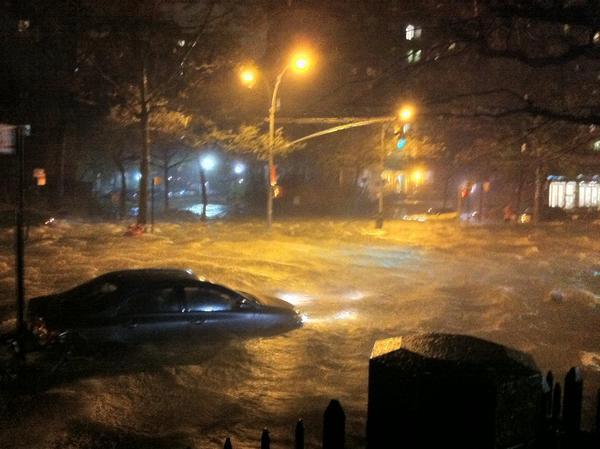
AN OCEAN ON NY’S LOWER EAST SIDE. Never happened ever like this. #sandy #nyc via @nycarecs
Hang tight everyone!
Got this from NYTimes.com. “Sea water flooded the Ground Zero construction site.” Photo: John Minchillo/Associated Press
oh my various gods! will the US Presidential elections have to be postponed…? at this rate? things are deteriorating rapidly in NYC, don’t think they can recover by Nov 6…
An exhibit featuring a selection of the 2012 First International Reggae Poster Contest’s winning posters opens at the National Gallery of Jamaica on Sept 30, 2012 unveiling an ambitious agenda to build a Frank Gehry-designed building on the Kingston Waterfront to showcase Jamaica’s globally renowned music.
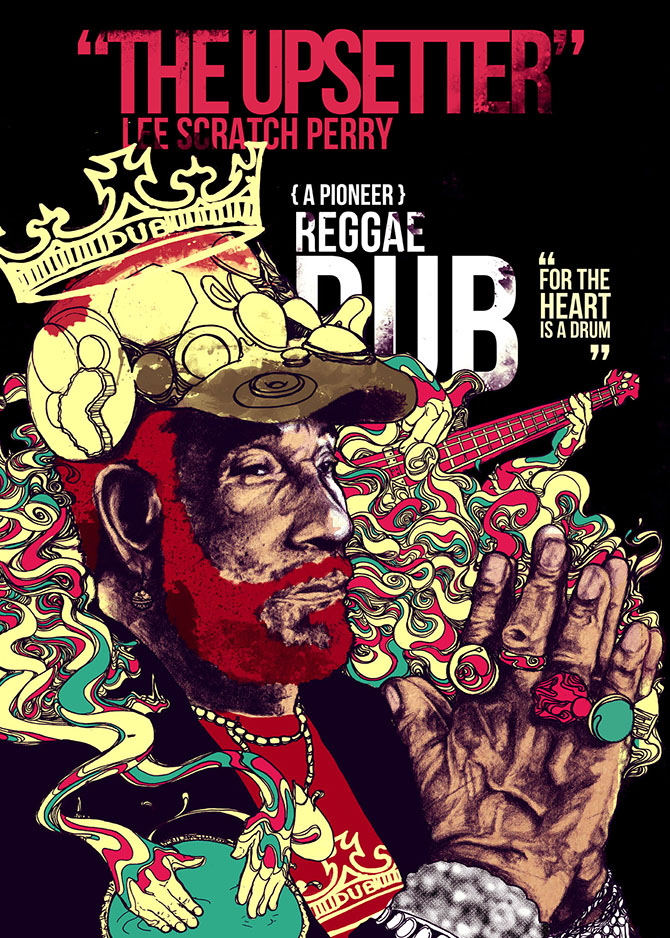
5 | Taj Francis | Jamaica
Taj Francis, a Jamaican designer, came fifth in the the 2012 First International Reggae Poster Contest with the poster directly above, depicting Lee Scratch Perry.
In my last post i decried the shambolic music museum that has been created in Jamaica to honour its world historical musical tradition. I also mentioned the National Gallery of Jamaica, an almost first world facility created to showcase the visual arts tradition of Jamaica. I could never understand why I rarely got a sense from the art displayed at the Gallery that there was any cross-fertilization between the powerful music scene here and the visual art scene. I also thought it strange that there was no reference to the fact that the Gallery was situated on Orange Street which in the 60s and 70s was known informally as Beat Street because it was the throbbing centre of musical activity in Jamaica. The passage quoted below will give you an idea of what I mean:
Like Bourbon Street in New Orleans, Beale Street in Memphis, 42nd Street in New York or Music Row in Nashville, Orange Street in Kingston, Jamaica is the prototypical ‘Music Street’. As indicated by its unofficial name, Beat Street, the area around Orange Street in central Kingston had been a centre for sound system activity since the 1950s. By the 1960s Orange Street itself was the subject of numerous songs – the great Prince Buster’s “Shaking Up Orange Street” being merely the most famous [and versioned]. Many producers rented shops in and around Orange Street, including Bunny Lee at number 101, Sir JJ Johnson at number 133, and perhaps most celebrated, Prince Buster’s legendary Record Shack at number 127. Sonia Pottinger’s pressing plant was also in Orange Street, at the bottom; just around the corner was Randy’s Studio, above the shop on North Parade. The area continued as a centre for music into the seventies and beyond, although on a much smaller scale. Prince Buster still operates his shop there, as does Augustus Pablo. Producer Trevor ‘Leggo’ Douglas was one who came to Music Street in the late seventies, opening Cash & Carry Records at 125 Orange Street, just down the street from Prince Buster; like Buster, he’s still there today, running his own studio. Right next door to the Prince was the address that gives title to this compilation; Dudley ‘Manzie’ Swaby and his then-partner in music the late Leroy ‘Bunny’ Hollett moved into premises on the music street late in 1975, having previously operated from Manzie’s family home in Love Lane nearby. From the House of Music at 129 Beat Street they issued a series of recordings – both in roots style and love songs – that have easily stood the test of time. Most of this music has never been issued outside of Jamaica; this compilation is hopefully the first of several to chronicle Manzie Swaby’s underground roots legacy.
By the end of the eighties when i first came to Jamaica you could see little sign of the former life of this historic street and today very few are aware of its rich musical connection. It’s fitting that finally the National Gallery is putting on a show which directly references the globally renowned music of the counry–Reggae. Tomorrow, an exhibition featuring some of the winning designs in the 2012 International Reggae Poster Competition–World-a-Reggae–will open at the Gallery. The brainchild of Michael Thompson, graphic designer extraordinaire who was trained at the Edna Manley College and exposed to the great graphic tradition in Cuba, the Reggae Poster contest was truly global in scope. To quote the contest website:
The 2012 First International Reggae Poster Contest (RPC) began in December 27, 2011 with the goal of discovering fresh Reggae Poster designs from around the world. Interest in the contest grew significantly over the 4-month run with a total of 1,142 submissions from 80 countries. The contest winners were chosen from 370 finalists by a distinguished panel of judges known for their creativity and commitment to design.
Thoroughly impressed with the outcome of the competition, the RPC organizers are excited to announce that the international jury committee has selected the three finalist and the 100 best posters.
The winners are:
1st Place: Alon Braier, of Israel, for his “Roots Of Dub” poster
2nd Place: Zafer Lehimler, of Turkey, for his “Reggae Star” poster3rd Place: Rosario Nocera, of Italy, for his “Riddim is Freedom” design
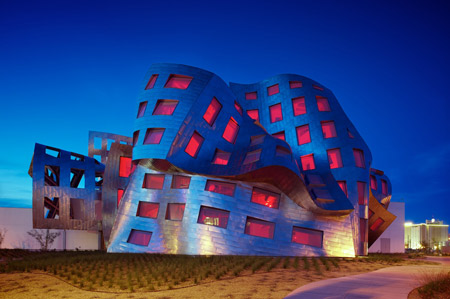
Please note that the top 3 winners are all from outside the Caribbean, a sign that local designers faced stiff competition from abroad. The contest also highlights the extraordinary reach of Jamaican music and popular culture, so inadequately honoured at home. Well Michael Thompson aims to change all that (for an interview with him on Jamaican TV go here). Along with Carolyn Cooper and others he’s all set to lobby for a world-class museum facility to be built on the Kingston Waterfront designed by none other than Frank Gehry, the architect who built the Bilbao Museum and so many other world-renowned art facilities. If he can find enough investors with the vision to see how this would add value to Jamaica’s rather limited tourism product–which does little more than capitalize on the country’s sun, sand and sea–the project could get on its feet. Some may think this is an absurdly grand project but to do justice to Jamaica’s music you do have to reach for the stars. I mean can you imagine how fabulous something like the building below would look squatting on the Kingston Waterfront? It could spearhead the long overdue revival of downtown Kingston. So what’re we waiting for? Let’s do it!
A Frank Gehry-designed building
World-a-Reggae, the exhibit of the 100 best entries opens tomorrow at the National Gallery of Jamaica at 11 am. The winning designer, Alon Braier, from Israel, will be there. Carolyn Cooper will be the guest speaker and the best part: The Alpha Boys Band will be performing all afternoon till 4 pm. So come on down! See you there!
Two shows at the Institute of Jamaica reveal the disinterest in archiving the nation’s valuable collection of musical artefacts and safeguarding the history of this iconic popular music.
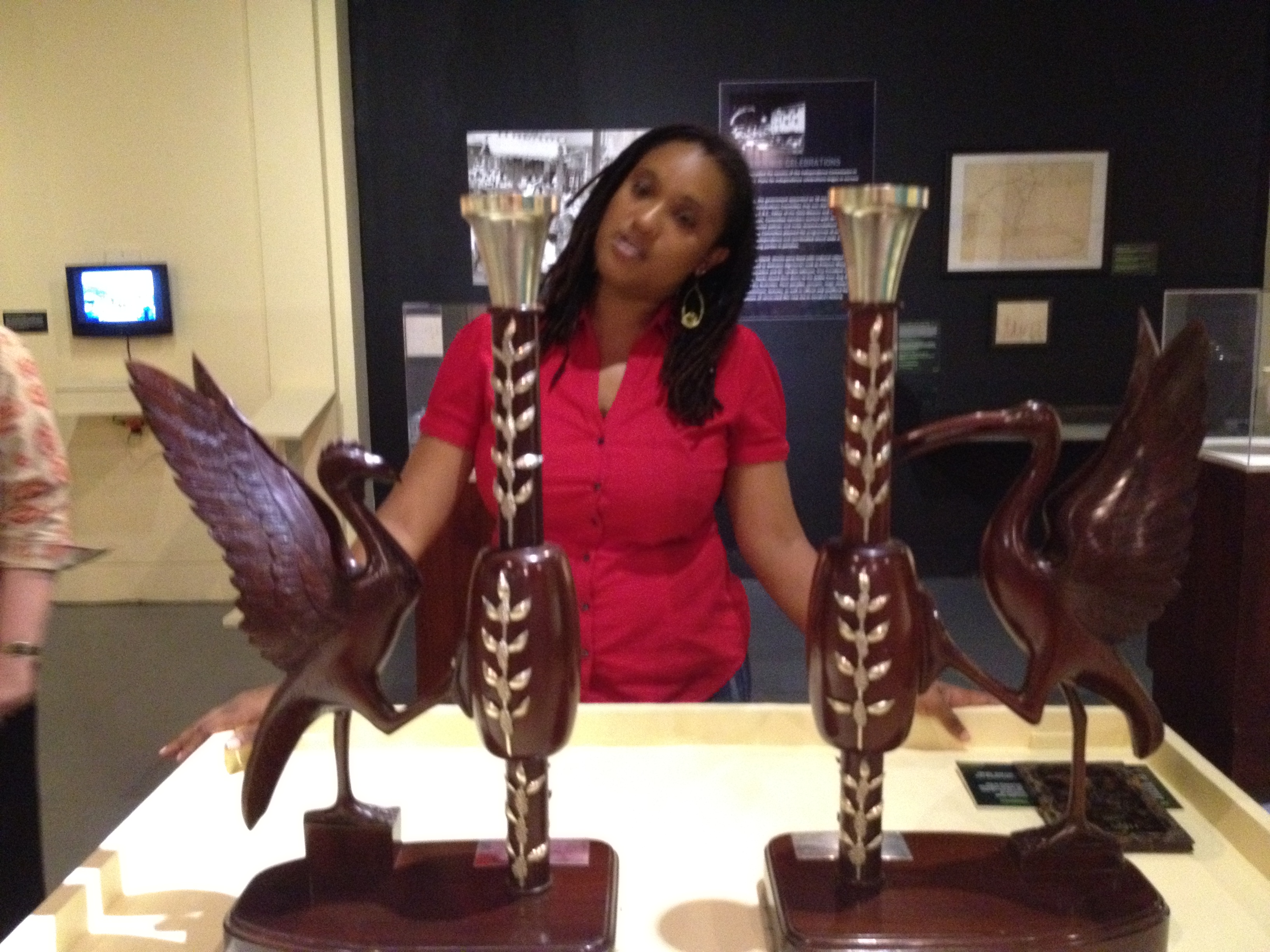
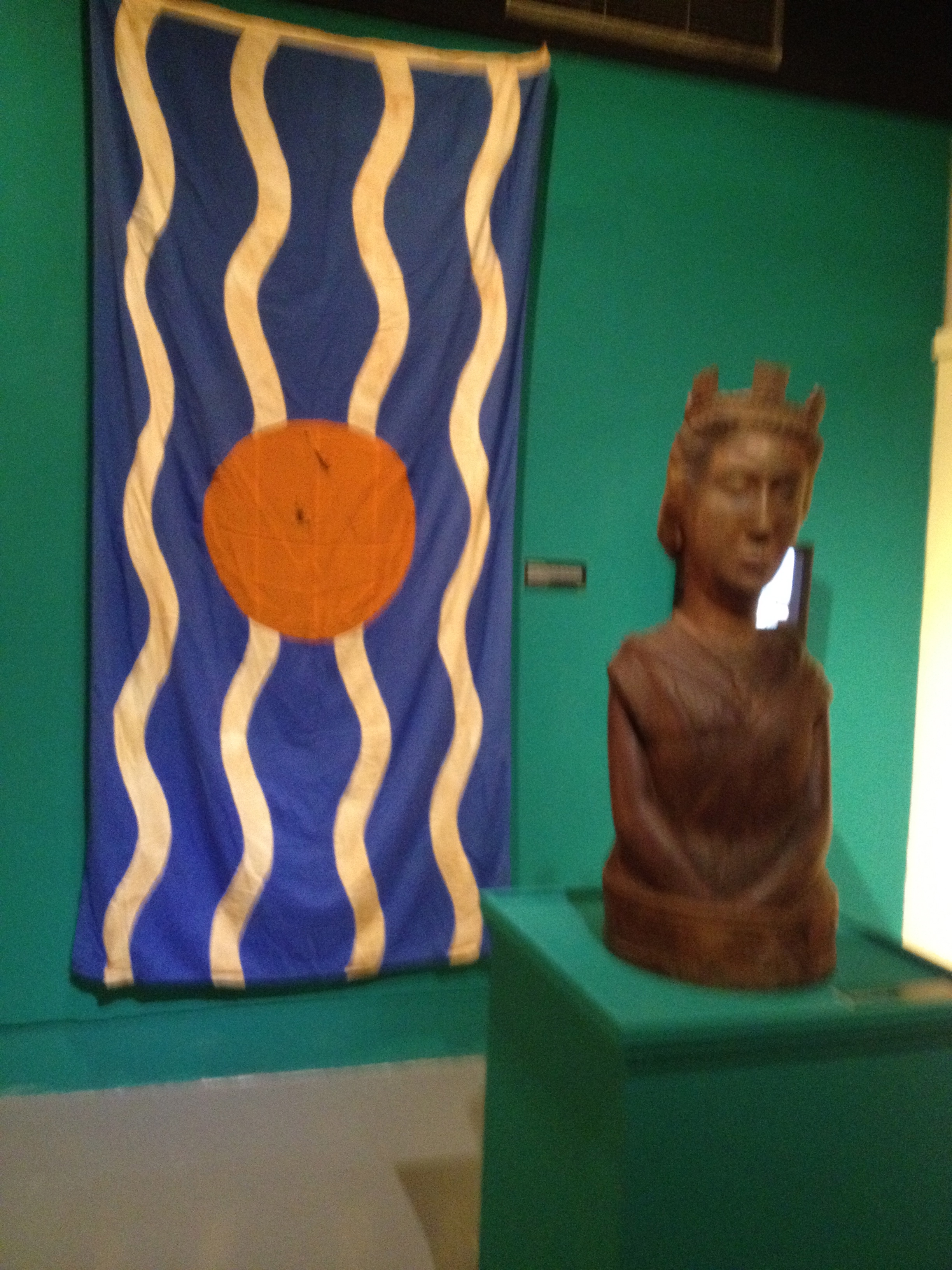
A rather strange table donated to the nation by Chen’s Furniture company at IndependenceCurator of Jamaica 50: Constructing a Nation, Dr. Shani Roper, displaying a gift given by Trinidad to Jamaica in 1962The flag of the short-lived Federation of the West Indies and a wooden bust of Queen Elizabeth carved by a Jamaican sculptor
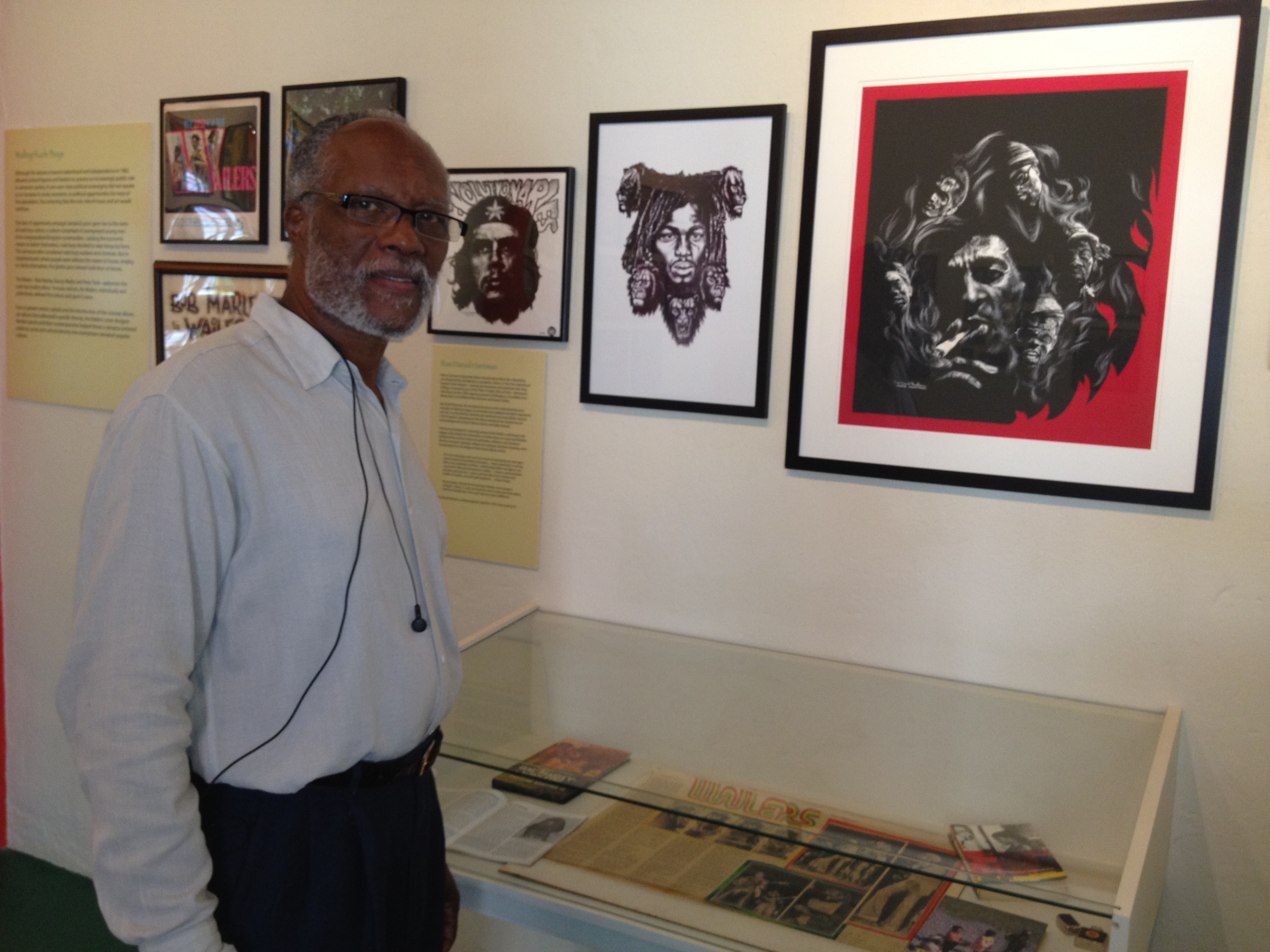
Visited two very poignant exhibits last week at the Institute of Jamaica…Jamaica 50: Constructing a Nation and Equal Rights: Reggae and Social Change, a show of historic Reggae album covers. The first of these actually opened today and will be open till February 2013. Equal Rights opened a few weeks ago and is a gem of an exhibit offering visitors a chance to see some rare Reggae album covers; it should also stay up into 2013 so try and catch it. The LP sized catalogue should be a keeper with texts about the raison d’etre of the exhibit and information about the various periods in Jamaican music that are featured in the show. What struck me as immeasurably sad was the cramped space made available to archive, document and display the vast portfolio of music this country has produced. There is a whole alternative history contained in Jamaican music which really deserves better treatment by the state than it currently receives.
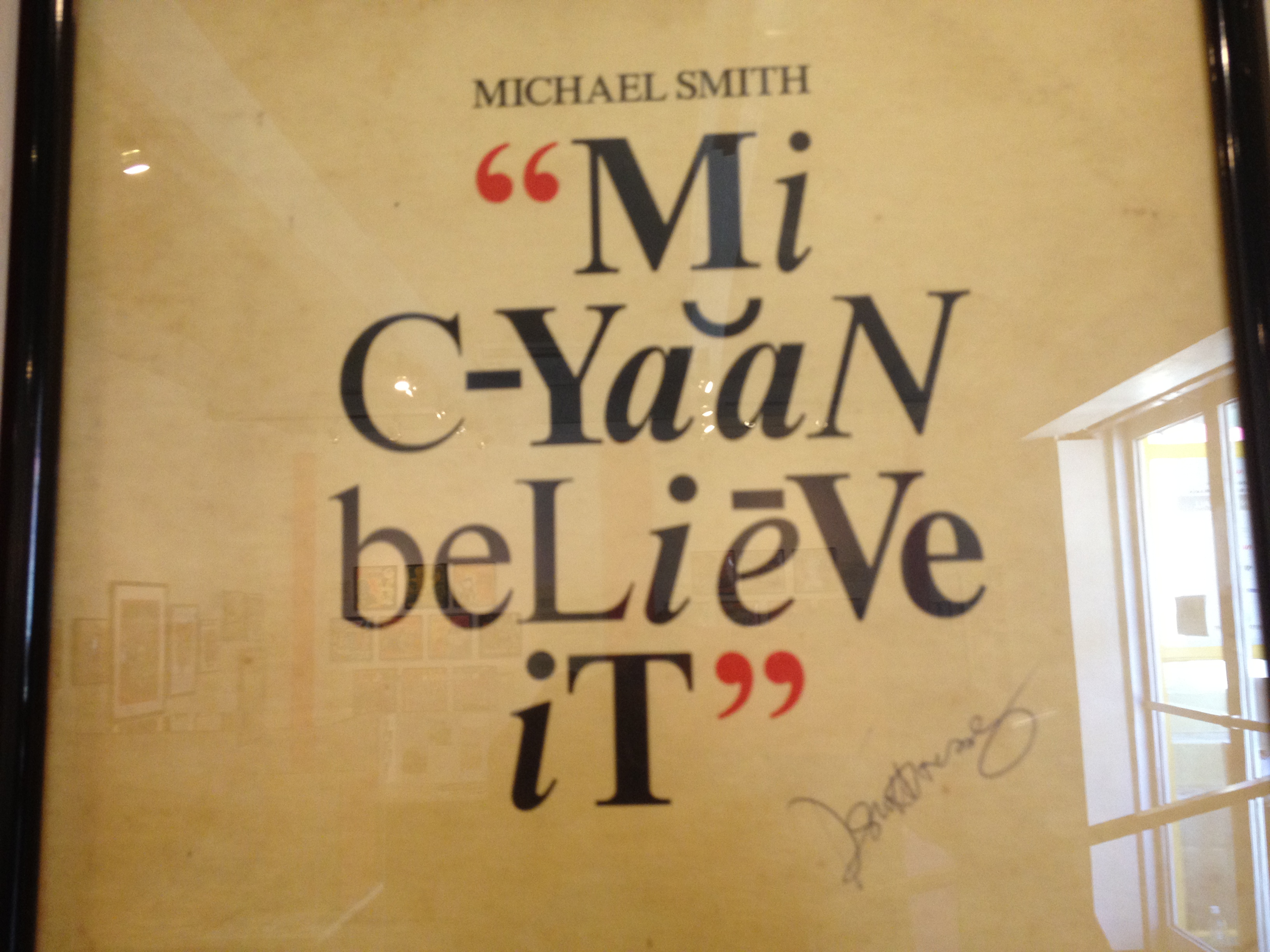
I always find myself shaking my head when i contrast the resources made available to house Jamaica’s rather slender visual art tradition in comparison to the slender resources made available to showcase Jamaica’s internationally renowned popular music. Mi cyaan believe it indeed, to echo Mikey Smith. Is this really what the nation thinks of the extraordinary music generated by its people? Is it because Jamaican music comes from the underprivileged segments of society that it gets such shoddy treatment? For a previous post on the subject go here.
Director of the Music Museum, Herbie Miller who curated Equal Rights
Miller surveying the tiny storeroom available to house the rich artefacts of Jamaica’s world famous music scene
These beautiful album covers from the Dermot Hussey collection donated to the Music Museum are at risk if not properly stored.
This faded, ragged poster of Usain Bolt draped in the nation’s flag is symbolic of the neglect of both downtown Kingston and the popular culture of its people
Jamaicans trying to come to grips with atheism on a TV show, Religious HardTalk
The irrepressible Ian Boyne, host of Religious Hardtalk
Religious Hardtalk
One of the stalwarts of the Jamaican public sphere is Ian Boyne, columnist, speech writer, pastor and host of TV programmes Profile and Religious Hardtalk. Last week he produced an exceptionally good episode of the latter looking at the subjects of Atheism and Secularism in religion-obsessed Jamaica (9/18/2012). It must be said that Boyne himself is a superb example of Christian practice at its best. He’s not afraid, as you can see from watching the video (linked below), to engage openly with views that depart drastically from his own. In the process he allowed time and space for a dissenting view rarely heard in Jamaica.
The two young people he had on were very articulate and gave a spirited critique of the kind of Christianity espoused in Jamaica and its insidious seepage into all areas of national life. One of them, @Chatimout or Javed Jaghai, has even gone so far as to start a group called Jamaicans for Secular Humanism for those like himself who want a space to articulate their doubts about the dangers of the all-enveloping, unquestioning forms of religiousity adopted by many Jamaicans. In fact its quite heretical in Jamaica to express the view that God might not exist or that there is something problematic about the de facto embrace of Christianity as a state religion.
I know a young man who as a child at St. Peters and Paul, a prominent Jamaican prep school, innocently announced in class that he didn’t believe in ‘god’. He was then subjected to disbelieving, disapproving scrutiny all day by other teachers who would pop into the classroom to have the ‘godless’ boy, who was all of 8 years old, pointed out to them. I was reminded of this story when I noticed with amusement the caption under Javed Jaghai’s image stating baldly “DOES NOT BELIEVE IN GOD.” In fact so narrow and hidebound are Jamaicans in their practice of Christianity that this episode of Religious Hardtalk was not repeated at the normally scheduled time because the powers-that-be were afraid that schoolchildren might be exposed to such apostasy!
Fortunately the TV station has made it available online. I highly recommend it, in fact its a must see for anyone trying to understand Jamaican culture:
A look at Saffronart’s autumn auction of Modern and Contemporary Indian Art.
A few days ago the sumptuous catalogue to Saffronart’s latest auction of modern and contemporary Indian art arrived. The Auction started today and ends tomorrow at 7.30 pm Indian time and 10 am Eastern standard time. Chock full of classics by some of the biggest names in Indian art, the catalogue not only features lavish full-colour reproductions of the artworks being auctioned but also rare photographs of the artists themselves along with biographical and sometimes critical texts on each one. It’s amazing how visual artists might become household names, but with one or two exceptions, MF Husain for instance, their visages remain unknown to us.
Paintings on view at the Delhi preview of the Saffronart Modern and Contemporary Art Auction
One of the stars of this auction for me is That Obscure Object of Desire by MF Husain pictured below. It truly is one of the best Husains I’ve ever seen. Wish i could buy it. It’s estimated at US$220,000 – 280,000 but at Saffronart Auctions works always go over the estimated value, sometimes by quite a margin.
Update: Winning bid $222,012, Rs 1,17,66,636 (Inclusive of buyer’s premium)
That Obscure Object of Desire by MF Husain
Throughout his artistic career, M.F. Husain has been enamoured by the idea of ‘cinema’ and everything it stands for. The artist’s own associations with the genre range from his early days in Mumbai as a cinema billboard painter and the personal friendships he forged with directors like Roberto Rossellini, Ingmar Bergman and Pier Paolo Pasolini, to the several films that he made himself, including ‘Through the Eyes of a Painter’, which won him a Golden Bear at the 1967 Berlin International Film Festival.
It is not surprising then that several of Husain’s works are influenced by films and actors that moved him. The title of the present lot, a monumental painting that recalls the scale of the billboards Husain used to paint in Mumbai, has been borrowed from a 1977 film directed by the famous Spanish director Luis Buñuel, whose surrealist and almost abstract imagery Husain greatly admired (Saffronart Catalogue):
Falling Figure with Bird by Tyeb Mehta
The most expensive work in the auction is by Tyeb Mehta. Estimated at between US$1.5-2m barely an hour or two into the auction it’s already at $1.3m. Who knows where it’ll end up? Update: Winning bid, $1,817,000 , Rs 9,63,01,000
(Inclusive of buyer’s premium) Below I’ve excerpted a couple of paragraphs from his bio in the Saffronart Catalogue:
Born in Gujarat in 1925, Tyeb Mehta’s artistic career spanned several decades, styles and media. Mehta’s first forays into the world of art were as a budding cinematographer and film editor in the wake of the Second World War. Later, in part because the communal rioting during the partition of the Indian subcontinent considerably circumscribed his activities, he turned to painting, enrolling at the Sir J.J. School of Art, which was close to his home in Bombay.
Given his experiences during Partition, human manifestations of violence, struggle and survival came to hold deep meaning for the artist from a very early age. Recalling an episode from his early twenties, Mehta says, “There were elements of violence in my childhood…One incident left a deep impression on me. At the time of partition I was living on Mohammad Ali Road, which was virtually a Muslim ghetto. I remember watching a young man being slaughtered in the street below my window. The crowd beat him to death, smashed his head with stones. I was sick with fever for days afterwards and the image still haunts me today” (Tyeb Mehta: Ideas, Images, Exchanges, Vadehra Art Gallery, New Delhi, 2005, p. 340-341).
Another beauty is the painting below by Arpita Singh. It’s estimated value is US$120,000-$150,000. Let’s see what it sells for when this auction ends tomorrow. Update: The bids didn’t reach the reserve price and the painting remained unsold. The same happened I notice with Jitish Kallat’s works in this auction. Could this indicate a slight fall in value of the work of younger contemporary artists?
Summer months by Arpita Singh
From the Saffronart Auction catalogue:
Arpita Singh’s paintings are informed by and address the multiple histories she has witnessed and narratives she has played a part in developing, ranging from the personal to the national. Additionally, Singh’s body of figurative work frequently draws on the private and public lives of women like herself, and on the external events that act on them. Like these lives, her dense, multilayered canvases defy any single interpretation.multilayered canvases defy any single interpretation.
Reviewing the New York show in which the present lot was first exhibited, critic Holland Cotter observed that “The psychological and the political merge in paintings by New Delhi artist Arpita Singh. So do everyday life and allegory, expressionism and ornament, historical sources from Bengal folk painting to Marc Chagall, and a formal approach that is at once unassuming and hard-worked, gauche and poised” (The New York Times, October 3, 2003).
Anna Gurji speaks to Neil Gaiman about role she played in Innocence of Muslims
Georgian actress, Anna Gurji
Continuing with the theme of why i find Twitter compelling enough to spend significant time on it (see previous post), one of the handful of celebrities I follow is Neil Gaiman, author of American Gods and much else. He tweets like a normal person about his work, his wife who is singer @amandapalmer, and generally about his day to day stuff. This morning he tweeted that he had posted a distressed email he received from Anna Gurji, one of the actresses in the film Innocence of Muslims, on his blog. He’s known her for some time and finds her a credible source; a good thing because her story is pretty sensational. She says she was one of a group of “People who were tricked into believing that we were making an adventure drama about a comet falling into a desert”. In her words they “did nothing but take part in a low budget indie feature film called the “Desert Warrior” that WAS about a comet falling into a desert and tribes in ancient Egypt fighting to acquire it.”
She has now discovered that the film people are rioting and losing their lives about is none other than the film she acted in. “Desert Warrior” was transformed thru clever editing and dubbing into the infamous “Innocence of Muslims”. Neil Gaiman asked her to write up her experience so he could put it on his blog. I’ve cut and pasted relevant parts of that statement below. Please visit Gaiman’s blogpost A Letter from a Scared Actress for the rest and for further details on Anna Gurji and his own acquaintance with her.
Everyone who wishes to find out the truth about the movie now known as the Innocence of Muslims, please read the letter below. I, Anna Gurji, as one of the supporting actresses in the film will share with you what really happened.
A year ago, in the summer of 2011, I submitted my materials to various projects on the Explore Talent web-site. I received a call from the casting director of the movie “Desert Warrior”, and my audition date was scheduled. I auditioned for the role of Hilary. Several days later, I was informed that I got a callback. I did the callback. Several days later, I was informed that I landed the role of Hilary in the movie called “Desert Warrior”.
The filming of the movie was done in August of 2011. We were filming the movie in a studio warehouse with a green screen in Duarte, CA. The project was a low budget, independent feature movie.
The filming of the movie was beginning soon after the day I was told I got a role. The script was not sent to me. When I got to the set, I was merely provided with the scenes my character was in.
I did not consider this to be an unusual thing, seeing as I have had an experience with something like this before. I did a movie once where the script was written in a foreign language and only my parts were translated into English and accordingly, I was provided with my scenes only. Having experienced that, I thought the same thing was happening with “Desert Warrior”. Aware of the fact that the supposed producer and the script-writer of the movie (known as Sam Bassil) was a foreigner (thanks to his accent), I thought that the original script was written in his native tongue and that not all scenes were translated into English. Also, the filming dates of the movie had to be rescheduled last minute to fit my schedule (I had other films to do right after the “Desert Warrior” outside CA). Because of this rushed rearrangements, I thought that the production first forgot and then did not consider it necessary to send me the script, and again – I did not find this unusual, since I knew what role I had, I knew about my character and I knew about the story of the film.
My character Hilary was a young girl who is sold (against her own free will) by her parents to a tribe leader known as GEORGE. She is one of his (most likely, the youngest) brides in the movie.
The film was about a comet falling into a desert and different tribes in ancient Egypt fighting to acquire it for they deemed that the comet possessed some supernatural powers.
The movie that we were doing in Duarte was called “Desert Warrior” and it was a fictional adventure drama. The character GEORGE was a leader of one of those tribes fighting for the comet.
There was no mention EVER by anyone of MUHAMMAD and no mention of religion during the entire time I was on the set. I am hundred percent certain nobody in the cast and nobody in the US artistic side of the crew knew what was really planned for this “Desert Warrior”.
The atmosphere at the set was as friendly as possible. We all knew that we were doing an adventure drama for a very low budget financing. The director Alan Roberts even had plans that with this low budget product he would be able to get some more money to make a good quality version (by shooting it in the real desert and having better product in every category) of the “Desert Warrior”.
I had interactions with the man known as Sam Bassil on the set. He was very amiable, respectful, soft-spoken, always making sure that the filming was running smoothly and everyone was satisfied. He even told me the premiere of the movie was going to happen sometime soon and I would get a good amount of tickets to invite my friends and family.
I have never been informed about the premiere after that (if it ever happened) and have not seen the final product (if there is any, except for the short one that is uploaded online).
People ask what’s my reaction after seeing that.
Shock.
Two hours after I found out everything that had happened I gave Inside Edition an interview, the duration of which I could not stop crying.
I feel shattered.
People who were tricked into believing that we were making an adventure drama about a comet falling into a desert did nothing but take part in a low budget indie feature film called the “Desert Warrior” that WAS about a comet falling into a desert and tribes in ancient Egypt fighting to acquire it.
It’s painful to see how our faces were used to create something so atrocious without us knowing anything about it at all. It’s painful to see people being offended with the movie that used our faces to deliver lines (it’s obvious the movie was dubbed) that we were never informed of, it is painful to see people getting killed for this same movie, it is painful to hear people blame us when we did nothing but perform our art in the fictional adventure movie that was about a comet falling into a desert and tribes in ancient Egypt fighting to acquire it, it’s painful to be thought to be someone else when you are a completely different person.
Like I explained to Inside Edition, I feel awful.. I did not do anything but I feel awful.
I feel awful that a human being is capable of such evil. I feel awful about the lies, about the injustice, about the cruelty, about the violence, about the death of innocent people, about the pain of offended people, about the false accusations.
I don’t know what else to do but speak the truth. I will not go into hiding (since I have nothing to hide), because if we don’t speak the truth, there is no world worth living for.










 Active Voice