No room for Stuart Hall in Brand Jamaica?

Why is Stuart Hall seemingly persona non grata in Jamaica? Can there be a Brand Jamaica that excludes him? Why and for what?

There is a curious affinity in Jamaica for the idea of branding and a certain obsession with the notion of ‘nation branding’ (as noted in my previous post To Brand or Not to Brand Jamaica). In 2012 the country was startled by a release from the Jamaica Information Service announcing that a ‘national branding programme’ was to be implemented “to effectively communicate and reinforce the true essence of what it means to be Jamaican.” No one was quite sure what this meant.

Also in 2012 Jamaica’s participation in the London Olympics and the superb performance of its athletes there spurred much talk of ‘rebranding’ the country. Earlier that year the PNP, having recently won the last general election, looked forward to enjoying a spectacular track and field season at the Olympics with Jamaican athletes set to sweep the sprint events (the team won 12 medals in all, 4 gold, 4 silver and 4 bronze, Usain Bolt alone winning 3 of the gold medals).

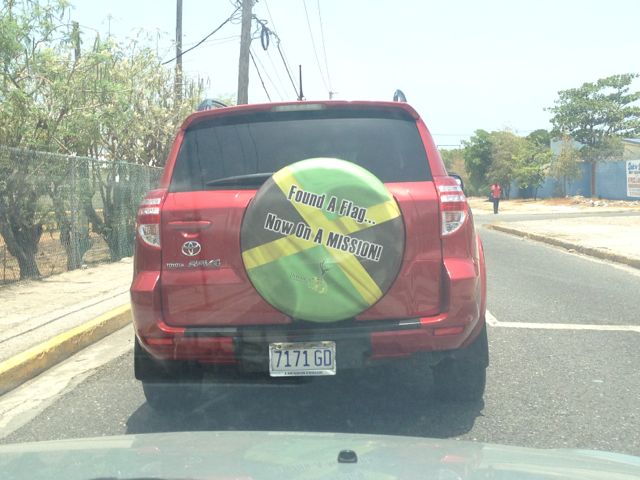
In 2012 the nation was also celebrating its 50th year of Independence and a new Director, Robert Bryan, was appointed to head the Jamaica 50 secretariat. The song commissioned by the previous government for the jubilee celebrations ‘Find the flag in your heart and wave it’ by veteran music producer Mikie Bennett was scrapped and a new one ‘Nation on a mission’ created. Branding seemed to be a central aspect of this ‘mission’.
IMG_1214

A grandiose project to celebrate the nation’s 50th anniversary at the 02 Arena in London during the Olympics was launched. According to Bryan “the plans would be a platform to rebrand Jamaica globally and it would be done in a way to capture world attention, delivering maximum impact of the brand worldwide and to attract international television coverage. Ultimately, he said, Jamaica hoped to convert the exposure to financial gains, including more visitors and greater publicity for Jamaica’s products.”

Three years later, sitting in IMF-straitened Jamaica progressively tightening our belts, its hard to see that the exorbitant ‘rebranding’ of 2012 achieved anything at all. Yet here we are talking about branding once again à la the Brand Jamaica symposium. See my previous post for more detail on this.

A recurrent view expressed at the Brand Jamaica conference was that the country urgently needed to move beyond the cliched image the Jamaica Tourist Board had managed to fix of the island being a fun destiNATION (my terminology) and little more.  As the Executive Director of the Broadcasting Commission, Cordel Green said in his paper:

Every person in the world who thinks Jamaica–must be disabused of the notion that outside the walls of all inclusives and tourist enclaves lie shacks and derlection. They must also know that we are considerably more than beaches, sun, rum and fun.

Our cultural heritage, history and intellectual pedigree are world class and this country has made an international footprint that bears no relation to her size, age and global ranking.

Hume Johnson, one of the main organizers of the conference also succinctly summed up the redemptive objective of the exercise:

Our aim is to advocate for a re-imagining and repositioning of the Jamaican brand, the creation of a more complex narrative beyond sun, sand and sea, one that projects a more positive and complete image of the country centred on its people, culture and heritage.”

The question at the heart of the Re-imagine Jamaica conference was how to produce this more nuanced, complex narrative about the country. After her presentation, keynote speaker Samantha North asked the audience what they would like to see included in Jamaican identity that might help shift or alter global perception of the country as a tourist playground with a violent, homophobic population. What were some of the assets Jamaica possessed that were little known by outsiders? That could be enlisted in the reconstituting and recuperation of its image?

The audience advanced a number of suggestions–Jamaica’s cuisine, its beauty queens, its intellectuals, its footballers dwelling in foreign climes such as Raheem Stirling. In terms of intellectuals Rex Nettleford was mentioned more than once and I brought up Stuart Hall, arguably the MOST outstanding intellectual Jamaica has produced whose influence globally, and on Britain in particular, easily puts him in any list of the top ten public intellectuals worldwide in the last four decades.

Stuart Hall wrote the textbook on representation and identity, how stereotypes are formed and how to dismantle them (see video above), his work is so highly cited (citation factor being the metric used in academia to measure scholarly worth) that on any given day a Google Scholar advanced search for his name returns approximately 54,000 results per 0.03 seconds to Rex Nettleford’s 2,000 (the highest of any locally based academic).  For comparison Orlando Patterson, another Jamaican intellectual superstar located in the diaspora, returns 51,000 results; Frantz Fanon about 36,600 results and Derek Walcott a measly 12,900 results.

Patterson and Hall are in a category with other global intellectual giants such as Amartya Sen, Edward Said, Richard Rorty and Slavoj Zizek, the latter lower at 44,000 than either Patterson or Hall. While Patterson is known to Jamaicans Stuart Hall is so unheard of that the main newspaper here  wrote an editorial after his death in February 2014 lamenting the lack of awareness in Jamaica of who this towering intellectual was.

Isn’t it time to end this abysmal ignorance and claim Hall once and for all for Brand Jamaica? The point of mentioning citation rates is merely to say that Stuart Hall has far more name recognition globally than any local intellectual and in any national reputation-building exercise his name would go much further than many others. People pay top dollar to have outstanding, well-known individuals associated with their ‘brands’, just look at the companies lining up to enlist Usain Bolt. My point is Jamaica could benefit from associating itself with a figure such as Stuart Hall. And he comes free because in a sense having been born and brought up here he belongs to Jamaica and the country can rightfully lay claim to him. Who better than Hall to complexify Jamaica’s identity/image along with the many other stellar intellectuals who live in the diaspora? He’s not the only one. How many know about Sylvia Wynter, another remarkable intellectual globally recognized and celebrated and one of the few female intellectuals from Jamaica/Caribbean operating at the level she does?

There’s a curious territoriality that comes into play when it comes to academia and intellection. An idea that to acknowledge Jamaican intellectuals who live abroad somehow implies disloyalty to the ones who ‘paid their dues’ by staying at home. This is a myopic view in my opinion. To claim Stuart Hall as the son of Jamaica that he was and the world-class intellectual that he became is hardly to disregard Rex Nettleford or his peers. It isn’t an either-or situation. Let’s suppose for a moment that Jamaica was putting together a team for an intellectual tournament–a world cup of groundbreaking scholarship–wouldn’t it be silly not to reach, in addition to Nettleford and company, for a Hall, a Patterson and a Wynter, whose experience abroad has forced them to be more competitive and therefore more exceptional and unbeatable than those who stayed at home and didn’t have the same opportunities?

Why is it ok for the national football team, the Reggae Boyz, to be composed of diaspora-based players who barely know the national anthem but not the intellectual equivalent of that team? Why should an intellectual team representing Jamaica be represented only by those ‘born and bred in Jamaica’?

For make no mistake, just as in football, there is a cost to restricting oneself to local or regional boundaries in the name of ‘paying dues’. Scholars and intellectuals whose work circulates globally and  internationally such as those mentioned above are Jamaican/Caribbean by birth but their ambit is global–that is they think and write as if addressing the world not merely the region or the nation they happen to come from. Most or all of them are/were oppositional voices who confronted the establishment when necessary but crucially such was Hall’s genius, his gift for communicating, that “his ideas traveled seamlessly to a broader world”.

Scholars such as Rex Nettleford, Norman Girvan, Barry Chevannes and many others (who are favoured as what I term ‘fi wi intellectuals’ or ‘our intellectuals’) were more committed to solving national and regional problems and in declaring epistemic independence by founding indigenous modes of scholarship. Unfortunately this obsession with battling ‘epistemological colonialism’ has led to a situation described as a crisis-of-mission for social sciences at the University of the West Indies, one where ‘theory’ was demonized as being Eurocentric and practically expelled from the academy while indigenous knowledge-building became paramount though increasingly this became restricted to statistical data-gathering and report writing.

These two groups are not at all mutually exclusive. There were moments when the national and regional scholars’ work addressed wider audiences but in general some of the most promising scholarly minds fell prey to what has been described as “the politicization of the social sciences in Latin America” where “Social science is part of public and political life in close relationship to power and to power struggles.” Many became advisers to Prime Ministers, or served as cabinet ministers and members of parliament while teaching at the University. Others were seduced by ‘the twilight world of consultancy’– contract research–for large agencies such as the Ford Foundation. These conditions fostered conformism and accommodation with the needs of the establishment rather than confrontation or dissent.

Acknowledging the immense pressure on public universities to solve national and regional problems Don Marshall (head of the Sir Arthur Lewis Institute of Social and Economic Studies, Cave Hill) warned some years ago about the inherent danger in such a capitulation: “It can lead to academics abrogating their intellectual responsibilities by giving identity to the immediate realms of the policy process. The consequence is one that not so much brings an appropriate education to public affairs as infiltrates the academy with the unreflective imperatives of state bureaucracies.”

Marshall identified a second but related problem: the entrenchment of a liberal-positivist leftwing intellectual tradition in the Caribbean unwilling to question, or perhaps unaware of, its own ontological assumptions in an increasingly conservative and pragmatic social environment. This has led inevitably to “a virtual discouragement of dissenting approaches.”

Stuart Hall whose name is synonymous with the groundbreaking field of cultural studies was never part of the nation-building processes in Jamaica having migrated at the age of 19 to attend Oxford as a Rhodes Scholar. But can Jamaica afford to avert its gaze from such a distinguished son? Should it? In so many ways Hall was the very model of the kind of scholar you would have expected the Caribbean academy to produce in the fullness of its postcolonial moment. Rather than detain Hall and other outward-looking, globally-minded thinkers in the diaspora, surely it’s equally important to cultivate an academic community capable of communicating with scholars abroad and bringing up-to-date knowledge to bear on local problems? Surely epistemic diversity is just as important as epistemic sovereignty?

Before I digress too far from the subject of this post–that is Stuart Hall and Brand Jamaica–let me rein in the argument I’m trying to make by invoking what acclaimed film director John Akomfrah said about the British-Jamaican cultural theorist. “Stuart Hall was kind of a rock star for us. For many of my generation in the 70s…he was one of the few people of colour we saw on television who wasn’t crooning, dancing or running. His very iconic presence on this most public of platforms suggested all manner of ‘impossible possibilities’.”

In Britain Stuart was integrally involved in combating the stereotyping of black migrants by the lily white English establishment, literally inserting the black in the Union Jack. He did so most of all by vigorously amplifying the narrative of what it means to be Jamaican/Caribbean by embodying the black public intellectual par excellence. Let’s claim him–for he would burnish Jamaica’s image and identity no less brightly than Usain Bolt does every time he runs a race.

Of course before we can do so we have to get to know Stuart Hall. I post two clips from his memorial service last November–one immediately above from the documentary he made on the Caribbean in the 70s–Redemption Song–and the second Jamaican theorist David Scott’s tribute to him. Scott’s remarks are interesting also for his discussion of ‘Brown’ Jamaica. The third (at the top of this post) is a clip of Hall talking about representation and the media in a lecture given at the University of Westminster in London in the 70s (it ends abruptly but continues in Part 2 of 4 available freely on YouTube). His ideas animated the world, radicalized the study of the humanities and social sciences globally and continue to be relevant today.

Still, as another Jamaican intellectual in the diaspora, Columbia University’s David Scott, noted at the memorial service held in Hall’s honour in London last November (for the full text please see video):

…Jamaica scarcely recognized Stuart, maybe no one should be surprised by this. He certainly wasn’t. Because he understood that part of what makes Jamaica enviably, unsettlingly Jamaica, part of what draws from us a grudging admiration, is precisely its scornfully prideful soul, its insouciant  indifference even to its own, its willful, sometimes self-destructive, don’t care attitude… its proverbial ethic of not begging anyone a glass of ice water. Stuart i think would have been the first to salute the defiant principle of this moral posture as an invaluable inheritance from the bitter past, it was in a very special way his inheritance too, in fact in that instinct for independent-mindedness, for finding his own way, his own idiom of dissent and refusal, in his way of being done, finished with exhausted phases of his life, we recognize something familiar, something that made him, to paraphrase CLR James, of Jamaica, Jamaican.

One thing I do know is that the Jamaica Scott describes here–the scornfully prideful, insouciantly indifferent, self-destructive country–is one that no amount of shallow ‘rebranding’ can redeem. It would be a hard sell. Part of the exercise of building a new identity for Jamaica will have to involve a radical shift in attitude and world-view. There is no one more equipped to help with this than Stuart Hall–he may be gone but he has left behind archives of new knowledge that students all over the world eagerly consume. We should too. His work on representation, the power of the image, stereotypes and how to dismantle them are directly related to the discussions on branding. But the most important thing about Stuart Hall as a symbol of what Jamaican intellection can and should be is the example he sets for Caribbean youth of a  Jamaican operating at the top of his game not in athletics, not in music but in the virtually impenetrable world of high theory.

To Brand or Not to Brand Jamaica…

Some remarks on the recently held Brand Jamaica Symposium, the first of a series of three posts looking at predicaments facing Jamaica and Jamaicans.

Hume Johnson, Moji Anderson and Erin McLeod
In the middle of July there was a good little conference on re-imagining Jamaica organized by two academics from the Jamaican diaspora, Hume Johnson (Assistant Professor of Public Relations, Roger Williams University, USA) and Kamille Gentles-Peart (Associate Professor, Roger Williams University, USA). Held on the campus of the University of the West Indies, Mona, the conference rose above the rather mercantile ambitions suggested by its subtitle, “Brand Jamaica Symposium 2015”.

The conference call for papers was by no means crudely reductive allowing space for a broad range  of responses. According to chair Hume Johnson:

It is important to begin a process of taking stock of the quality of the nation’s global brand and image, both the areas which are positive and can be leveraged for our economic benefit and political and social advantage as well as the aspects that threaten our good name.

Our aim is to advocate for a re-imagining and repositioning of the Jamaican brand, the creation of a more complex narrative beyond sun, sand and sea, one that projects a more positive and complete image of the country centred on its people, culture and heritage.

For many of us the discourse of branding is problematic, doubly so when it’s related to countries like Jamaica with its history of slavery, of human beings treated as property whose abject ‘thinghood’ was burnt into their flesh with branding irons—probably one of the earliest articulations of the branding discourse–to literally mark on the bodies of slaves the symbols or logos of the plantation owner they belonged to. The very first paper, “Back to the Brand: Inequality and Alienation through ‘Brand Jamaica’” amply critiqued the concept, signaling presenters Moji Anderson and Erin McLeod’s profound disagreement with the idea of ‘nation branding.’

It’s a matter of some irony that despite this history of inhumane servitude the nation state of Jamaica would develop in the 21st century into a country that fetishizes brands and branding. Only a few days before the conference an economist named Dennis Jones noted the Jamaican predilection for logos and corporate branding.

I was especially struck today by a picture of two top executives [JPS] wearing business suits with the company logo embroidered on them–not just the snazzy polo shirts, or the neat cotton shirts with the brand on the pocket or lapel or collar.

Grace Kennedy and their top executive, Don Wehby, often hit the eye with their branded clothes.

I gladly admit to knowing nothing about why this [love for branding] is so strong in Jamaica. It goes even to public service agencies, like government ministries. So, it’s deep in our economic culture.

A rather horrifying thought is that perhaps thinghood is so deeply rooted in our culture that we gravitate effortlessly towards the corporate and corporatization. The phenomenon of uniforms in Jamaican offices is also worth noting. There seems to be an ardent desire for incorporation, a longing to belong, to have a rightful place, and then having been incorporated, to brandish that affiliation for everyone to see. Are we invisible unless we have a logo to claim? Is this why some Jamaicans are anxious to brand their country and re-tool its image away from the stereotypes it currently conjures in the minds of non-Jamaicans?

The commodity fetish (a la Anne McClintock) is an inevitable feature of the ‘commodity culture’ we inhabit. However it’s one thing for the wo/man on the street to be subsumed by the mercantilist ethos of our times but should our policy-makers, politicians, technocrats and academics not adopt a more nuanced view of things?

Samantha North, the place specialist who gave the keynote lecture is herself wary of the term ‘nation branding’. “Personally I don’t even like to use the term ‘brand’ but it is sort of entrenched in the industry now …I think identity is a better word, more descriptive and I hope that it can come into our lexicon,” said North in a radio interview after the conference. On Twitter she expanded further: “The term #nationbrand trivialises the entire thing & gives a false idea of our true aims. This is NOT about marketing.  Perhaps a new term is needed, as I mentioned last night in my keynote. Identity is a good one. #BrandJamaica = Jamaican identity.”

Despite the negatives associated with the concept of branding the conference itself produced a number of spirited panels and discussions. From the simplistic appeal of the President of the Jamaica Hotel and Tourism Association for self-censorship (in effect complaining that Jamaicans had tweeted too much about the Chik-V outbreak here last year scaring tourists away in the process—one couldn’t help wondering–would she rather they had come here and succumbed to the epidemic? How would that have enhanced Jamaica’s image?) to the Executive Director of the Broadcasting Commission, Cordel Green’s observation that there is nothing at Jamaica’s airports to announce to tourists their arrival in Reggae country to Anna Perkins’ paper on the economic costs of homophobia the conference was rich and diverse.  Alana Osbourne, a PhD. Student from the University of Amsterdam spoke on Aestheticizing Poverty and Violence in Trench Town, Jamaica. For a full list of speakers and topics go here.

Investment guru, Michael McMorris discussing foriegn direct investment and whether Jamaican can get it right.

Not only was there plenty of food for thought, there was also food and drink on the house at this well-organized and free-to-the-public event. Unsurprisingly audiences were robust and participated vigorously in the debates and discussions some of which is captured in the tweets presented at the end of this post. The consensus was that as North said, quoting Obama, “You can’t put lipstick on a pig.” Jamaica has a serious image problem which cannot simply be erased or reversed by a few well-funded public relations campaigns.

Jamaica’s negatives—its crime, its violence, its homophobia, its lack of economic growth–are liabilities that will have to be eliminated or reduced before Jamaica’s many assets can be effectively leveraged, or used to burnish its image.

The Re-imagine Jamaica conference was put on in partnership with the University of the West Indies’ Centre for Leadership and Governance (CLG), a good collaboration between the diaspora and yard.

This post is the first in an interconnected series I want to write. Hopefully the next one will be available tomorrow. That’s the plan anyway 🙂

#brandjamaica symposium. Listening to Moji Anderson &@touchofallright: Brand Jamaica continues the commodification#blackbodies @anniepaul
@touchofallright and Moji Anderson: #branjamaica: living our lives thru the eyes of others @anniepaul
Hume Johnson talks about traditional identity of Jamaica as being imported and then reproduced not emerging from the people.#brandjamaica
Hume Johnson our people can no longer be at the periphery in articulating our identity they must be at the center. #brandjamaica
@cordelgreen – There is nothing on arrival in Jamaica that suggests that #Jamaica is reggae country #BrandJamaicaSymposium#reimagineJamaica
Head of Jamaica Hotel & Tourism Assn suggested J’cans shouldn’t express criticism of the govt or society on social media. Yup. That’s right.
-brandishes hands wildly- ‘You are all brand ambassadors! YOU are#BrandJamaica! BE THE BRAND! FEEL THE BRAND!’  https://twitter.com/touchofallright/status/621724207194333189 …
This concept of #brandjamaica is THE most comical thing in the world to me
Alana Osbourne talking: aestheticizing poverty and violence in#trenchtown #jamaica currently at #BrandJamaicaSymposium2015
#BrandJamaica is a sham. Top hotels run by Spanish who outsource labour. Coffee owned by Japan, Grace Foods produced and packages outside
LMAO let’s not forget them complaining about how theres a brain drain w/o offering us options to live in a dignified manner??#BrandJamaica
Jamaica is just a large timeshare and Jamaicans exist in the helpers quarters to serve when needed. #BrandJamaica
RT @nnboogie #BrandJamaica is a country that almost killed Bob Marley over a friggin peace concert but now blast his music at the airport
@BigBlackBarry marketing #brandjamaica not our savior. we need to produce/market world class products & services. #whatworks
Real change necessary, not enough to put lipstick on pig was one of Samantha North’s messages #ReimagineJamaica #BrandJamaica

Lol one minute they're turning their nose up at dancehall, next min they want to capitalise on it #BrandJamaica http://t.co/3ps7LCBXMm

Lol one minute they’re turning their nose up at dancehall, next min they want to capitalise on it #BrandJamaica pic.twitter.com/3ps7LCBXMm
The responses to #BrandJamaica support what I’ve thought for some time: that the term ‘brand’ is totally misleading.
The term #nationbrand trivialises the entire thing & gives a false idea of our true aims. This is NOT about marketing. #BrandJamaica
Perhaps a new term is needed, as I mentioned last night in my keynote. Identity is a good one. #BrandJamaica = Jamaican identity.

Waiting for the Barbarians: Europe’s Refugee Crisis and the Decline of the West

While i write my next one here’s a cogent post from former colleague John Rapley whose forthcoming book is called The Money Cult. It explains the predicament of the West lucidly and engagingly.

“Now, after the Second World War, European countries supposedly saw the light and gave their colonies independence. Yet the state system into which these new countries were born had already been created, with the United Nations regulating relations and the General Agreement on Tariffs and Trade governing trade. These bodies tended to operate to the advantage of the Western countries. Meanwhile, the initial lack of administrative capacity of most former colonies meant they turned inwards and tended to be rather passive at international negotiations. The end result was that the global economic structure remained more or less imperial, but with the cost of administration in the ‘provinces’ being out-sourced to a new set of what were, in effect, client-states. It was a big win for the West. The world economy continued operating to its advantage, but without the cost of colonial management. Not surprisingly, between 1950 and the turn of the millennium, that income-gap grew from 30:1 to 60:1. How could we honestly persuade ourselves we could maintain such an imbalance without some kind of response from the five-sixths of humanity marginalised by our model?”

John Rapley's avatarbrixtonsubversity

The flood of illegal refugees into Europe might be our version of Attila’s march on Rome. But we are the barbarians.

What do you do with a man who slips across borders, puts his life at risk by jumping trains and trucks and crosses a continent to enter your country illegally? Give him a job, of course! Where else will you find that kind of ambition?

UK Prime Minister David Cameron sees things differently. He wants to build better fences, line them with sniffer dogs and toughen security. As he puts it “you have got a swarm of people coming across the Mediterranean, seeking a better life, wanting to come to Britain because Britain has got jobs, it’s got a growing economy, it’s an incredible place to live”. Of course he would say that, but I understand his dilemma. Still, I think the best his approach will do is stick another finger in a crumbling dike.

View original post 1,144 more words

A tragedy in three parts: how the Greek debt crisis unfolded

Today I’m reblogging a very compelling analysis of the Greek situation by University of Essex Professor Sheri Markose who provides irrefutable evidence that it was the medicine administered by the Troika of creditors (the European Commission, the European Central Bank and the International Monetary Fund) that did the Greek economy in, long before the Tsipras government was on the horizon. Her conclusion?

bleedinggreece

Today I’m reblogging a compelling analysis of the Greek situation by University of Essex Professor Sheri Markose who provides irrefutable evidence that it was the medicine administered by the Troika of creditors (the European Commission, the European Central Bank and the International Monetary Fund) that did the Greek economy in, long before the Tsipras government was on the horizon. Her conclusion?

Clearly, honest brokers and good economics in dealing with the Greek and eurozone crisis have been in short supply. The objective of the Troika should be to kickstart growth in Greece and make that the vehicle for debt repayments rather than aim to implement austerity and regime change which have sunk two previous governments and sent the Greek economy into a tailspin.

Read Sheri Markose’s full post below:

After five years of punishing recession which wiped out a quarter of GDP and led to an alarming 60% rate of youth unemployment and 20% wage deflation, on July 5 the Greek people overwhelmingly voted against bailout conditions that only seemed likely to push them further into a downward spiral.

Then on Monday, a deal was presented which set draconian conditions for a third bailout worth €86 billion, and for liquidity support for Greek banks from the ECB which might avoid Grexit, but which exceeds the ferocity of the kind of post-war reparations meted out to a defeated enemy.

The loss of fiscal and legislative sovereignty signals an intervention that goes beyond the presence of an inspectorate of the creditors in Greece. There was no talk of growth plan and no firm commitment to debt rescheduling which will be considered only “if it is deemed necessary”. It was the culmination of a process which has studiously avoided some clear and crushing truths.

Since its election in January, the main message of the Syriza government to the Troika of creditors (the European Commission, the European Central Bank and the International Monetary Fund), has been that Greece is close to bankruptcy and is unable to meet its debt repayments. On June 30, Greece defaulted on a $1.6 billion loan repayment to the IMF. This came amid capital controls, bank holidays and a €60 limit on ATM withdrawals.

A Debt Sustainability Analysis, released by the IMF on July 5 and updated since gave the very same message as Syriza – that Greek debt was unsustainable. The IMF pointed to the need for “debt relief on a scale that would need to go well beyond what has been under consideration to date”. Until then the premise of the Greek creditors had been – and it continues to be the view of many in the Eurogroup – that Greek debt is sustainable if only the Greeks were less feckless and continued to tighten their belt. Faced with these kinds of racial slurs, it is important that some key facts are made clear.

How did Greeks borrow so much?

It is ordinarily not the business of private banks to hold large quantities of government bonds. But, in a chilling account, Viral Acharya and Sascha Steffen show how, despite differences in country risk ratings, the so called Basel II regulatory framework permitted banks to hold government debt with zero capital.

This zero-risk weight on government bonds combined with cheap short-term credit encouraged a roaring “carry trade”. What that essentially means is that banks would borrow money cheaply from central banks, use it to buy high-yielding debt from countries on the eurozone periphery and pocket the difference. Greek bonds gave the highest returns in the eurozone. It’s like you or I taking out a loan at a 1% interest rate to lend money to a struggling neighbour at 10%.

The problems only start, of course, when your neighbour can’t pay you back. The moral hazard grew with the private risk-taking behaviour by banks. Costs of failure were ignored and the banks ramped up their exposure to the periphery countries even as yield spreads – a measure of how risky the debt is – widened between March and December 2010.

Dirty money.
Thomas Hawk, CC BY-NC

Of course, this was not the only bit of debt mismanagement over the past decade. Housing bubbles were blown up too in Spain and Ireland as banking supervision failed to control a tempting era of cheap money for banks. We have seen plenty of examples of how bad regulations can fail to raise alarm bells even when the sums and the risks are equally vast. There was a flow of more than €1 trillion from banks in Germany and France to the periphery.

Further, given the lack of a single fiscal authority, there is a clear stabilisation problem for these hot capital flows between eurozone countries. In the absence of a flexible exchange rate it needs an institutional solution that reflects forethought and economic inventiveness at institutions such as the ECB, IMF or the EU. Otherwise adjustments will take the form of extreme GDP and wage deflation.

Bailouts swapped bank profligacy for the Troika

Greece had €350 billion of debt in 2010. Five years later that figure has hardly budged after a period in which the Troika effectively bailed out the mostly French and German banks which were owed money by Greece. This extraordinary step in 2012 may have avoided a so-called disorderly default – and it did at least see private investors accept the loss of half the money they were owed – but it eventually forced Greece into a worse position.

Leaving a long shadow. IMF chief Christine Lagarde.
IMF, CC BY-NC-ND

It was negotiating now with the IMF and eurozone partners who had stumped up taxpayer money to keep Greece solvent and were loath to let the country off the hook – for political reasons as much as economic.

Anil Kashyap of the Chicago Booth School of Business concluded that:

the stealth rescue of the non-Greek banks was completed with little public attention and the narrative that all the problems were self-inflicted by the Greeks became more pronounced.

But surely the buyout of private sector Greek debt was not simply to prevent a disorderly default by Greece? It could have been constructive. Troika ownership of Greek debt could have come with the kind of long-term 30 to 70-year maturity typical of UK and German war bonds held by the US in order to give them a chance to recover and grow. According to the Financial Times the average maturity on Greek debt at the beginning of 2015 was 16.5 years.

As noted by Jeromin Zettelmeyer, the debt buyback failed to significantly shift the payment profile into the future. There was bunching of payments at the short end of the maturity profile and a Sword of Damocles left hanging over the Greeks: Any slippage or a default, on payments to the ECB in particular, would invite the threat of Grexit.

Reality cheque

It all smacks of an inability to face reality. The IMF had to maintain a fiction of the solvency of the Greek government in order to make a loan to Greece in 2010, but by 2012 it was clear even to board members including India and Brazil that, in order for Greece to pay the official creditors back, the debt rescheduling must make allowances for the macroeconomic conditions. Fast forward to this month and it is arguable that the explicit IMF acceptance of the need for debt relief was the crucial concession which at last won Greece some allies in France and Italy in the eurogroup.

Syriza has made a useful target, but for those who need evidence of the Troika medicine killing the patient, even before Alexis Tsipras’ government came to power, then the following data from the World Bank can put things into perspective. Greek banks, despite their recapitalisation in 2012, experienced an accelerated growth of non-performing loans of 30% and more in 2013. This is the best indicator of a failing economy.

Greece Ratio of Nonperforming Loans to Total Loans (%)
World Bank

Clearly, honest brokers and good economics in dealing with the Greek and eurozone crisis have been in short supply. The objective of the Troika should be to kickstart growth in Greece and make that the vehicle for debt repayments rather than aim to implement austerity and regime change which have sunk two previous governments and sent the Greek economy into a tailspin.

The Conversation

Sheri Markose is Professor of Economics at University of Essex.

This article was originally published on The Conversation.
Read the original article.

If A Gay Man Screams In The Caribbean, And A White Man Isn’t There To Hear Him, Has He Still Made A Sound?

In which Kei Miller eloquently details the problem with long-distance activism and boycotts organized by outsiders who refuse to engage with activists on the ground, or even inform themselves adequately before taking drastic action:

“It is very obvious that several well-meaning white North Americans would like (ever so earnestly) to bear witness to the suffering that LGBT people experience in the Caribbean. They would like to amplify these hurts – to give an international sound to these poor, hapless trees and saplings falling about in the Caribbean with ‘no one’ at all to hear them. And this kind of advocacy is deeply problematic.

“But let us use an actual example to talk this through. Between 2008 and 2009 a campaign called Boycott Jamaica was started in San Francisco by a man called Michael Petrelis. The launch of the campaign saw people gathered in Stonewall New York to throw bottles of Redstripe Beer and rum down into the sewers. The symbolism could not be lost anyone – Jamaica was such a repulsive place that anything coming out of it rightfully belonged in the sewers. The campaign created the unfortunate image of mostly white Americans who had possibly never been to Jamaica pretending to know and understand what was happening there.”

keimiller's avatarUnder the Saltire Flag

  1. On the Matter of Trees

tree1

You know of course the philosophical question I am punning on – the tree that falls in the forest. If no one is around to hear it, does it still make a sound? Apparently if we take the question outside of the discipline of philosophy and place it, instead, within the discipline of Physics, then the answer is possibly No — It does not make a sound. The scientific community is now split on this, but one argument as proffered by the journal Scientific American, goes: sound is what happens when various stimuli and vibrations reach to the ear. The ear translates these things into sound. But if there is no ear to receive such stimuli and vibration, then the sound, technically, isn’t made. The same might be said of an image: if someone wears a bright red shirt, and no one opens their eyes…

View original post 2,125 more words

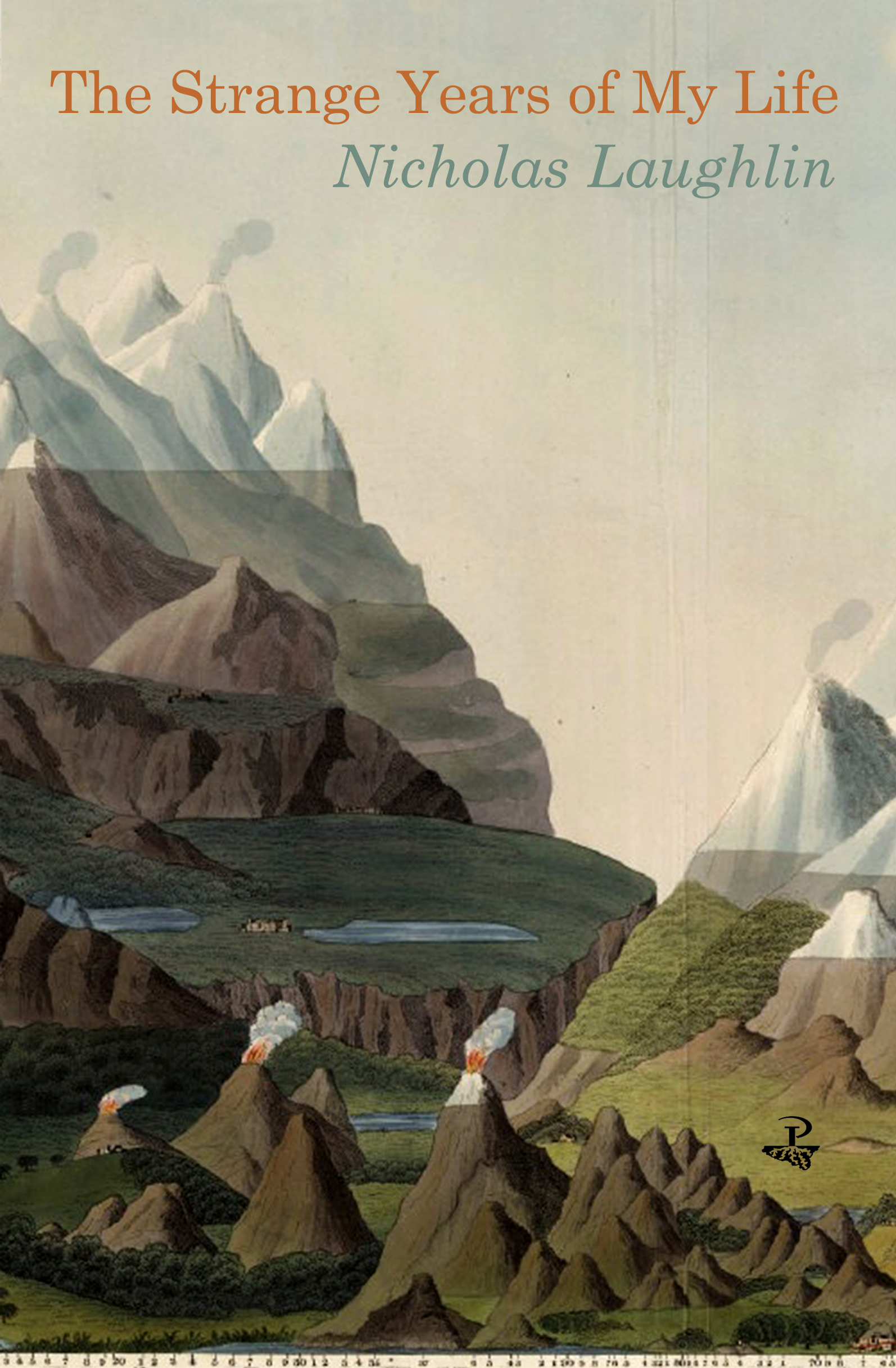
The Strange Years of My Life by Nicholas Laughlin: A Review by Anu Lakhan

the strange years of my life front covernicholas-laughlin-manaus

Peepal Tree Press Ltd
ISBN: 9781845232924
Pages: 86
Published: 06 April 2015

And now for something completely different. This is a guest post by Anu Lakhan, a poet and writer from Trinidad and Tobago. She’s reviewing a volume of poetry by her friend of many years standing, fellow Trinidadian Nicholas Laughlin. Nicholas Laughlin is the editor of the Caribbean Review of Books and the culture and travel magazine Caribbean Beat. He is the program director of the Bocas Lit Fest, Trinidad and Tobago’s annual literary festival, and a co-director of Alice Yard, a nonprofit contemporary art space in Port of Spain.

That was the bare bones bio, it describes some of the things Nicholas does without conveying a sense of the man. To remedy this I borrow a Facebook status update by Jamaican poet Kei Miller which deftly places Laughlin as the multi-tasking, multi-faceted literary dynamo he actually is:

In this life that I live there are often two groups: people who mostly write literature and others who mostly make space for literature – editors, agents, festival organizers. But sometimes there is a crossing – someone who has mostly made space becomes someone who mostly writes. And it can be embarassing that crossover – when the writing is servicable but not amazing. Still, occasionally there is a person who makes the transition brilliantly. Toni Morrison comes to mind. She lived an entire life as an editor, working on other people’s writing – and only began to write when she retired from that. In the Caribbean, we now have Nicholas Laughlin. I’ve spent yesterday and today reading his first collection of poems – ‘The Strange Years of My Life.’ It is astoundingly good. I can only hope that we make a space for this book as large and as generous as the space Nicholas has made for all of us.

A review with as many stops as starts

by Anu Lakhan

Start 1
If you find yourself short on wrens, fur, twigs, teeth, bones and maps, fret not: I know where they are. Nicholas Laughlin has appropriated them and found precise and usually very complex homes for them. If a thing be friable, fragile, concealed or rather like a brand new razor blade hidden just where it can do the most damage to something like a heart or a secret, they are in this first collection from the poet.

Stop 1
That is not at all what I mean. That all sounds very much like no matter how hard you try to break into the text everything will be hidden from you. And that’s not true. In their way, these poems are no more complicated than the average person (or poem); no more inscrutable than he (or another poem). Each poem has a personality and so it is easier to think of them as people than as something as still and set as a piece of writing. Everything vibrates.

Start 2
Nicholas Laughlin’s first solo flight with The Strange Years of My Life is a nice bit of work in all the real meanings of the word “nice” except the one with which commonplace conversation has abused us. It is fine, sensitive, fastidious, and if you have something in the way of a good dictionary you can work out the rest. I can think of no poet writing now (a Laughlin poem would want a better sense of the “now” of which I speak) or here (as in the world of poetry available to me; that is to say, that written in English) who has more respect for the form. And if you respect the form, you respect the subject and in doing so, as often as not, you end up respecting the reader. Some pieces are spare and surgical. Some initiate conversations that would be better finished off-page and in the company of friends and a lot of wine.

Stop 2: It is difficult not to enter the spaces filled with French cinema and Borges and mirrors but once you get there it’s a question of what to do. You can simply love them. But you will have to work for it.

Stop 2.1: Did Wilson Harris or Eliot or Zeus ever set so many traps? What is it with gods and writers and all these traps?

Start 3: #alreadynooneremembersyouathome. The first poem is called “Everything Went Wrong”.
Don’t trust the maps; they are fictions.
Don’t trust the guides; they drink.
In this country there’s no such thing as “true north.”
Don’t trust natives. Don’t trust fellow travellers.
Better no one knows you sleep alone.
Already no one remembers you at home.

The last line seems destined to be the most quoted of all the lines in all the pieces. That is a shame. It’s a worthy line but if you allow yourself the false security of such neat endings you will miss equally—or exceeding—flecks of the gorgeous, the alchemical, the blood rush beauty.

Stop 3: “It took longer to read about those months than to live them.” Above all else, this is the thing that must be believed. The more-than-a-decade’s worth of work that is here must certainly have been lived faster than the business of parsing and aggregating their details.

This is a story about a traveller. This is about escape and frailty. Mostly, this is a story about undying hunger and the kind of thirst that makes you drink seawater or sand or poison because the need is beyond reason.

Start 4: Remember, these are poems and therefore allowed to tell such stories without being relegated to the worlds of insanity or juvenilia. Be careful with them—the poems are in ongoing dialogue with each other—you may be tempted to feel left out. Don’t. You’re not. The secrets are ready to be let out.

Class Shaming in Jamaica: The West Kingston Commission of Enquiry

This post is offered in the spirit of a tweet i saw the other day by @jeremyweate:

“Towards a Phenomenology of Complicity: the subtle ways in which we nourish the status quo”

#westkingstoncoe Inexperienced consul should shadow senior consul. Time wasting and a tad embarrassing.
#westkingstoncoe Maj Gen Saunders is exhibiting great patience & constraint. Then again that’s the training.
@FaeEllington I’m being patient with that apparent aitch problem
@FaeEllington cyaan send young chicken fi go fight ole hawks. Unfair.
@micharie_thomas silent…no ‘booming’ sounds
@BigBlackBarry But is WHO sen him. He has good spunk but manner will cause ‘defeat’.
Poor Tivoli people. They have gotten the wusserest lawyers for this enquiry.
The new lawyer ave ha hayches problem to. Which is sad. No matter how smart or dumb he may be, he already is judged as weak.
If you can’t manage the English language as a lawyer in an English speaking country, you better stay out of court.

BigBlackBarry

There is still much debate about whether the West Kingston Commission of Enquiry is worth the billions being spent on it or not. Constituted to publicly examine what happened during a security intervention by the state in Tivoli Gardens in May 2010 that left 70 plus citizens dead, the Commission gobbles millions of taxpayer dollars in legal hours on a daily basis. Many think this is an extravagant charade and time-waste; it’s true that it seems hard to justify such expenditure at a time when IMF-related belt-tightening has become the demand du jour if not du jure.

While there is some basis for such views I think a Commission of Enquiry becomes a necessary national exercise in the absence of any state agency stepping forward of its own volition to account for such lavish ‘collateral damage’ as the death of 73 civilians in the process of an ‘internal security operation’. It’s also valuable from the point of view of being one of those rare instances where high and mighty public officials, from Prime Ministers to army generals, normally closeted from public scrutiny in Jamaican society, are obliged to sit down like ordinary citizens and answer questions about their roles leading up to and in the Tivoli carnage. The proceedings are carried live on public television and then replayed in the evenings for those who missed it during work hours. Occasionally there is an in-camera session which is not open to the public.

An unintentional but even more valuable corollary or spinoff of this daily spectacle is that the Commission has made visible the hidden codes that operate beneath the surface of official activities and affairs of governance in Jamaica, a highly stratified society, in which a narrow and rigid politics of language is deployed to nurture and maintain privilege in ways that most democratic countries have moved beyond in the 21st century. I suggest that the behaviour and language used by the ‘learned counsel’ representing Jamaica’s armed forces and police at the Commission can and must be read for clues into the deadly series of events that unfolded at Tivoli Gardens on May 24, 2010.

On that day a joint operation between the Jamaica Constabulary Force (JCF) and the Jamaica Defence Force (army) was mounted to enter the community of Tivoli Gardens, in Western Kingston, in search of ‘Dudus’ or Christopher Coke, nicknamed Prezi or President. Coke, the most influential don or unelected leader figure in Jamaica at the time, was wanted by the US government for heading the Shower Posse, a gang accused of engaging in drug-running and arms-smuggling in cities along the east Coast of the USA among other things.

In Jamaica however despite a few minor skirmishes with the law Coke had remained a free man, not least because of influential ties to the ruling party at the time, the Jamaica Labour Party or JLP as it is popularly known. However the People’s National Party, the PNP, in power for much of the time since Independence in 1962, didn’t seem to have a problem with Coke either and had never challenged his power or influence enough to keep him behind bars. This imbrication of Jamaican party politics with internationally-connected criminal interests revealed a state whose legitimacy was severely compromised and vulnerable. Not surprisingly the Jamaican government turned down the US’s request for the extradition of Dudus, claiming that the method of evidence collection used by the US, wiretapping, was illegal under Jamaican law.

After grandstanding for a good 9 months after the initial request for extradition to the US was received in August 2009, the Golding government buckled to US and local pressure and reluctantly signed the extradition request in May 2010. In retrospect, with that signature, the Attorney-General at the time effectively signed a death warrant for at least 73 civilians in Tivoli Gardens, the community led by Dudus, where he took refuge as soon as he got word that the extradition request had finally been signed.

Much has been made of the fact that then Police Commissioner Admiral Hardley Lewin, had advised the media that within minutes of his meeting with Prime Minister Golding, where he and then head of the JDF Maj-Gen Saunders were informed about the signing of the extradition request, Christopher Coke–Dudus–had fled his uptown St. Andrew home for the barricaded confines of Tivoli Gardens, his powerbase in downtown Kingston. This of course suggests close, virtually immediate cooperation and communication between the highest levels of government in Jamaica and the topmost informal powerbroker in the country, someone Interpol and the US were calling a criminal mastermind.

Tivoli Gardens, once referred to as the mother of all garrisons, locked down and barricaded itself to protect Dudus. Gunmen from all over the island were reputed to have made a beeline for West Kingston and were reportedly offering their services to an informal army formed to repel any attempt to extract the don from his fortress. The official security forces in Jamaica saw this as an open affront to their authority. They had long been plotting and planning the dismantling of the barricades and the restoration of ‘law and order’ there. On May 24, 2010, therefore, a day considered suitable because it was Labour Day and a public holiday when the bustling streets of downtown Kingston would be much less busy, the JCF with support from the JDF marched on Tivoli Gardens and unleashed a blitzkrieg of no mean proportions on that community.

At the end of the virtual Armagiddeon 73 civilians lay dead but neither Dudus nor any of the hundreds of gunmen who mobilized to protect him were apprehended. They had all mysteriously escaped or otherwise vanished.  The JCF called the Tivoli incursion Operation Key West and the JDF called it Operation Garden Parish. They had clearly had fun with those names, playing on Tivoli’s location in West Kingston. Despite their inability to capture Dudus and the extremely high cost in citizens’ lives that resulted, under questioning from Mr  Williams, counsel for the Tivoli Committee, a representation of Tivoli Garden inhabitants, army chief Maj-Gen Saunders dubbed the operation a success. “The operation was successful, but the patient died,” muttered Commission Chairman David Simmons under his breath, pinpointing the absurdity of the Army’s claim.

It also emerged in the course of the Enquiry that the JDF used, by their own admission,  psychological and sonic warfare against the community. The loud explosions many Tivoli Gardens inhabitants had reported hearing during the incursion was from mortar fire used according to Maj-Gen. Saunders to disorient residents of Tivoli and keep them inside while the security forces conducted their operation. The use of mortars had been strenuously denied by the Minister of Security and other officials up to that point.

It is in the interaction between counsel for the security forces and the people of Tivoli appearing as witnesses and some of the counsel representing them, that the contempt and lack of empathy for Tivoli residents becomes apparent, giving a sense of the magnitude of the problem facing us. I wasn’t here in December 2014 and thus missed the sessions in which Tivoli witnesses were subjected to a barrage of questioning, their dignity as human beings assaulted with the same ferocity with which the security forces had executed their mission in Tivoli Gardens, but I heard about it from others and saw the agitated tweets it generated.

By the time I started watching the proceedings again last week, a new lawyer was representing the Tivoli Committee, and I was privy to the supercilious, boorish class-shaming he was subjected to by Counsels Linton Gordon and Peter Champagnie on behalf of the JDF. Mr. Williams unapologetically drops his aitches, an unforgivable breach of etiquette according to the gatekeepers of approved speech patterns in Jamaica, even though this didn’t in the least diminish his ability to get under the skin of the high-ranking individuals he quite expertly questioned, forcing them to admit information they were reluctant to make public. So egregious were the persistent efforts to destabilize Mr. Williams by mocking his diction and sartorial style (both irrepressibly and admirably impervious to tremendous peer pressure to conform to banal norms of respectability, middle class speech and decorum) that Chairman of the Commissions, Sir Simmonds, was moved to issue a reprimand: “We are West Indians, not Australian cricketers so there will be no sledging of Mr. Williams.”

According to an internet source about the origins of this cricketing term, “‘Sledging or “Mental Disintegration” as it is also known, is the tactic of talking to players on the opposition side (particularily batsmen…) with the objective of destroying either their concentration or their confidence/self esteem.”

The attempts to destroy Mr. Williams’ confidence and self-esteem focused in great part on mocking his diction and pronunciation, an act of shaming that is frequently used by racists–white Americans, for example–to mock black speech. When the Tivoli Committee representative asked about the ‘booming’ sounds of the mortars Champagnie and others literally collapsed with derisive laughter, Oh my God what a butu, he couldn’t even say ‘bombing’ properly, how to take someone like this seriously–surely the Commission and Jamaica couldn’t possibly regard Williams as a credible spokesperson was the unspoken corollary to the scornful laughter and comments. Yet this is the same usage Bob Marley deployed in Talking Blues when he sang “I feel like booming (bombing) a church.”

On cue some journalists picked up the speech shaming and ran with it. The tweets compiled above clearly indicate the unreflexive investment in the idea that only ‘proper’ speech, that is to say ‘standard English’, is worthy of our attention and concern. While I can understand if not condone the need for opposing counsel in the theatre of the Commission to level derogatory comments and laughter at Tivoli Counsel in an attempt to disable and silence him I’m puzzled by the media’s kneejerk support of such tactics.

I’ve included @BigBlackBarry’s tweets because they represent elite beliefs about the role of English in Jamaica. “If you can’t manage the English language as a lawyer in an English speaking country, you better stay out of court,” he tweets. There are several problems here. Is Jamaica really an English-speaking country? If competence in written and spoken English was a requirement how many citizens would pass the test? Are young children who don’t have English in the ‘English-speaking country’ given the means to acquire it before being disqualified for not knowing it? What is noteworthy is the assumption of all concerned, Fae Ellington included, that Williams’ strategically long pauses and imperfect pronunciation of English were somehow a sign of inexperience and therefore ‘a tad embarrassing.’ Please note that some of these tweets have been removed by the individuals concerned although I present them as tweeted at the time.

If ever there was a poster girl for what Jamaicans call ‘speaky-spokey’ (that is painstakingly clearly articulated diction) it’s senior journalist Fae Ellington. She is so celebrated that almost every week she’s invited to a school to give a speech, to inspire students to excel, she’s the ultimate institutional role model and an unswerving champion of the establishment. During the Commission Fae registered her approval of former Police Commissioner Owen Ellington in glowing terms. “Former Comm of Police, Owen Ellington’s handling of Terrence Williams’ questioning makes Mr. Ellington look the lawyer,” she tweeted and subsequently “My respect for Owen Ellington keeps growing. What a calm, patient and steady man. Unflappable. Can’t be twisted.”

Yet this eminently well-spoken, respectable, affable police commissioner was suddenly removed from his position a year or so ago, in a move that raises serious questions about his integrity.  It seems the US-UK axis as someone called it, widely seen as the parties who demanded Ellington’s removal, weren’t as favourably impressed by his flawless, articulate handling of the English language. Similarly Police Superintendent James Forbes, described by the Gleaner as the poster boy of what a clean police force should be, was convicted of corruption last year and forced to resign. He is the senior-most member of the Jamaica Constabulary Force (JCF) to have been convicted on corruption charges.

James Forbes, an exceptionally well-spoken, presentable man, is also held in high esteem by Fae Ellington. I distinctly remember her protesting in a TV interview that Forbes was a close friend of hers as if that fact alone should acquit him of any wrongdoing. I’m not suggesting that Fae’s defence of her friend was calculated or conscious. We have been socialized to believe that the better you speak English the more upright, honest and respectable you are and as a corollary we are taught to think that the less competently you handle the language as dictated by purely superficial signs such as pronunciation and aspiration of vowels (for make no mistake Mr. Williams’ English in terms of syntax, noun-verb agreement and grammar generally speaking is superior to that of many a journalist in Jamaica), the more likely it is that you’re less than respectable.

We need to break this inflexible association between standard English and legitimacy and Patwa and other non-standard languages and illegitimacy. There is no simple correlation between these categories of behaviour and speech. We also need to ask ourselves hard questions about those who act and speak in the name of the establishment in a situation where there has been a working collaboration between the state and criminal forces.

What if the society you live in has been completely subverted by decades of moral equivocating on matters of right and wrong? Can the establishment still then be held up as an ipso facto exemplar of good conduct, governance and legitimacy? Can and should the language of the establishment, stilted and unproductive as it has been, be the sole medium of approved communication in the postcolony? What about the language of the people in the transition to democracy from the profoundly undemocratic state of an ex-slave colony or plantation society? Is the devaluing and disapprobation of Jamaican Patwa, the constant mocking and derision of its speakers, not a direct reflection of the low value placed on the lives of what Buju referred to as ‘low-budget people’?

Are we not in as much need of a #lowbudgetlivesmattertoo campaign as the US needs a #Blacklivesmatter one? Did this widely prevalent and prejudicial attitude to a certain class of people not enable the ferocious invasion and concomitant lack of respect for the lives and limbs of Tivoli residents? As Scottish editor Kevin McKenna, writing about class problems he had faced in the UK says, “When we (that is, society at large) deem people from working class backgrounds as somehow less-than because of the way that they use English, we’re being classist – plain and simple.”

And that holds true of Jamaica as well. Classism is no less despicable than racism or gender-based discrimination, something it would behoove the JDF’s lawyers to remember. The JLP used the same tactics against Portia Simpson-Miller in the last election and it backfired spectacularly against them because when you assume that we all agree with such prejudices you’re overlooking those who identify with the aitch-droppers and who know very well that the fact that they say ‘igh-rise’ instead of ‘high-rise’ and ‘booming’ instead of ‘bombing’ is no indication of character whatsoever.

Tivoli and what happened there on May 24, 2010 must not be translated into the perfectly articulated but overdetermined and exhausted language of what is known as ‘standard English’ in Jamaica, it must remain indigestible and provocative, demanding answers, in Patwa-inflected English if necessary, from those who would govern us. For there is no crime in this…on the other hand there is much crookedness, corruption, class snobbery and more inscribed in the discourse of standard English in Jamaica, and this is what we need to dismantle if the status quo is to change for the better. After all what has any zealous aitch-pronouncer and proud speaker of standard English done to elevate this country that compares to even one hundredth of the world-class exploits of the aitch-droppers who put Jamaica on the map?

Mel Cooke and the Problem of Point of View

In which Kei Miller decisively dismantles Mel Cooke’s presumptuous point of view on homosexuals, published in the Gleaner a few days ago. A masterful takedown…read it…

One of the most important points he makes is worth calling out: “To publicly challenge things that are said publicly is not the same as being censorious. To point out (sometimes with vehemence and rigour) how some things can cause offense, or how they might be homophobic or racist or whatever, is not the same as saying that thing should never have been said. That is reductive thinking. Of course I affirm Mel’s right to say what he wants to say, to share *his* point of view if not the assumed Point of View of the Other. But I also affirm everyone else’s right to contend, to debate, to come with new arguments and counter arguments. Isn’t that what discourse is?”

Nuanced discourse is too often missing in Jamaica…certainly you rarely find it in the newspapers…hallelujah for blogs where some of the best critical writing can be had at a moment’s notice.

keimiller's avatarUnder the Saltire Flag

There is a saying in Jamaica – mi throw mi corn, mi nuh call nuh fowl. (I threw my corn, I didn’t  call any fowl). And another one – ‘throw stone inna hog pen, him who squeal a him it lick’. (when you throw a stone into a pig’s pen, the one who squeals is the one who was hit). Both sayings are about words that are aimed and yet pretend disingenuously to have no directions – words that hit targets but then shrug. ‘Oh? Did I hit you? I am so sorry!’

JA-Fowl2

Mel Cooke’s recent article in the Jamaica Gleaner,  ‘Bye-Bye, Boom-Bye-Bye’ did a lot of throwing. He was throwing corn, throwing stones, and throwing word. His target? Oh – the usual of course. Every Jamaican DJ who wants the crowd to go wild, every Jamaican pastor who wants a louder Amen, and every Jamaican newspaper writer who…

View original post 1,862 more words

Binyavanga Uncut…

In which i try and capture a long, rambling, regret-soaked set of tweets by Binyavanga Wainana reflecting late Friday, May 15, on the dissembling life of gay men like himself and how sex is the least of one’s problems…

The tweets welled up almost spontaneously, unstoppable, even extending to a promise to visit Kingston, Jamaica in December this year but mostly they express anguish over past wrongs induced by the pressure to conform to society’s demand for appropriately masculine behaviour from boy children. They also mention fellow African writers Chimamanda Adichie and Elnathan John…and Bishop Tutu and Ruto, Kenya’s Deputy President, whose speech may have precipitated Wainana’s stream of tweets.
The most meaningful thing I read yesterday were @BinyavangaW‘s tweets. That man moves me.
God save us from African writers who prosecute your rights to be urself on earth based on what their pastor says 2 them.
 Binyavanga-
Coz she makes you feel, like nobody else. Nina Simone.  https://youtu.be/xr8ol8ufSRg  via @YouTube
“I am in your hands” a text I sent when defeated by my defenses. Because I loved him. Loved him. Releasing 2 love is very very hard.
It took doctors to tell me I was near death to let myself text him and say I love you, and i release myself to you. Gay love! God?!
How do you love when the ground shifts over your feet every minute?
How do you love when you can’t hold hands in a hospital room?
how do you love with your parents, cousins friends, unable to digest?
How do you love as a gay man except by defiance always? defiance or self destruction?
Africans important 2 discuss these things, human people really are all first just about loving before food, human rights, procreation.
people think sexuality is about having sex. So, then why don’t you all give up sexual love,a and passion?
so much of our world here is about quick borrowed intimacy..sharing a bed with a man and being free when when u do not fuck.
people call u in tears and leave wives to come to you not for sex but because who else will understand? and u hold them all night.
When Ruto opens his mouth or of of those fucking hate bishops, gays change routes coming home on public transportation.
gays try hard to not show themselves, but all of them live in fear always, u relax for a few months and some shit happens in the news…
when Ruto speaks and theca church people in the news, gays get evicted from apartments, get threatening text messages. EVERy time.
We find ourselves always protecting our straight people, loving them coz they r weak and brittle often. We can’t shut off love, u see.
baldwin, was also just yet another black gay first born man saving his family first, putting his life 4 black people first, love: last.
So in the morning after he has cried and cried, you make coffee for him and give him support to put his straight face on and face Africa.
many gay African couples in the europe adopt and have children who r straight, & loved and still hide their families from people back home.
@BinyavangaW: How do you love when you can’t hold hands in a hospital room?” Or at the funerals, clan gathering. Your very tears hidden?
u hear stories how in primary school your own brother walked away in shame when you were beaten for being girly and u were five years old.
and that evening, ashamed and unable, you cracked jokes to make your brother feel okay, because u ra ashamed u shamed him.
Kenyan church can never invite Bishop Tutu 2 speak. He loves gays, straights, revolutionaries, feminists.
Why can’t our churches march with women against violence in #idressasIwant – u can disagree and still show public support 4 women.
@BinyavangaW: gay African couples adopt & have children, straight, & loved & still hide from people back home.” Can’t introduce ours 2 clan
kenyan church r terrified of love and change and truth. They are there to police you to expect little, and pretend to expect much.
I have an essay to write about 3 homosexual men I helped humiliate in high school, I am deeply ashamed. Always.
Kenya will break! Break apart! If we open our hearts to being ourselves and to accepting that there is what we do not know.
Bishop Tutu the same product of the same Colonial missions. He just liberated himself t b 4 Africa, not to be a colonial sin collector.
Give credit 2 the man Tutu who can walk into the most dangerous township and preach love and tell them they have to love gay people 2.
When I went to SA, Tutu was a revelation. Just love love and freedom. I did not imagine such a thing could exist.
Finally “independence” made us overseers of the African colonial plantations, now do what about freeing ourselves from this role?
So try to imagine the heaven that Tutu will go to, and Ruto’s heaven (14 cowering virgins?)
Fine. On the Winnie Versus Tutu thing, me I am with Winnie. But apart from SA, our African cowardly safe rich churches care for nothing.
@BinyavangaW Good phrase: Tutu not “a colonial sin collector”. Wish more religious leaders would focus on the real evil of poverty instead
Which African church elder will say I do not understand u Jide Macauley, but I come to see u 2 pray together. Because I fight 2 love.
I see our priests, even the ‘Africaniser’ ones wearing the ideas and self-hates of the Colonial District Officers and so on. Same game.
Black South Africa really did shake up the post colonial narrative” flawed,raw and dangerous, u took us forward into new possibilities.
Must pay credit here 2 the liberationists in catholic church who hosted, mentored Nyerere, Mugabe…. stand 4 their ideas.
I feel it is my job, and the job of our generation to poke past all this shit, even when it was good, and see into how 2 make new integrity.
It is no longer about the growth of the nation. The firming of its order or disorder.
When will Kenyan PCEA invite Ngugi wa Thiongo to speak? Can they self-interrogate?
Our parents, careful with us in a hostile world freed us into knowledge so we can fight them 2 make this world. Pay no homage 2 their dogma
U did not come to earn to approval of ur father & mother African! U are there to make a world 4 ur children’s children. DO what u must do
Joburg: housands of gay African professionals wanting 2 work make black Africa better. Today, in Africa, they contribute. Today.Amazing.
I turned down a great job in Joburg, wanting t be fully in the continent. But I really want to be in the fight here, in this ‘other Africa.’
@BinyavangaW Having the most institutionalised political party/movement in Africa helps hugely. No big man politics In SA.
@bettywaitherero to look for ways to break apart your own mobility to be what is necessary 2 carry us all. to refuse fear..Yes.
@bettywaitherero terrifying, as all purposed things must be.
@BinyavangaW introspective and review is necessary if you are growing and not static. gotta change your mind often. 🙂
me: fucking ego man V competitive, and I have had over the years had 2 fight myself 2 accommodate the Chimamanda jaggernaught.
Now. It is okay to have that fight inside you over that woman who is seemingly ruling the world. And u wanted 2 2.
Chimamanda and I agree on exactly nothing from the first day. And then she was like, then, this young young woman.
In our own relationship as writers, what has come to matter is..Chimamanda and I
Is that Chimamanda will have the confidence, each time, 2 go further than I will, for me, to ask me to take myself further.
In truth: I am theonw who is noisy conservative scared 2 try, and Chimamanda is the one writer who asks me to take my project further.
cozy work seems so experimental, people don’t understand this thing. Real relevant honesty defines our friendship and working relationship.
Chimamands is the first human person who looked me in the eye and asked me, are you gay? That is what love looks like. Now I go to sleep.
@BinyavangaW Have you read Men of the South – Zukiswa Wanner. Something related to that tweet.
@Omuteso am laughing.long story..but i shall I owe tax there.
when somebody does that 2 u, u have to step up and b the same kinda honest always with them and 4 them. That is a New Africa #chimamanda.
don’t u feel that, that people see u, and choose not to see u?
@BinyavangaW If you ever need a Naija beard sha… Get at me. I’d do it for free if you let me rub your clean shaven head.
@AfroVII I do, bring me shea butter ,and some sexy beard juju.
So, Chimamanda is my big sister, & I am cool. and I am like older and got 2 Caine Prize before. Could give not a shit. Was neva like that.
@mairekayegi lol. send 500,000 dollars by western union pse. lol.
people look around you, around you, and so few people get friend u look At u. Too painful and vulnerable
@BinyavangaW how many times have you said you’re going to sleep Binya, yet there are new tweets every minute on my TL (not complaining)
@SafiaA lol. this vulnerability shit is hard, so i started whiskey.
@BinyavangaW Got these off Sister Joy’s fb page. pic.twitter.com/FgB8i6Ewim
@SafiaA I made the mistake of listening to Nina Simone. FUCK!
Hooi. So now like after a year or 2 after Chimamanda opens a bomb in myself which was ready. I hire this six foot seven Naija gay escort.
I am in London, have been for years online wondering where to find a man to do..something..that I do not know what.
And gay bars are full if 19 year olds with 3 percent fat..
the other person whom I love deeply, Martin Kimani. I am staying in their home,
O I go online and book an escort called Black Orpheus. i have been watching him online 4 months. He is Nigerian. In London.
And I pay him 200 pounds to give me a nude massage. I feel nothing sexually, and he is super hot. I just feel,….shit…I did not die.
So. That night back at my old buddy Martin’s, we r drinking beer, and i start, term..am not gay…but today, this is what i did.
And I tell martin everything that happened: very coldly , and watch his face twist and turn and fall and climb.
fucker opens me a new beer, and says, wow. So, are u okay? And I say. Yes. and 4 the 2nd time I know 2 people love me without condition
That was 2004/2005, and the journey these loves set me on started my real life. And I am still young, 44, as a gay man.
U cry, and ask, why did I not tell martin all this when I was 19? how many years of nonsense would that have saved?
@BinyavangaW i need a book from you about your queer experience, i need it,i need it. Its not my place to need it but i do
@fistvoices lol. not soon. nt like that..some r coming.
i thank everything wonderful in the world that I am an African second born man. God, what do my first born African gay brothers go through?
trust me when I say that my memoir was as gay as I could be with my father (oh I love that wonderful man) alive. It is gay.
@afrolicious and u and all of us, not me, this is about all os us facing ourselves with love…
Not making these tweets Africans coz I am having a bad time. That is a lie. I am am always mostly happy. Am sharing myself as we should.
I knew I was gay, but though that shit is all flexibility, be a rubber band of achievement, and then it will b fine, fine.
if gay in high school, middle class high school, and u r not girly, option 2 just all pretend 2 this day. Play ‘white’/ play assexual.
I played a woman in our celebrated school play wore a miniskirt a sex worker called Desiree. Wore a miniskirt, high heels.
Was contemptuous of my straight friends in boarding school. I was witty, sat near the powerful and when make-up was off…it was our game.
could wear a role 4 for ‘boys’ – and I could take it off, and they would think ah..he is artistic but supports ruby. I was always a prefect.
But in Lenana, as a prefect, stories come to you about love affairs. I remember the beautiful broken gay boy – name ruined across school.
I never looked him in the eye. Now, that I knew him to be like me, and me safely fooling the straight machos, I needed him o disappear.
Like so many gay Africans online, I hated on the femmes, the men who cannot mask their sexuality. As we do with tribe, we beat them down.
@MagungaWilliams mangu in my time was nowhere as violent and Lenana on sexuality. Leanne was a very very violent school.
@fistvoices i dont. but this is an issue. just like tribe on the sleeve and its costs.
@fistvoices A good 30 percent of online profiles of gay men or more on websites people say be straight acting, No femmes,
@fistvoices on Sites, gay Africas threaten open violence on effeminate gays who cannot hide, and insult them with no shame.
@fistvoices same siasa, as kenyans on Somalis, or not inviting your unfavored tribe friends t dinner when ur tribe in power.
@BinyavangaW true,its how we police gender performance, the idea of not having to wear your homosexuality,its prevalent and divisive
@fistvoices policed by your own fellow gays.
@BinyavangaW forgetting that the majority of the people that have been queer active were not hegemonic gender performers
@BinyavangaW they wore their homosexuality
@BinyavangaW i am seemingly buff,but buff is not masculine, right now i am wearing leggings, and i notice the stares
So, cheers 2 all the straight brother, siblings, sisters, friends, random Africans who see & saw u and keep u alive, because that is life.
@BinyavangaW how dare he waste his body? How dare he wears that persona while he looks like that?
carole mwai came 2 Chimamanda talk in NYC, was v young and she will not remember how she saved me from the boys and my brother. Teared up.
Chose, that day, 2 bake cakes with the girls with in the kitchen and bitch about the boys, and did not act as lieutenant. I was maybe 7.
They were like our closest family friends. I had been dying to escape the boys and hang in the kichen, bit I was my bros right hand man,
because all the boys were afraid of Caroline Mwai, when she said come, I came. I knew my bro and her bros would not do 2 much.
So. 4 the first time sat in the kitchen and baked and cooked and gossiped about the boys.
of course, my bro is getting all kinds of shit outside with the boys, and then he is like their leader.
My brother never ever made issue. because every photo we had he was there protecting me,
So. My the time we eat, My head is nearly hysterical with guilt. I have broken the boys code, I have shamed by brother.
What do I do. The neighbor ,visiting, is Darmindar Singh this Sikh Kenyan kid….
So while we ate what we baked, i announce that Darmindar is the 1 who told me that I should do that so he is a snitch.
I felt absolutely nothing, but sat and watched saw Darminder cry, thought him a sissy, and my bro said to me, we will sort him out.
I was not 9 years old. I thought, straight people so weak, they take any excuse 2 avoid truth that Indian Kenyan saved me from being gay.
So. i three Darminder under the bus 2 bb close to be boys who ruled Lena Moi primary, and be still cool with Caroline, who ruled also.
i have been a fucking manipulative gay kenyan getting my way. and still am. But lies kill us.
@chemelumadu fuck. i scared to ask. but it killed his vibe in school.. KILLED.
So disliking this new politics of them them progressives where queers activists and feminists black never did shit. Account 4 nothing.
@chemelumadu ngai. so totally ready to fly to him and say sorry. SORRY.
@ReneCMugenzi @BinyavangaW hahaha on Twitter Binyavanga’s head is all over the place, ill need follow ups and its not my book 2 write
Anybody willing to Storify and publish. do.
@BinyavangaW been trying to, Storify not cooperating but will keep trying…
now that u know ur sins, humans, address them and sleep well..lol. Love 2 all!
Pray e that the El Nathan who showed so much genuine..something, will repudiate the African Museum mask he has chosen and be real.
Coz. don’t doubt me, his fans could give less of a shit, but El nathan’s ghosts brother him shitloads. lol. Always. Good truth 2 him.
It is the ones that show real promise, that really have a battle to fight, that u can crap on. lets s mo ‘child soldiers’ from that talent.
celebrate first if El Nathan wins caine prize, will he then look inside and give us something mo than best school composition for Oninbo?
4 El Nathan John – coz there’s mo u know. Ain’t Got No, I Got Life – Nina Simone  https://youtu.be/L5jI9I03q8E  via @YouTube
@anniepaul shit. I need 2 drink with u I feel u have so much shit t call me 2 account 4 am comin 2 Jamaica okay?
anytime @BinyavangaW wow, that would be something…to have you here…
Elathan was 1 of the few nigerians in many years who was fighting to find something. Really. Special. Dangerous, and full of directions.
could even be that El nathan winning caine prize will release the truth man he is hiding 2 please the mild prize people. GOOD 4 literature.
@anniepaul just fucking airmiles I need. no near so far. REALLY. on my own would come to have wine. like tomorrow.
@BinyavangaW some Diemmesfontaine Pinotage would be perfect for the occasion 🙂
@fistvoices he does not know. that is he battle. Actually I he knows,.
@fistvoices hi satires built on mine, but he is no mimic, he has shit to say and make. but the writing SOOOOOO tame.
@fistvoices writing tamer than the guy u drink with, he is afraid of himself.
@fistvoices I hate fools. I cannot hate on Elnathan I want him to to amazing. He must just conquer himself. Not Caine and this silly game.
@anniepaul u been in my love since Achal so so long ago, but remember every internevention on twitter. EACH 1
@BinyavangaW wow didn’t know if you remembered that Achal had introed us…i was just with him in Joburg.
so, that musical “hitch your wagon 2 star” that Elnathan chose to play, fine, so now wat u wanted it 2 b joke song? Boy, it is not. Show.
Elnathan, all sarcastic terrified 2 speak and write what he really has to say 2 Nigeria. SHIT. So performs Caine Prize safe. real talent.
@anniepaul U ar like what Kingston is going to be in my head.
@anniepaul and we will sit and u will say i am really upset at u and u rr shit guy and we have 2 talk about it.
@anniepaul and I will say, do u have red wine…a nd bend over..
If you say so 🙂 RT @BinyavangaW: @anniepaul and I will say, do u have red wine…a nd bend over..
bring all your African love 2 support El Nathan 4 caine Prize, ask him directly to grow. None of us need moral teenagers.
@anniepaul Love love love and I can’t spell anymore so am off;
Love>3 to you too…your wine and much else awaits in Kingston…come soon @BinyavangaW
@anniepaul @BinyavangaW Yes come — but only when I’m there!!
*rolls eyes and concedes* RT @keimiller: @anniepaul @BinyavangaW Yes come — but only when I’m there!!
i killed my banana bread drinking whiskey and tweeting, this is fucked up. Bye!
@keimiller @anniepaul u shut the fuck up Kei. U killed my banana bread
@keimiller @anniepaul it had whiskey, cardamon, lemon juice and baobab seed powder and is so fucking dry now.
mmmmm RT @BinyavangaW: @keimiller @anniepaul it had whiskey, cardamon, lemon juice and baobab seed powder and is so fucking dry now.
Nina Simone- Mood Indigo  https://youtu.be/kUU7Rkoj4qw  via Kei Miller, Annie paul, Martin Kimani, Achal Prabhala…
@keimiller @anniepaul So am coming when u come to jOmaika! Love t U Kei.
@BinyavangaW @anniepaul June (maybe too soon) or December. Yeah man. Come we mek a flex. And Annie always has great wine…
@BinyavangaW @anniepaul and other great things beginning with ‘w’. Not like the shit we got in Nigeria. 😦
@keimiller @anniepaul it’s like fuckedcookies now, It was supposed to be alike the derrida of affect, a 3 D paper. sigh.
@keimiller @anniepaul really interested especially in the geology and ancient eruptions u know,
@keimiller @anniepaul and evolving national museum practice
@keimiller @anniepaul and long thrusting fast bowlers and hip action
@keimiller @anniepaul BUT. last week it was high school politics I was sniffing at….learned a lot. A little LOT.
@keimiller @anniepaul haha. Who we g to which school and Why. and where did dat shit go…starting to sniff .
@keimiller @anniepaul Got Garnet drunk …conversation unfinished….lol
December it is, with or without Kei RT @BinyavangaW: @keimiller @anniepaul Got Garnet drunk …conversation unfinished….lol
let us look free at the beautiful thing we have been allowed to make.
Another Branda Fassie: Joy – Paradise road.wmv  https://youtu.be/Uc-dw0tapJY  via @YouTube
and Kei will be here, not to worry 🙂 RT @BinyavangaW: @anniepaul @keimiller DealDone.
@anniepaul @keimiller nope. ileave the assumption now all u west indians wherelike beating each other over poetry competitions high school.
Off to Jamaica this December.
It’s happening RT @BinyavangaW: Off to Jamaica this December.
@anniepaul nairobi. just back from drunkenness in NYC
ah just back from too much walking in NYC RT @BinyavangaW: @anniepaul nairobi. just back from drunkenness in NYC
@anniepaul Dat @keimiller is a free man – and the work, the work….free-ing.
@SafiaA lol. it will be fine..this is not a paper, it is an opinion…love
@SafiaA Will never storify myself, don’t like that editing.
in bed with sugar free cough drops.

“So the real world boss land”: Obama in Jamaica

A selection of tweets from the day Obama arrived in Jamaica

Who knew how much Jamaicans love Barack Obama? I didn’t until he arrived yesterday and the country went into full One Love mode. “So the real world boss land” commented Colin Channer referring to the local self-titled Worl’ Boss, Vybz Kartel, languishing in jail. Meanwhile “We welcome the President on this hysterical moment” a newscaster is reputed to have babbled in his excitement. People congregated at key sections of the road from the airport to New Kingston but were disappointed when Obama was transported by helicopter instead of the Beast. Nevertheless as @wayneprawl tweeted: Marine One just frigging passed over my house. The entire Port Royal just erupted in waves and screams. Others noted that POTUS’s arrival had displaced the live draw of Cashpot, a national lottery, that never yields its airtime not even for the Olympics. Obama has managed to stop Cashpot and NOTHING stops Cashpot tweeted @jomariemalcolm in awe while Alison Stuart said: What! He stopped Cashpot!!!!! He mus really be a powerful man!!!!!!!

Meanwhile my neighbour Deborah Anzinger told me her daughter Zoe, 6, had asked if her parents could take her to talk to  Obama. What do you want to talk to him about? her mother asked. Her answer: she wants to ask him “why are you here?”

#outofthemouthsofbabes